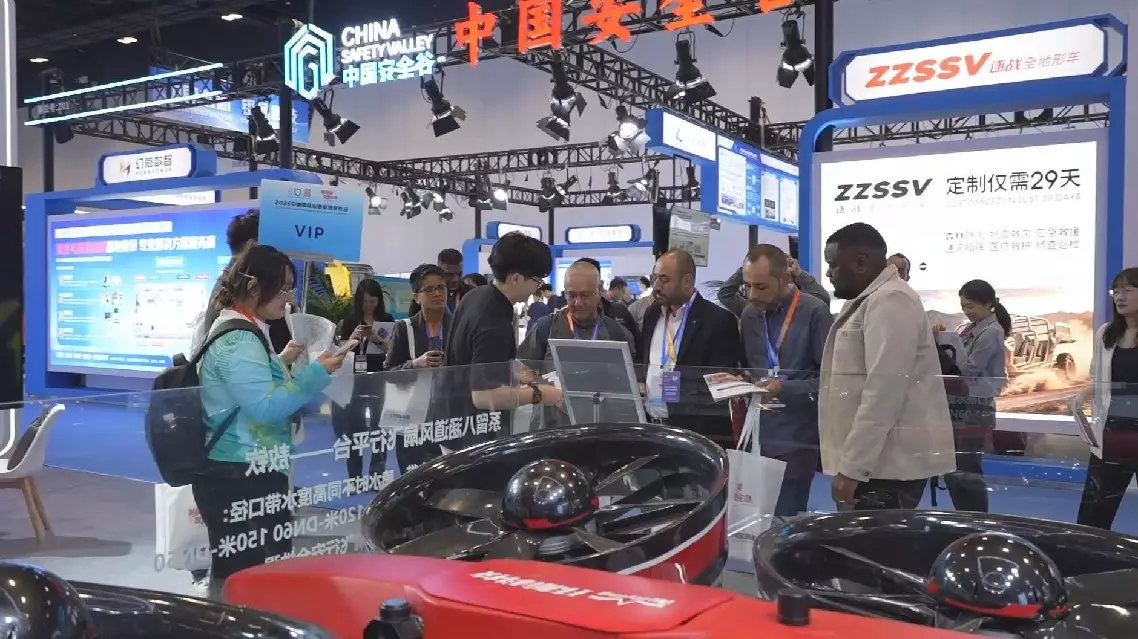
The ongoing 2026 China International Emergency Management Exhibition has brought together cutting-edge emergency technologies and intelligent equipment in Beijing, showcasing how innovation is reshaping disaster response and safety management.
The exhibition, running from September 8 to 10 at the China National Convention Center, is organized by the International Exchange and Cooperation Center of the Ministry of Emergency Management.
Under the theme "Leading the future of emergency management," the event aims at displaying advanced safety and emergency technology and equipment from home and abroad and promoting the high-quality development of the safety and emergency equipment industry.
More than 400 outstanding Chinese and foreign exhibitors, including leading technology and manufacturing enterprises and research institutes, are presenting over 400 categories of advanced equipment covering aviation emergency response, intelligent monitoring and early warning, comprehensive fire rescue and other fields, along with application scenarios and integrated innovation solutions.
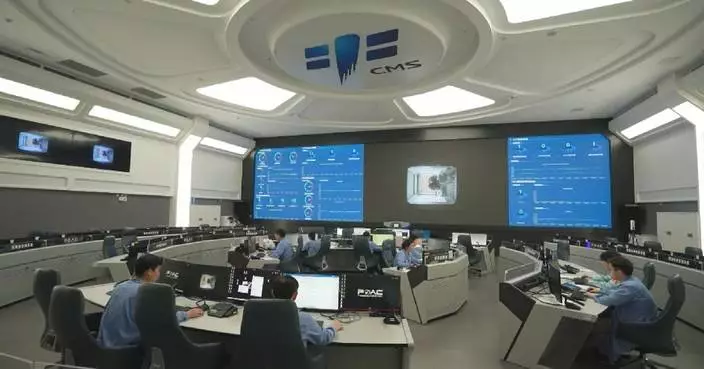
One highlight is a satellite relay station that can help people trapped by natural disasters quickly contact the outside world when communication, power and transportation are cut off.
The device can be made into a small phone that starts up with one button for instant communication, or into a portable satellite base station that allows 200 people within a 200-meter range to make calls and access the internet simultaneously, enabling fast and efficient rescue communication.
The exhibition has also set up special zones for diverse innovation achievements, showcasing quality results transformed from competitions, school-enterprise collaboration and scientific research breakthroughs, to integrate industry, academia, research and application in the safety and emergency field.
As an important program for natural disaster prevention and emergency management under the Belt and Road Initiative, the exhibition has been held annually since 2023, becoming an important platform for supply-demand matching and international cooperation to promote the high-quality development of the safety and emergency equipment industry in China and around the world.
Emergency expo showcases innovation reshaping disaster response
China's Shenzhou-24 astronauts say demanding drills, encouragement and humor helped them build trust in just over six months of training, ahead of Wednesday's launch on the first mission in the country's manned space program to carry a foreign crew member.
The China Manned Space Agency (CMSA) said on Tuesday that the spacecraft is scheduled to lift off at 8:18 Beijing time the following day from the Jiuquan Satellite Launch Center in northwest China.
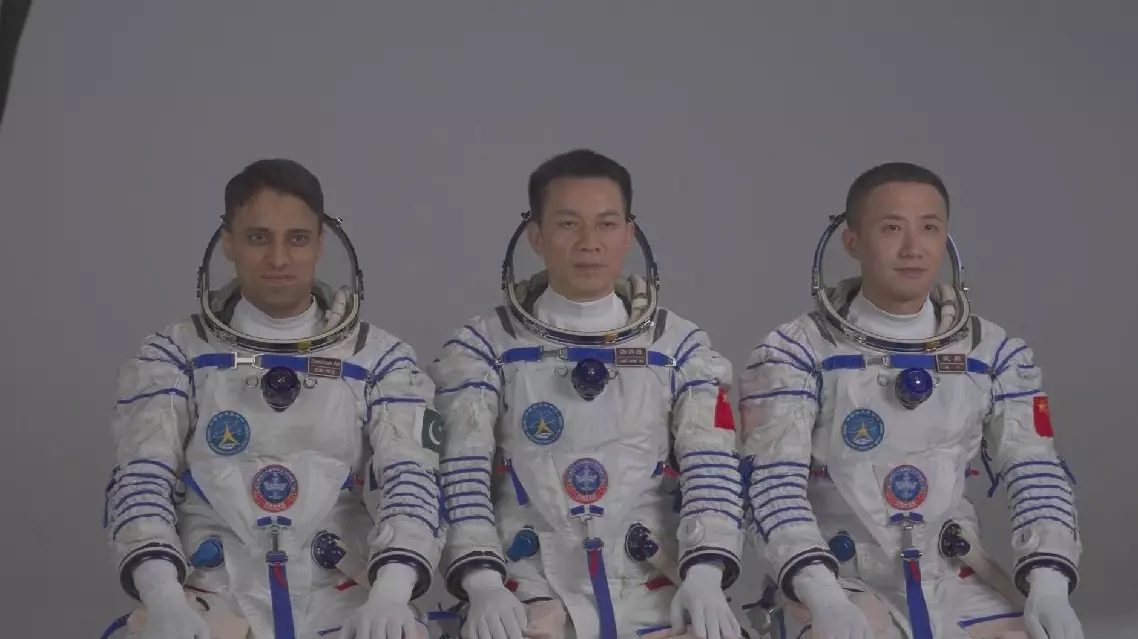
Commander Tang Hongbo will be joined by flight engineer Wu Yi and Pakistani payload specialist Muhammad Zeeshan Ali, who is set to become the first foreign astronaut to visit China's Tiangong space station. The flight will mark Tang's third journey to Tiangong and his second stint as commander, while Wu and Ali are both heading into space for the first time.
In recent interviews with China Central Television (CCTV), recorded alongside training footage filmed over the course of this year, the three men described how they learned to work, and eventually to live, as one crew.
Tang, a veteran pilot returning to space two years after his last mission, set a strict standard for his new teammates from the outset. In his view, discipline had to come first, because only a team that works flawlessly together earns the right to call one another friends.
"First and foremost, we have to be a capable team, highly effective at our jobs. Only then are we colleagues and friends. In space, we are a small team carrying out a mission, and we have to maintain strict discipline," Tang said.
For Wu, that standard translated into constant questioning, whether on lessons already covered or on tasks still to come.
"The commander sets very high standards for himself, and he's demanding of me too. He repeatedly quizzes me on things we've trained for. For things we haven’t practiced, or haven't practiced much, we go through them together in advance and discuss them so we can get the best results from training," Wu said.
Ali was held to exactly the same standard. Although he will spend only a short time aboard Tiangong, assisting with joint China-Pakistan science experiments before returning to Earth aboard Shenzhou-23, the mission still requires him to master a large body of skills, from emergency procedures to the Chinese-language commands and labels used on key equipment.
Tang walked him through that equipment one item at a time, testing him until he could recognize and operate everything with ease.
"I set clear requirements for everything he might come into contact with. I tell him these are requirements because they concern safety. We're all in the same spacecraft, and to keep everyone safe, you have to master these things. The same goes for us. There are more than 100 particularly important, commonly used safety-related operations in all," Tang said.
Ali admits he had expected a commander of such experience to be stern, but months of working side by side left him with a very different impression.
"First of all, it's Commander Tang. When I came here and started training with him, I had a very different impression of him -- that he would be very strict. But as time passed, I found him to be the most humble person, despite being a very well-experienced commander and having been to this space station two times. And knowing that this time he will be the first commander of the very first international crew, still he was very humble, and he taught me whatever he learned, whatever experience he had," Ali said.
Wu saw the same quality from another angle. Behind the strictness, he said, stood a commander who could always sense when a crewmate needed relief from the pressure of training.
"He doesn't just help you improve your skills, but also gives you a lot of emotional support. When he sees that you're under pressure, he'll casually make a joke during training or in daily life, or find some other way to help you relax. It's a pleasure to be around him," Wu said.
For Ali, what carried him through the most demanding stretches was the faith Tang placed in him at every step.
"At every stage, he reminded me to believe in myself, always to believe in myself, to perform every task confidently to achieve the desired results. So I am very thankful to him for helping me pass through all these challenges and reach this stage," Ali said.
The regard went both ways. Tang said Ali's years in the cockpit had shaped a spirit the whole crew could recognize, one that gave them a shared understanding of responsibility and of difficult work.
"I told him, 'You're like many of my pilot friends and astronaut colleagues: optimistic, humorous, outgoing, brave and resilient.' He said, 'Yes, yes, that's what pilots are like. That's what we're like.' We're also full of energy and have a strong sense of responsibility, honor and mission. When things get especially difficult, we focus on how to complete the task. Friendships formed through such demanding work last a long time and run very deep," Tang said.
Beyond the drills, Wu said, the three had come to share something deeper than a simple willingness to help one another.
"One time when we were training together, we were chatting. We used to use the word 'friendship' a lot. Now we're united as a crew, we work well together and we share the same goals," Wu said.
That closeness had a practical side as well. Wu and Tang had long since developed an easy rapport, so as Ali familiarized himself with the mission's procedures, he brought his questions to his Chinese crewmates, and it was usually Tang, drawing on his wealth of flight experience, who explained the answers.
"Our Pakistani crewmate is very eager to learn. Whenever he doesn't understand something, he asks us. The commander has a great deal of experience and is highly skilled in flight operations, so he usually answers Ali's questions. That's mainly how the three of us work together, and I think it goes very smoothly," Wu said.
Ali said both men had helped him reach the launch pad, and that along the way they had left him with memories he would carry long beyond the flight itself.
"Although he (Wu Yi) is himself a flight engineer going into space for the very first time, he has done a lot of training over the last couple of years. So he had a lot of experience with training. So he shared all his training experience with me, and at every moment he motivated me. And I can still remember his one line--you all just said to me, 'Do not relax till the time the ignition system of the rocket is ignited.' So I think, yes, these two friends helped me a lot, and I will cherish the beautiful memories that I made with them throughout my life," Ali said.
Shenzhou-24 crew forges bonds before first foreign astronaut visits China's space station