China's space station will carry out more international science and technology cooperation projects as its research efficiency continues to improve, said an international cooperation manager from the Technology and Engineering Center for Space Utilization under the Chinese Academy of Sciences recently.
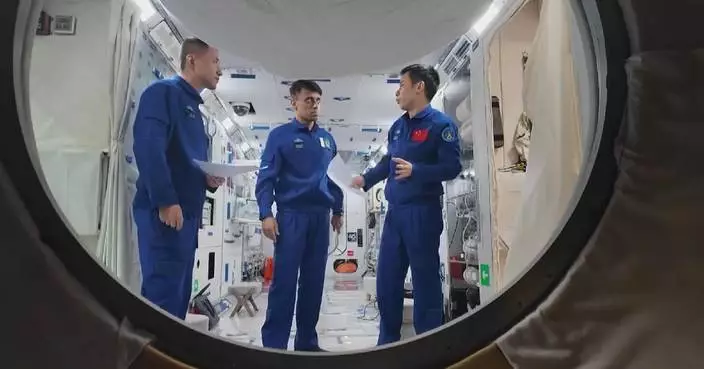
More than 200 space science and application studies have been conducted in orbit so far, and many domestic and foreign research teams hope to use the station's unique space environment for frontier exploration impossible on the ground.
"We are currently advancing the POLAR-2 gamma-ray burst polarization detection experiment, jointly developed by Switzerland, China, Germany and Poland, which will later be deployed outside the space station for astronomical observation of gamma-ray bursts," said Chen Mengyun, the manager.
According to the plan, selected experiment projects will be advanced in an orderly manner in accordance with the disciplinary layout.
International science and technology cooperation is an important path for the development of space science and applications.
Relying on standardized project selection procedures, engineering development requirements and in-orbit implementation mechanisms, China's space station is well positioned to expand international cooperation.
"We are also rolling out annual calls for space science and application research projects, open to scientists worldwide. We hope that China's space station, as a national space laboratory, can provide such a top-tier experimental platform for scientists around the globe," Chen said.
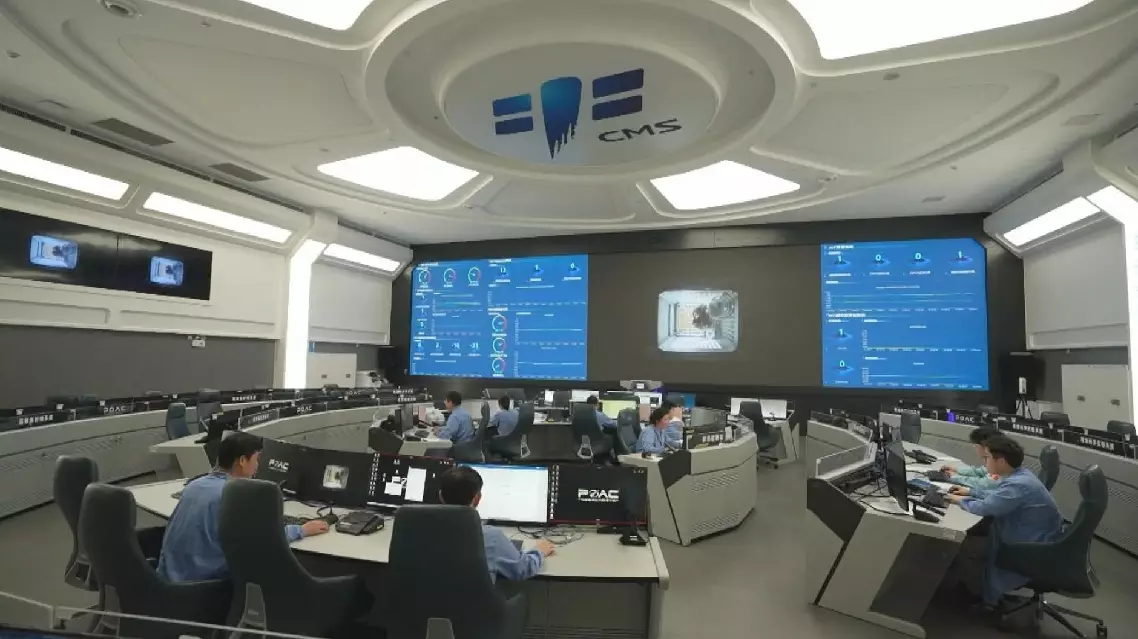
China Space Station to host more int’l science projects: cooperation manager