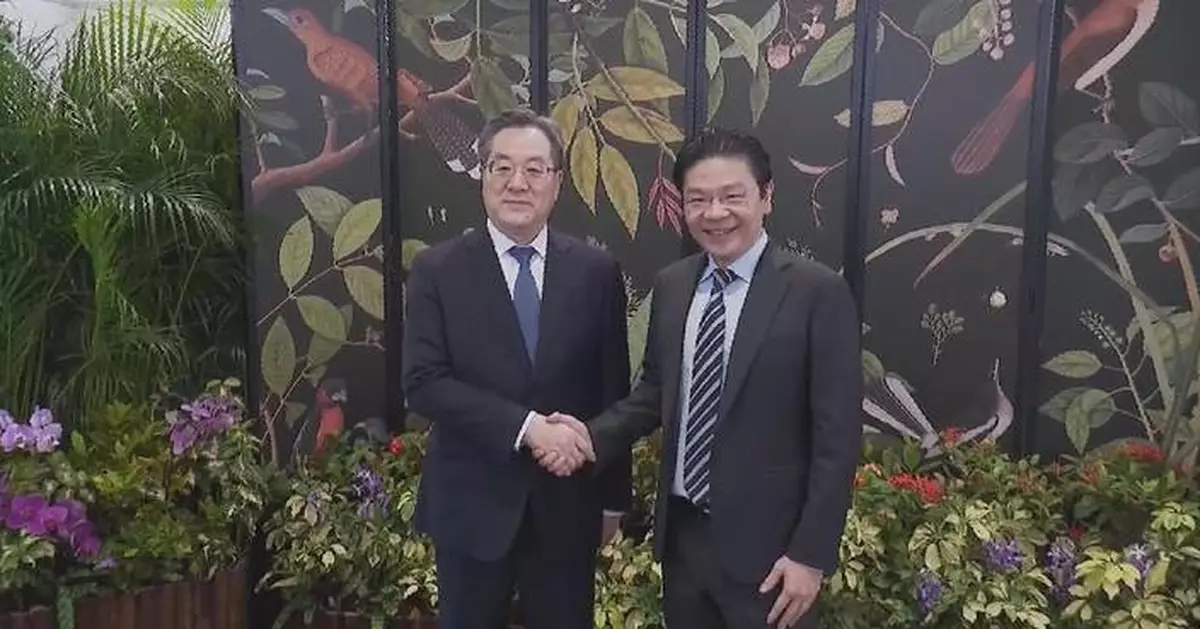
Chinese Vice Premier Ding Xuexiang visited Singapore from Sunday to Monday and co-chaired bilateral cooperation mechanism meetings.
During his visit, Ding, also member of the Standing Committee of the Political Bureau of the Communist Party of China (CPC) Central Committee, had separate meetings with Singaporean Prime Minister Lawrence Wong, Singapore's Senior Minister Lee Hsien Loong, and Singaporean Deputy Prime Minister Gan Kim Yong.
During the meetings, Ding said that under the care and guidance of leaders of both countries, the practical cooperation between China and Singapore has achieved remarkable results, reflecting the all-round high-quality future-oriented nature of bilateral relations.
China stands ready to work with Singapore to translate the leaders' aspiration and consensus on deepening cooperation into concrete actions and outcomes, he said.
China has remained firmly committed to deepening reform comprehensively, pursuing opening up, and promoting independent innovation, so as to firmly hold the future of the country's development in its own hands, Ding said.
In the face of the complex and turbulent international situation, the two sides should continue to follow the right strategic direction, maintain close communication and coordination, and promote steady and sustained progress in bilateral cooperation, he said. The Singaporean leaders said the country attaches high importance to developing ties with China. They also expressed the hope that the two sides would form greater synergy between their development strategies, push for more cooperation outcomes, and continue to consolidate and expand the all-round high-quality future-oriented partnership. They said the development of artificial intelligence (AI) bears on the future of both countries and the world, and Singapore looks forward to strengthening cooperation with China.
Singapore will assume the ASEAN chairmanship next year and is willing to use this as an opportunity to actively advance ASEAN-China cooperation in various fields, they said.
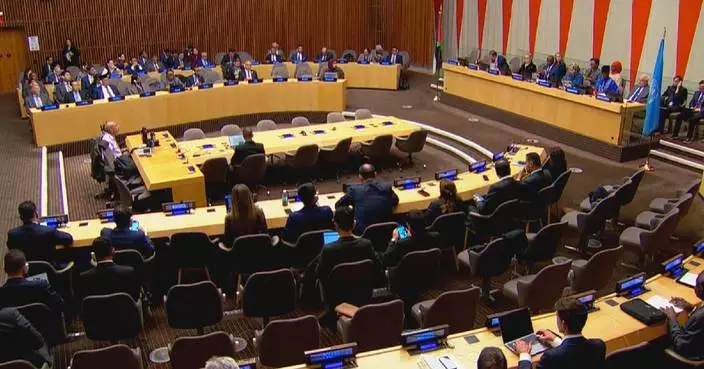
Ding and Gan co-chaired the 22nd China-Singapore Joint Council for Bilateral Cooperation Meeting, the 27th China-Singapore Suzhou Industrial Park Joint Steering Council Meeting, the 18th China-Singapore Tianjin Eco-City Joint Steering Council Meeting, and the 10th China-Singapore (Chongqing) Demonstration Initiative on Strategic Connectivity Joint Steering Council Meeting.
The two sides reviewed the implementation of high-level consensus and progress in cooperation in key areas, and had in-depth exchanges on deepening Belt and Road cooperation and cooperation in economy and trade, sustainable development, innovation among others.
Both sides agreed to leverage the exemplary and leading role of intergovernmental cooperation, upgrade cooperation in traditional areas, expand cooperation in emerging fields such as sci-tech innovation, the digital economy, AI and green industries.
The two sides also agreed to expand people-to-people exchanges and produce more cooperation outcomes in education, culture and tourism, health, media and human resources, to bring the two peoples closer.
After the meetings, Ding and Gan jointly witnessed the display of China-Singapore cooperation outcomes.
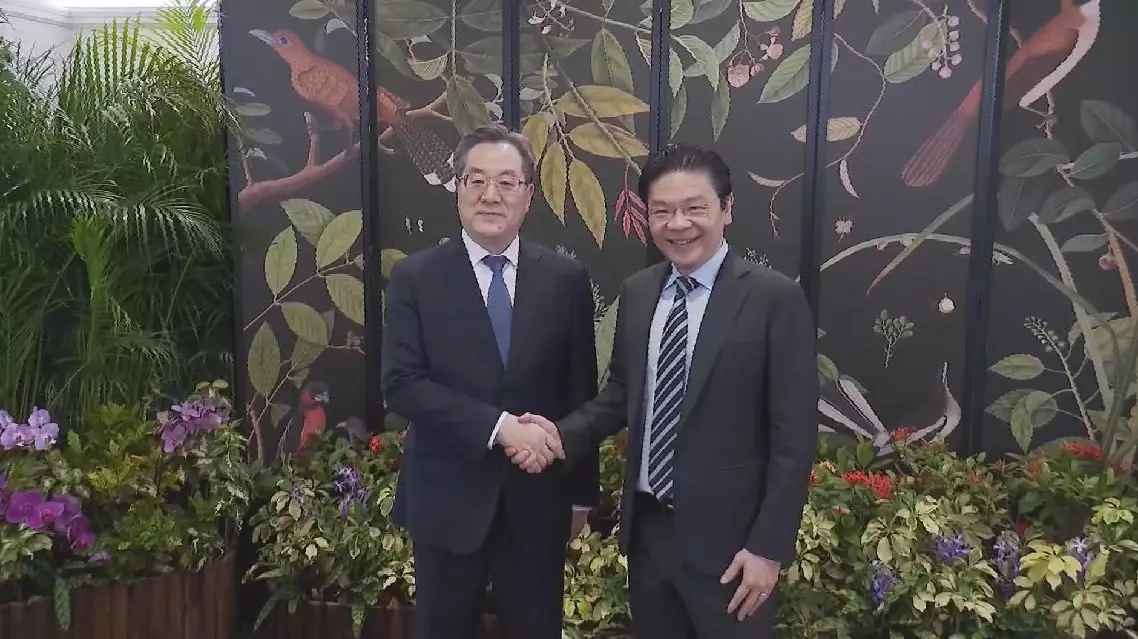
Chinese vice premier visits Singapore, co-chairs bilateral cooperation mechanism meetings