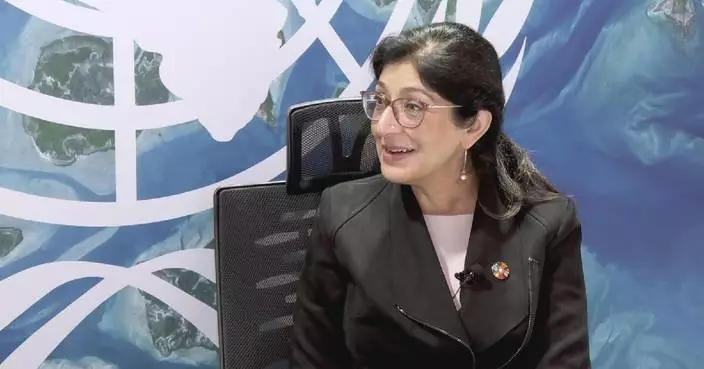
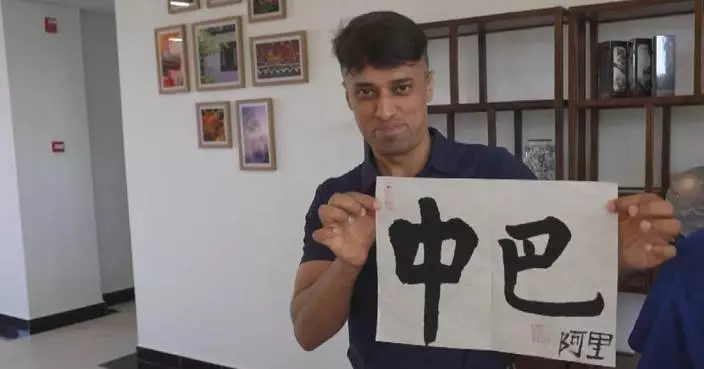
Pakistani astronaut Muhammad Zeeshan Ali, set to become the first foreign astronaut to board China's Tiangong space station, reflected on his months of training and voiced confidence in accomplishing the upcoming mission in a recent interview with China Media Group (CMG).
China's Shenzhou-24 crewed spaceship is scheduled to lift off at 08:18 a.m. Beijing time on Wednesday from the Jiuquan Satellite Launch Center in northwest China, the China Manned Space Agency announced on Tuesday.
The crew brings together commander Tang Hongbo, flight engineer Wu Yi, and Pakistani payload specialist Muhammad Zeeshan Ali, marking the first joint flight of Chinese and foreign astronauts in the history of China's manned space program.
Ali's path began in February 2025, when China and Pakistan signed a cooperation agreement in Islamabad on selecting and training Pakistani astronauts for a mission to China's space station, formally opening the selection process.
"I felt very lucky to be part of it. When we were over with our first medical selection, I was really surprised to see that out of my ten batch mates, I was the only one that was selected," he said.
Strict screening across preliminary, secondary and final rounds narrowed the field to Ali and Khurram Daud, the first foreign astronauts chosen for China's manned space program. The two Pakistanis then underwent seven months of training and assessment at the Astronaut Center of China (ACC), with one picked to fly the mission and the other serving as backup.
In April 2026, the selected Pakistani astronauts and their team leader arrived in Beijing and settled in at the ACC.
"When it came to the ACC, the first impression I had, different culture, different people. It was a little challenging at the beginning, but the ACC, they were so caring and they trained us so well that I quickly adjusted into the environment," he said.
As an air force pilot, Ali said that his flying experience has made much of the astronaut training familiar to him.
"For example, the centrifuge training, which is used for the overload of the flight, both in normal conditions and in the emergency conditions, I've been doing it throughout my flying career. Similarly, the motion sickness training, or the physiological training and the psychological training as well, so all this training that we're going through for becoming an astronaut, as a pilot, most of it I've already done. I was very confident with the operations of the spaceship. And it didn't feel difficult for me to just translate this training into what I've already learned in my previous career," he said.
The first step on the road to China's space station is mastering the Shenzhou spaceship. Ali still vividly remembers the moment he first stood in front of the simulator.
"If you look at the history of the Shenzhou spaceship itself, I think it's the most safest spaceship, and it has conducted many successful space missions and transfers of the astronauts from the Earth to the space station and back. Maximum before this, I went up to maybe 50,000 feet flying a jet, but this time I was very excited to actually train and learn how to fly a spaceship to go beyond that 50,000 feet, up to 400 kilometers, up to the China Space Station," he said.
Day after day of rigorous drilling has turned complex flight procedures into muscle memory, drawing a once-distant dream closer to the countdown.
Under the mission plan, Ali will travel to China's space station aboard Shenzhou-24 for a short-term mission and return to Earth aboard Shenzhou-23.
Khurram Daud, who came through the same seven months of training and now serves as the mission's backup astronaut, will be at the launch site to see his teammate off on launch day.
As liftoff approaches, Ali sees the mission as more than a personal milestone, but one that carries the aspirations of a quarter-billion Pakistanis and the goodwill of the Chinese people.
"Going into space as an astronaut was my childhood dream. I think there's a huge responsibility on my shoulders, not only for 250 million Pakistani people, but also for billions of Chinese friends who are expecting a lot from me. I was the last one to get in this program, but I am very confident to be the first one to lead this program and this China-Pakistan friendship higher into space," he said.
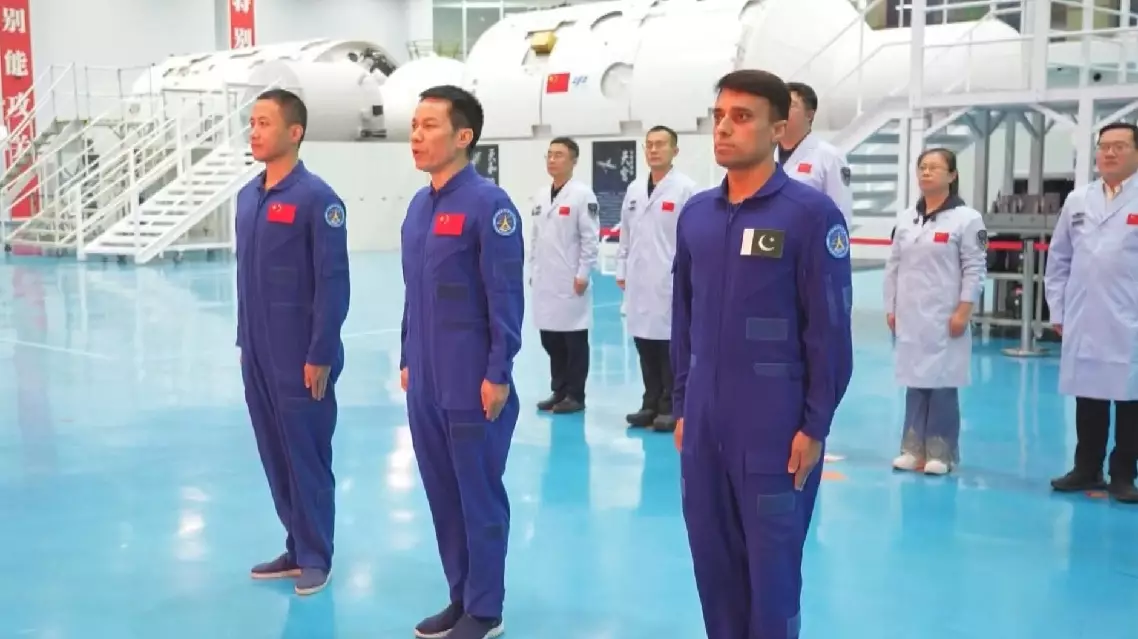
Pakistani astronaut shares training experience, confident ahead of China's Shenzhou-24 mission