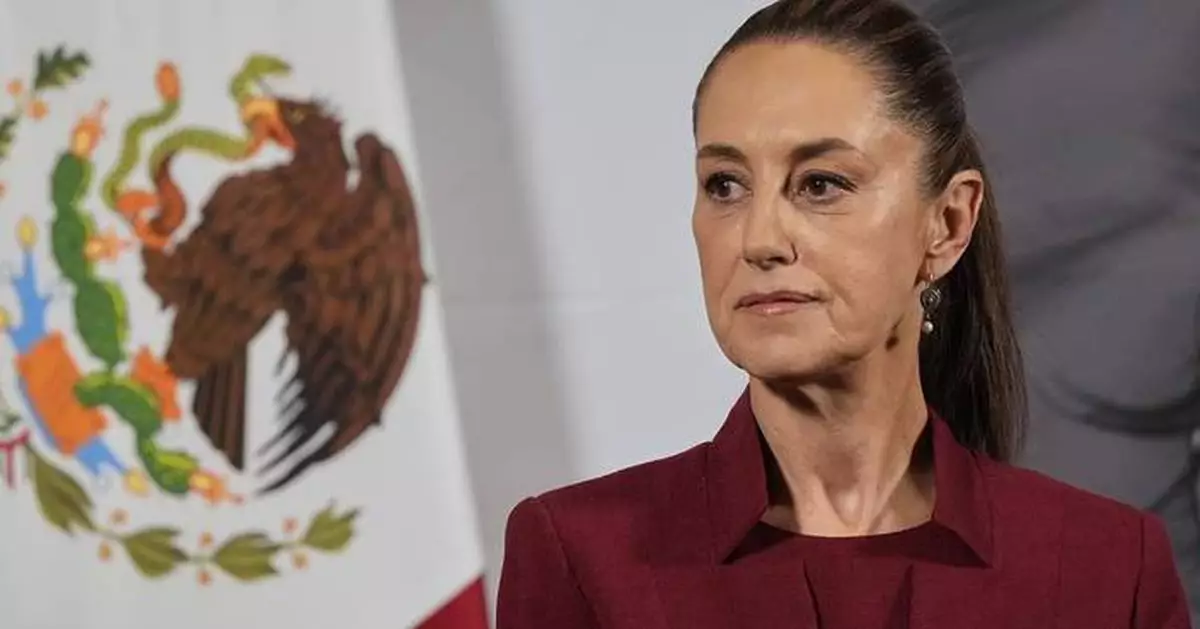
MEXICO CITY (AP) — Mexican President Claudia Sheinbaum responded sharply Thursday to U.S. government sanctions to block transfers from three Mexican financial institutions, saying Washington hasn't shown evidence of its allegations of money laundering.
Shortly after, Mexico’s banking authority announced that it was temporarily taking over management of two of the institutions, CIBanco and Intercam Banco, to protect creditors.
The U.S. Treasury Department announced the sanctions Wednesday on the two banks, as well as on the brokerage Vector Casa de Bolsa, alleging that they had facilitated millions of dollars in money transfers for Mexican drug cartels.
Sheinbaum said during her morning news briefing Thursday that the administration of U.S. President Donald Trump had showed no evidence proving that the institutions carried out any money laundering, despite repeated requests for such evidence.
“The Treasury Department hasn't provided a single piece of evidence to show that any money laundering was taking place," she said. “We aren’t going to cover for anyone, there isn’t impunity here. They have to be able to demonstrate that there was actually money laundering, not with words, but with strong evidence."
The accused banks also fired back on the orders, rejecting the allegations and similarly citing a lack of evidence.
Brokerage firm Vector said Wednesday night in a statement that it “categorically rejects any allegation that compromises its institutional integrity" while Intercam said in a statement it denies being involved in any “illegal practice.” Vector is owned by entrepreneur Alfonso Romo, who served as chief of staff to ex-President Andrés Manuel López Obrador early in his presidency.
Manuel Somoza, president of strategies of CIBanco, told local press that they only heard about the order the same time it was made public, and claimed that it wasn't a formal legal accusation, but rather an investigation.
“Our books are open," he said. ”Rumors are clearly damaging, whether they’re true or not. So, what we want is for (American authorities) to come and investigate."
The Treasury Department has said the order will go into effect in 21 days. The law officials cited states that they can take such actions without publicly presenting clear evidence if there are “reasonable grounds" to believe that the institutions were involved in the money laundering connected to trafficking.
Sheinbaum said they were notified by American officials of the accusations ahead of the Wednesday announcement, and that Mexican financial regulators carried out their own investigations into the institutions.
They found "administrative infractions," she said, but nothing close to the accusations being levied by Treasury officials.
Despite that, Mexico's National Banking and Securities commission said they were temporarily taking over management of CIBanco and Intercam Banco “in order to protect the interests of public savers and creditors.”
In the orders blocking transactions between the three institutions and American banks, the Trump administration alleged that the three companies facilitated millions of dollars in transfers with Chinese companies, which it said were used to buy chemicals to produce fentanyl. The Treasury Department said the institutions had facilitated transfers to U.S. banks, but officials would not name which U.S. institutions were implicated nor provide more details.
Sheinbaum countered that their own investigation simply showed that institutions had strong relationships with Chinese clients and banks, which she said was more of an indicator that the two countries share a robust trade relationship. China has been the main source of chemical precursors to produce fentanyl in Mexico, according to U.S. authorities. At the same time, the U.S. has increasingly sought to block growing Chinese influence and investment in Latin America.
The leader also expressed frustration on Thursday morning, reminding Trump officials that Mexico is a sovereign nation and must be treated as an equal by the U.S. government.
“We're no one's piñata," she said. "Mexico must be respected.”
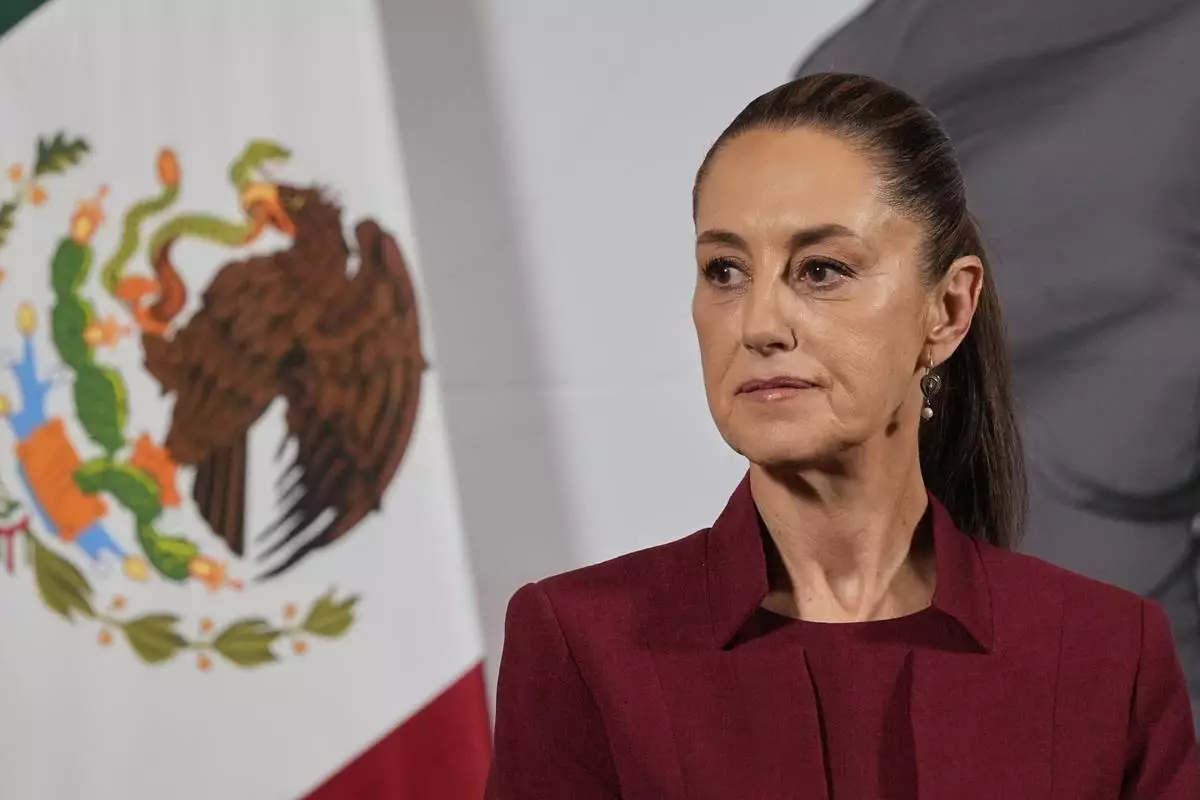
FILE - Mexican President Claudia Sheinbaum attends her morning press conference at the National Palace in Mexico City, April 2, 2025. (AP Photo/Marco Ugarte, File)
WASHINGTON (AP) — Inflation likely remained elevated last month as the cost of electricity, groceries, and clothing may have jumped and continued to pressure consumers' wallets.
The Labor Department is expected to report that consumer prices rose 2.6% in December compared with a year earlier, according to economists' estimates compiled by data provider FactSet. The yearly rate would be down from 2.7% in November. Monthly prices, however, are expected to rise 0.3% in December, faster than is consistent with the Federal Reserve's 2% inflation goal.
The figures are harder to predict this month, however, because the six-week government shutdown last fall suspended the collection of price data used to compile the inflation rate. Some economists expect the December figures will show a bigger jump in inflation as the data collection process gets back to normal.
Core prices, which exclude the volatile food and energy categories, are also expected to rise 0.3% in December from the previous month, and 2.7% from a year earlier. The yearly core figure would be an increase from 2.6% in November.
In November, annual inflation fell from 3% in September to 2.7%, in part because of quirks in November's data. (The government never calculated a yearly figure for October). Most prices were collected in the second half of November, after the government reopened, when holiday discounts kicked in, which may have biased November inflation lower.
And since rental prices weren't fully collected in October, the agency that prepares the inflation reports used placeholder estimates that may have biased prices lower, economists said.
Inflation has come down significantly from the four-decade peak of 9.1% that it reached in June 2022, but it has been stubbornly close to 3% since late 2023. The cost of necessities such as groceries is about 25% higher than it was before the pandemic, and other necessities such as rent and clothing have also gotten more expensive, fueling dissatisfaction with the economy that both President Donald Trump and former President Joe Biden have sought to address, though with limited success.
The Federal Reserve has struggled to balance its goal of fighting inflation by keeping borrowing costs high, while also supporting hiring by cutting interest rates when unemployment worsens. As long as inflation remains above its target of 2%, the Fed will likely be reluctant to cut rates much more.
The Fed reduced its key rate by a quarter-point in December, but Chair Jerome Powell, at a press conference explaining its decision, said the Fed would probably hold off on further cuts to see how the economy evolves.
The 19 members of the Fed’s interest-rate setting committee have been sharply divided for months over whether to cut its rate further, or keep it at its curent level of about 3.6% to combat inflation.
Trump, meanwhile, has harshly criticized the Fed for not cutting its key short-term rate more sharply, a move he has said would reduce mortgage rates and the government's borrowing costs for its huge debt pile. Yet the Fed doesn't directly control mortgage rates, which are set by financial markets.
In a move that cast a shadow over the ability of the Fed to fight inflation in the future, the Department of Justice served the central bank last Friday with subpoenas related to Powell's congressional testimony in June about a $2.5 billion renovation of two Fed office buildings. Trump administration officials have suggested that Powell either lied about changes to the building or altered plans in ways that are inconsistent with those approved by planning commissions.
In a blunt response, Powell said Sunday those claims were “pretexts” for an effort by the White House to assert more control over the Fed.
“The threat of criminal charges is a consequence of the Federal Reserve setting interest rates based on our best assessment of what will serve the public, rather than following the preferences of the President,” Powell said. “This is about whether the Fed will be able to continue to set interest rates based on evidence and economic conditions—or whether instead monetary policy will be directed by political pressure or intimidation.”
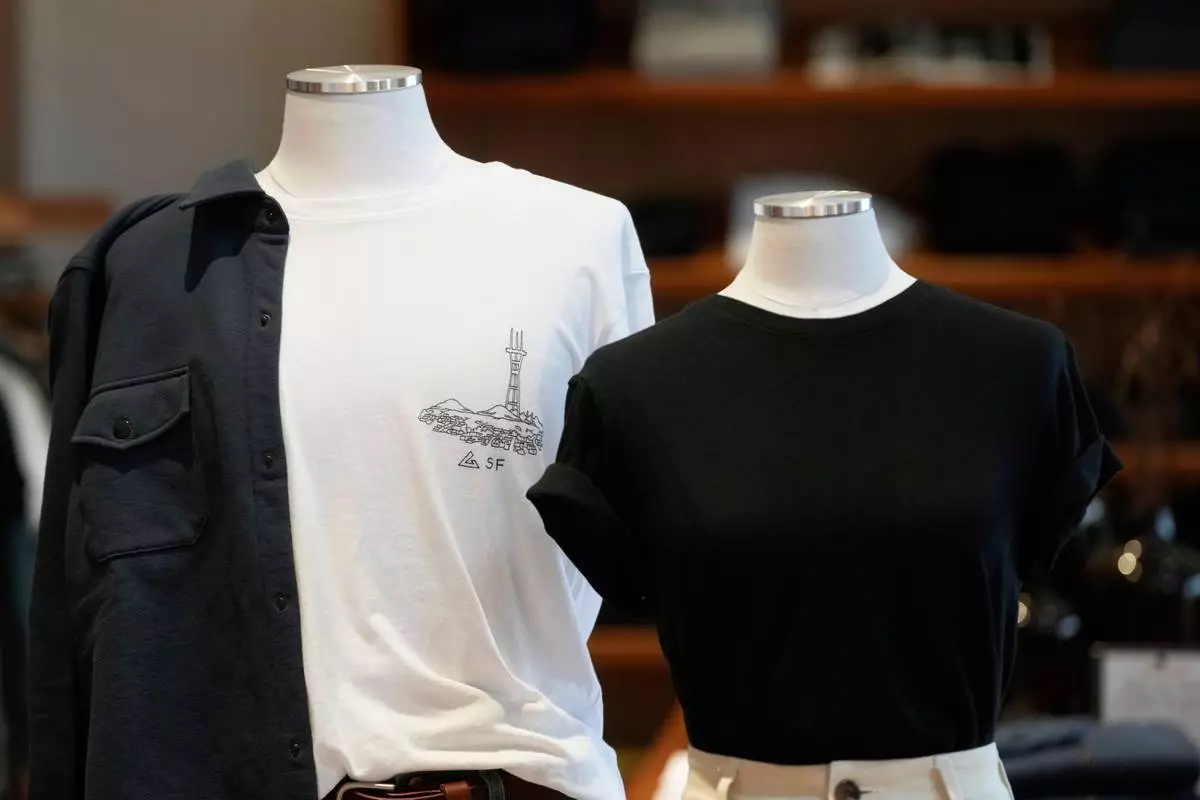
FILE -American Giant clothing is displayed at the company's showroom in San Francisco, April 17, 2025. (AP Photo/Jeff Chiu, File)
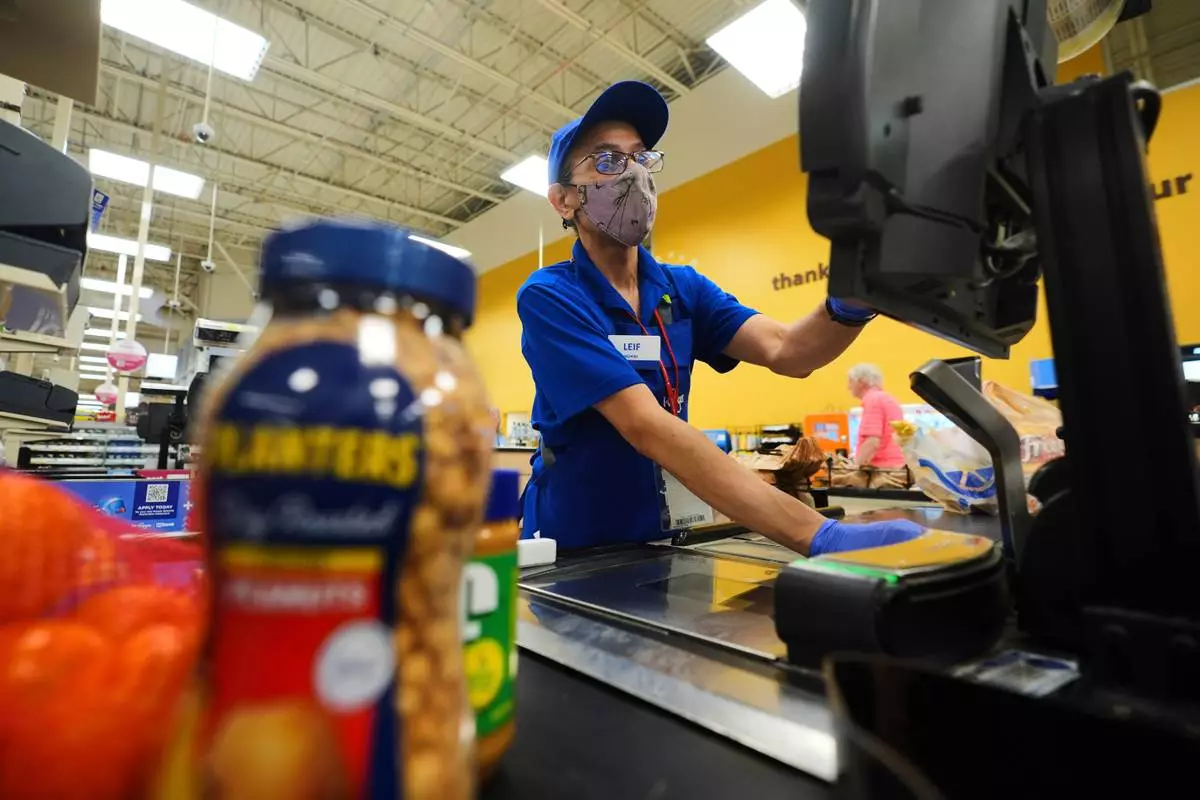
FILE -A cashier rings up groceries in Dallas, Aug. 28, 2025. (AP Photo/LM Otero, File)