Skip to Content Facebook Feature Image

Bill Moyers, the former White House press secretary turned acclaimed TV journalist, dead at 91

ENT

Bill Moyers, the former White House press secretary turned acclaimed TV journalist, dead at 91
ENT

ENT

Bill Moyers, the former White House press secretary turned acclaimed TV journalist, dead at 91

2025-06-27 06:02 Last Updated At:06:11

NEW YORK (AP) — Bill Moyers, the former White House press secretary who became one of television’s most honored journalists, masterfully using a visual medium to illuminate a world of ideas, died Thursday at age 91.

Moyers died in a New York City hospital, according to longtime friend Tom Johnson, the former CEO of CNN and an assistant to Moyers during Lyndon B. Johnson's administration. Moyers' son William said his father died at Memorial Sloan Kettering in New York after a “long illness.”

More Images
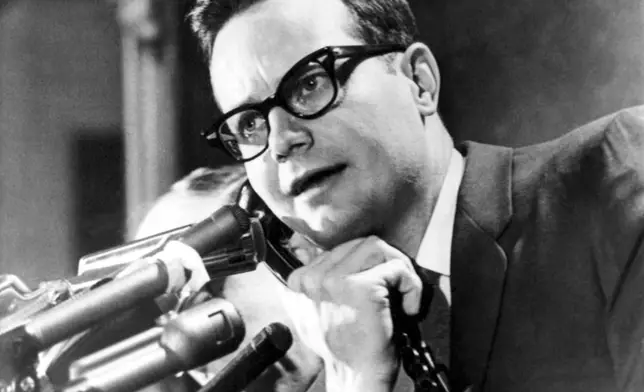
FILE - White House press secretary Bill Moyers appears at a press briefing at White House in Washington on Feb. 25, 1966. (AP Photo/William J. Smith, File)
FILE - White House press secretary Bill Moyers appears at a press briefing at White House in Washington on Feb. 25, 1966. (AP Photo/William J. Smith, File)

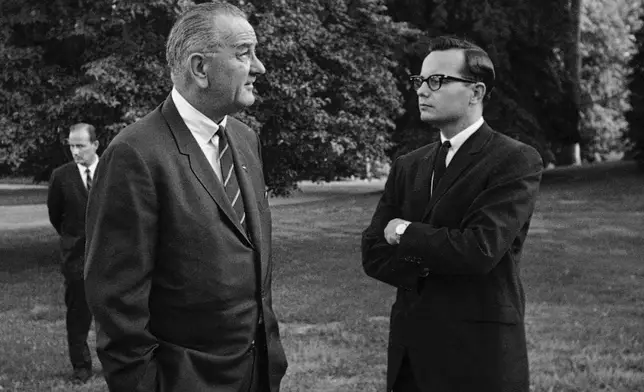
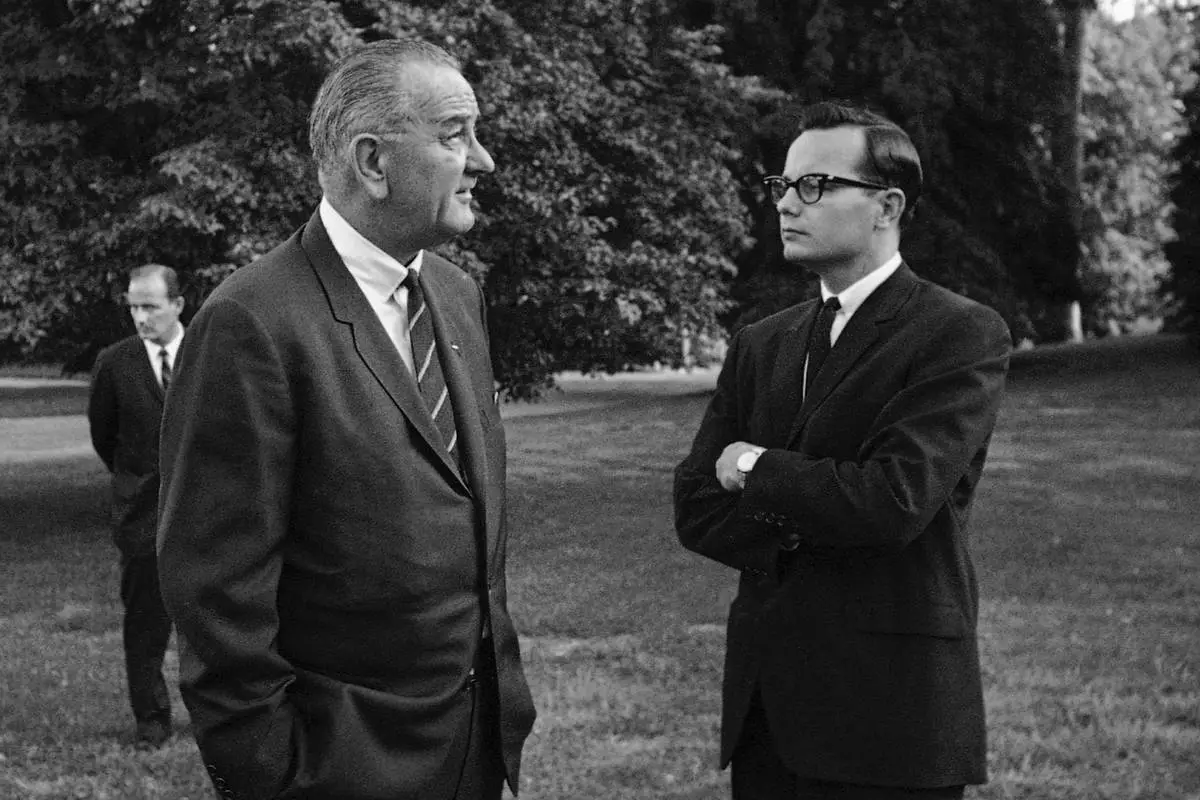
FILE - President Lyndon B. Johnson, right, talks with press secretary Bill Moyers on the South Lawn of the White House in Washington on Aug. 30, 1965. (AP Photo/William J. Smith, File)
FILE - President Lyndon B. Johnson, right, talks with press secretary Bill Moyers on the South Lawn of the White House in Washington on Aug. 30, 1965. (AP Photo/William J. Smith, File)

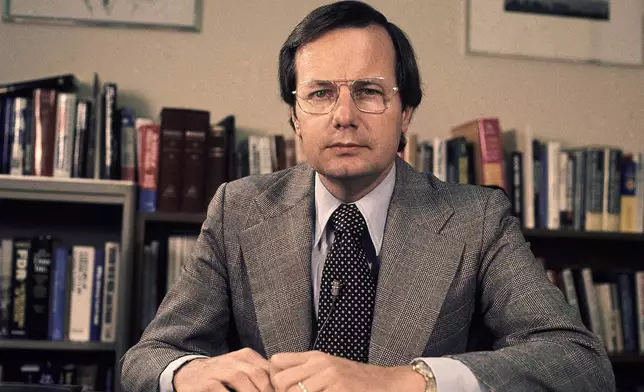
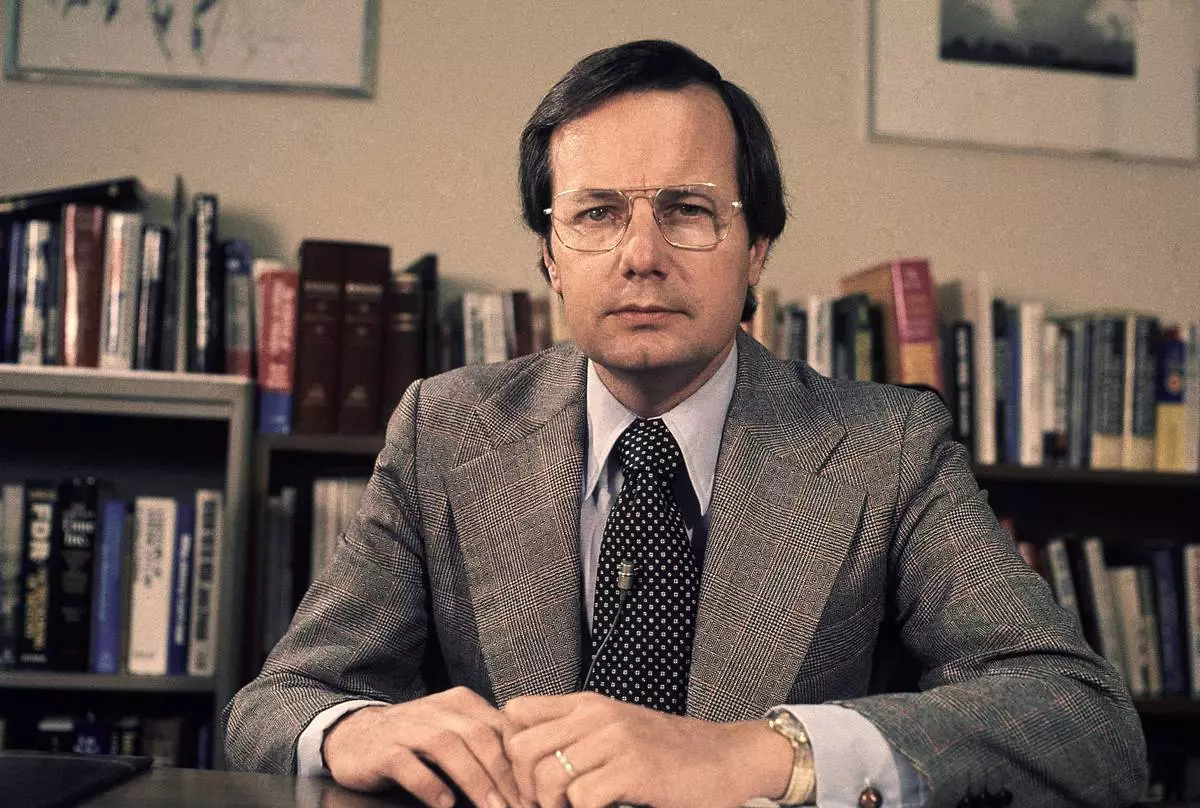
FILE - PBS host Bill Moyers appears at WNET in New York in 1974. (AP Photo, File)
FILE - PBS host Bill Moyers appears at WNET in New York in 1974. (AP Photo, File)

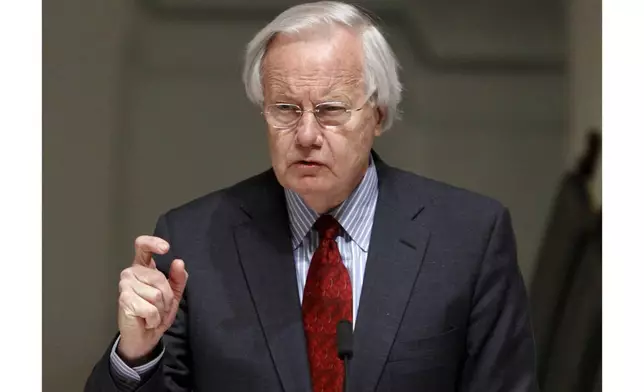
FILE - Bill Moyers speaks during the wake for R. Sargent Shriver in Washington on Jan. 21, 2011. (AP Photo/Alex Brandon, File)

FILE - Bill Moyers speaks during the wake for R. Sargent Shriver in Washington on Jan. 21, 2011. (AP Photo/Alex Brandon, File)

Moyers' career ranged from youthful Baptist minister to deputy director of the Peace Corps, from Johnson’s press secretary to newspaper publisher, senior news analyst for “The CBS Evening News” and chief correspondent for “CBS Reports.”

But it was for public television that Moyers produced some of TV’s most cerebral and provocative series. In hundreds of hours of PBS programs, he proved at home with subjects ranging from government corruption to modern dance, from drug addiction to media consolidation, from religion to environmental abuse.

In 1988, Moyers produced “The Secret Government” about the Iran-Contra scandal during the Reagan administration and simultaneously published a book under the same name. Around that time, he galvanized viewers with “Joseph Campbell and the Power of Myth,” a series of six one-hour interviews with the prominent religious scholar. The accompanying book became a best-seller.

His televised chats with poet Robert Bly almost single-handedly launched the 1990s Men’s Movement, and his 1993 series “Healing and the Mind” had a profound impact on the medical community and on medical education.

In a medium that supposedly abhors “talking heads” — shots of subject and interviewer talking — Moyers came to specialize in just that. He once explained why: “The question is, are the talking heads thinking minds and thinking people? Are they interesting to watch? I think the most fascinating production value is the human face.”

Demonstrating what someone called “a soft, probing style” in the native Texas accent he never lost, Moyers was a humanist who investigated the world with a calm, reasoned perspective, whatever the subject.

From some quarters, he was blasted as a liberal thanks to his links with Johnson and public television, as well as his no-holds-barred approach to investigative journalism. It was a label he didn’t necessarily deny.

“I’m an old-fashion liberal when it comes to being open and being interested in other people’s ideas,” he said during a 2004 radio interview. But Moyers preferred to term himself a “citizen journalist” operating independently, outside the establishment.

Public television (and his self-financed production company) gave him free rein to throw “the conversation of democracy open to all comers,” he said in a 2007 interview with The Associated Press.

“I think my peers in commercial television are talented and devoted journalists,” he said another time, “but they’ve chosen to work in a corporate mainstream that trims their talent to fit the corporate nature of American life. And you do not get rewarded for telling the hard truths about America in a profit-seeking environment.”

Over the years, Moyers was showered with honors, including more than 30 Emmys, 11 George Foster Peabody awards, three George Polks and, twice, the Alfred I. duPont-Columbia University Gold Baton Award for career excellence in broadcast journalism. In 1995, he was inducted into the Television Hall of Fame.

Born in Hugo, Oklahoma, on June 5, 1934, Billy Don Moyers was the son of a dirt farmer-truck driver who soon moved his family to Marshall, Texas. High school led him into journalism.

“I wanted to play football, but I was too small. But I found that by writing sports in the school newspaper, the players were always waiting around at the newsstand to see what I wrote,” he recalled.

He worked for the Marshall News Messenger at age 16. Deciding that Bill Moyers was a more appropriate byline for a sportswriter, he dropped the “y” from his name.

He graduated from the University of Texas and earned a master’s in divinity from Southwestern Baptist Theological Seminary. He was ordained and preached part time at two churches but later decided his call to the ministry “was a wrong number.”

His relationship with Johnson began when he was in college; he wrote the then-senator offering to work in his 1954 re-election campaign. Johnson was impressed and hired him for a summer job. He was back in Johnson’s employ as a personal assistant in the early 1960s and for two years, he worked at the Peace Corps, eventually becoming deputy director.

On the day John F. Kennedy was assassinated in Dallas, Moyers was in Austin helping with the presidential trip. He flew back to Washington on Air Force One with newly sworn-in President Johnson, for whom he held various jobs over the ensuing years, including press secretary.

Moyers’ stint as presidential press secretary was marked by efforts to mend the deteriorating relationship between Johnson and the media. But the Vietnam war took its toll and Moyers resigned in December 1966.

Of his departure from the White House, he wrote later, “We had become a war government, not a reform government, and there was no creative role left for me under those circumstances.”

He conceded that he may have been “too zealous in my defense of our policies” and said he regretted criticizing journalists such as Pulitzer Prize-winner Peter Arnett, then a special correspondent with the AP, and CBS’s Morley Safer for their war coverage.

In 1967, Moyers became publisher of Long Island-based Newsday and concentrated on adding news analyses, investigative pieces and lively features. Within three years, the suburban daily had won two Pulitzers. He left the paper in 1970 after the ownership changed. That summer, he traveled 13,000 miles around the country and wrote a best-selling account of his odyssey: “Listening to America: a Traveler Rediscovers His Country.”

His next venture was in public television and he won critical acclaim for “Bill Moyers Journal,” a series in which interviews ranged from Gunnar Myrdal, the Swedish economist, to poet Maya Angelou. He was chief correspondent of “CBS Reports” from 1976 to 1978, went back to PBS for three years, and then was senior news analyst for CBS from 1981 to 1986.

When CBS cut back on documentaries, he returned to PBS for much less money. “If you have a skill that you can fold with your tent and go wherever you feel you have to go, you can follow your heart’s desire,” he once said.

Then in 1986, he and his wife, Judith Davidson Moyers, became their own bosses by forming Public Affairs Television, an independent shop that has not only produced programs such as the 10-hour “In Search of the Constitution,” but also paid for them through its own fundraising efforts.

His projects in the 21st century included “Now,” a weekly PBS public affairs program; a new edition of “Bill Moyers Journal” and a podcast covering racism, voting rights and the rise of Donald Trump, among other subjects.

Moyers married Judith Davidson, a college classmate, in 1954, and they raised three children, among them the author Suzanne Moyers and author-TV producer William Cope Moyers. Judith eventually became her husband’s partner, creative collaborator and president of their production company.

AP Media Writer David Bauder and former Associated Press writer Robert Monroe contributed to this report. Moore retired from the AP in 2017.
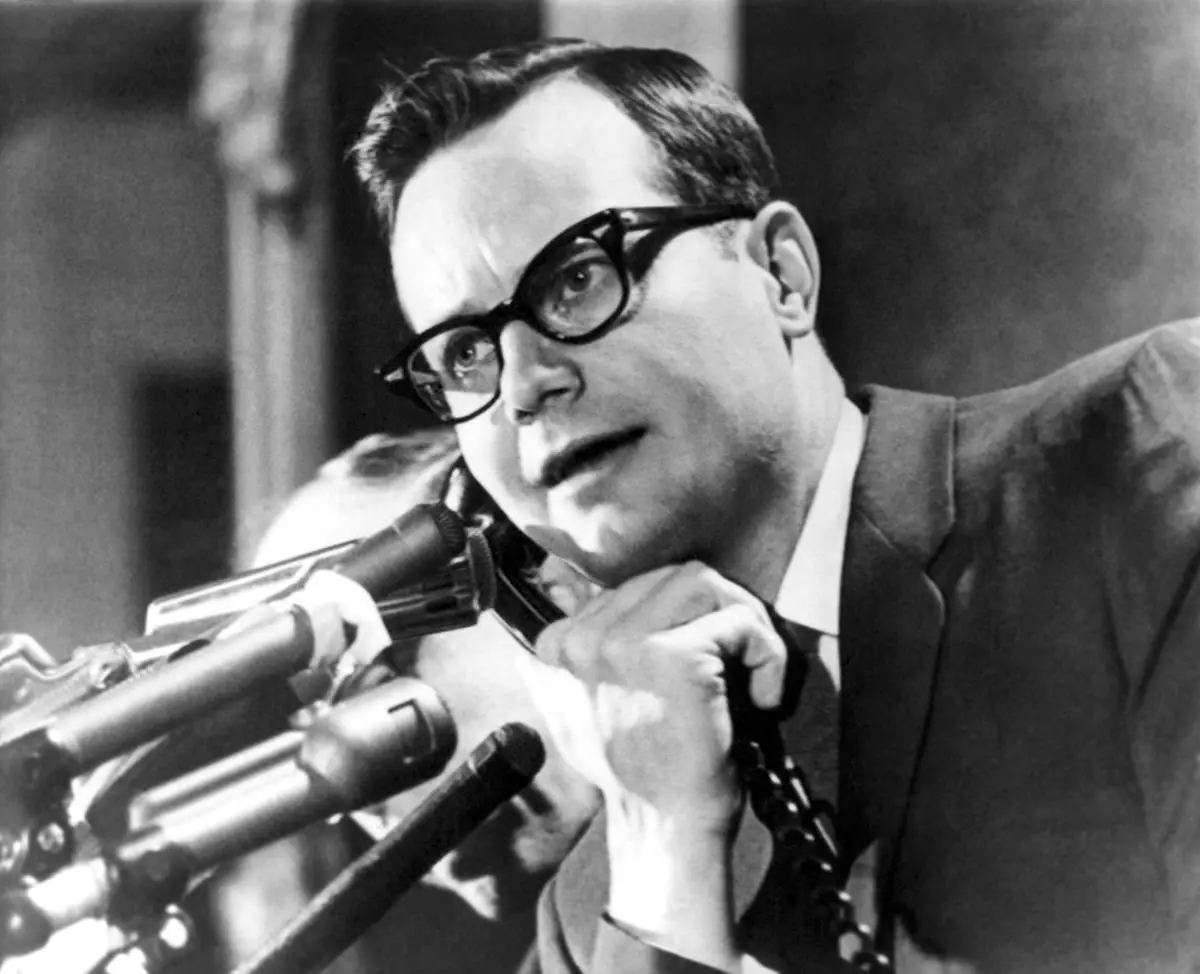
FILE - White House press secretary Bill Moyers appears at a press briefing at White House in Washington on Feb. 25, 1966. (AP Photo/William J. Smith, File)
FILE - White House press secretary Bill Moyers appears at a press briefing at White House in Washington on Feb. 25, 1966. (AP Photo/William J. Smith, File)

FILE - President Lyndon B. Johnson, right, talks with press secretary Bill Moyers on the South Lawn of the White House in Washington on Aug. 30, 1965. (AP Photo/William J. Smith, File)
FILE - President Lyndon B. Johnson, right, talks with press secretary Bill Moyers on the South Lawn of the White House in Washington on Aug. 30, 1965. (AP Photo/William J. Smith, File)

FILE - PBS host Bill Moyers appears at WNET in New York in 1974. (AP Photo, File)
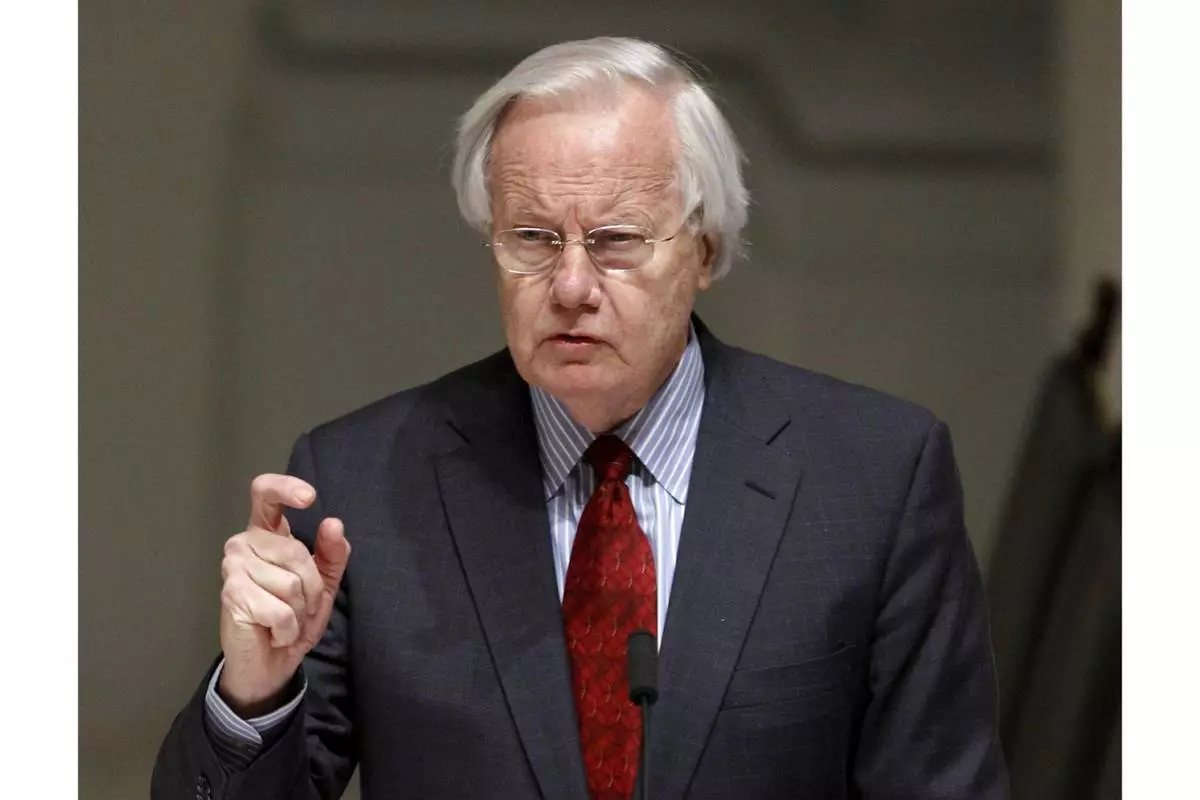
FILE - PBS host Bill Moyers appears at WNET in New York in 1974. (AP Photo, File)

FILE - Bill Moyers speaks during the wake for R. Sargent Shriver in Washington on Jan. 21, 2011. (AP Photo/Alex Brandon, File)
FILE - Bill Moyers speaks during the wake for R. Sargent Shriver in Washington on Jan. 21, 2011. (AP Photo/Alex Brandon, File)
U.S. President Donald Trump says Iran has proposed negotiations after his threat to strike the Islamic Republic as an ongoing crackdown on demonstrators has led to hundreds of deaths.

Trump said late Sunday that his administration was in talks to set up a meeting with Tehran, but cautioned that he may have to act first as reports mount of increasing deaths and the government continues to arrest protesters.

“The meeting is being set up, but we may have to act because of what’s happening before the meeting. But a meeting is being set up. Iran called, they want to negotiate,” Trump told reporters on Air Force One on Sunday night.

Iran did not acknowledge Trump’s comments immediately. It has previously warned the U.S. military and Israel would be “legitimate targets” if America uses force to protect demonstrators.

The U.S.-based Human Rights Activists News Agency, which has accurately reported on past unrest in Iran, gave the death toll. It relies on supporters in Iran cross checking information. It said at least 544 people have been killed so far, including 496 protesters and 48 people from the security forces. It said more than 10,600 people also have been detained over the two weeks of protests.

With the internet down in Iran and phone lines cut off, gauging the demonstrations from abroad has grown more difficult. Iran’s government has not offered overall casualty figures.

The Latest:

A witness told the AP that the streets of Tehran empty at the sunset call to prayers each night.

Part of that stems from the fear of getting caught in the crackdown. Police sent the public a text message that warned: “Given the presence of terrorist groups and armed individuals in some gatherings last night and their plans to cause death, and the firm decision to not tolerate any appeasement and to deal decisively with the rioters, families are strongly advised to take care of their youth and teenagers.”

Another text, addressed “Dear parents,” which claimed to come from the intelligence arm of the paramilitary Revolutionary Guard, also directly warned people not to take part in demonstrations.

The witness spoke to the AP on condition of anonymity due to the ongoing crackdown.

—- By Jon Gambrell in Dubai, United Arab Emirates

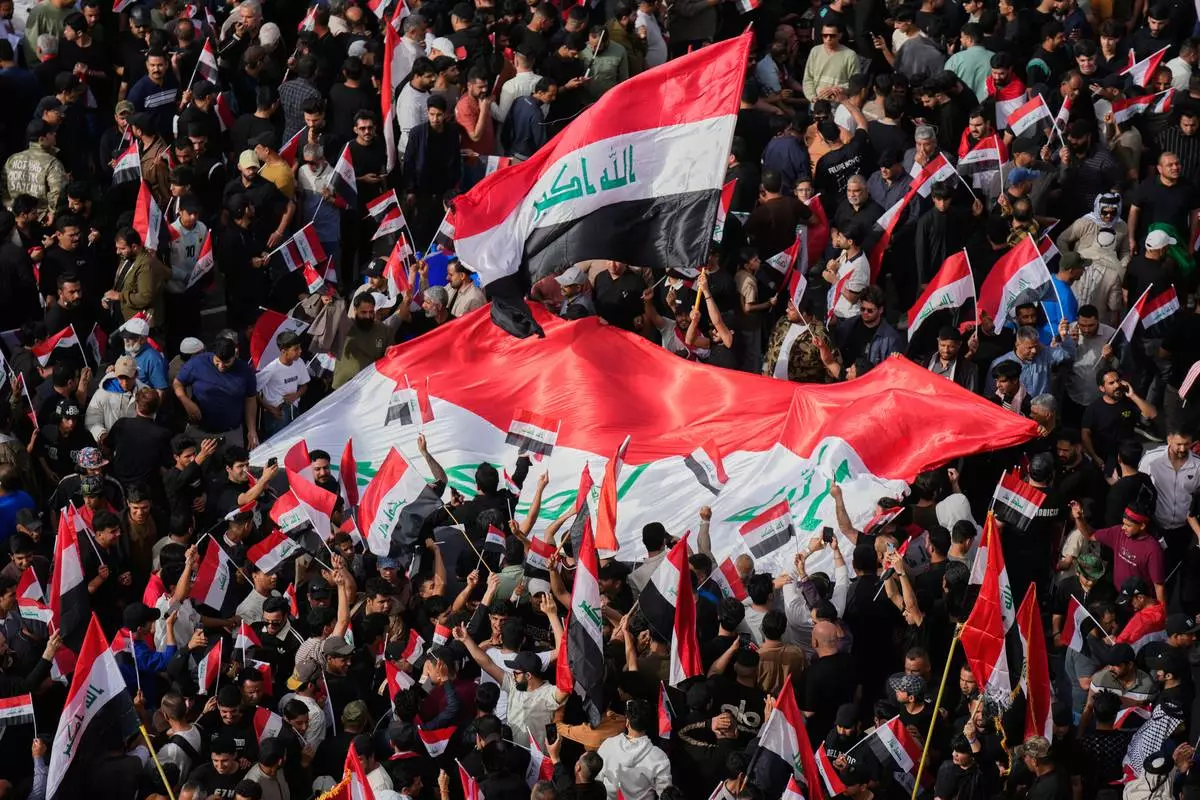
Iran drew tens of thousands of pro-government demonstrators to the streets Monday in a show of power after nationwide protests challenging the country’s theocracy.

Iranian state television showed images of demonstrators thronging Tehran toward Enghelab Square in the capital.

It called the demonstration an “Iranian uprising against American-Zionist terrorism,” without addressing the underlying anger in the country over the nation’s ailing economy. That sparked the protests over two weeks ago.

State television aired images of such demonstrations around the country, trying to signal it had overcome the protests, as claimed by Iranian Foreign Minister Abbas Araghchi earlier in the day.

China says it opposes the use of force in international relations and expressed hope the Iranian government and people are “able to overcome the current difficulties and maintain national stability.”

Chinese Foreign Ministry spokesperson Mao Ning said Monday that Beijing “always opposes interference in other countries’ internal affairs, maintains that the sovereignty and security of all countries should be fully protected under international law, and opposes the use or threat of use of force in international relations.”

German Chancellor Friedrich Merz condemned “in the strongest terms the violence that the leadership in Iran is directing against its own people.”

He said it was a sign of weakness rather than strength, adding that “this violence must end.”

Merz said during a visit to India that the demonstrators deserve “the greatest respect” for the courage with which “they are resisting the disproportional, brutal violence of Iranian security forces.”

He said: “I call on the Iranian leadership to protect its population rather than threatening it.”

Iran’s Foreign Ministry spokesman on Monday suggested that a channel remained open with the United States.

Esmail Baghaei made the comment during a news conference in Tehran.

“It is open and whenever needed, through that channel, the necessary messages are exchanged,” he said.

However, Baghaei said such talks needed to be “based on the acceptance of mutual interests and concerns, not a negotiation that is one-sided, unilateral and based on dictation.”

The semiofficial Fars news agency in Iran, which is close to the paramilitary Revolutionary Guard, on Monday began calling out Iranian celebrities and leaders on social media who have expressed support for the protests over the past two weeks, especially before the internet was shut down.

The threat comes as writers and other cultural leaders were targeted even before protests. The news agency highlighted specific celebrities who posted in solidarity with the protesters and scolded them for not condemning vandalism and destruction to public property or the deaths of security forces killed during clashes. The news agency accused those celebrities and leaders of inciting riots by expressing their support.

Canada said it “stands with the brave people of Iran” in a statement on social media that strongly condemned the killing of protesters during widespread protests that have rocked the country over the past two weeks.

“The Iranian regime must halt its horrific repression and intimidation and respect the human rights of its citizens,” Canada’s government said on Monday.

Iran’s foreign minister claimed Monday that “the situation has come under total control” after a bloody crackdown on nationwide protests in the country.

Abbas Araghchi offered no evidence for his claim.

Araghchi spoke to foreign diplomats in Tehran. The Qatar-funded Al Jazeera satellite news network, which has been allowed to work despite the internet being cut off in the country, carried his remarks.

Iran’s foreign minister alleged Monday that nationwide protests in his nation “turned violent and bloody to give an excuse” for U.S. President Donald Trump to intervene.

Abbas Araghchi offered no evidence for his claim, which comes after over 500 have been reported killed by activists -- the vast majority coming from demonstrators.

Araghchi spoke to foreign diplomats in Tehran. The Qatar-funded Al Jazeera satellite news network, which has been allowed to work despite the internet being cut off in the country, carried his remarks.

Iran has summoned the British ambassador over protesters twice taking down the Iranian flag at their embassy in London.

Iranian state television also said Monday that it complained about “certain terrorist organization that, under the guise of media, spread lies and promote violence and terrorism.” The United Kingdom is home to offices of the BBC’s Persian service and Iran International, both which long have been targeted by Iran.

A huge crowd of demonstrators, some waving the flag of Iran, gathered Sunday afternoon along Veteran Avenue in LA’s Westwood neighborhood to protest against the Iranian government. Police eventually issued a dispersal order, and by early evening only about a hundred protesters were still in the area, ABC7 reported.

Los Angeles is home to the largest Iranian community outside of Iran.

Los Angeles police responded Sunday after somebody drove a U-Haul box truck down a street crowded with the the demonstrators, causing protesters to scramble out of the way and then run after the speeding vehicle to try to attack the driver. A police statement said one person was hit by the truck but nobody was seriously hurt.

The driver, a man who was not identified, was detained “pending further investigation,” police said in a statement Sunday evening.

Shiite Muslims hold placards and chant slogans during a protest against the U.S. and show solidarity with Iran in Lahore, Pakistan, Sunday, Jan. 11, 2026. (AP Photo/K.M. Chaudary)

Shiite Muslims hold placards and chant slogans during a protest against the U.S. and show solidarity with Iran in Lahore, Pakistan, Sunday, Jan. 11, 2026. (AP Photo/K.M. Chaudary)

Activists carrying a photograph of Reza Pahlavi take part in a rally supporting protesters in Iran at Lafayette Park, across from the White House, in Washington, Sunday, Jan. 11, 2026. (AP Photo/Jose Luis Magana)

Activists carrying a photograph of Reza Pahlavi take part in a rally supporting protesters in Iran at Lafayette Park, across from the White House, in Washington, Sunday, Jan. 11, 2026. (AP Photo/Jose Luis Magana)

Activists take part in a rally supporting protesters in Iran at Lafayette Park, across from the White House in Washington, Sunday, Jan. 11, 2026. (AP Photo/Jose Luis Magana)

Activists take part in a rally supporting protesters in Iran at Lafayette Park, across from the White House in Washington, Sunday, Jan. 11, 2026. (AP Photo/Jose Luis Magana)

Protesters burn the Iranian national flag during a rally in support of the nationwide mass demonstrations in Iran against the government in Paris, Sunday, Jan. 11, 2026. (AP Photo/Michel Euler)

Protesters burn the Iranian national flag during a rally in support of the nationwide mass demonstrations in Iran against the government in Paris, Sunday, Jan. 11, 2026. (AP Photo/Michel Euler)

Recommended Articles