TIANJIN, China, June 27, 2025 /PRNewswire/ -- From June 24 to 26, the World Economic Forum 2025 Annual Meeting of the New Champions (the 16th Summer Davos Forum) was held in Tianjin. Artificial intelligence, as the new frontier of global economic growth, was one of the hottest topics of this year's forum.
Ms. Gong Rujing (Gong Yingying), Founder and Chairwoman of Yidu Tech, was invited to attend the forum as a representative of the AI healthcare industry and a Young Global Leader. She delivered insightful remarks in the themed dialogue "The AI+ Era", sharing the stage with Dr. Peter Koerte, Member of the Managing Board, Chief Technology Officer and Chief Strategy Officer of Siemens AG; Zhu Min, Senior Fellow at the China Center for International Economic Exchanges and former Deputy Managing Director of the International Monetary Fund; and Kenny Lam, CEO Asia Pacific at Two Sigma. The dialogue was moderated by Azeem Azhar, CEO of Exponential View.
Yidu's Healthcare Innovation Practice: From Data Intelligence Infrastructure to AI Clinical Implementation
Gong Rujing (Gong Yingying) pointed out that the trend of population aging poses a severe challenge to healthcare systems: "The original intention of founding Yidu Tech ten years ago was based on the foresight that the traditional healthcare supply chain would be unsustainable under the aging peak expected by 2030." She emphasized that the core prerequisite for the implementation of AI in the medical field is to overcome the challenge of unstructured medical data.
Over the past ten years, Yidu Tech has invested considerable resources in promoting data standardization governance, making it truly computable and applicable. The company's core algorithm engine, YiduCore, has cumulatively and legally processed and analyzed over 6 billion medical records—this is the foundational resource enabling AI technology to deeply empower healthcare.
With the breakthrough progress in large model technology, Yidu Tech's years of medical data governance capabilities are generating exponential value—the company has not only independently developed a large language model in the medical domain but also launched a Clinical-Grade Intelligence Engine "AI Middleware Platform" to drive the construction of smart hospitals, successfully implemented in over 30 well-known top-tier hospitals within three months. "At present, each doctor handles 30 to 100 patient visits per day. The AI Middleware Platform is deeply integrated into the entire diagnosis and treatment process as doctors' 'AI Copilot Station', continuously empowering pre-diagnosis information integration, in-consultation decision support, and post-diagnosis patient management, thereby reducing doctors' burdens."
In the pre-diagnosis phase, the intelligent pre-consultation system collects patients' chief complaints, medical history, medication information, etc., through natural language interaction, improving the density of valid information. Particularly noteworthy is the intelligent medical record generation function, which can integrate the patient's pre-consultation information, consultation recording, and historical data (examinations/imaging/past records, etc.) with one click to generate a preliminary medical record, significantly reducing doctors' workload.
In the in-consultation phase, AI can parse patients' past medical records within seconds, dynamically generate a timeline and trend charts of patients' treatment history to help doctors quickly understand key medical history. AI also comprehensively considers diagnostic data and marks the basis for decisions, effectively supporting clinical decision-making while ensuring scientific rigor and reliability.
In the post-diagnosis phase, the AI patient management platform enables data interconnectivity within and outside the hospital. Based on specialized large language models, it provides personalized follow-up, rehabilitation guidance, and medication guidance services to improve patient compliance.
"This not only frees up doctors' time but also significantly improves the quality of diagnosis and treatment and patient experience through precision data-driven methods," said Gong Rujing (Gong Yingying). From February to June 2025, the AI diagnosis and treatment assistant built on the AI Middleware Platform assisted doctors in serving a total of 26,000 patients.
Human-Machine Collaboration: From Medical Empowerment to Organizational Evolution
Gong Rujing (Gong Yingying) believes that current AI development is still in its early stage, and its ultimate form has not yet taken shape. Therefore, Yidu Tech maintains an open mindset and takes "creating real value in end-user scenarios" as the core anchor of its AI strategy. She emphasized: "The key to harnessing AI lies not only in the technology itself but also in achieving deep collaboration between humans and technology."
This concept is deeply reflected in Yidu Tech's innovation in medical practice. The pain point of traditional AI healthcare lies in the attempt to use standardized tools to meet the diverse needs of doctors. However, uniformly built models or applications cannot meet the stringent requirements of specialists for professional depth, nor can they flexibly adapt to the specific work scenarios of doctors with different levels of seniority and positions. To solve this contradiction, Yidu Tech launched the "Custom Smart Assistant" function on top of the AI Middle Platform, allowing doctors to independently design intelligent assistants tailored to their unique needs through zero-code, "Lego-style" modular construction. This is a key step for AI in healthcare to move toward deeply contextualized scenarios and marks a shift from the previous "tool-based empowerment" to doctor-led "co-creation of capabilities". AI tools developed by doctors themselves will become a key force in enhancing the accessibility of medical services.
At the same time, the concept of human-machine collaboration is also driving the internal organizational evolution of Yidu Tech. "During periods of rapid technological iteration, an organization's learning capacity, resilience to change, and value orientation are more important than a single technological advantage." Gong Rujing (Gong Yingying) actively advocates that the team embrace AI transformation, maintain high adaptability, and form an efficient collaborative working relationship with AI agents. Currently, AI agents have taken on about 20% of Yidu Tech's daily work. This is not only an improvement in efficiency but also a substantive manifestation of the organizational form and work paradigm moving toward "human-machine symbiosis."
"Data privacy, cross-institution collaboration, and technological ethics are common challenges faced by AI healthcare development worldwide. However, the large-scale application scenarios of China's healthcare system provide a unique advantage for AI technology iteration." In the global tide of accelerating toward an intelligent era, Gong Rujing (Gong Yingying)'s sharing at the Summer Davos Forum showcased the innovation strength of AI healthcare enterprises and offered a practical path for the industry's development. As "AI + Healthcare" evolves from concept to deep implementation, Yidu Tech will remain grounded in data and empowered by AI, continuously exploring new possibilities and driving the healthcare industry toward greater efficiency, precision, and accessibility.
** The press release content is from PR Newswire. Bastille Post is not involved in its creation. **

Yidu Tech's AI Agents Now Handle 20% of Hospital Tasks: Human-Machine Collaboration Model Showcased at Summer Davos
LOS ANGELES, June 13, 2026 /PRNewswire/ -- Southern California homeowners are facing longer hot seasons, rising utility costs, and evolving lifestyle needs. As a result, demand for flexible, energy-efficient cooling solutions continues to rise across the region with no signs of slowing down.
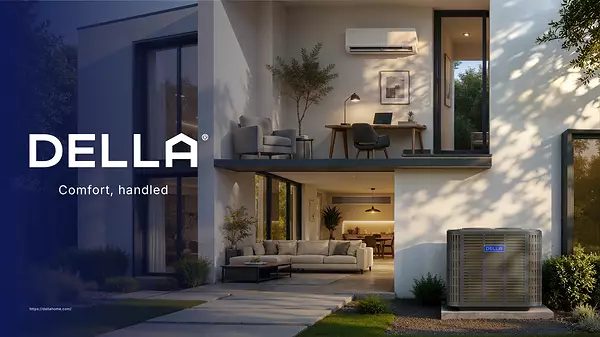
DELLA, a leading provider of ductless mini split systems, is helping homeowners meet these changing demands with smart, room-specific cooling solutions. As modern households seek greater comfort, convenience, and energy efficiency, ductless systems offer an effective alternative to relying solely on traditional whole-home climate control.
The Shift Toward Smarter Home Climate Control
This pronounced shift reflects a growing trend reshaping home comfort. Today's homeowners are no longer focused only on keeping a house cool. Increasingly, they want personalized comfort that adapts to how different rooms are being used throughout the day.
Modern smart homes no longer function as a single environment with a uniform temperature. Climate fluctuates naturally throughout the day based on a variety of factors, and each room serves a completely different purpose.
Yet many traditional HVAC systems continue to cool the entire household as though every room and every person require the same temperature.
To remedy this, homeowners across Southern California are exploring room-by-room climate control solutions that provide greater flexibility and efficiency.
Why Traditional Central AC Often Feels Inconsistent
Most central air systems were designed around a simple old-fashioned idea: one thermostat controls the entire home. But modern living has changed dramatically.
Different rooms heat up differently based on sunlight, layout, occupancy, electronics, cooking activity, ceiling height, and even the time of day. The result is a home that constantly feels slightly off balance.
Common frustrations include:
- Bedrooms that stay warm long after sunset
- Overcooled living rooms during the day
- Upstairs areas that never feel comfortable
- Constant thermostat adjustments
- Rising summer energy bills without better comfort
The issue isn't always that a system is failing—it's that the system was designed for an older idea of how homes function.
Today, homeowners are searching for energy efficient cooling systems that support room-by-room living rather than treating the home as a single environment.
Because real comfort is not just about what the thermostat says.
It's about how a home actually feels.
This is why DELLA provides energy efficient cooling systems that adapt to how people actually live instead of forcing one fixed temperature across the entire home.
How DELLA Mini Split Systems Address Changing Homeowner Needs
DELLA mini split systems were designed around the growing demand for personalized comfort and more efficient cooling.
Instead of pushing air through extensive ductwork from a single central source, mini split systems deliver targeted comfort directly into individual rooms. Each indoor unit operates independently, allowing temperatures to adjust naturally based on how each space is being used.
That flexibility changes the entire home comfort experience.
Rather than overcooling one area to compensate for another, homeowners can create balanced comfort throughout the home in a way that feels quieter, more efficient, and better aligned with daily routines.
This is one reason ductless mini splits and smart climate systems continue gaining popularity throughout Southern California, particularly during extended periods of summer heat.
The goal is no longer simply more air conditioning.
It is smarter comfort that works in the background while adapting naturally to everyday life.
Key advantages include:
- Room-by-room temperature control
- Faster cooling response times
- Lower energy waste compared to traditional ducted systems
- Quiet air conditioner performance for bedrooms and living spaces
- Flexible installation without major renovation work
- More balanced airflow throughout the home
For many homeowners, the biggest difference is how natural the comfort feels.
The best climate systems don't constantly remind you they're running. They quietly support the way people actually live.
Homes Aren't One Temperature Anymore
A bedroom may require cooler nighttime temperatures for improved sleep quality.
A home office may need consistent daytime cooling during work hours.
A kitchen naturally generates heat during cooking.
Living rooms may fluctuate based on gatherings, sunlight exposure, entertainment equipment, and daily activity.
Traditional HVAC systems often struggle to respond to these changing conditions because they treat the entire house as a single cooling zone.
That is where zoned cooling for homes becomes a significant advantage.
Mini split systems allow homeowners to cool spaces individually rather than forcing a single setting throughout the home. The result is more precise comfort, improved efficiency, and a living environment that better reflects how people use their homes today.
The DELLA Mini Split Collection
DELLA offers a complete collection of ductless cooling systems designed to adapt to virtually any lifestyle, home layout, or comfort preference. Three of the company's most popular models — the Serena, Optima, and Vario Series — each deliver a different approach to modern comfort while emphasizing efficiency, quiet performance, and flexible everyday living.
The Serena Series focuses on balanced whole-home comfort with smooth, quiet operation and up to 22 SEER2 efficiency, making it an ideal choice for consistent daily use.
The Optima Series is designed for multi-zone precision, allowing homeowners to independently control temperatures in different rooms for greater comfort and improved efficiency throughout the home.
Meanwhile, the Vario Series offers a practical and budget-conscious solution for targeted cooling in bedrooms, home offices, garage conversions, apartments, and ADUs.
Together, these systems reflect DELLA's broader approach to smart, adaptable comfort built around the way modern homeowners actually live.
Quiet Comfort Is the New Luxury
One of the biggest changes happening in modern home comfort is that homeowners are becoming more sensitive to how cooling feels — not just whether cold air exists.
Older systems often rely on aggressive airflow, loud cycling, or constant thermostat adjustments that make the cooling experience feel noticeable and disruptive.
But modern comfort trends are shifting toward quieter, more balanced environments.
People want bedrooms that stay cool without loud airflow at night.
They want living spaces that feel evenly comfortable without cold blasts of air hitting one side of the room.
They want systems that operate quietly in the background while daily life continues naturally.
This is why mini split systems are increasingly viewed as both a lifestyle upgrade and an efficiency upgrade.
DELLA's technology supports a softer, more adaptive approach to cooling that aligns with how modern homes are actually being used.
Energy Efficiency That Supports Everyday Living
Energy savings remain one of the strongest practical advantages of mini split systems.
Unlike traditional HVAC systems that repeatedly cycle on and off, inverter technology continuously adjusts output to maintain stable temperatures more efficiently.
This leads to:
- Lower monthly utility costs
- Reduced energy waste
- More stable indoor temperatures
- Less system strain over time
- Improved long-term efficiency performance
For homeowners dealing with Southern California summers, those efficiency gains often become noticeable quickly, especially during extended heat waves when cooling systems run for longer periods throughout the day.
Southern California Home Comfort
Real comfort is about creating spaces that feel balanced, natural, and comfortable exactly where and when you need them most. DELLA provides homeowners, especially those in areas with hot climates like Southern California, with all the right options to save money, conserve energy, and stay truly comfortable.
** This press release is distributed by PR Newswire through automated distribution system, for which the client assumes full responsibility. **
DELLA Highlights Growing Demand for Room-by-Room Climate Control in Southern California