IRBIL, Iraq (AP) — From abroad, Iranian Kurdish dissident groups have been watching closely for signs that Iran’s theocracy could falter in its grip on the country, battered by Israeli airstrikes in the intense, 12-day war until a U.S.-negotiated ceasefire halted the fighting.
Israel launched the strikes on June 13, drawing Iranian missiles that targeted Israel. But it was not until the United States inserted itself into the war and hit Iranian nuclear sites on Sunday, including with 30,000-pound bunker-buster bombs, that the war came to a watershed moment.
Now, with the fragile ceasefire holding and many Iranians trying to return to a normal life, questions swirl about whether and how much the war has weakened Iran's clerical rule, in place since the 1979 Islamic Revolution.
A handful of Iranian Kurdish groups — many with a distinctly militant past — have long found a safe haven in northern Iraq’s semiautonomous Kurdish region, but their presence has been a point of friction between the central government in Baghdad and Tehran.
Iraq in 2023 reached an agreement with Iran to disarm the groups and move them from their bases near the border areas with Iran — where they potentially posed an armed challenge to Tehran — into camps designated by Baghdad.
Their armed bases were shut down and their movement within Iraq restricted, but the groups have not entirely given up their weapons.
Officials with two prominent Iranian Kurdish groups in Iraq told The Associated Press they are trying to organize politically to ensure that they would not be sidelined should the administration in Iran lose its hold on power.
When asked if their groups were preparing an armed uprising, they either denied it or avoided a direct response.
President Donald Trump floated the idea of “regime change” in Tehran in the wake of the U.S. strikes, only to have his administration later say that was not the goal. Some of the Kurdish dissidents say they expect no immediate upheaval in Iran's ruling theocracy.
“Some of the parties think this war between Iran and Israel is a good opportunity for us” to advance the Kurdish cause, said Khalil Naderi, spokesperson for the Kurdistan Freedom Party, or PAK, a separatist Iranian Kurdish group based in Iraq.
But Naderi disagreed with that premise. "The U.S. and Israel attacked Iran to protect themselves from its weapons, not for Kurdish rights,” he said.
Any premature armed mobilization on their part could endanger both the Kurdish groups and the fragile security of the Kurdish areas, both in Iraq and across the border in Iran, Naderi said.
His stand was a contrast to that of PAK leader Hussein Yazdanpanah, who days after the outbreak of the Israel-Iran war, called on X for Kurdish youth to rise against the authorities in Tehran.
“Attack the enemy, its centers, and its facilities” and “avenge the blood" of their fallen, Yazdanpanah posted.
And last week in Washington, where he had been pushing U.S. officials to include the Kurds in plans for a potential “day after” in Iran, Abdullah Mohtadi, the head of the leftist Komala Party from Iran's Kurdish regions, said he hopes the Israel-Iran war could represent a turning point.
“War can bring about internal domestic change," he said. "We hope that this time this will be the case.”
Mohtadi denied that any external player, including the U.S. and Israel, had encouraged Kurdish groups to take up arms. But he didn't rule out the possibility that they would.
“We haven’t at the moment called for an uprising, or we haven’t called for an armed struggle, but we are monitoring developments very closely,” he said.
Mohtadi maintained that Komala has avoided an armed struggle for nearly 30 years and that its camps in northern Iraq are purely for “self defense.”
Both Komala and the PAK, as well as another exiled Kurdish group, the Democratic Party of Iranian Kurdistan or KDPI, have fought Iranian authorities in the past — but also sometimes fought against each other.
The groups have different approaches to the question of Kurdish separatism. PAK advocates for an independent Kurdish state, while Komala and KDPI want a system in Iran similar to that in northern Iraq, where Iraqi Kurds have a semiautonomous and self-governed region.
Iran has occasionally launched strikes on the Iranian Kurdish dissidents, but none during the Israel-Iran war this month.
The dissident groups are walking a fine line, balancing the differences among themselves and with their hosts in Iraq, the Iraqi Kurds and the Iraqi government in Baghdad — neither of which they want to antagonize.
Despite having shared grievances over the marginalization of Kurds in Iran, the Iranian Kurdish parties have not been able to build a consensus
"We haven’t been able to unite, even though we would like to,” Naderi said.
In March, ahead of Nowruz, the Persian New Year, the Kurdish dissident groups had planned to “meet and discuss" Kurdish rights and destiny, but plans fell through. Even now, he said, coordination remains elusive.
Kawsar Fattahi, a central committee member of Komala, said the dissidents should not plan for “the fall of the regime, but on what will happen after that.”
“Because our goal is to rebuild a new Iran,” she said.
Mohtadi, the Komala leader, said he has tried to reassure Washington that his group is not separatist but wants a “democratic, secular federal Iran where the rights of Kurds and other ethnic groups are protected by the new constitution.”
He denied anyone is pushing Komala into armed conflict.
“We aren’t puppets,” Mohtadi said. “Nobody has asked us to rise (up). We will decide when is the right time.”
Knickmeyer reported from Washington.
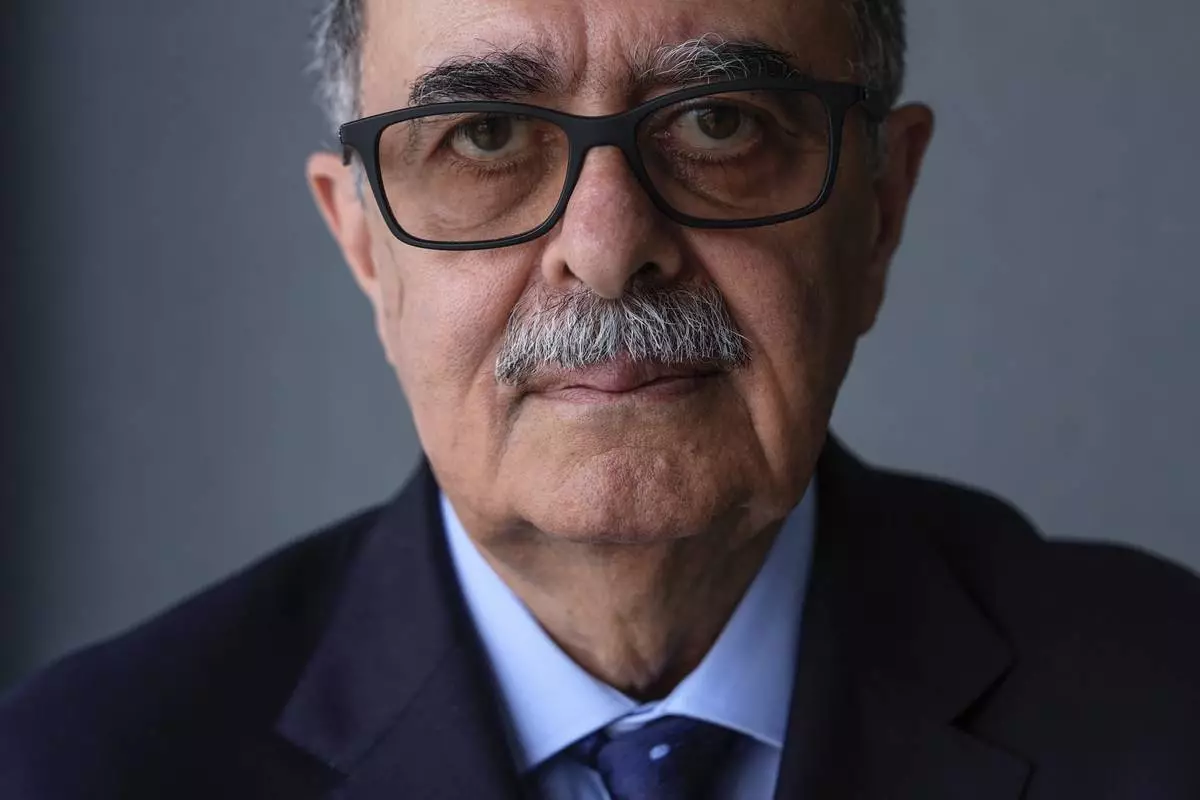
Abdullah Mohtadi, head of the leftist Komala Party from Iran's Kurdish regions, poses for a portrait in Washington, Friday, June 20, 2025. (AP Photo/Julia Demaree Nikhinson)
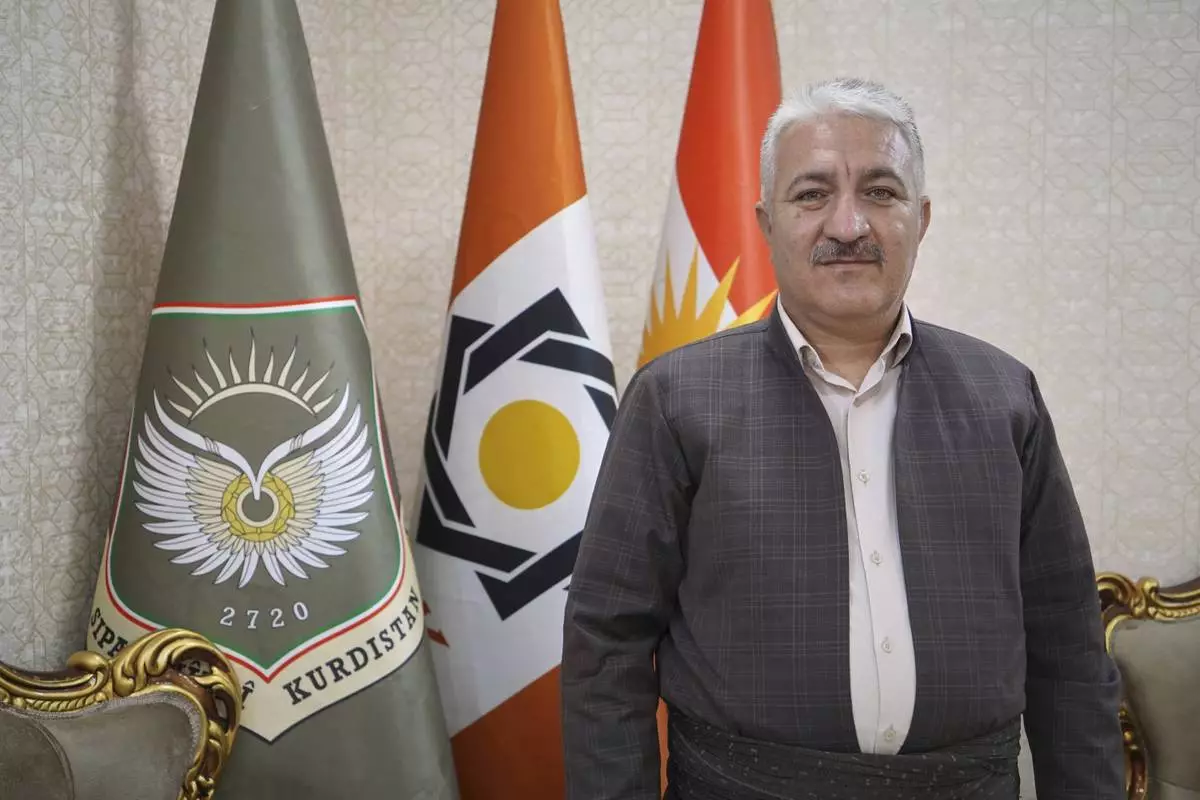
Khalil Naderi, spokesperson for the Kurdistan Freedom Party, or PAK, a separatist Iranian Kurdish group based in Iraq, poses for a portrait at a party office in an undisclosed location in Iraq's Irbil governorate, June 21, 2025. (AP Photo/Rashid Yahya)
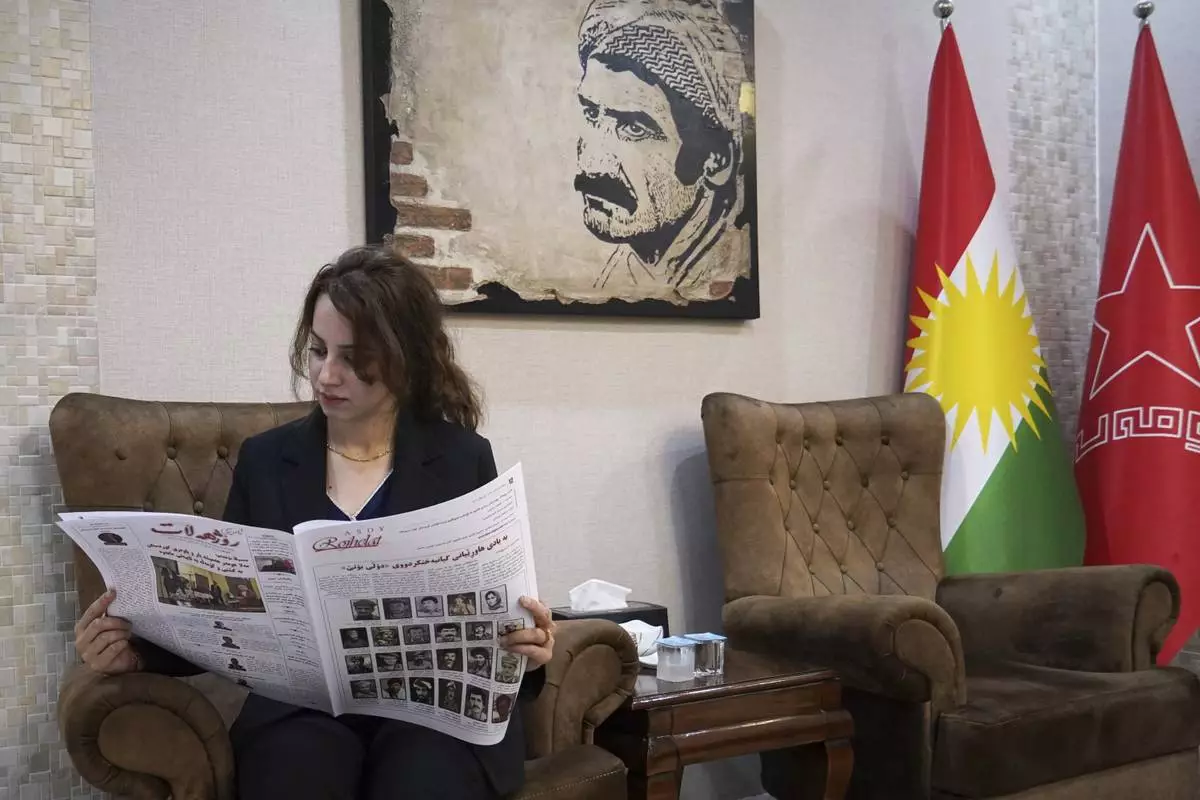
Kawsar Fattahi, a member of the central committee of the Komala Party of Iranian Kurdistan, reads the party's newspaper, Asoy Rojhelat, at one of its offices in an undisclosed location in Iraq's Irbil governorate, June 19, 2025. (AP Photo/Rashid Yahya)
NEW YORK--(BUSINESS WIRE)--Jan 11, 2026--
Torq, the established Agentic AI security operations pioneer, today announced it has closed a massive $140 million Series D funding round, propelling its valuation to $1.2 billion and total funding to $332M.
This press release features multimedia. View the full release here: https://www.businesswire.com/news/home/20260112510774/en/
Led by Merlin Ventures —a leading cybersecurity fund renowned for its deep access to the U.S. commercial and Public Sector markets—with participation from all existing investors, including Evolution Equity Partners, Notable Capital, Bessemer Venture Partners, Insight Ventures Partners, and Greenfield Partners, this capital injection is a definitive investment in the future of security. Torq is driving the industry’s critical shift: the complete transformation of the Security Operations Center (SOC) through battle-tested AI Agents at enterprise scale.
The new funds will accelerate the adoption of the Torq AI SOC Platform, the only end-to-end solution built on the pillars of advanced Hyperautomation, Alert Triage, and Fatigue Reduction to deliver full operational autonomy for global enterprises and government agencies.
“Torq is redefining security operations,” said Shay Michel, Managing Partner, Merlin Ventures. “They’ve fused automation and human judgment into a new AI SOC Platform built for asymmetric threats and real-world scale. This is why Merlin is leading the investment. Our focus now is speed—accelerating go-to-market, expanding across commercial and government markets, and building the next global category leader in AI security operations.”
Torq Delivers On the Promise of the AI SOC
“This funding accelerates our mission to define and dominate the AI SOC market. We are moving far beyond the constraints of legacy SOAR and SIEM, harnessing the Agentic AI Era to deliver outcomes our customers rely on,” said Ofer Smadari, CEO and co-founder, Torq. “Global enterprise adoption of our AI SOC Platform has validated our vision for the future of security operations. We have achieved tremendous revenue growth, with Fortune 100 customers adopting our AI Agents in their SOCs for everything from investigation to response. Our partnership with Merlin Ventures is the definitive signal that Torq is now ready to scale this massive customer success into the high-stakes Federal and Public Sector markets.”
The Growth Engine: Massive AI Agent Adoption
The primary driver behind Torq’s 2025 growth is the unprecedented adoption of its AI Agents across its global customer base. Unlike legacy security tools that require extensive professional services, Torq AI Agents are designed for self-service, enabling security teams to build and deploy sophisticated agents with minimal effort.
Today, Torq AI Agents are deeply embedded in the daily operations of Fortune 500 SOCs, managing millions of complex security tasks autonomously. This "bottom-up" adoption has transformed Torq from a specialized tool into the primary platform for the modern SOC.
“Torq delivers fast, measurable value to Valvoline’s SOC and eliminates the manual tasks that once consumed our analysts’ time,” said Corey Kaemming, CISO, Valvoline. “Within 48 hours of deployment, our team was using Torq’s AI SOC Platform for automating phishing triage, accelerating alert handling, and reducing response times across the board. The results were transformative. Analysts reclaimed hours of time, containment actions became automatic, and the security team evolved from reactive responders to proactive strategists. Torq took the vision that was in our heads and actually put it into practice. My team is in love with Torq.”
Strategic Expansion Into the Federal Market
Torq's partnership with lead investor Merlin Ventures has accelerated Torq’s traction within the U.S. Federal and Public Sector markets. With nearly 30 years of success bringing technologies to the U.S. government market, Merlin Ventures provides Torq with the strategic support and deep government relationships necessary to navigate complex compliance requirements, including FedRAMP, and rapidly scale the Torq AI SOC Platform to protect the nation's most critical infrastructure.
Explosive Growth and Enterprise Maturity Validation
The Series D affirms Torq’s proven market traction and maturity. In 2025 alone, the company delivered significant customer expansion, demonstrating that the Torq AI SOC Platform is built for complex, multinational security environments. Torq now protects hundreds of multinational enterprises, including Marriott, PepsiCo, Procter & Gamble, Siemens, Uber, and Virgin Atlantic.
Torq Leads the Shift To AI Agents: Autonomous Investigations and Advanced Automation
Torq is driving this transformation through its singular Agentic AI foundation. In 2025, Torq solidified its market lead by delivering the most advanced multi-agent security capabilities, backed by the strategic acquisition of RevRod. This proven platform empowers SOC teams through two critical product pillars:
“We’re always innovating our security operations approach at Virgin Atlantic and the Torq AI SOC Platform is driving significant benefits for us,” said John White, CISO, Virgin Atlantic. “Today, innovation stems from an AI-first approach, which Torq excels at. Torq is making our security operations simpler and more efficient, and providing us with complete coverage across our security stack. Torq is now our umbrella platform.”
About Torq
Torq is transforming cybersecurity with the Torq AI SOC platform. Torq empowers enterprises to instantly and precisely detect and respond to security events at scale. Torq’s customer base includes major multinational enterprise customers, including Abnormal Security, Armis, Check Point Security, Chipotle Mexican Grill, Inditex (Zara, Bershka, and Pull & Bear), Informatica, Kyocera, PepsiCo, Procter & Gamble, Siemens, Telefonica, Valvoline, Virgin Atlantic, and Wiz.
About Merlin Ventures
Merlin Ventures is the venture capital affiliate of Merlin Group, a network of companies with nearly 30 years of success bringing technologies to the U.S. government market. Merlin Ventures rapidly scales visionary companies and introduces disruptive solutions designed to help enterprises address today's most critical cybersecurity challenges. Its unique business model combines robust infrastructure and capital, technical advisory and engineering advisory, market readiness acceleration, and deep-rooted government and industry relationships that enable its portfolio to rapidly grow and scale. Learn more at merlin.vc.
Torq Secures $140M Series D at $1.2B Valuation to Lead the AI SOC and Agentic AI Era