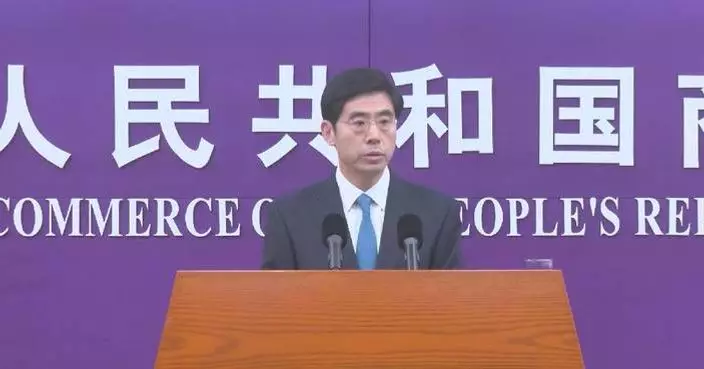
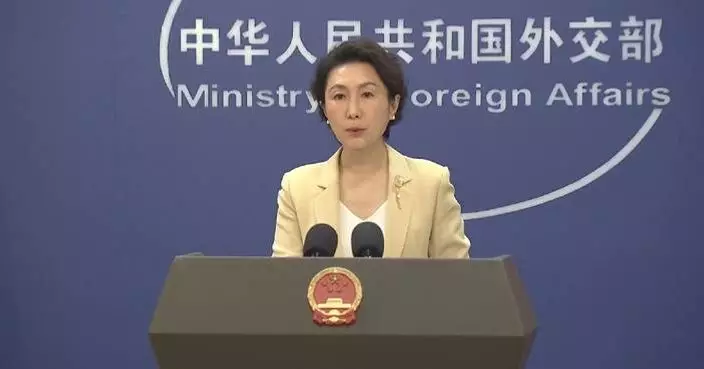
been accelerating the construction of national high-grade waterways and has gained fruitful achievements, the country's Ministry of Transport (MOT) reported at a press conference on Friday morning.
A relevant official pointed out that by the end of 2024, the total length of high-grade waterways had reached 16,000 kilometers, an increase of 62 percent compared with 2012.
Over the past decade, the capacity of major waterways, including the Yangtze River, the Xijiang River, and the Beijing-Hangzhou Grand Canal, has been continuously enhanced, the official noted.
Meanwhile, the Jianghan Canal in Central China's Hubei Province and the Jianghuai Canal, which links the Yangtze River and Huai River, have been completed and put into operation, and major projects, such as the Pinglu Canal in south China's Guangxi Zhuang Autonomous Region, are advancing rapidly.
the MOT also pointed out that the handling capacity of ports has also been continously improving. Since 2012, an average of 10 berths with a cargo capacity of 10,000 tons or higher have been added annually. By the end of 2024, the number of inland ports with an annual cargo throughput exceeding 100 million tons reached 23, 2.3 times that of 2012.
In addition, the volume of inland waterway freight in 2024 amounted to 4.95 billion tons, 2.2 times the figure recorded in 2012, and the freight turnover was around 2.2 trillion ton-kilometers, 2.9 times the level reported in 2012.
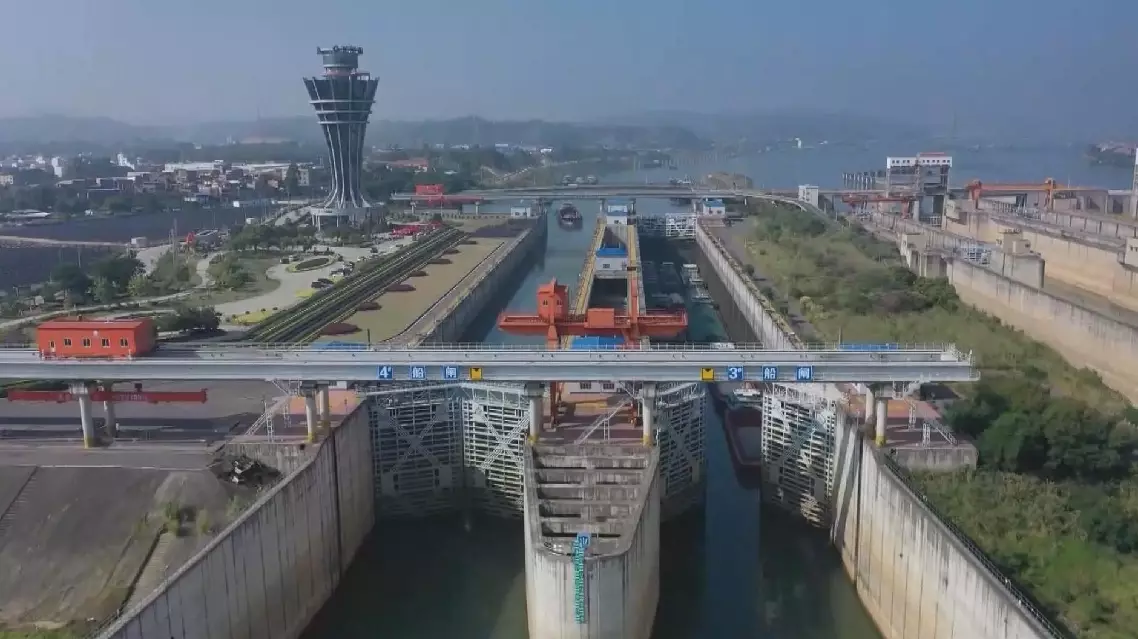
China achieves fruitful results in waterway network development
More than 20 films will hit Chinese screens during the three-day Qingming Festival holiday from Saturday to Monday, spanning genres from revolutionary historical dramas, realism movies to suspense thrillers, according to the China Film Administration on Thursday.
Revolutionary historical films such as Blood-Spattered Cliff, Eight Sons, Eight Soldiers, and Half Of The Quilt, will pay tribute to martyrs through the lens.
Three films -- It's OK, Now I Met Her, and Sunshine Women's Choir -- tell moving stories of love, growth, and reconciliation.
It's OK is a contemporary family comedy that follows a mother and daughter navigating their joyful yet turbulent relationship. Now I Met Her tells a rebellious teenager who gets to know his late mother through her old diary. Sunshine Women's Choir, a film from the Taiwan region of China, portrays the "perfect" maternal love of "imperfect mothers."
The suspense film Game of Identity tells the story of two people from different backgrounds who accidentally swap lives, setting off an unexpected adventure. The documentary films Seeking Nature: The Code of Life, and Missions to the Moon (Part One) explore the connection between humanity and science.
Imported films from different countries, including The Super Mario Bros. Movie 2, Project Hail Mary, and Hoppers, will deliver spectacular cinematic experiences to audiences.
The Qingming Festival, or Tomb-Sweeping Day, falls on April 5 this year. It is a traditional Chinese festival for honoring the deceased and paying tribute to ancestors. The holiday also provides a short break for Chinese citizens as they engage in outdoor activities and sightseeing.

Over 20 films expected to hit Chinese screens during Qingming Festival Holiday