GUATEMALA CITY (AP) — The Homeland Security secretary is praising Florida for coming forward with an idea that’s been dubbed “Alligator Alcatraz” because it would house immigration detainees in a facility being built in a Florida swamp.
Homeland Security Secretary Kristi Noem said the department has been looking to expand immigration detention capacity, and she has been reviewing contracts Immigration and Customs Enforcement has with various vendors for detention beds.
“The ones with some of the vendors that we had, I felt were way too expensive, and that those vendors were not giving us fair prices and so I went directly to states and to ask them if they could do a better job providing this service,” she said in an interview with The Associated Press as her Latin America trip wound down late Thursday.
She said the department has been reaching out to states or companies who aren’t regular ICE contractors to see whether they’re able to provide the detention space the department needs at a better price.
“We really are looking for people that want to help drive down the cost but still provide a very high level of detention facility,” she said.
Noem said Florida Attorney General James Uthmeier brought this particular idea to the department.
“They were willing to build it and do it much quicker than what some of the other vendors were. And it was a real solution that we’ll be able to utilize if we need to,” she said. Noem said they evaluated the contract and it “made sense.”
As the Trump administration has dramatically ramped up immigration enforcement around the country as part of its mass deportation effort, the number of people in ICE detention has swelled. ICE detention facilities are currently holding more than 56,000 immigrants in June, the most since 2019.
Florida officials have dubbed the facility that they're building in the remote and ecologically sensitive wetland about 45 miles (72 kilometers) west of downtown Miami as “Alligator Alcatraz." The facility located at an isolated Everglades airfield surrounded by mosquito-, python- and alligator-filled swamplands is just days away from being operational.
The detention facility is the latest effort by Florida to assist in President Trump’s mass deportation agenda.
Noem said some of the ICE detention contracts put in place under her predecessor, Alejandro Mayorkas, were for 10-15 years.
“That’s insane to me. If we do our job correctly, we shouldn’t be doing this 15 years from now,” she said.
The detention contracts were among a range of subjects Noem spoke about with the Associated Press during an interview in Guatemala City on the tail end of her four-country tour through Central America. Noem made stops in Panama, Costa Rica, Honduras, and Guatemala.
Here are some of the other highlights of the conversation:
Noem said that President Trump “encouraged” her to visit countries in Central America that have historically been points of origin for many migrants to the United States and “get more security agreements or to finalize ones” where discussions had already started — and to “get them across the finish line.”
She praised Honduras for being “much more of a partner” than in the past and said that they had signed a safe third country agreement with Honduras, calling it a “big win from this trip.” She said Guatemala on Thursday also agreed to be a safe third country.
The agreements expand the Trump administration’s efforts to provide the U.S. government flexibility in returning migrants not only to their own countries, but also to third countries as it attempts to ramp up deportations.
“We’ve never believed that the United States should be the only option, that the guarantee for a refugee is that they go somewhere to be safe and to be protected from whatever threat they face in their country," she said. “It doesn’t necessarily have to be the United States.”
Noem said those agreements were something the administration has been working on “for months” but they weren’t happening “until we came here.”
“We’ve been putting a lot of pressure on them to finalize those agreements,” she said. “And both of those countries did, which is great.”
Both governments denied having signed safe third-country agreements when asked following Noem’s comments.
Noem had said Thursday that “politically, this is a difficult agreement for their governments to do.”
Both countries have limited resources and many needs making support for asylum-seekers from other countries a tougher sell domestically. There are also the optics of two left-of-center governments appearing to help the Trump administration limit access to U.S. asylum.
Noem also signed an agreement with Guatemala on Thursday that establishes a Joint Security Program under which U.S. Customs and Border Protection officers would work with the Guatemala government to improve border security in Guatemala.
Under the agreement, CBP officers will be stationed at the country’s international airport and possibly other airports in the future to assist the Guatemalan government in identifying travelers who might be involved in terrorism or other crimes or pose a threat to Guatemala by smuggling contraband or currency in or out of the country.
Noem said both Costa Rica and Guatemala want to partner with the United States. “Guatemala and Costa Rica, I feel like, are competing for this a little bit. They both want to be America’s strongest partners,” she said.
Costa Rica specifically wants U.S. help in its efforts to screen every person or package coming into the country, she said.
Noem said Costa Rican President Rodrigo Chaves isn’t asking the U.S. to pay for the technology or equipment but instead wants help negotiating with private companies to get Costa Rica what it needs.
The partnership is different in Guatemala, though. There, Noem said, the government wants American help in going after drug cartels.
Speaking of her talks with Guatemalan President Bernardo Arevalo, she said he had specific requests during their meeting Thursday designed to help Guatemala target cartels.
“He wants us to help support him in going after them because they’re seeing a big increase in drug usage here in this country,” she said.
She said Panama, which is home to the economically crucial Panama Canal, has been a “priority of this administration.” The country is also a key part of the migration route from South America to the United States. In recent years, hundreds of thousands of migrants have traversed the treacherous Darien Gap connecting Panama and Colombia.
Although that traffic started to fall last year under the Biden administration and dwindled to nothing after Trump took office, Noem said during her time in Panama they discussed how to sustain that drop. But she was critical of Panama when it came to information-sharing: “That country has worked with us, but it hasn’t been our greatest partner I would say as far as sharing information."
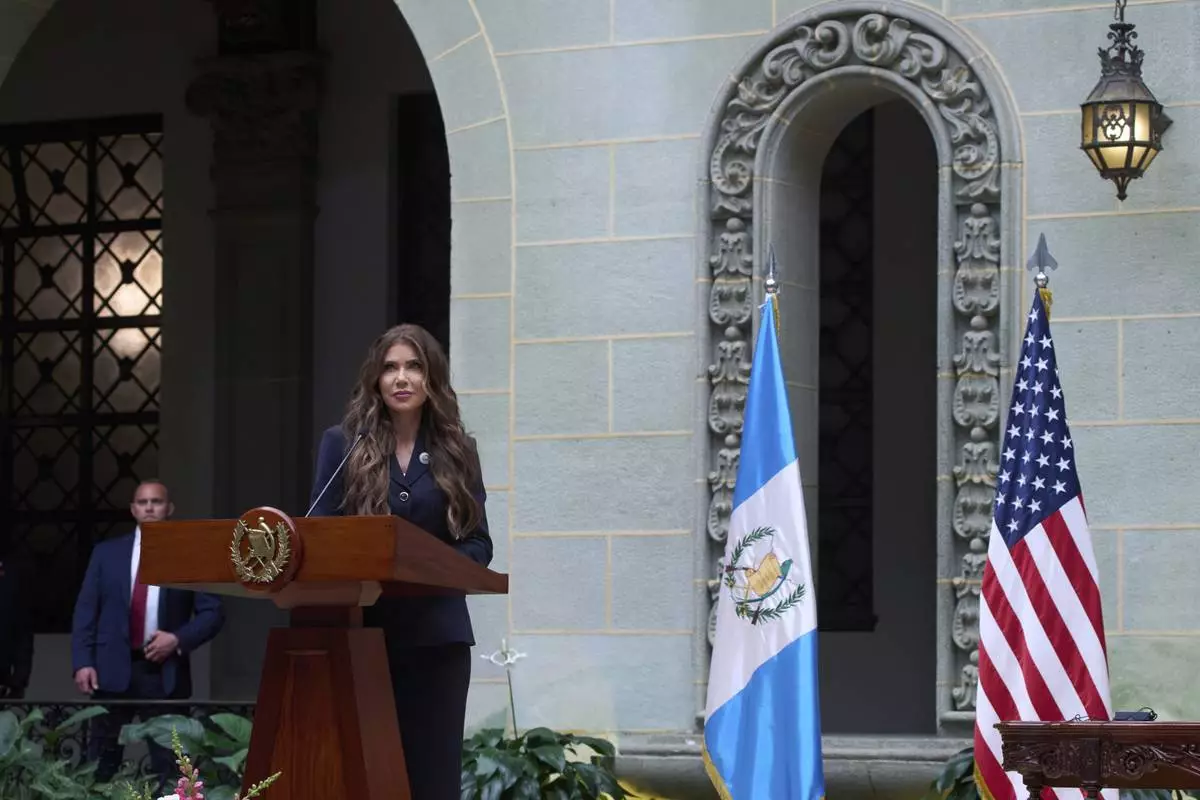
U.S. Homeland Security Secretary Kristi Noem listens as Guatemalan Interior Minister Francisco Jimenez speaks during a signing ceremony, at the National Palace in Guatemala City, Thursday, June 26, 2025. (AP Photo/Moises Castillo)
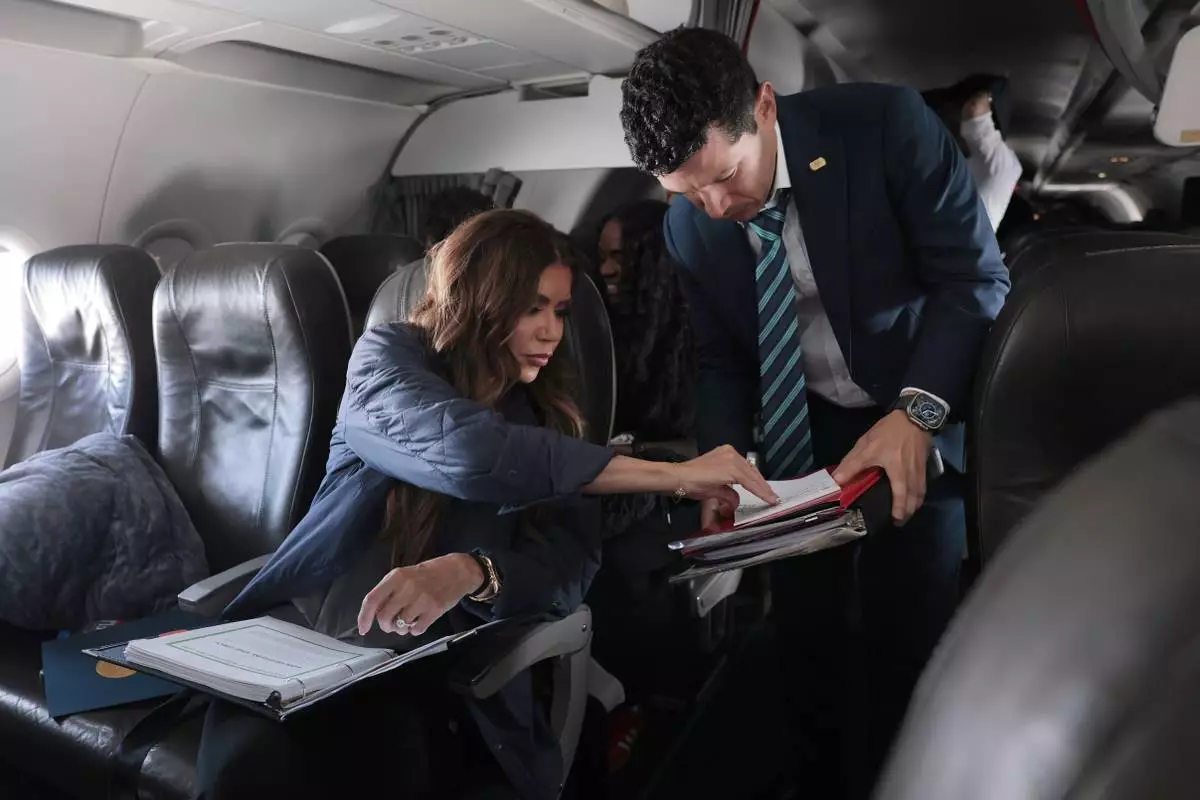
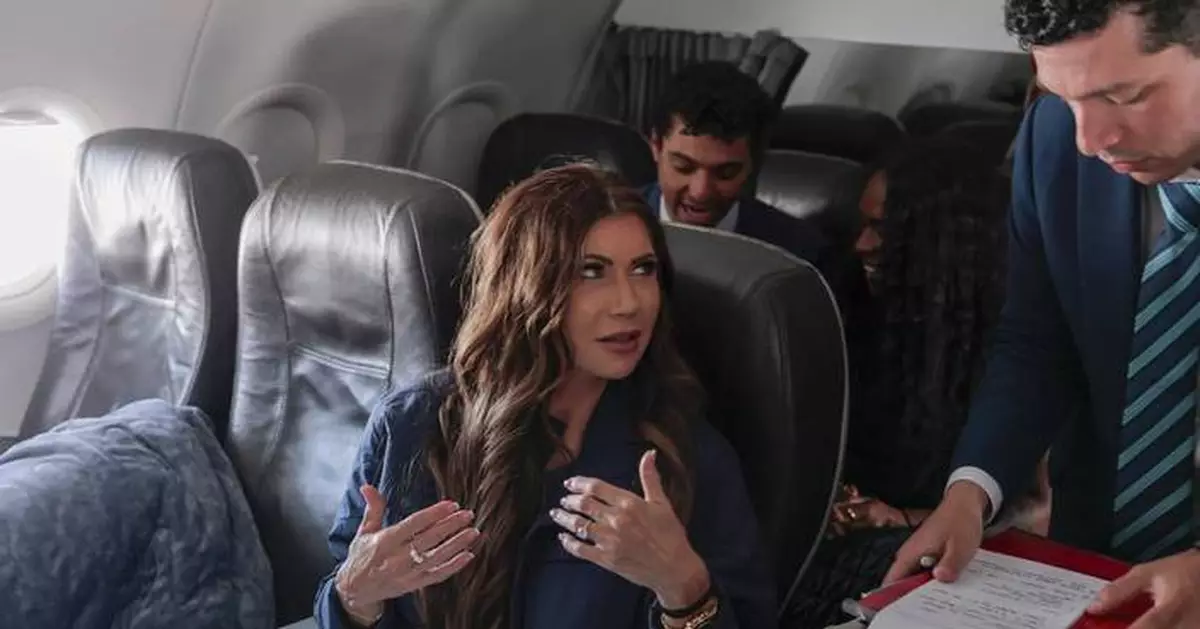
Homeland Security Secretary Kristi Noem reviews notes with staff member Steven Munoz on a plane Thursday, June 26, 2025, to Joint Base Andrews, Md. (Anna Moneymaker/Pool Photo via AP)
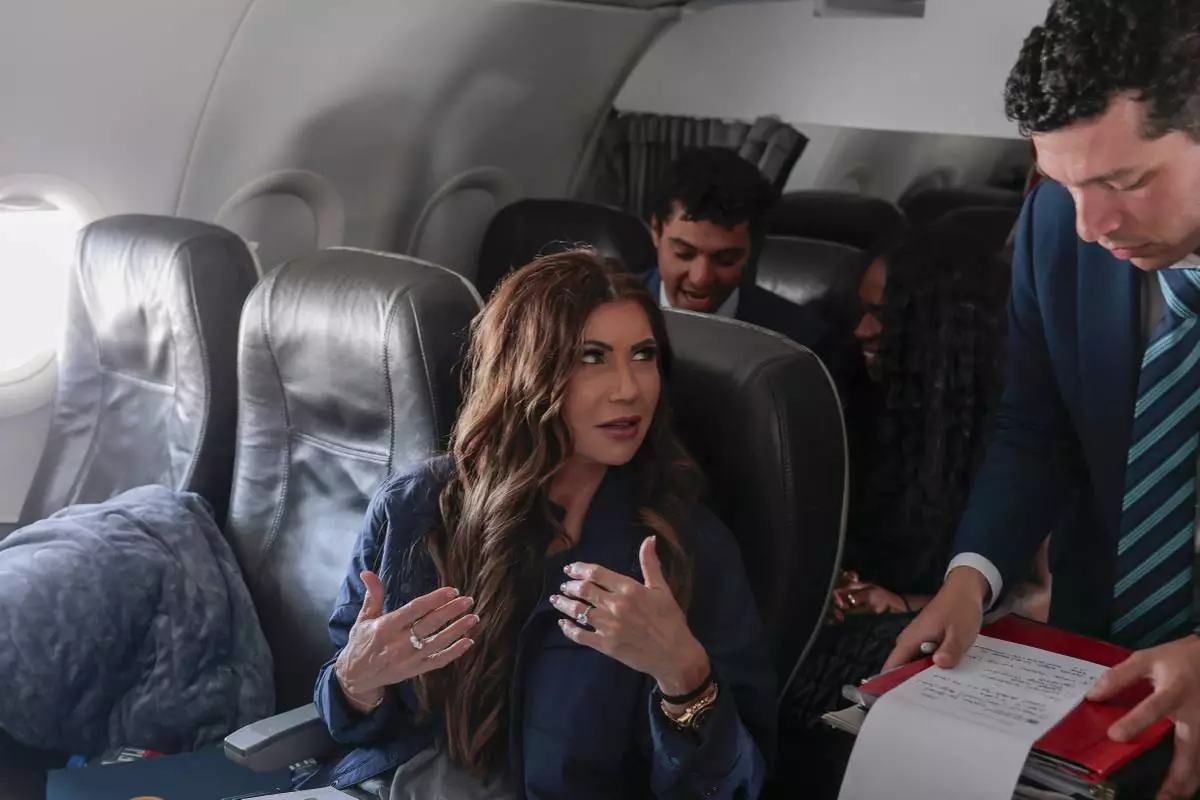
U.S. Homeland Security Secretary Kristi Noem reviews notes with staff member Steven Munoz on a plane to Joint Base Andrews, Md., Thursday, June 26, 2025. (Anna Moneymaker/Pool Photo via AP)
Iran eased some restrictions on its people and, for the first time in days, allowed them to make phone calls abroad via their mobile phones on Tuesday. It did not ease restrictions on the internet or permit texting services to be restored as the death toll from days of bloody protests against the state rose to at least 2,000 people, according to activists.
Although Iranians were able to call abroad, people outside the country could not call them, several people in the capital told The Associated Press.
The witnesses, who spoke on condition of anonymity for fear of reprisal, said SMS text messaging still was down and internet users inside Iran could not access anything abroad, although there were local connections to government-approved websites.
It was unclear if restrictions would ease further after authorities cut off all communications inside the country and to the outside world late Thursday.
Here is the latest:
The U.S.-based Human Rights Activists News Agency, which has been accurate in previous unrest in recent years, gave the latest death toll on Tuesday.
It said 1,847 of the dead were protesters and 135 were government-affiliated.
This came a day after the European Parliament announced it would ban Iranian diplomats and representatives.
“Iran does not seek enmity with the EU, but will reciprocate any restriction,” Foreign Minister Abbas Araghchi wrote on X on Tuesday.
He also criticized the European Parliament for not taking any significant action against Israel for the more than two-year war in Gaza that has killed more than 71,400 Palestinians, while banning Iranian diplomats after just “a few days of violent riots.”
Dutch Foreign Minister David van Weel said he summoned Iran’s ambassador to the Netherlands “to formally protest the excessive violence against peaceful protesters, large-scale arbitrary arrests, and internet shutdowns, calling for immediate restoration of internet access inside the Islamic Republic.
In a post on X, Weel also said the Dutch government supports EU sanctions against “human rights violators in Iran.”
The United Nations human rights chief is calling on Iranian authorities to immediately halt violence and repression against peaceful protesters, citing reports of hundreds killed and thousands arrested in a wave of demonstrations in recent weeks.
“The killing of peaceful demonstrators must stop, and the labelling of protesters as ‘terrorists’ to justify violence against them is unacceptable,” U.N. High Commissioner for Human Rights Volker Türk said in a statement Tuesday.
Alluding to a wave of protests in Iran in 2022, Türk said demonstrators have sought “fundamental changes” to governance in the country, “and once again, the authorities’ reaction is to inflict brutal force to repress legitimate demands for change.”
“This cycle of horrific violence cannot continue,” he added.
It was also “extremely worrying” to hear some public statements from judicial officials mentioning the prospect of the use of the death penalty against protesters through expedited judicial proceedings, Türk said.
“Iranians have the right to demonstrate peacefully. Their grievances need to be heard and addressed, and not instrumentalized by anyone,” Türk said.
Finland’s foreign minister says she is summoning the Iranian ambassador after authorities in Tehran restricted internet access.
“Iran’s regime has shut down the internet to be able to kill and oppress in silence," Elina Valtonen wrote in a social media post Tuesday, adding, “this will not be tolerated. We stand with the people of Iran — women and men alike.”
Finland is “exploring measures to help restore freedom to the Iranian people” together with the European Union, Valtonen said.
Separately, Finnish police said they believe at least two people entered the courtyard of the Iranian embassy in Helsinki without permission Monday afternoon and tore down the Iranian flag. The embassy’s outer wall was also daubed with paint.
Iranian security forces arrested what a state television report described as terrorist groups linked to Israel in the southeastern city of Zahedan.
The report, without providing additional details, said the group entered through Iran’s eastern borders and carried U.S.-made guns and explosives that the group had planned to use in assassinations and acts of sabotage.
The Israeli military did not immediately comment on the allegations.
The Nobel Peace Prize laureate hailed people who have “long warned about this repression, at great personal risk.”
“The protests in Iran cannot be separated from the long-standing, state-imposed restrictions on girls’ and women’s autonomy, in all aspects of public life including education. Iranian girls, like girls everywhere, demand a life with dignity,” Yousafzai wrote on X.
“(Iran’s) future must be driven by the Iranian people, and include the leadership of Iranian women and girls — not external forces or oppressive regimes,” she added.
Yousafzai was awarded the peace prize in 2014 at the age of 17 for her fight for girls’ education in her home country, Pakistan. She is the youngest Nobel laureate.
The French Foreign Ministry said it has “reconfigured” its embassy in Tehran after reports that the facility's nonessential staff left Iran earlier this week.
The embassy's nonessential staff left the country Sunday and Monday, French news agency Agence France-Presse reported.
The ambassador remained on site and the embassy continued to function, the ministry said late Monday night.
Associated Press writer Angela Charlton contributed from Paris.
German Chancellor Friedrich Merz said he believes the Iranian government is in its “final days and weeks,” as he renewed a call for Iranian authorities to end violence against demonstrators immediately.
“If a regime can only keep itself in power by force, then it’s effectively at the end,” Merz said Tuesday during a visit to Bengaluru, India. “I believe we are now seeing the final days and weeks of this regime. In any case, it has no legitimacy through elections in the population. The population is now rising up against this regime.”
Merz said he hoped there is “a possibility to end this conflict peacefully," adding that Germany is in close contact with the U.S. and European governments.
The Israeli military said it continues to be “on alert for surprise scenarios” due to the ongoing protests in Iran, but has not made any changes to guidelines for civilians, as it does prior to a concrete threat.
“The protests in Iran are an internal matter,” Israeli military spokesperson Brig. Gen. Effie Defrin wrote on X.
Israel attacked Iran’s nuclear program over the summer, resulting in a 12-day war that killed nearly 1,200 Iranians and almost 30 Israelis. Over the past week, Iran has threatened to attack Israel if Israel or the U.S. attacks.
Mobile phones in Iran were able to call abroad Tuesday after a crackdown on nationwide protests in which the internet and international calls were cut. Several people in Tehran were able to call The Associated Press.
The AP bureau in Dubai, United Arab Emirates, was unable to call those numbers back.
Witnesses said the internet remained cut off from the outside world. Iran cut off the internet and calls on Thursday as protests intensified.
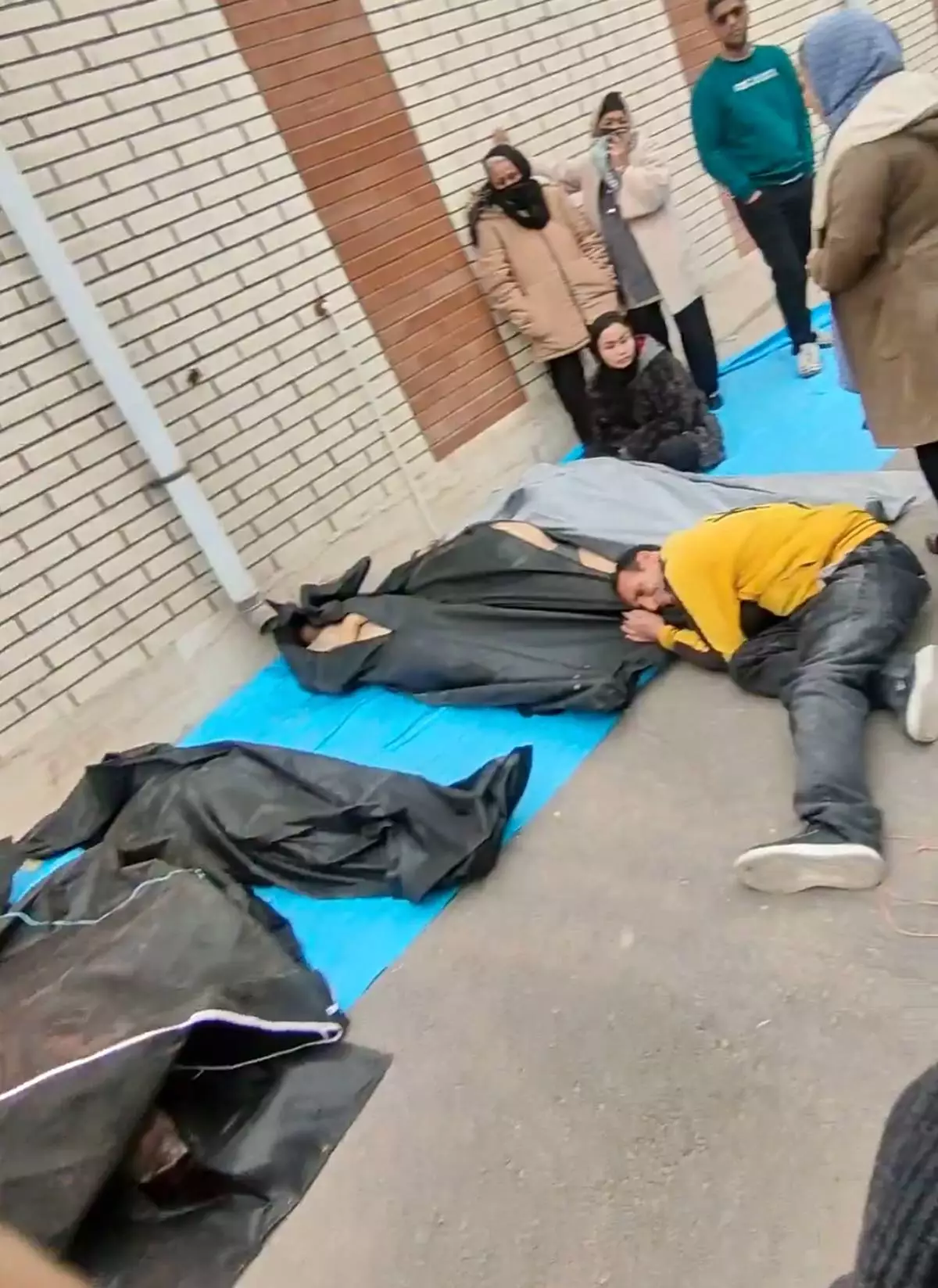
This frame grab from videos taken between Jan. 9 and Jan. 11, 2026, and circulating on social media purportedly shows images from a morgue with dozens of bodies and mourners after crackdownon the outskirts of Iran's capital, in Kahrizak, Tehran Province. (UGC via AP)
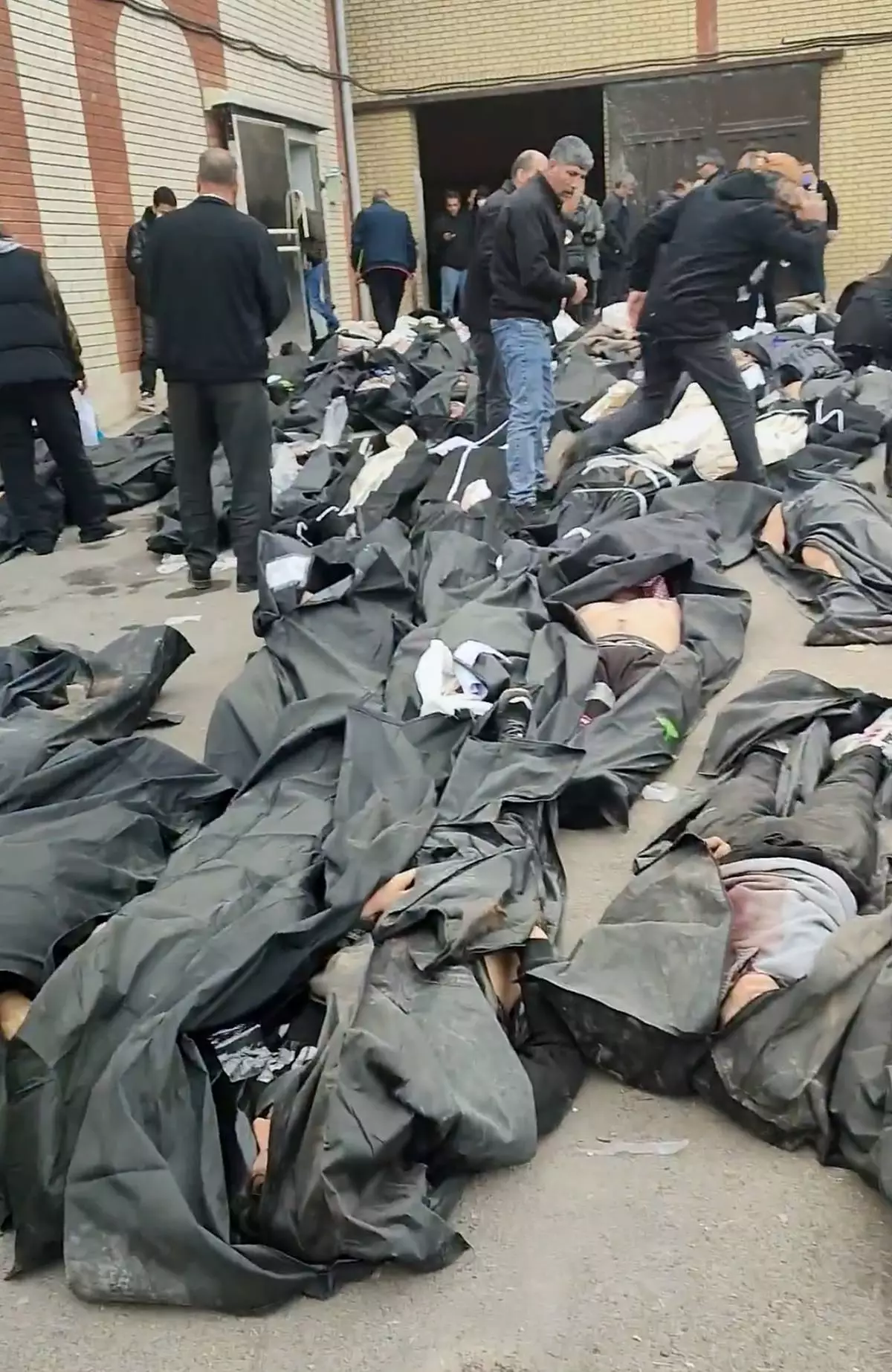
This frame grab from videos taken between Jan. 9 and Jan. 11, 2026, and circulating on social media purportedly shows images from a morgue with dozens of bodies and mourners after crackdown on the outskirts of Iran's capital, in Kahrizak, Tehran Province. (UGC via AP)
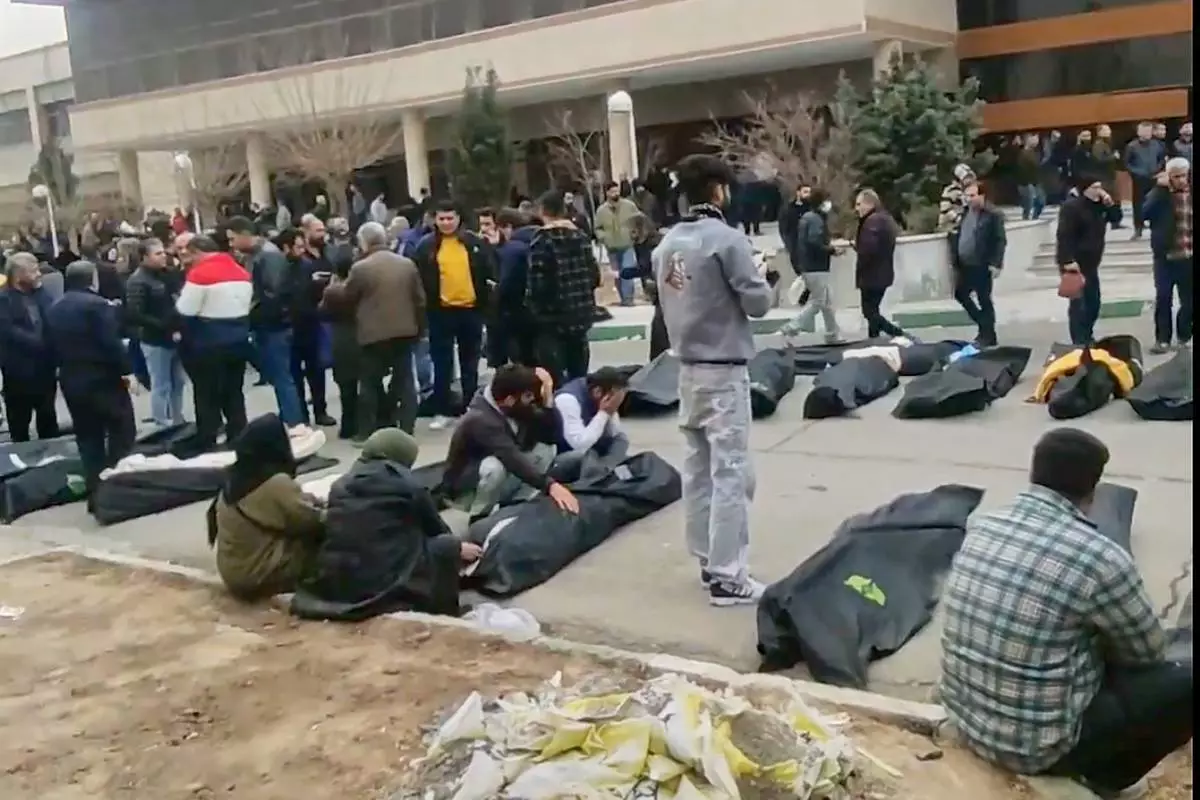
This frame grab from videos taken between Jan. 9 and Jan. 11, 2026, and circulating on social media purportedly shows images from a morgue with dozens of bodies and mourners after crackdown on the outskirts of Iran's capital, in Kahrizak, Tehran Province. (UGC via AP)
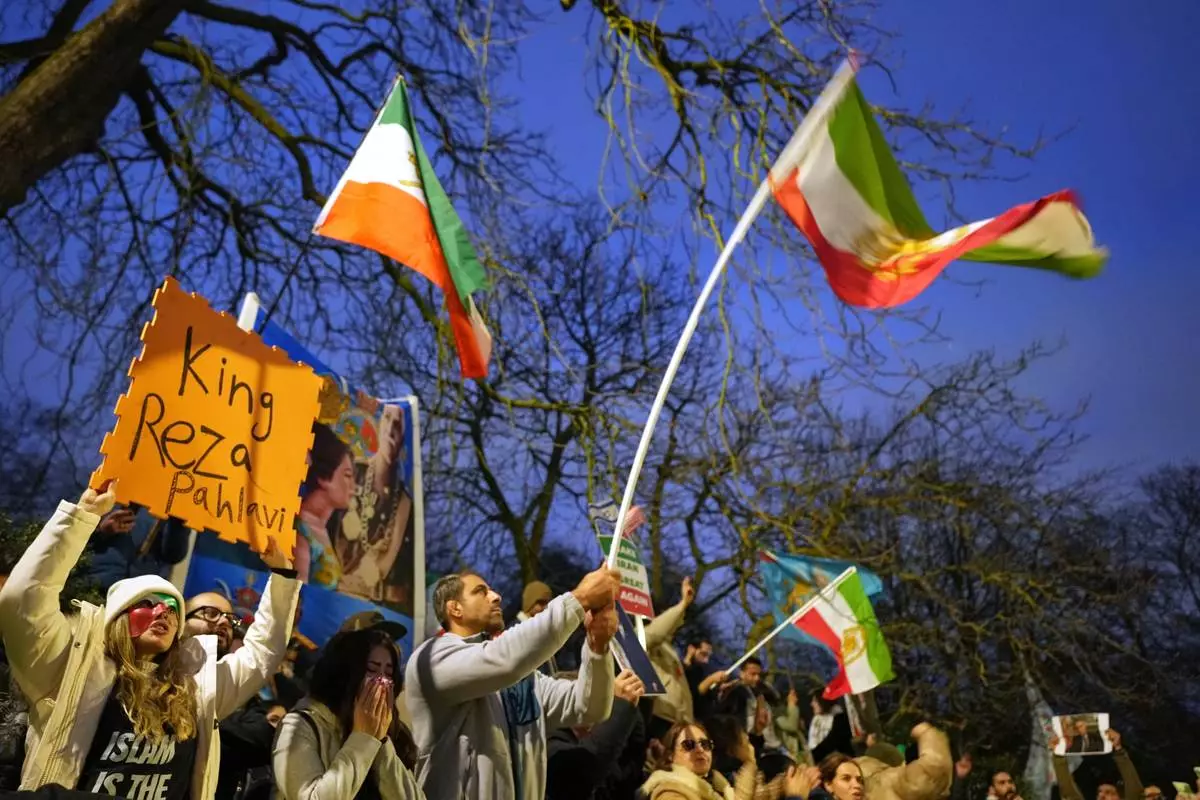
Protesters hold up placards and flags as they demonstrate outside the Iranian Embassy in London, Monday, Jan. 12, 2026. (AP Photo/Alastair Grant)
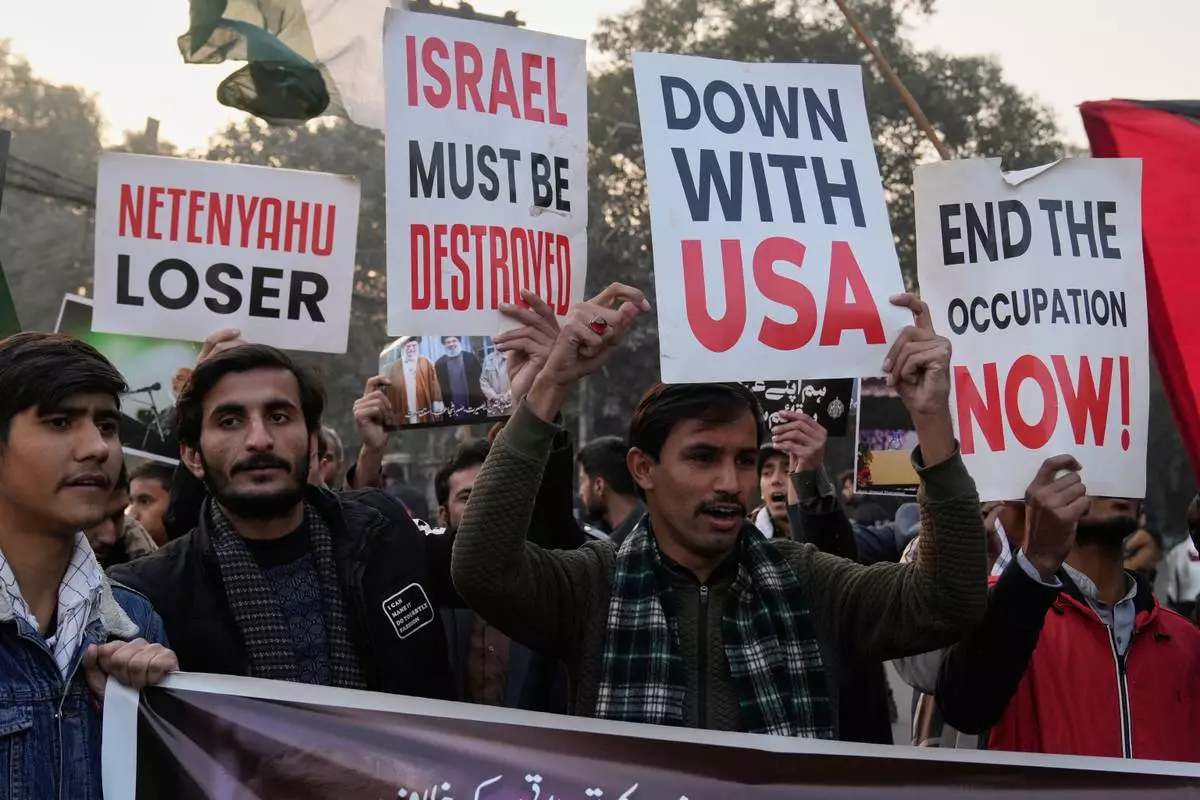
Shiite Muslims hold placards and chant slogans during a protest against the U.S. and show solidarity with Iran in Lahore, Pakistan, Sunday, Jan. 11, 2026. (AP Photo/K.M. Chaudary)
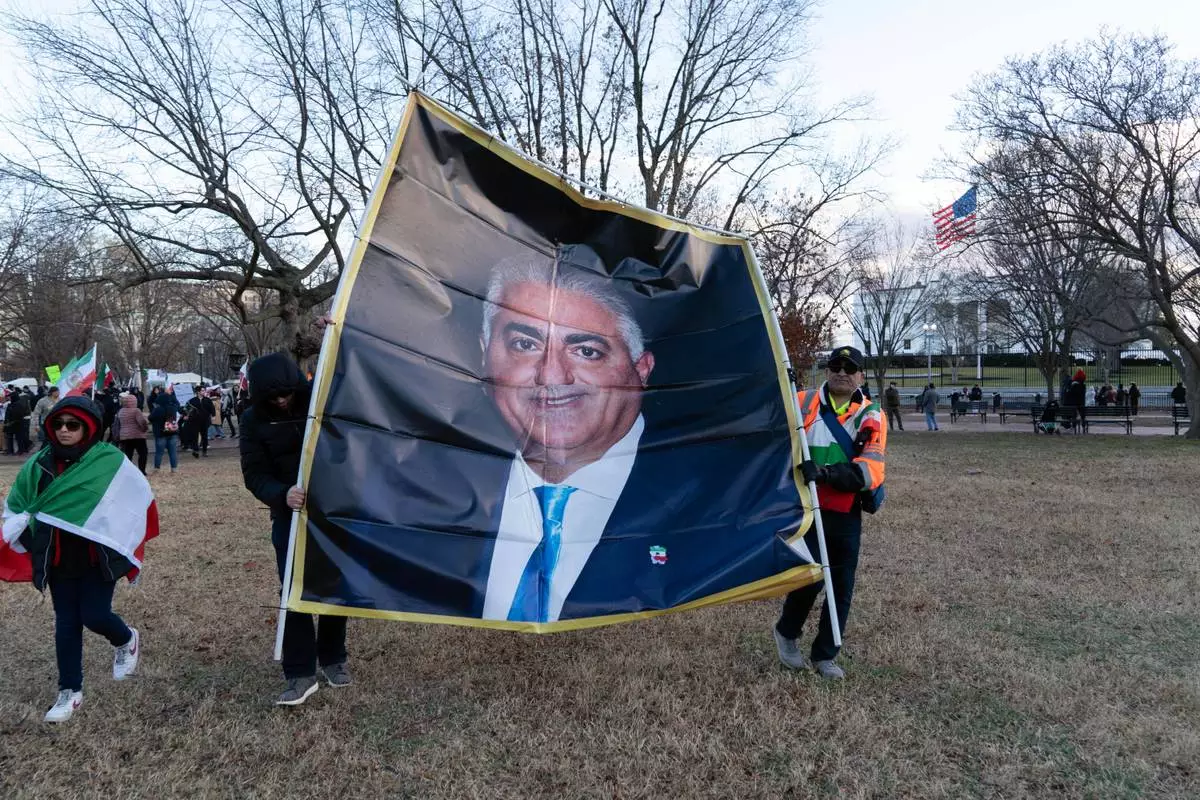
Activists carrying a photograph of Reza Pahlavi take part in a rally supporting protesters in Iran at Lafayette Park, across from the White House, in Washington, Sunday, Jan. 11, 2026. (AP Photo/Jose Luis Magana)
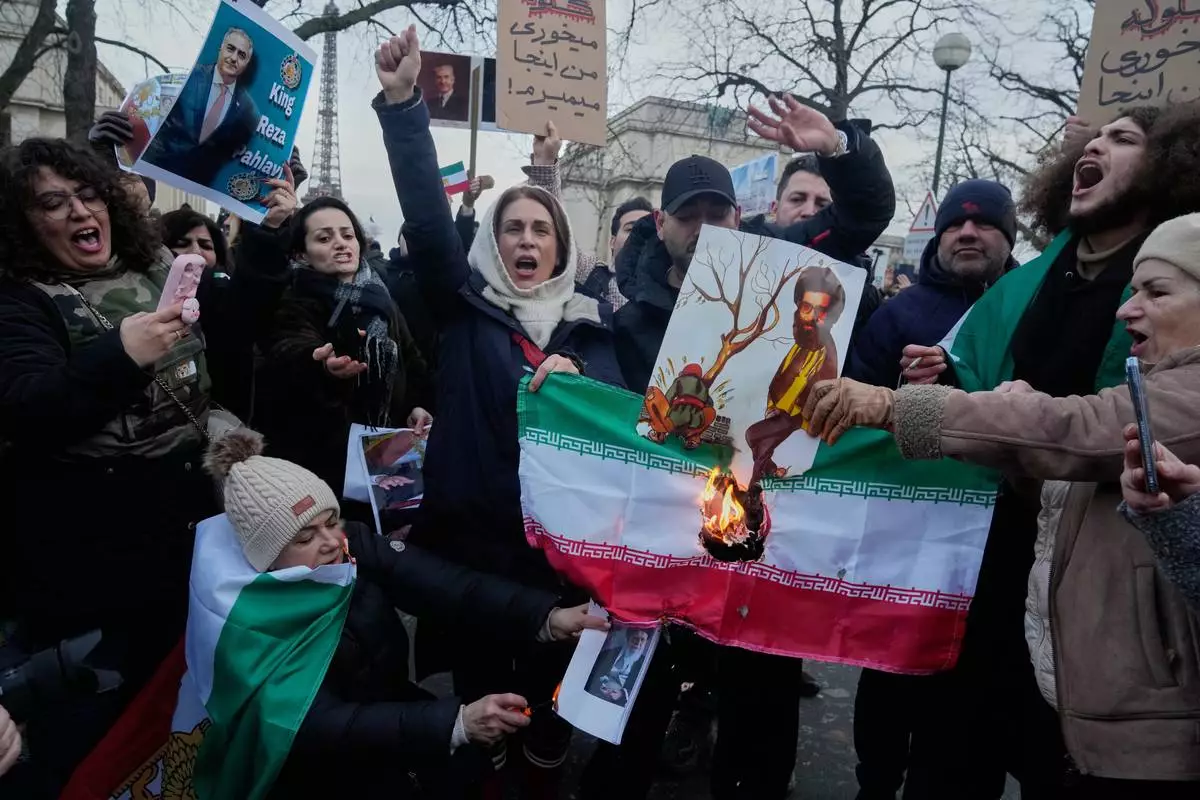
Protesters burn the Iranian national flag during a rally in support of the nationwide mass demonstrations in Iran against the government in Paris, Sunday, Jan. 11, 2026. (AP Photo/Michel Euler)
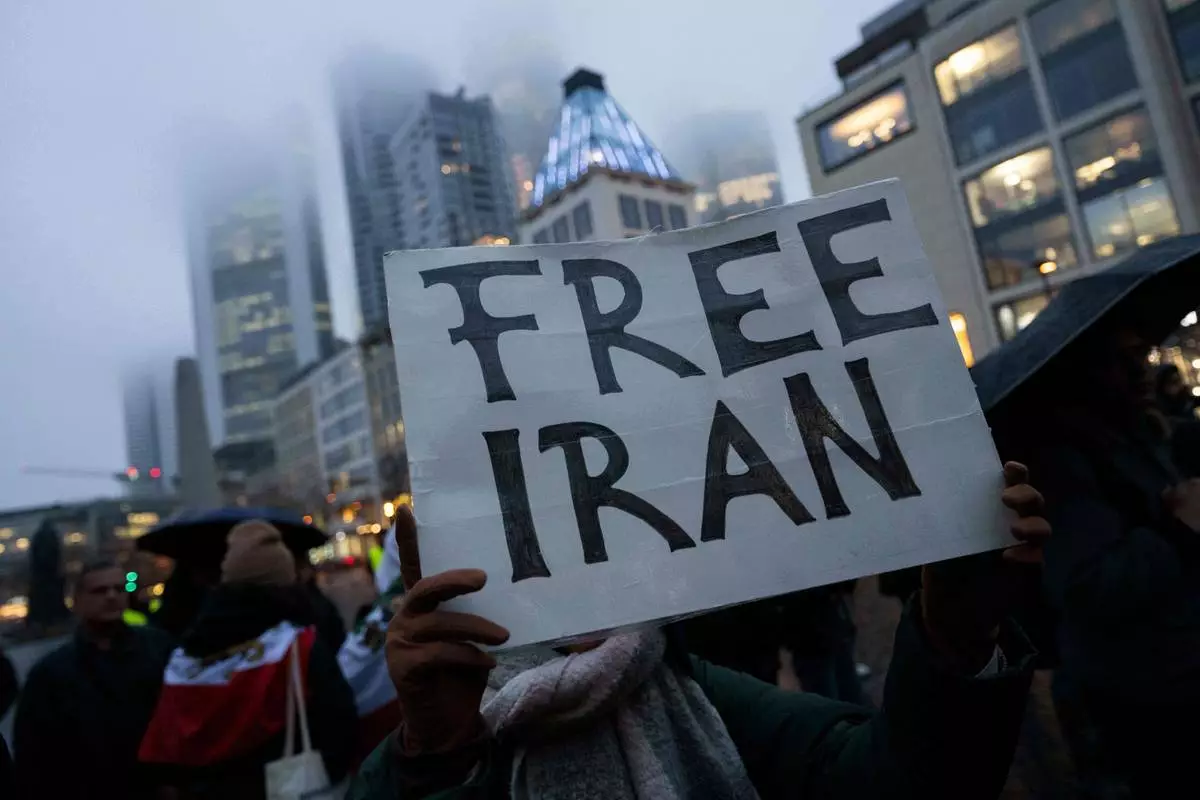
People attend a rally in Frankfurt, Germany, Monday, Jan. 12, 2026. (Boris Roessler/dpa via AP)
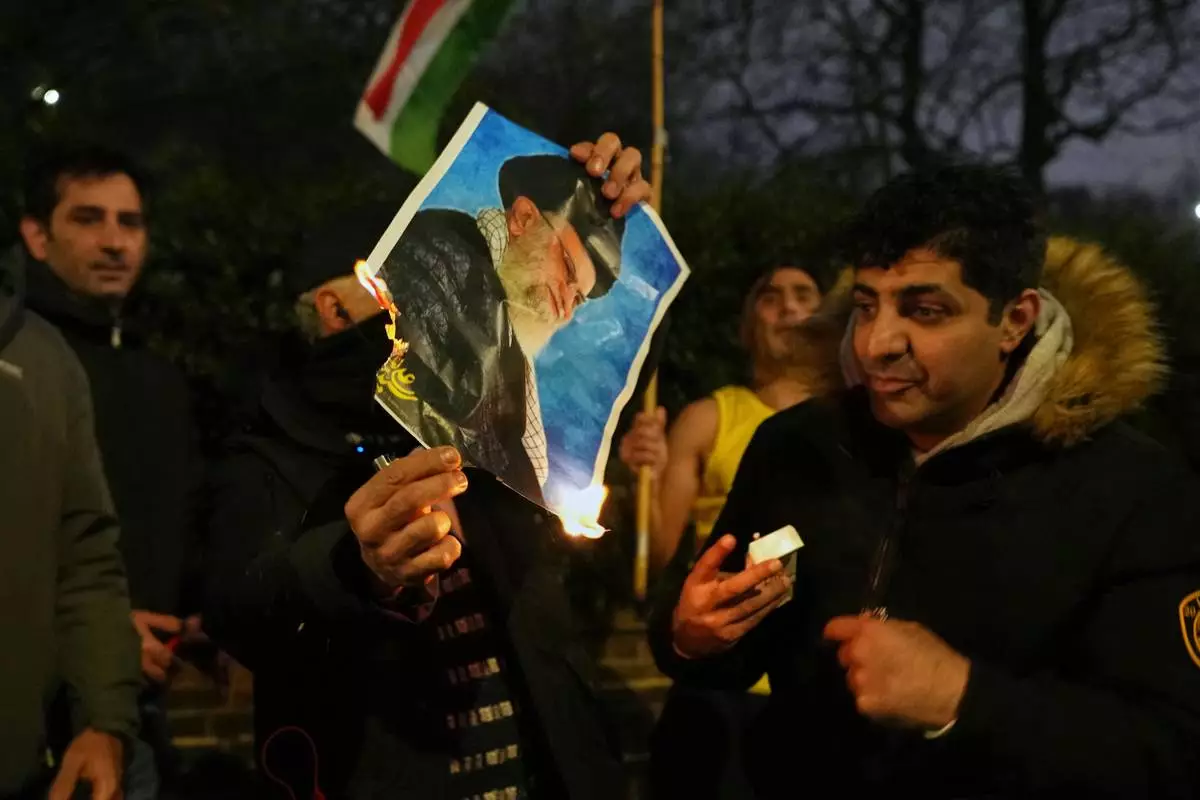
A picture of Ayatollah Ali Khamenei is set alight by protesters outside the Iranian Embassy in London, Monday, Jan. 12, 2026. (AP Photo/Alastair Grant)