Skip to Content Facebook Feature Image

How Wall Street powered to a record high and what comes next

News

How Wall Street powered to a record high and what comes next
News

News

How Wall Street powered to a record high and what comes next

2025-06-30 21:14 Last Updated At:21:20

A trade war. A real war with bombs dropped in the Middle East. A barrage of insults hurled by the president of the United States at the head of the Federal Reserve.

The stock market has powered through all of that in the past few months to set a new record Friday and reward investors who stayed their ground through a volatile stretch. The S&P 500 closed at an all-time high of 6,173.

While Wall Street can take a bow — and breath a sigh of relief — there's no let-up ahead. The pause President Donald Trump put in effect for many tariffs expires in early July. Second-quarter profit reports and upcoming economic indicators could reveal more about the impact of the tariffs that did go into effect. The Fed could face a tricky decision on interest rates.

Here's a look at what's happened in markets and what could lie ahead.

Trump appeared in the Rose Garden on April 2 and announced steeper-than-expected tariffs on almost all U.S. trade partners. He especially targeted China, eventually raising the duties on imports from China to 145%. Beijing retaliated by raising tariffs on U.S. goods to 125%.

Within just four days, the S&P 500 fell about 12%, and the Dow Jones Industrial Average lost nearly 4,600 points, or about 11%.

Trump shrugged off the stock market drop but he couldn’t ignore the signs of trouble in the bond and foreign exchange markets. Tumbling prices for U.S. government bonds raised worries that the U.S. Treasury market was losing its status as the world’s safest place to keep cash. The value of the U.S. dollar also sank in another signal of diminishing faith in the United States as a safe haven for investors.

On April 9, Trump announced on social media a “90-day PAUSE” for most of the tariffs he’d announced, except those against China. The S&P 500 soared 9.5% for one of its best days ever.

In May, the administration struck a trade deal with the United Kingdom. Then came the biggest news: The U.S. and China said that they were temporarily rolling back most of the tariffs they’d imposed on one another. The countries have indicated they've reached a deal, but details are scarce.

Markets briefly got spooked when Trump threatened tariffs against the European Union, but he decided to hold off — until July 9 — as the countries negotiate.

The trade war was pushed out of the headline by a real war this month as Israel and Iran attacked each other. The price of oil spiked, threatening to boost inflation and slow the global economy. A U.S. strike on Iranian nuclear facilities was followed by a cease-fire and oil prices dropped sharply. Relieved, Wall Street resumed its climb toward a new record.

Trump wants the Fed to lower interest rates. The Fed says it needs to see the impact of Trump's tariffs before it can act. The president has taken to regularly bashing Jerome Powell, whose term as Fed chair expires next year. According to the Wall Street Journal, Trump could name his nominee to replace Powell unusually early, in an attempt to undermine him. The drama could influence trading in the bond and foreign exchange markets, and by extension on Wall Street.

Strong profit reports for the first quarter helped offset the pressure from tariffs. Soon, companies will report results for the quarter ending June 30. While Wall Street analysts have lowered their expectations for earnings growth for the companies in the S&P 500, they still forecast solid growth of 5%, according to FactSet. The average quarterly profit growth over the past five years is 12.7%. Some companies withdrew profit forecasts amid the uncertainty created by tariffs, making forecasting even trickier.

In a sign that stocks are still sensitive to trade developments, the S&P 500 fell briefly Friday afternoon after Trump said he was halting trade negotiations with Canada over its plans to continue with its tax on technology firms. Canada rescinded the tax on Sunday.

Also over the weekend, Trump said he is not planning to extend a 90-day pause on tariffs on most nations beyond July 9. He said his administration will notify countries that the trade penalties will take effect unless there are deals with the United States.

Of course, Trump has changed his mind on tariffs before. The president could also say that his negotiators are making progress with some or all of the targeted countries and give them another reprieve.
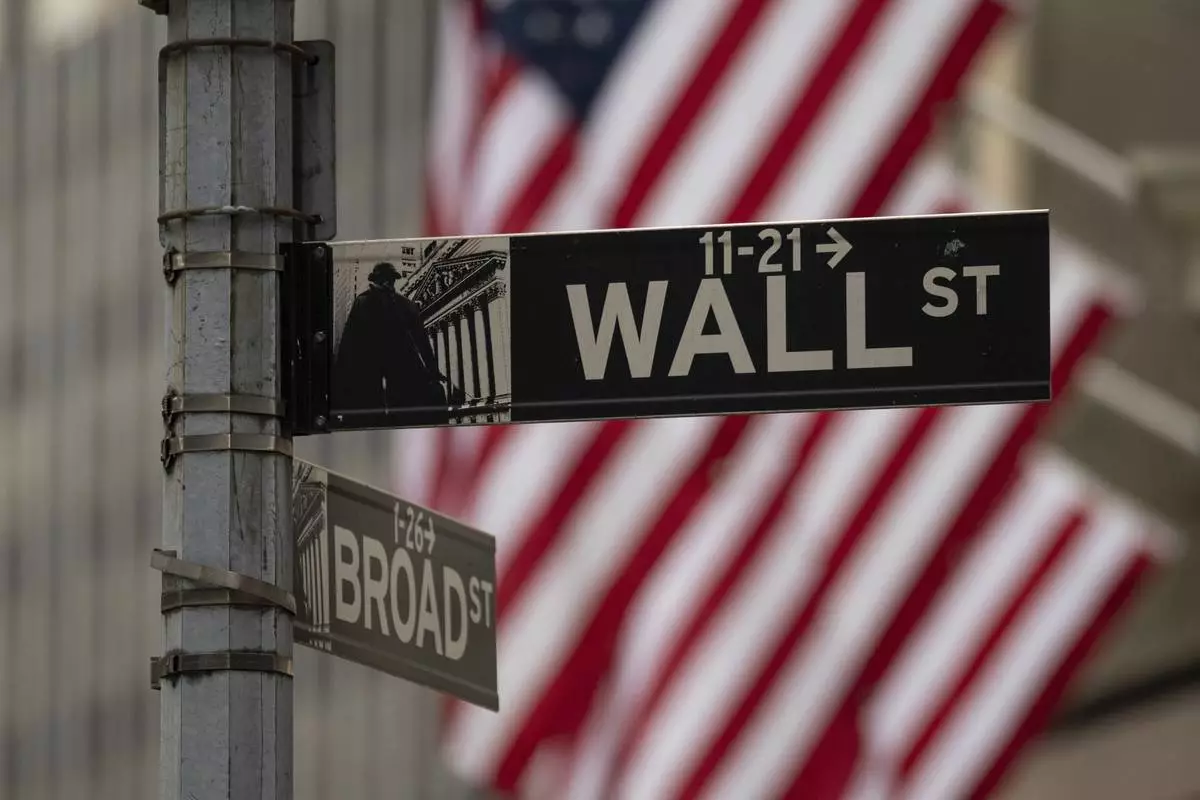
A Wall Street sign hangs near to the New York Stock Exchange, Wednesday, June 18, 2025, in New York. (AP Photo/Yuki Iwamura)
A Wall Street sign hangs near to the New York Stock Exchange, Wednesday, June 18, 2025, in New York. (AP Photo/Yuki Iwamura)

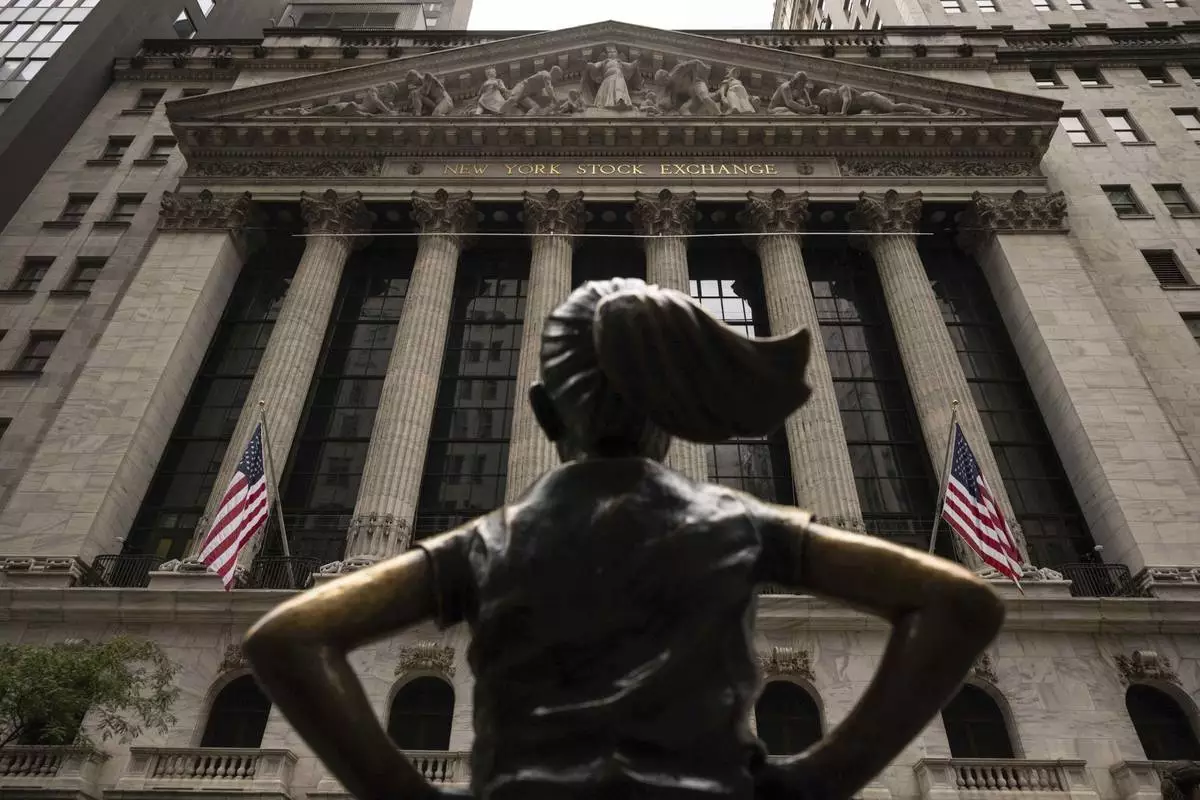
The "Fearless Girl" statue stands in front of the New York Stock Exchange, Wednesday, June 18, 2025, in New York. (AP Photo/Yuki Iwamura)
The "Fearless Girl" statue stands in front of the New York Stock Exchange, Wednesday, June 18, 2025, in New York. (AP Photo/Yuki Iwamura)

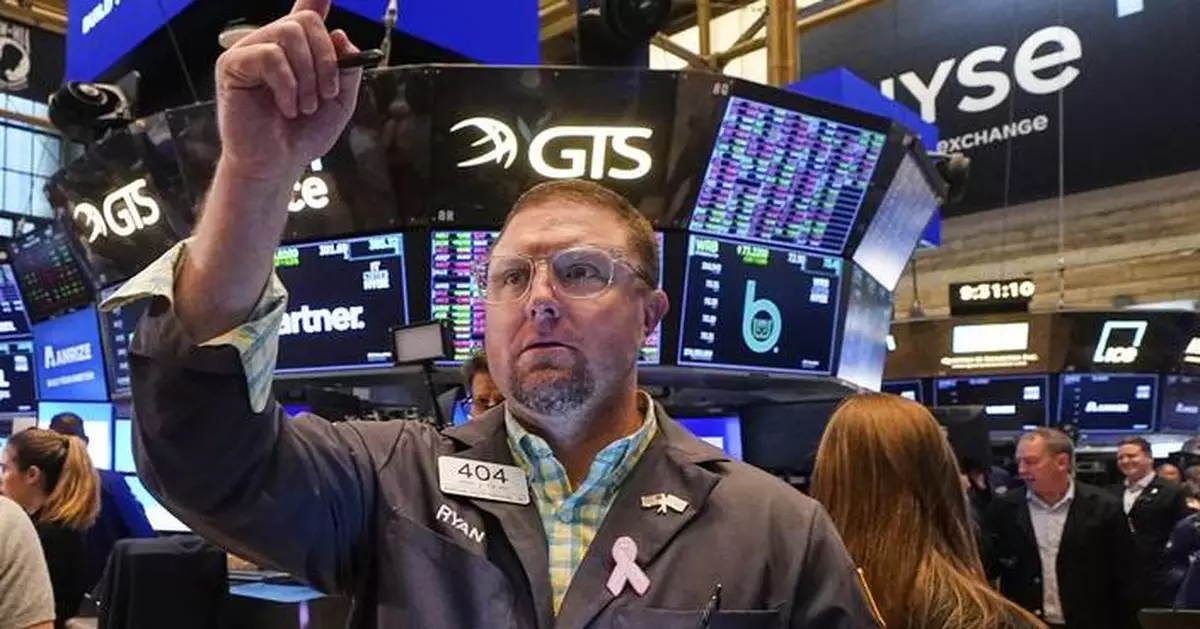
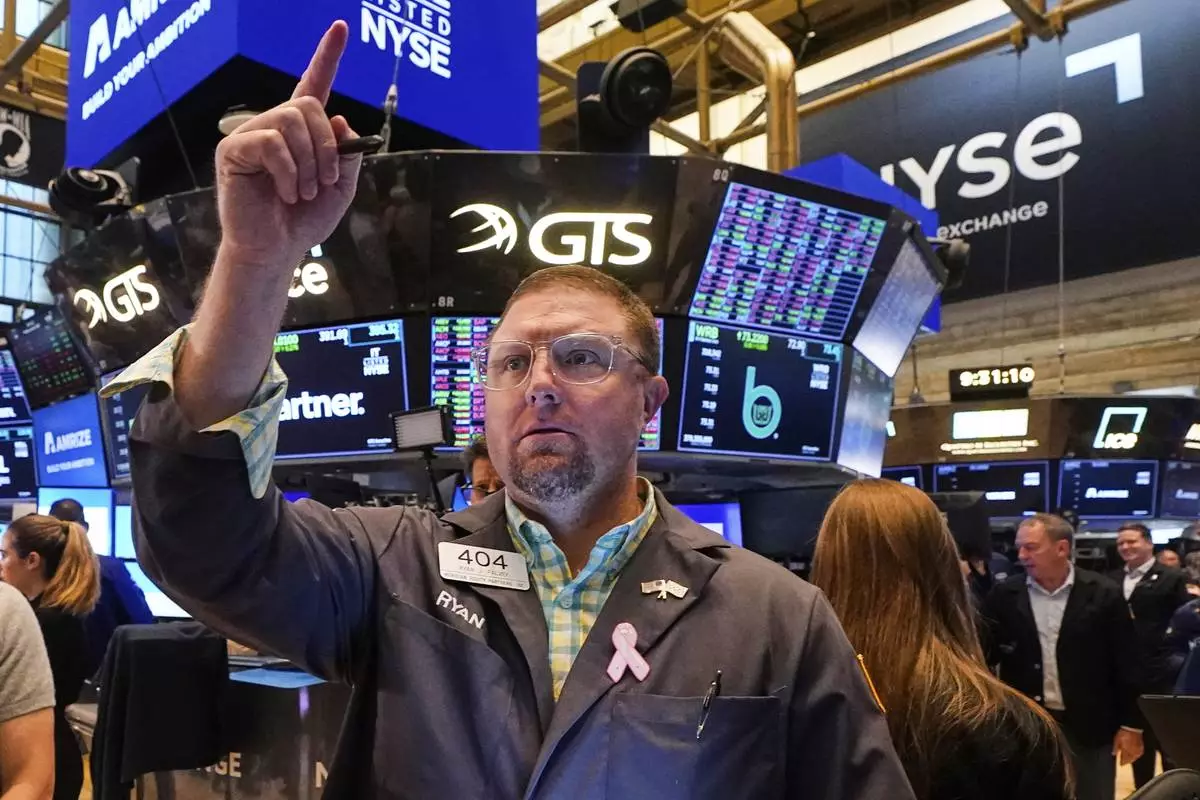
Trader Ryan Falvey works on the floor of the New York Stock Exchange, Monday, June 23, 2025. (AP Photo/Richard Drew)
Trader Ryan Falvey works on the floor of the New York Stock Exchange, Monday, June 23, 2025. (AP Photo/Richard Drew)
NEW YORK (AP) — Stocks rose in morning trading on Wall Street Friday, joining global markets to kick off a new year on an upbeat note.

The S&P 500 rose 0.7%. The benchmark index is coming off a gain of more than 16% in 2025.

The Dow Jones Industrial Average rose 42 points, or 0.1%, as of 10:03 a.m. Eastern. The Nasdaq composite rose 1.3%.

Markets in Europe and Asia also made strong gains. Indexes in Britain and South Korea hit records.

The gains are helping trim some of the broader weekly losses for the market, which is closing a shortened holiday week. Markets were closed Thursday for New Year’s Day.

Technology stocks were leading the market higher, especially companies with a focus on artificial intelligence, continuing the trend that pushed the broader market to records in 2025.

Nvidia jumped 2.8% and was the biggest force pushing the market higher. Apple jumped 2% and Google's parent company, Alphabet, rose 2%. They are among the most valuable companies in the world and their outsized valuations give them more influence on the market's direction.

Technology companies have been a major focus because of advancements in artificial intelligence technology and the potential for growth within the sector. Wall Street has been betting that demand for computer chips and other items needed for data centers will help justify the big investments from technology companies and their pricey stock values.

Tesla rose 0.8% despite reporting falling sales for a second year in a row.

E-commerce giant Alibaba climbed 4.3% and Baidu, maker of the Ernie chatbot, jumped 9.4% in Hong Kong after it said it plans to spin off its AI computer chip unit Kunlunxin, which would list shares in Hong Kong early in 2027. The plan is subject to regulatory approvals.

Crude oil prices slipped. Prices for U.S. crude oil fell 1.2% to $56.73 per barrel. The price of Brent crude, the international standard, fell 1.2% to $60.13 per barrel.

Gold prices kicked off the new year with more gains. The price of gold rose 0.7%.

Treasury yields held steady in the bond market. The yield on the 10-year Treasury rose to 4.18% from 4.17% late Wednesday. The yield on the two-year Treasury, which moves more closely with expectations for what the Federal Reserve will do, held steady at 3.48% from late Wednesday.

AP business writer Elaine Kurtenbach contributed to this report.

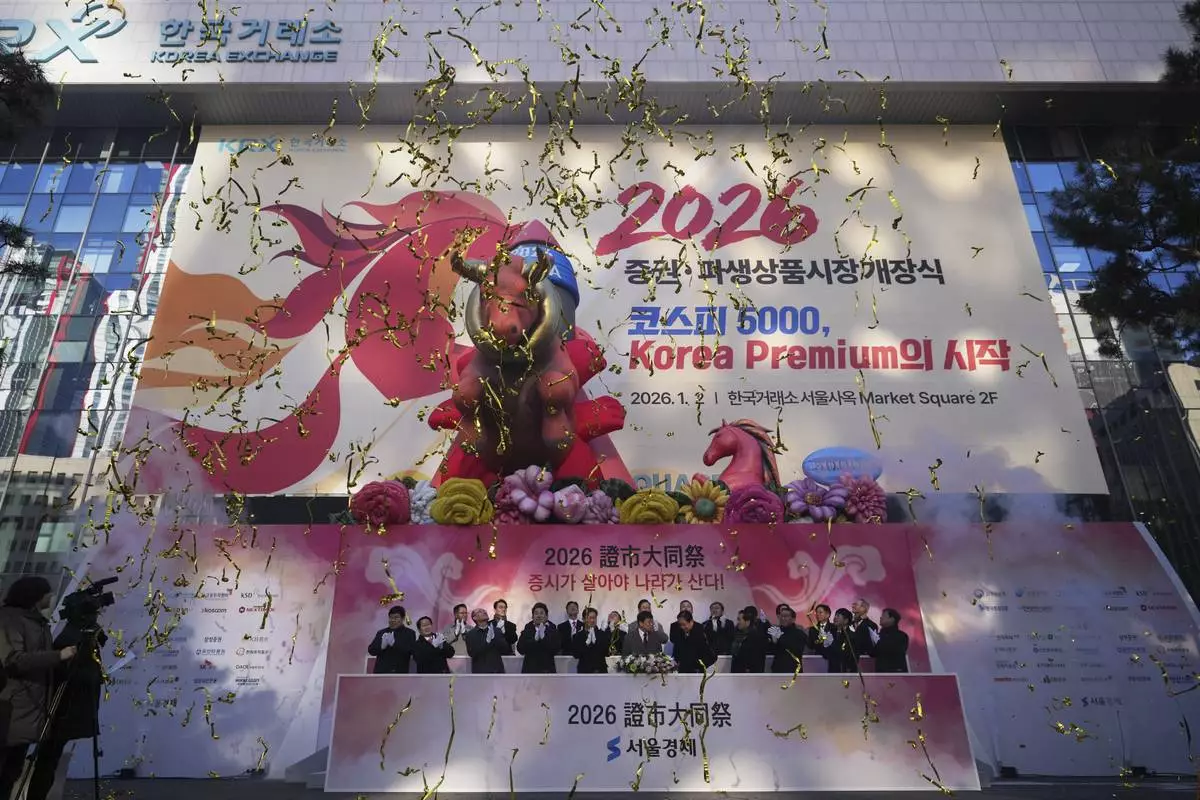
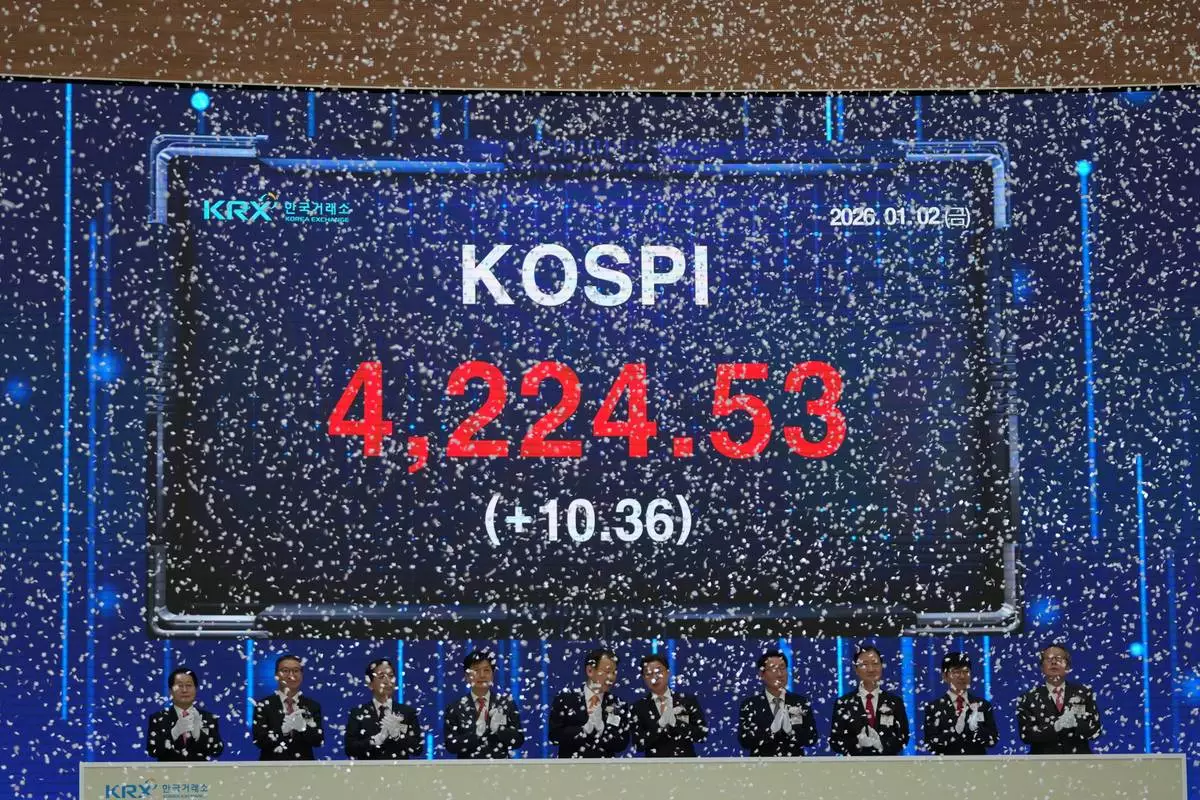
A screen shows the Korea Composite Stock Price Index (KOSPI) as participants applaud during the opening ceremony of the 2026 trading year at the Korea Exchange in Seoul, South Korea, Friday, Jan. 2, 2026. (AP Photo/Lee Jin-man)

A screen shows the Korea Composite Stock Price Index (KOSPI) as participants applaud during the opening ceremony of the 2026 trading year at the Korea Exchange in Seoul, South Korea, Friday, Jan. 2, 2026. (AP Photo/Lee Jin-man)

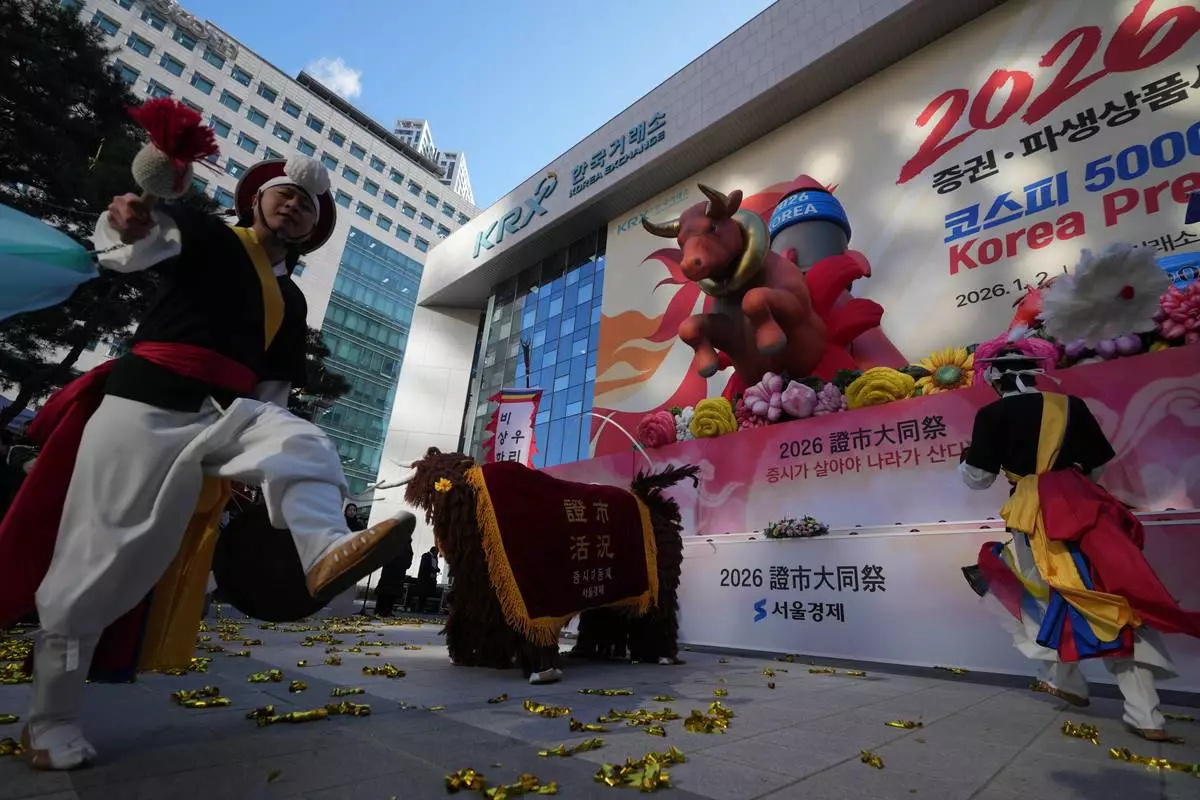
Dancers in traditional costumes perform to celebrate the opening for the 2026 trading year outside of the Korea Exchange in Seoul, South Korea, Friday, Jan. 2, 2026. (AP Photo/Lee Jin-man)

Dancers in traditional costumes perform to celebrate the opening for the 2026 trading year outside of the Korea Exchange in Seoul, South Korea, Friday, Jan. 2, 2026. (AP Photo/Lee Jin-man)

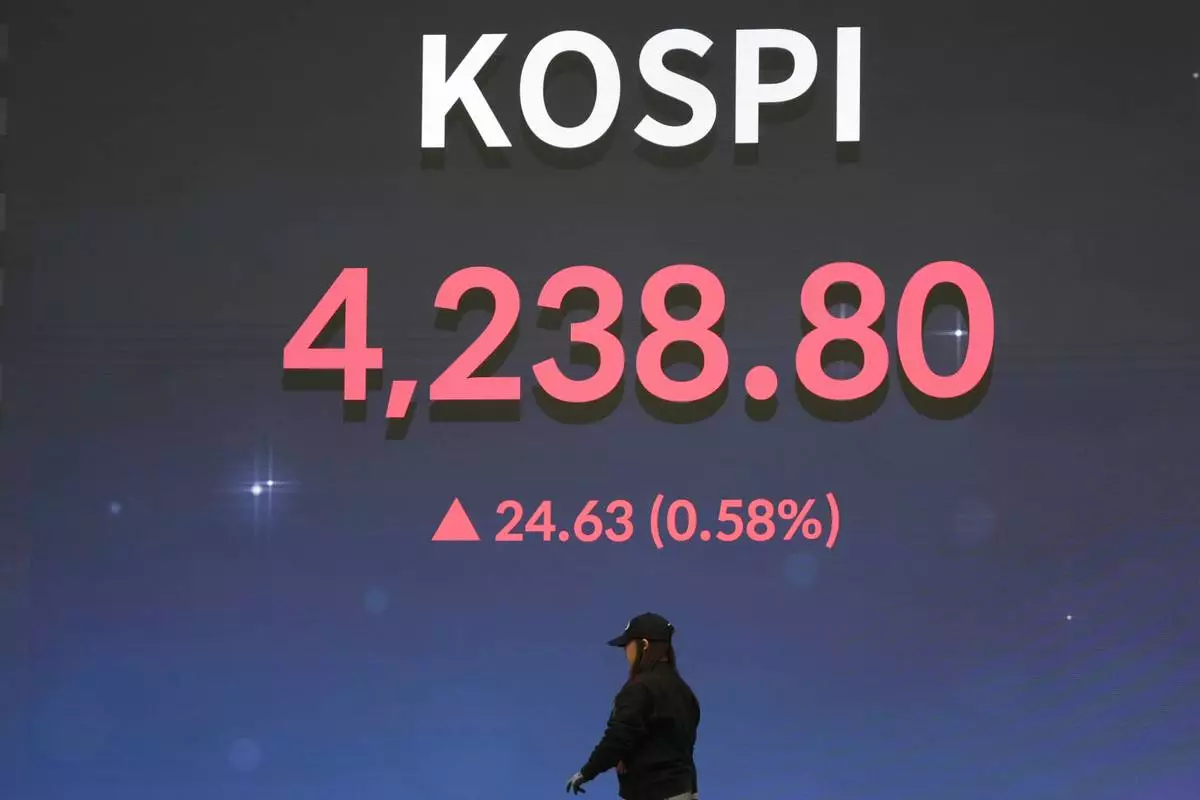
A worker walks near a screen showing the Korea Composite Stock Price Index (KOSPI) after the opening ceremony of the 2026 trading year at the Korea Exchange in Seoul, South Korea, Friday, Jan. 2, 2026. (AP Photo/Lee Jin-man)

A worker walks near a screen showing the Korea Composite Stock Price Index (KOSPI) after the opening ceremony of the 2026 trading year at the Korea Exchange in Seoul, South Korea, Friday, Jan. 2, 2026. (AP Photo/Lee Jin-man)

South Korean financial officers celebrate the opening for the 2026 trading year outside of the Korea Exchange in Seoul, South Korea, Friday, Jan. 2, 2026. (AP Photo/Lee Jin-man)

South Korean financial officers celebrate the opening for the 2026 trading year outside of the Korea Exchange in Seoul, South Korea, Friday, Jan. 2, 2026. (AP Photo/Lee Jin-man)

Dancers in a bull-shaped costume perform to celebrate the opening for the 2026 trading year outside of the Korea Exchange in Seoul, South Korea, Friday, Jan. 2, 2026. (AP Photo/Lee Jin-man)

Dancers in a bull-shaped costume perform to celebrate the opening for the 2026 trading year outside of the Korea Exchange in Seoul, South Korea, Friday, Jan. 2, 2026. (AP Photo/Lee Jin-man)

Recommended Articles