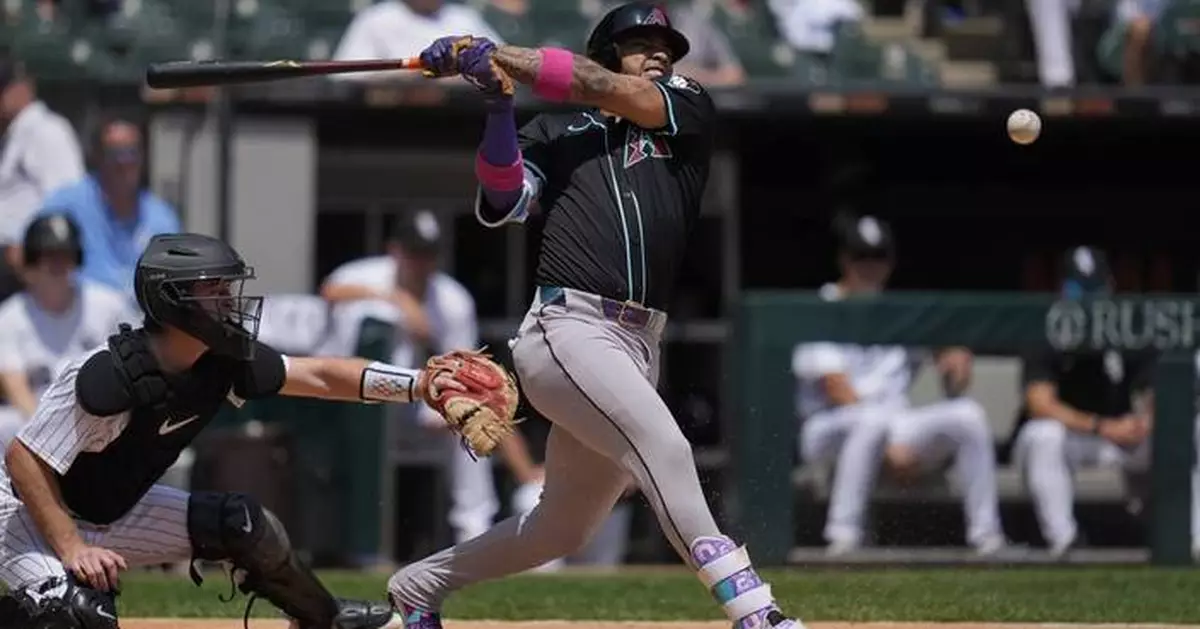
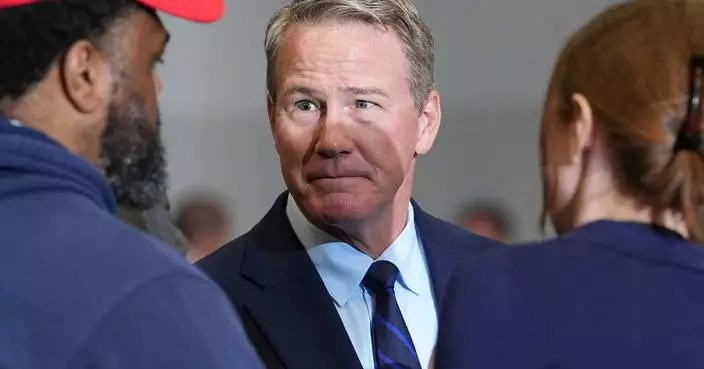
Arizona Diamondbacks second baseman Ketel Marte said a fan in Chicago who brought him to tears during a game against the White Sox this week shouted that he messaged his late mother the previous night.
The two-time All-Star revealed what was said during an interview with Spanish-language journalist Yancen Pujols.
“A fan was up on the dugout shouting things about my mother,” he said. "He was like, ‘Last night I sent a message to your mother.’”
Marte was seen in tears on the field after the 22-year-old spectator yelled a derogatory comment about Marte’s late mother during a seventh-inning at-bat in Arizona’s 4-1 win over Chicago on Tuesday night. Major League Baseball banned the fan indefinitely from all stadiums the following day.
Marte’s mother, Elpidia Valdez, died in a car accident in the Dominican Republic in 2017. He said he's used to being taunted, but had never been heckled about his mom. He said what made it more painful for him was the Diamondbacks were in Chicago to play the Cubs when she died.
AP MLB: https://apnews.com/hub/mlb

The Chicago White Sox display a sign on the big screen in support of Arizona Diamondbacks' Ketel Marte (4) during the first inning of a baseball game Wednesday, June 25, 2025, in Chicago. (AP Photo/Erin Hooley)
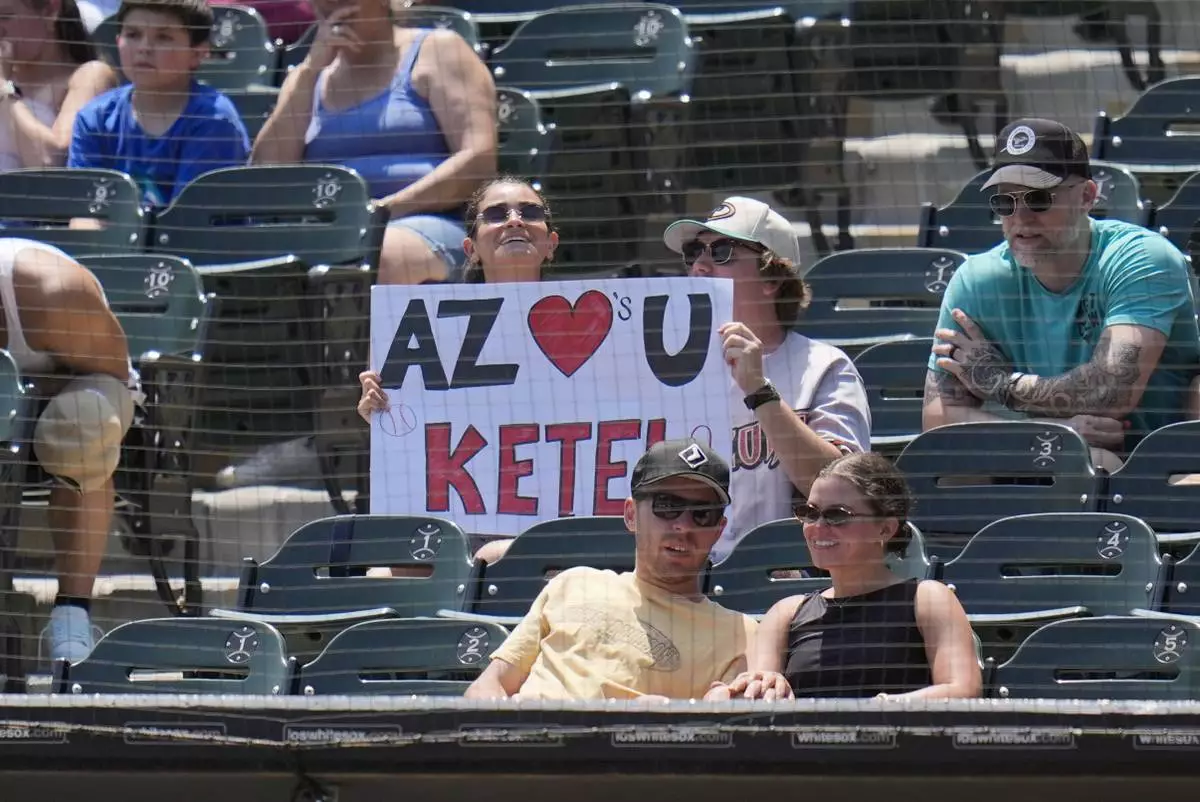
Fans show support for Arizona Diamondbacks' Ketel Marte (4) during the third inning of a baseball game against the Chicago White Sox, Wednesday, June 25, 2025, in Chicago. (AP Photo/Erin Hooley)
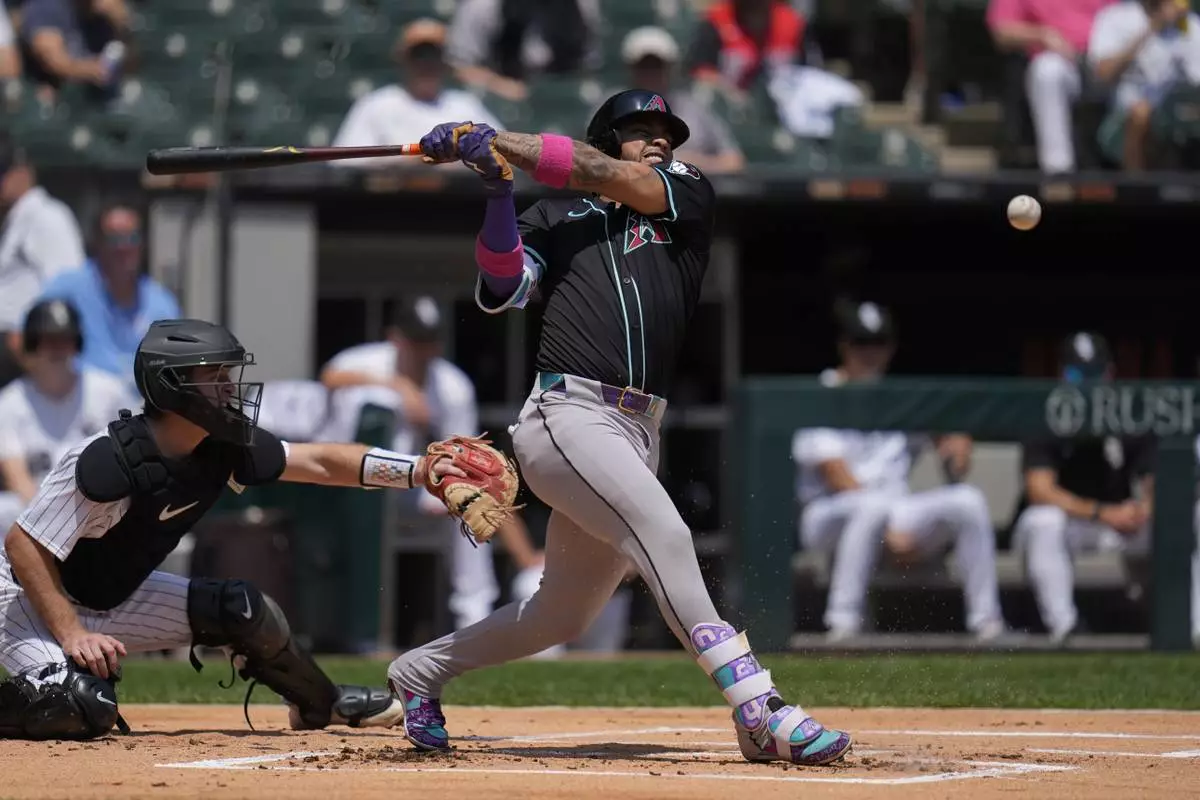
Arizona Diamondbacks' Ketel Marte (4) fouls off the ball during the first inning of a baseball game against the Chicago White Sox, Wednesday, June 25, 2025, in Chicago. (AP Photo/Erin Hooley)
MIAMI GARDENS, Fla. (AP) — Miami wide receiver Malachi Toney caught a screen pass near midfield, made three Pitt players miss, then ran by about three others on his way to the end zone.
As always, he made it look easy.
The superstar sophomore set a Miami school record with 16 catches — the most by any Football Bowl Subdivision player in a game this season — and finished with 194 yards and three touchdowns to help the top-ranked Hurricanes roll by Pitt 52-23 to remain unbeaten.
“The dude works his butt off day in and day out,” Miami quarterback Darian Mensah said. “And come Saturday, he's super prepared.”
Toney started the day needing only 31 yards to reach the 2,000-yard mark for his career. He got there quickly, joining Ohio State's Jeremiah Smith as the only active FBS players to reach that milestone by the end of their sophomore season.
Toney got there in his 23rd career game; Smith reached the 2,000-yard mark in the 24th game of his career last season.
And the yards kept coming.
Toney — who now has 10 games with at least 100 yards for the Hurricanes — caught the first 16 passes thrown his way on Saturday; the only one that fell incomplete was the last one where he was the intended receiver. Miami turned the game over to backups not long afterward, with the outcome in no doubt.
“We have playmakers around Malachi, where if you try to double one and create more attention on one, you can get hurt on the other side, which we saw today as well,” Miami coach Mario Cristobal said. "There’s not a guy in the country that’s more dependable than Malachi Toney.”
Toney — a Heisman Trophy candidate, alongside players like Smith and Hurricanes quarterback Darian Mensah — became the 11th player in Miami history to reach the 2,000-yard receiving mark and the 21st currently active player to reach that number at the FBS level.
He now has 175 career catches, the most of any FBS player since the start of last season. Toney is 25 away from matching the Miami school record for catches; Xavier Restrepo had 200 in his time with the Hurricanes. At this rate, Toney could have it long before the regular season ends.
“It feels great," said Toney, who ended the game Saturday as the national leader with 66 catches this season. "I've just got to stay locked in on my preparation. Keep going hard at the things that have allowed me to have success.”
Earlier in the week, Mensah raved about his go-to receiver, calling him “a young legend.” Saturday's performance only enhanced that assessment.
“He’s one of the first people in the building every day and has a consistent routine that he never strays away from,” Mensah said. “And then the mentality — he understands he has to do his job no matter if he’s supposed to get the ball or if he is run-blocking. ... The dude just plays ball. I think that’s what’s special about him.”
Sign up for Top 25 poll alerts here, visit the Top 25 here and see AP’s full college football coverage here
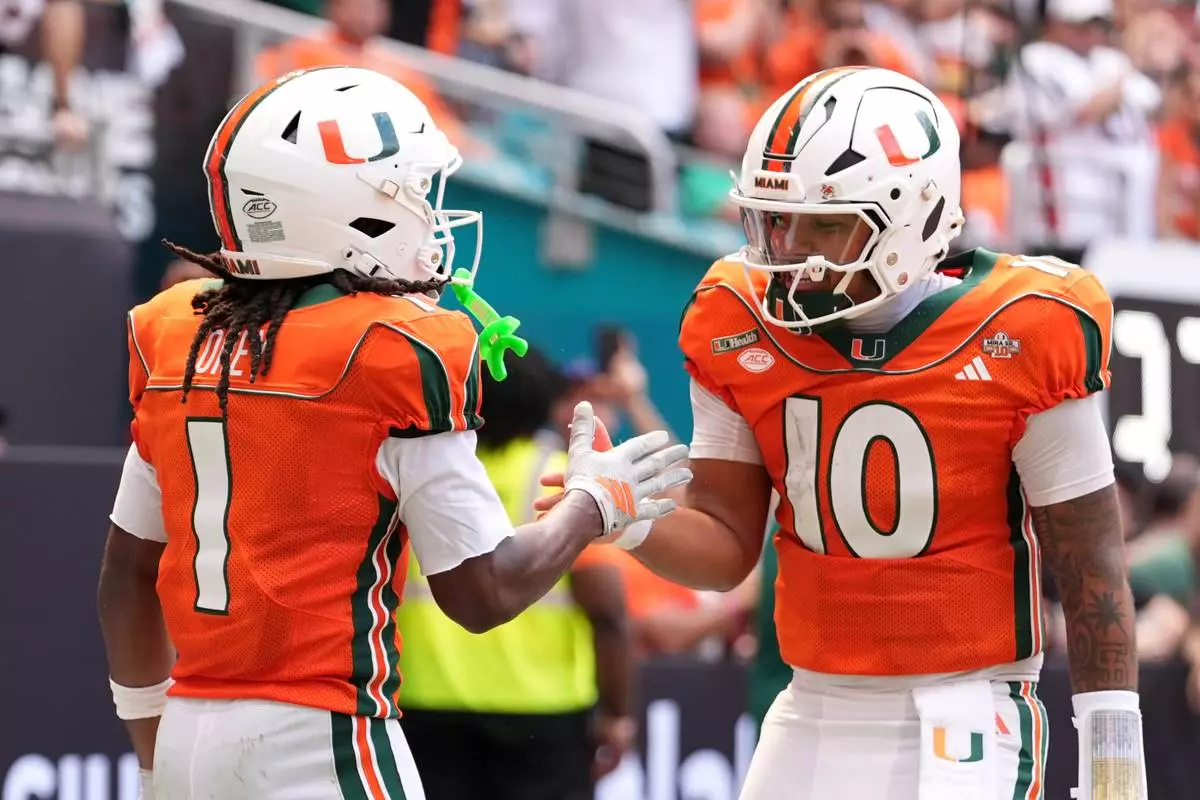
Miami wide receiver Malachi Toney (1) celebrates with quarterback Darian Mensah (10) after scoring a touchdown against Pittsburgh during the first half of an NCAA college football game, Saturday, Oct. 24, 2026, in Miami Gardens, Fla. (AP Photo/Rebecca Blackwell)
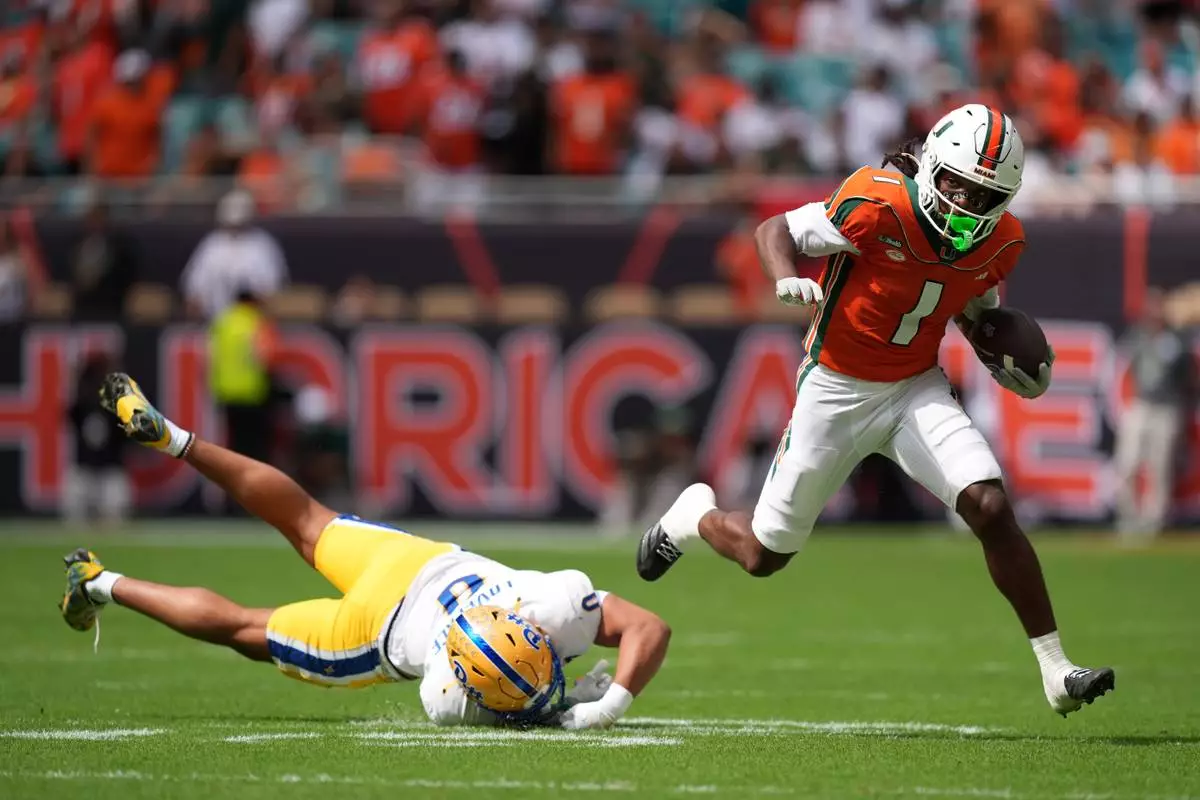
Miami wide receiver Malachi Toney (1) escapes a tackle from Pittsburgh linebacker Braylan Lovelace (0) during the first half of an NCAA college football game, Saturday, Oct. 24, 2026, in Miami Gardens, Fla. (AP Photo/Rebecca Blackwell)
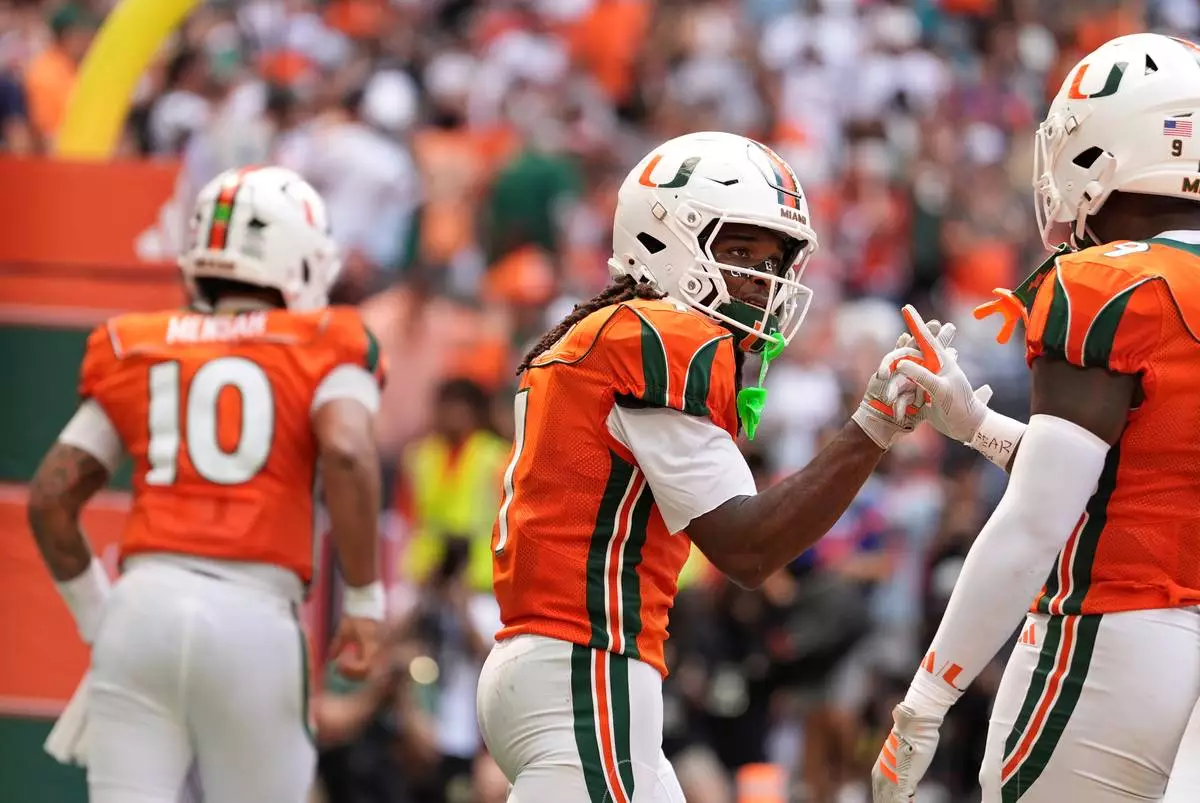
Miami wide receiver Malachi Toney (1) celebrates Miami tight end Elija Lofton (9) after scoring a touchdown during the first half of an NCAA college football game, Saturday, Oct. 24, 2026, in Miami Gardens, Fla. (AP Photo/Rebecca Blackwell)
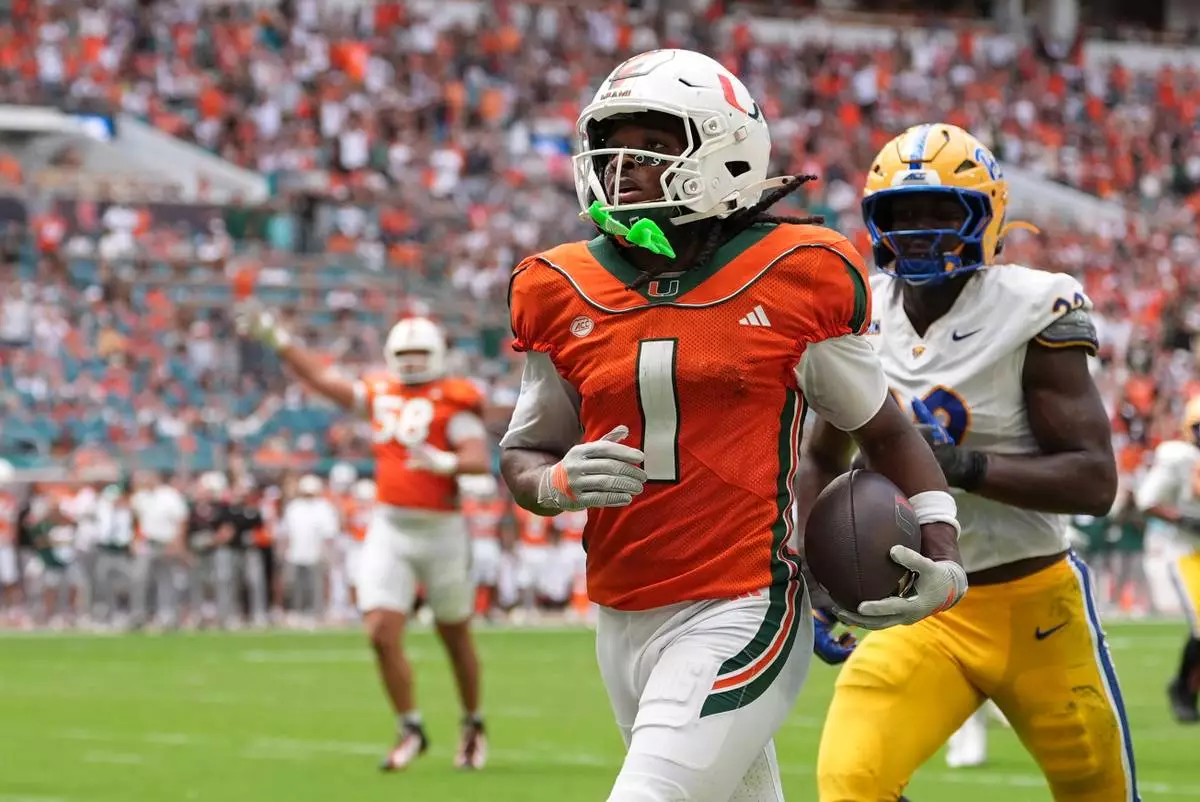
Miami wide receiver Malachi Toney (1) runs in to the endzone for a touchdown during the first half of an NCAA college football game against Pittsburgh, Saturday, Oct. 24, 2026, in Miami Gardens, Fla. (AP Photo/Rebecca Blackwell)