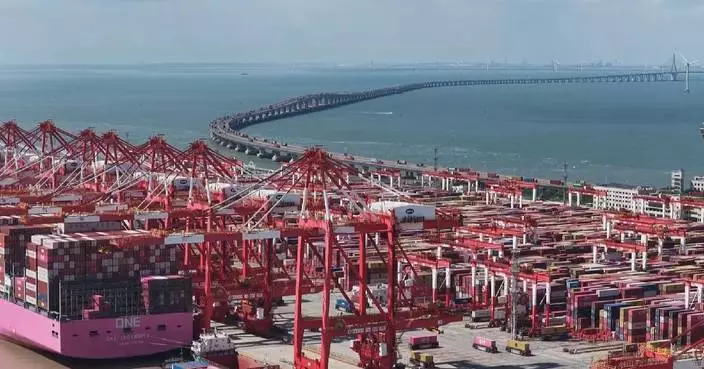
China is transforming from a major hardware manufacturing power into an innovation-driven economy, said business leaders attending the 2025 Summer Davos Forum Thursday in Tianjin, China.
At a session themed "China's Economy: Analysed" in the forum, guests agreed that China's advance in the fields of technology and intellectual property (IP) are bringing new opportunities for the world.
"China's a great innovator on the hardware side. I think what is actually the next version is give you on the software side and on the IP side," said Joseph Luc Ngai, chairman of the Greater China, McKinsey & Company.
Dr. Zhu Min, a member of the Senior Expert Advisory Committee of the China Center for International Economic Exchanges, said China's artificial intelligence (AI) industry is expected to usher in a new stage of growth which will benefit the whole world.
"I think the fundamental is China is going to lead AR+ wave. Not only for China but for whole world. So, be prepared. The big wave is coming. Brace for the new world. It will be excellent, [an] excellent new-tech world," he said.
Jin Keyu, a professor of Hong Kong University of Science and Technology, said the IP is an important engine driving innovation and creativity for companies.
"The ones that are most protected from trade wars and geopolitical uncertainties are those that have their own IP, R&D skill upstream. But the ones that suffer the most are the labor-intensive ones," she said.
Syensqo, a Belgian company and a leader in advanced materials and specialty chemicals, said they have already started introducing high-end technologies from China to many other parts of the world.
"Targeting other regions, other countries in Asia, but also in Europe and on-shoring the best available technology in China there," said Ilham Kadri, CEO of Syensqo.
The 2025 Summer Davos, or 16th Annual Meeting of the New Champions, concluded in Tianjin on Thursday. The event brought together over 1,700 leading figures from more than 90 countries and regions to explore how entrepreneurship and emerging technologies can unlock more dynamic and resilient economies.

China transforms from hardware manufacturing power to innovation-driven economy: business leaders
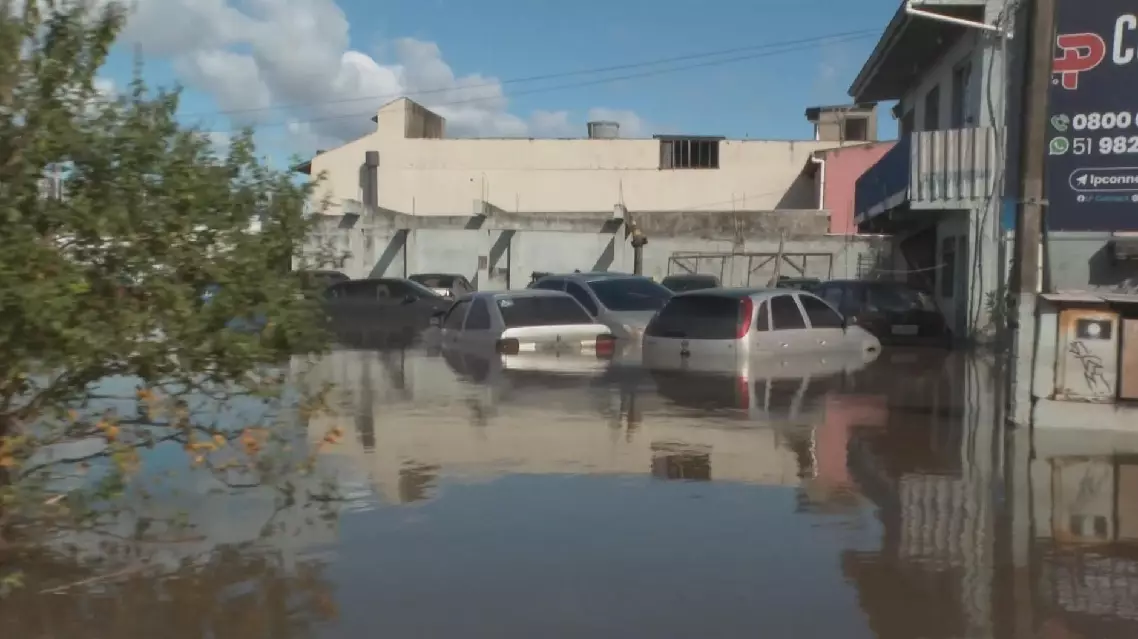
A Brazilian climatologist warned that climate risks in southeastern Brazil, including the Sao Paulo state, will further escalate as the Southern Hemisphere enters spring, following an abnormal September in the country's largest city marked by alternating heavy rains and high temperatures driven by a strong El Nino phenomenon and local cold fronts.
Winters in Sao Paulo are typically relatively dry, but the arrival of a strong El Nino has changed that this year.
According to the city's climate emergency management center, cumulative rainfall during this year's winter, from June 20 to September 22, reached 417.1 millimeters, a 219.6-percent surge from the historical average of 130.5 millimeters. Meanwhile, cumulative precipitation from the beginning of September up to the 22nd day of the month hit 294.3 millimeters, marking the highest level on record for the same period.
In an interview with China Media Group (CMG) via video link, Jose Antonio Marengo Orsini, a climate expert at Brazil's National Center for Monitoring and Warning of Natural Disasters, pointed out that extreme short-term precipitation puts immense pressure on the city's vulnerable flood-control infrastructure.
"One of the characteristics of such extreme weather is a massive amount of rainfall within a few days, with two or three days of precipitation equaling a typical month's total. The situation is even more severe in coastal areas prone to landslides or in the city of Sao Paulo. In the Sao Paulo metropolitan area, any heavy rain will trigger waterlogging because most of the city's ground is impermeable by water," he said.
"It has rained almost every day for the past two weeks, and the city's rivers are on the verge of overflowing. It can be said that El Nino has basically brought about this type of extreme weather. These changes began to become more noticeable in spring and will turn more severe in summer," said the expert.
Although Brazil is not bordered by the Pacific Ocean, the largest country in Latin America faces varying degrees of climate anomalies whenever an El Nino phenomenon occurs.
For instance, the current El Nino phenomenon has triggered severe heat and drought in the north, leading to a drastic drop in water levels on the Amazon River basin's inland waterways. In the western Pantanal region, extreme heat and dry conditions have fueled frequent wildfires, severely damaging wetland vegetation.
In the Sao Paulo state, the country's most economically developed region, El Nino also causes distinct areas to experience either drought or heavy rainfall, often accompanied by scorching temperatures.
According to the expert, the climate shocks brought by El Nino extend far beyond natural disasters, impacting agriculture, logistics, energy, and public health, ultimately evolving into a systemic socioeconomic challenge. As the Southern Hemisphere approaches summer, a season typically characterized by even more frequent extreme weather events, local authorities face the dual test of disaster prevention and ensuring essential supplies.
Southeastern Brazil faces rising climate risks as El Nino persists: climate expert