Skip to Content Facebook Feature Image

Southwest China's Rongjiang County lifts emergency response to top level as new flood wave hits
China

China

China

Southwest China's Rongjiang County lifts emergency response to top level as new flood wave hits

2025-06-28 16:36 Last Updated At:23:17

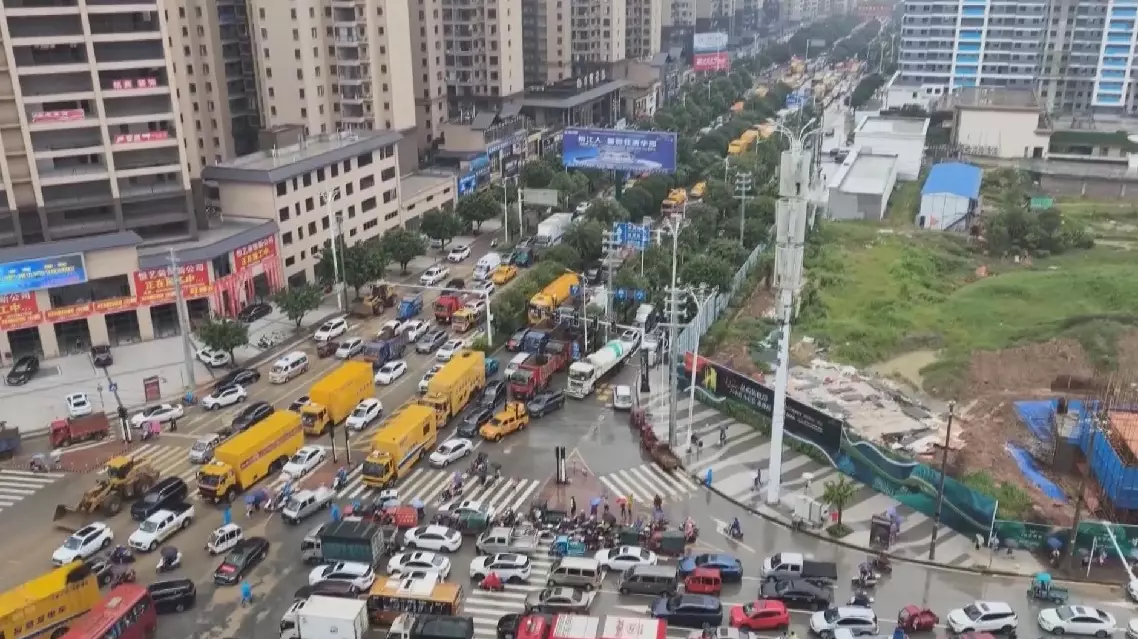
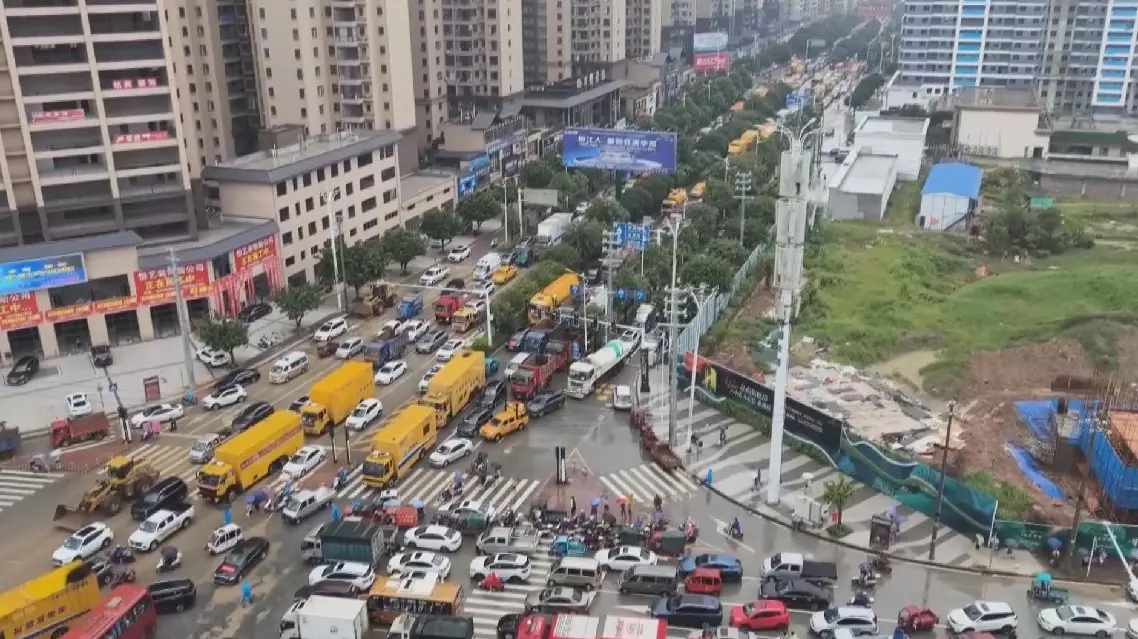
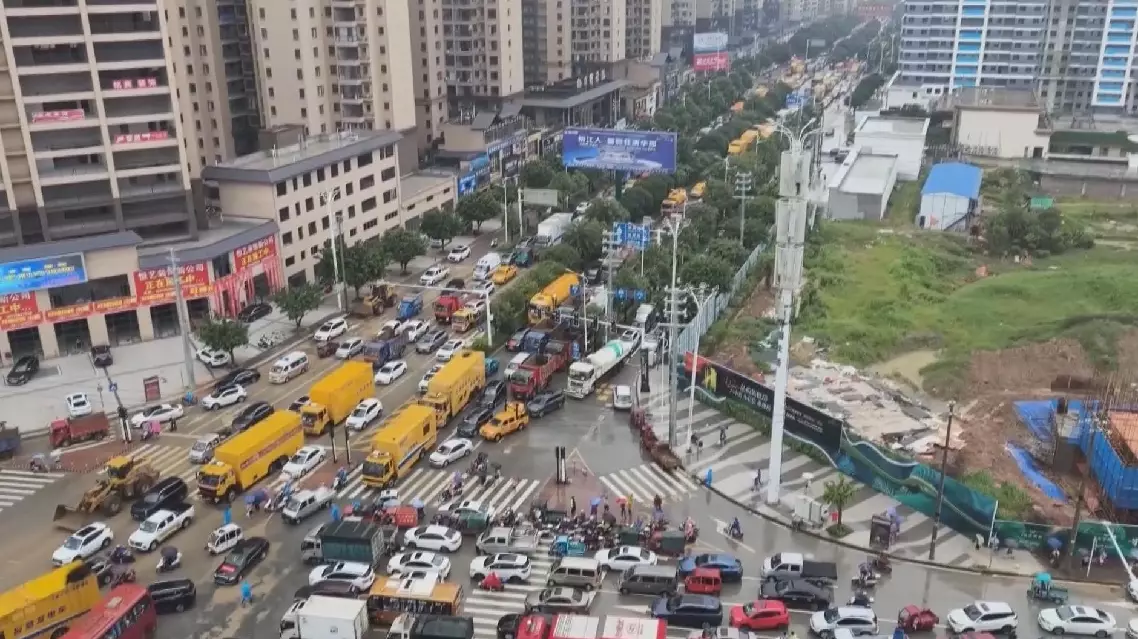
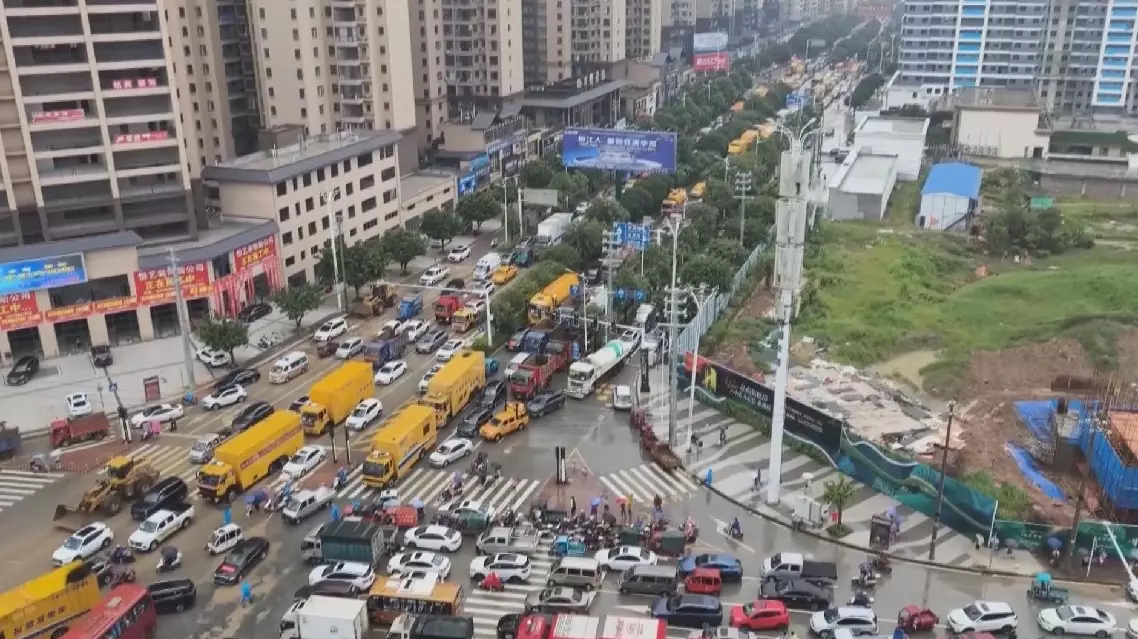
A new wave of flooding has prompted authorities in Rongjiang County, southwest China's Guizhou Province, to escalate its flood emergency response to the highest Level, as rising waters threaten local communities and force evacuations.

According to hydrological forecasts, the Shihuichang Hydrological Station on the Duliu River is expected to register a peak water level of 253.5 meters around 17:00 on Saturday. This level exceeds the guaranteed safety threshold of 251.5 meters by two meters, with an anticipated flood discharge rate of 8,360 cubic meters per second.

More Images
Southwest China's Rongjiang County lifts emergency response to top level as new flood wave hits

Southwest China's Rongjiang County lifts emergency response to top level as new flood wave hits
Southwest China's Rongjiang County lifts emergency response to top level as new flood wave hits
Southwest China's Rongjiang County lifts emergency response to top level as new flood wave hits
Southwest China's Rongjiang County lifts emergency response to top level as new flood wave hits

Southwest China's Rongjiang County lifts emergency response to top level as new flood wave hits
Southwest China's Rongjiang County lifts emergency response to top level as new flood wave hits
Southwest China's Rongjiang County lifts emergency response to top level as new flood wave hits

In response, the Rongjiang County Flood Control and Drought Relief Headquarters announced that the county raised its emergency response from Level II to Level I — the most severe classification — effective from 12:30 on Saturday.

Local government departments have begun relocating residents from the urban center to designated safe zones. Several rural townships, including Dingwei and Tashi (home to Yao and Shui ethnic communities), have reported severe flood damage and are currently coordinating the evacuation of affected residents.

This latest escalation comes just days after Rongjiang County was hit by severe flooding that began on June 24. At that time, officials also raised the emergency response to Level I. By June 26, six people had been confirmed dead as a result of the disaster.

China has a four-tier emergency response system for flood control, with Level I being the most severe, and a four-tier weather warning system, with red representing the most severe warning, followed by orange, yellow, and blue.

Southwest China's Rongjiang County lifts emergency response to top level as new flood wave hits
Southwest China's Rongjiang County lifts emergency response to top level as new flood wave hits
Southwest China's Rongjiang County lifts emergency response to top level as new flood wave hits

Southwest China's Rongjiang County lifts emergency response to top level as new flood wave hits

Southwest China's Rongjiang County lifts emergency response to top level as new flood wave hits

Southwest China's Rongjiang County lifts emergency response to top level as new flood wave hits

Southwest China's Rongjiang County lifts emergency response to top level as new flood wave hits

Southwest China's Rongjiang County lifts emergency response to top level as new flood wave hits

The United States cannot legitimize an operation that attacked Venezuela and captured its president, a Chinese scholar said Sunday.

On Saturday, the United States launched a large-scale strike on Venezuela, during which Venezuelan President Nicolas Maduro and his wife were 'captured and flown out of Venezuela' according to a post by U.S. President Donald Trump on his Truth Social account.

Teng Jianqun, director of the Center for Diplomatic Studies at Hunan Normal University, said in an interview with China Global Television Network (CGTN) that the aim of this operation is to take full control of Venezuela’s natural resources.

"I don't think the United States can legitimize this operation to take custody of the president of Venezuela. And also I don't think the United States can legitimize its any action in taking the oil reserves of that country. This is actually a very dangerous game played by the Trump administration. And of course, the United States would like to take full control of that country and to take full control of the natural resources, especially the large reserve of oil in Venezuela," said Teng.

Teng said Venezuela is not an isolated case but a common practice by the United States. The United States launched an invasion of Panama on Dec. 20, 1989, which continued until January 1990, with the stated objective of capturing Panamanian strongman Manuel Noriega on charges of drug trafficking and organized crime.

"We still remember the so-called sentence of the former president of Panama in the late 1980s. And this time, the president of Venezuela will be under some judicial condition (judicial proceedings) for the so-called drug trafficking and some other crimes. So I think this is not a single case for the Venezuela country, but also this is actually a practice by the United States -- to use force, to use so-called justice under law against any leaders in Latin America and the Caribbean waters," he said.

US cannot legitimize operation against Venezuela: Chinese scholar

US cannot legitimize operation against Venezuela: Chinese scholar

Recommended Articles