Skip to Content Facebook Feature Image

Foreign trade of China's Yangtze River Delta tops 100 tln yuan

China

China

China

Foreign trade of China's Yangtze River Delta tops 100 tln yuan

2025-06-29 00:45 Last Updated At:04:17

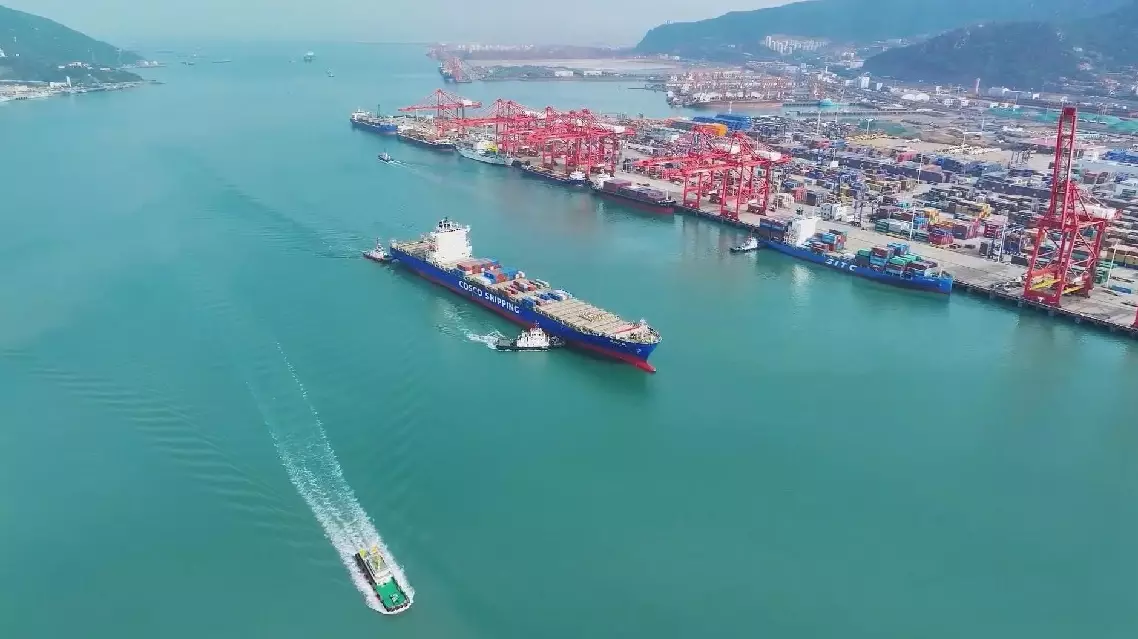
The latest data shows that as of May this year, the cumulative import and export volume of the Yangtze River Delta region has reached 101.2 trillion yuan (about 14.12 trillion U.S. dollars) over the seven years since the integrated development of the Yangtze River Delta was elevated to a national strategy, highlighting the region's strong economic resilience and vitality.

According to customs statistics, in the first five months of this year, the Yangtze River Delta region's import and export volume reached 6.73 trillion yuan, marking a year-on-year increase of 5.2 percent and setting a new record high for the same period in history.

In the first five months of this year, machinery and electronic products accounted for nearly 60 percent of the Yangtze River Delta region's total export value. Among them, integrated circuit exports reached 211.16 billion yuan, up 19.3 percent year on year. Automobile exports totaled 146.41 billion yuan, an increase of 14 percent. Exports of industrial robots reached 2.08 billion yuan, representing a significant year-on-year growth of 58.8 percent.

The Yangtze River Delta is home to 26 national-level advanced manufacturing clusters, covering a wide range of fields such as large aircraft, marine engineering equipment, and high-tech ships. These clusters have become a key foundation for driving the region's goods trade toward medium- and high-end development.

"High-tech industries and high-end manufacturing are the main driving forces behind foreign trade in the Yangtze River Delta. One out of every two industrial robots exported nationwide is manufactured in the Yangtze River Delta. High-tech products such as integrated circuits, biomedicine, and artificial intelligence have been exported to over 200 countries and regions worldwide, and the scale of foreign trade continues to grow," said Li Jirong, deputy director of the Department of Statistics and Analysis of Shanghai Customs.

In the first five months of this year, the Yangtze River Delta region's imports and exports with ASEAN and the European Union, its main trading partners, reached 1.07 trillion yuan and 1.02 trillion yuan respectively, representing year-on-year increases of 16.9 percent and 3.9 percent. Meanwhile, the region's total trade with Belt and Road partner countries reached 3.36 trillion yuan, up 10.1 percent year on year.

"Over the past seven years, Shanghai, Jiangsu, Zhejiang, and Anhui have closely focused on the two key words of 'integration' and 'high-quality." They have continuously deepened industrial collaboration, innovation cooperation, resource sharing, and the flow of production factors, constantly injecting new momentum into the high-quality development of regional foreign trade," said Lian Junwei, a researcher at the Zhejiang Development and Planning Institute.
Foreign trade of China's Yangtze River Delta tops 100 tln yuan
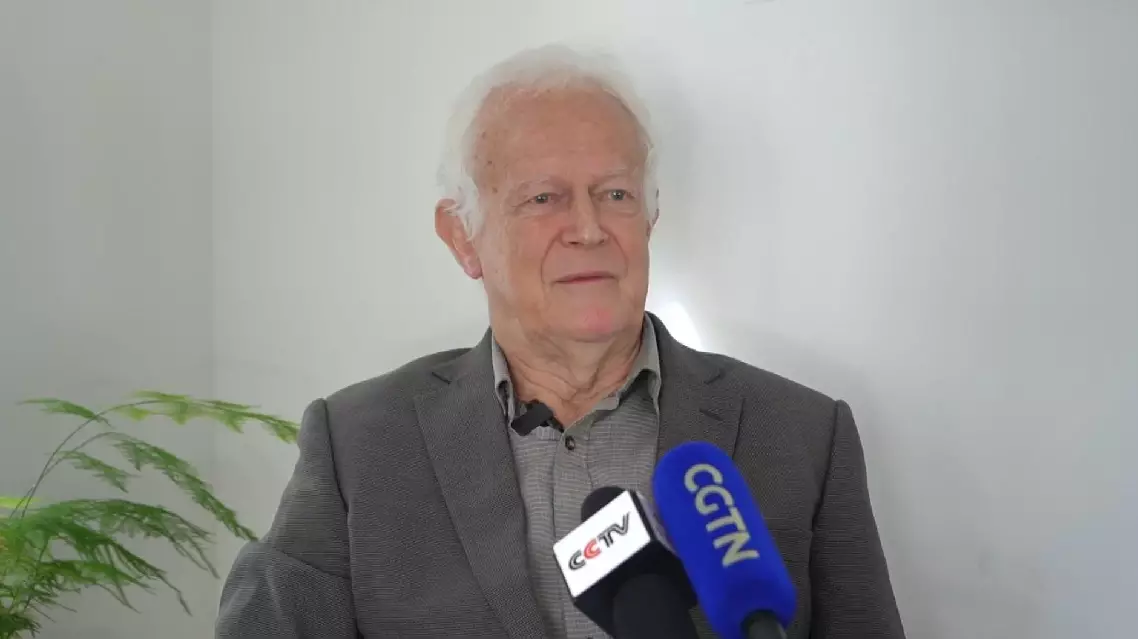

Foreign trade of China's Yangtze River Delta tops 100 tln yuan

Thai and Cambodian leaders must find a way to resolve their differences through talks and not on the battlefield, according to a former Thai foreign minister, who also believes China could be in a unique position to serve as a mediator given its strong ties with both sides.

Border clashes between the two sides have reignited since Dec 7 -- less than two months after the two sides signed a joint peace declaration -- with both trading the blame for instigating the attacks.

The latest round of fighting has left at least 19 Thai soldiers and 19 Thai civilians dead, with over 270,000 people displaced, Thailand's defense ministry announced on Wednesday.

Meanwhile, on the same day, the Cambodian Defense Ministry said that 17 civilians have been killed and 77 injured as the Thai military forces have continued airstrikes and artillery shelling into Cambodian territory, with over 438,000 individuals fleeing their homes.

With the two sides continuing to point the finger of blame and trade accusations of attacks on civilians, peace talks appear to be a long way off.

Kasit Piromya, who formerly served as Thailand's Minister of Foreign Affairs, urged the two countries' leaders to put people first, set aside their pride and find a resolution.

"The people must be the priority, not the victory or losses or the battlefield. It's detrimental and destructive to all. It is easy to arouse the passion, but [the sign of] great leaders, great statesmen is to be able to overcome the nationalistic sentiment and come back to the sense and sensibility and to start to talk with one another," he said.

China has called for utmost restraint and every possible measure conducive to a ceasefire to ensure de-escalation of tensions as soon as possible, a Chinese foreign ministry spokesman told a daily press briefing on Monday.

China supports direct dialogue and consultation between the two countries, as well as the efforts of ASEAN -- and Malaysia, in particular -- to promote peace talks, and the pursuit of a mutually acceptable solution within the ASEAN framework, according to the spokesman.

Piromya said he believes China could play a constructive role in a peace process between the two sides.

"China has been having, I think, more or less an excellent bilateral relationship respectively with Thailand and Cambodia. So China is in a very unique and great position to bring the two sides, Cambodia and Thailand, together," Piromya said.

Former official urges Thailand, Cambodia to make people priority, end border clashes

Former official urges Thailand, Cambodia to make people priority, end border clashes

Recommended Articles