Experts from both the mainland and the Taiwan region have lashed out at the absurd narratives in Taiwan leader Lai Ching-te's recent "10 lectures on unity" on the Taiwan island, saying Lai's related speeches were awash with lies and deception, hostility and provocation, deliberate distortion and fragmentation of history attempted to cover up his true separatist intentions.
Lai kicked off the so-called "10 lectures on unity" campaign last Sunday, with each lecture focusing on a specific theme, which completely divorced from historical facts, legal foundations and current realities.
The Taiwan Affairs Office of the State Council aptly described the speech as a blatant "Taiwan independence manifesto," inciting confrontation across the Taiwan Strait, and a patchwork of deeply flawed and misguided separatist rhetoric.
Lai's first lecture started with the so-called "Taiwan has had an independent ecosystem since ancient times" from paleontological fossils to human skull fossils, from archaeological sites to prehistoric culture, attempting to construct Taiwan's so-called "independence" and deny the fact that Taiwan has been an inseparable part of China since ancient times.
Wang Chuanchao, a special-term professor with the Fudan University, described it as a pure lie.
"Lai Ching-te claimed that 'Taiwan has had an independent ecosystem since ancient times' and used rhino fossils as a basis. However, rhino fossils unearthed in western Taiwan have been confirmed by geological and paleontological research to be completely consistent with fossils in the same period of strata in the southern part of the Chinese mainland. Taiwan and the mainland were once connected in the geological history period, and large mammals such as rhinos migrated from the mainland to Taiwan through land bridges. Lai Ching-te attempts to sever the connection between Taiwan and the mainland with archaeological sites, but Taiwan's prehistoric culture is precisely an extension of mainland civilization," Wang said. From fossils, Lai turned to ethnicity. He claimed that Taiwan's indigenous peoples - part of the community speaking Austronesian languages - have no connection to the Chinese mainland, which means Taiwan's cultural and ethnic origins are unrelated to the mainland's.
However, while the Austronesian language family is indeed widely recognized, its origins are not limited to Taiwan. Archaeological evidence confirms strong cultural links between Taiwan and the mainland's southeastern coast, including sites in Fujian and Guangdong Provinces.
The Keqiutou site in Fujian, for example, has well-documented links to Taiwan's Dapenkeng culture, an early Neolithic culture that appeared between 4000 and 3000 BC. In fact, researchers on both sides of the Taiwan Strait have established a joint International Austronesian Archaeological Research Base in Fujian, grounded in these findings.
Yu Tzu-hsiang, a professor with the Shih Hsin University in Taiwan, said he believes Lai's allegation that Taiwan is the cradle of Austronesian culture is groundless.
"Lai Ching-te also mentioned the Austronesian language family in an attempt to cut off the blood connection between the two sides of the Taiwan Strait. However, many scientists have long discovered that the Austronesian language family originated in southern China based on samples of people in the southern part of the mainland and Taiwan during the Neolithic Age, and spread to various parts of the South Pacific through Taiwan. In addition, the Han people who account for 96.2 percent of Taiwan's population are all immigrants from the mainland. They are not the 'rest of the population' called by the Lai authorities. The two sides of the Taiwan Strait both belong to the Chinese nation, and Lai cannot deny it at all," Yu said.
Lai also skipped over nearly two millennia of shared history between Taiwan and the mainland. In his version of events, Chinese governance of Taiwan began with the Qing Dynasty (1644-1911). This conveniently overlooks the fact that Emperor Sun Quan of the Three Kingdoms period (220-280 AD) sent expeditions to Taiwan (then known as Yizhou) as early as the third century. Later, the Yuan Dynasty (1271-1368) established administrative structures in Penghu, a cluster of islands in the Taiwan Strait.
Even more telling is Lai's omission of Zheng Chenggong (Koxinga), the Ming Dynasty general who expelled Dutch colonizers and established rule in Taiwan in 1662. Zheng was committed to restoring imperial rule and his administration in Taiwan, which reflected traditional Chinese regional governance. At no point did he declare Taiwan a sovereign state.
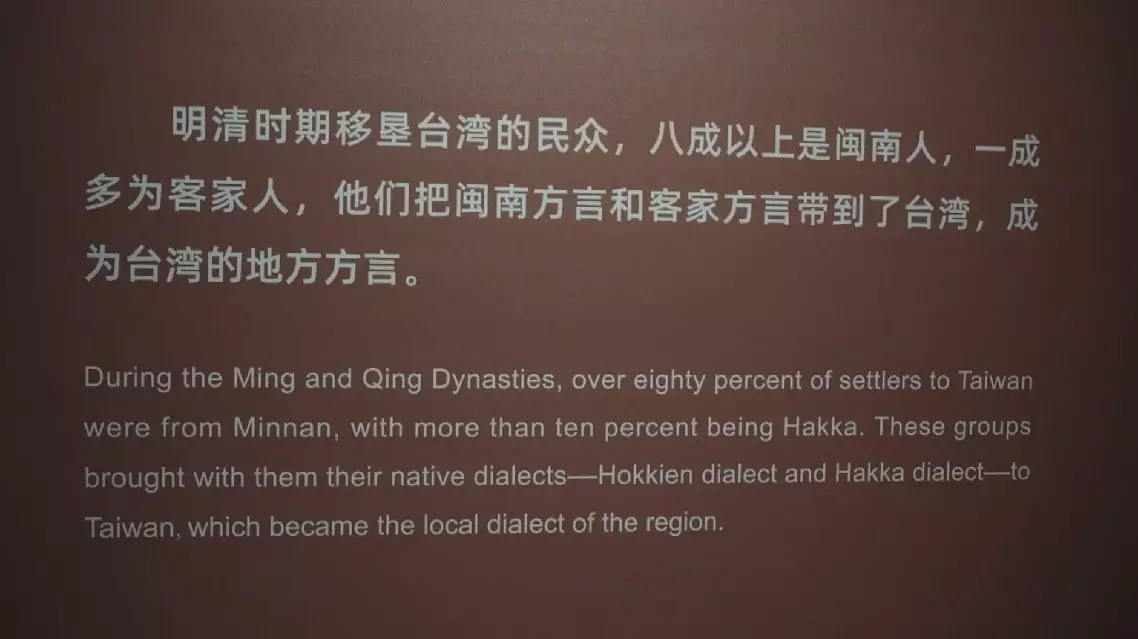
The sustained historical connection between the island and the mainland facilitated migration, particularly of Han Chinese, whose descendants today make up the majority of Taiwan's population.
"The historical truth is that when the Qing government took Taiwan into its territory in 1683, there were only 80,000 to 90,000 indigenous people, divided into hundreds of tribes, in a primitive state without writing and currency, and there was a custom practice of beheading outsiders, so the Han people could not cultivate land in Taiwan. At that time, the Qing government recognized the indigenous people's ownership of land in Taiwan and stipulated that the Han people who opened up land in Taiwan must pay 'aborigine rent' to the indigenous people. That is to use 'aborigine rent' to protect the livelihood of the indigenous people and guarantee security for the Han people, which led to a rapid increase in the number of Han immigrants from Fujian and Guangdong to settle in Taiwan from 30,000 in 1686 to 450,000 in 1735 and 660,000 in 1756," said Chi Chia-lin, honorary chairman of the Reunification Alliance Party in Taiwan.
Experts lash out at absurd narratives in Lai Ching-te's '10 lectures on unity'