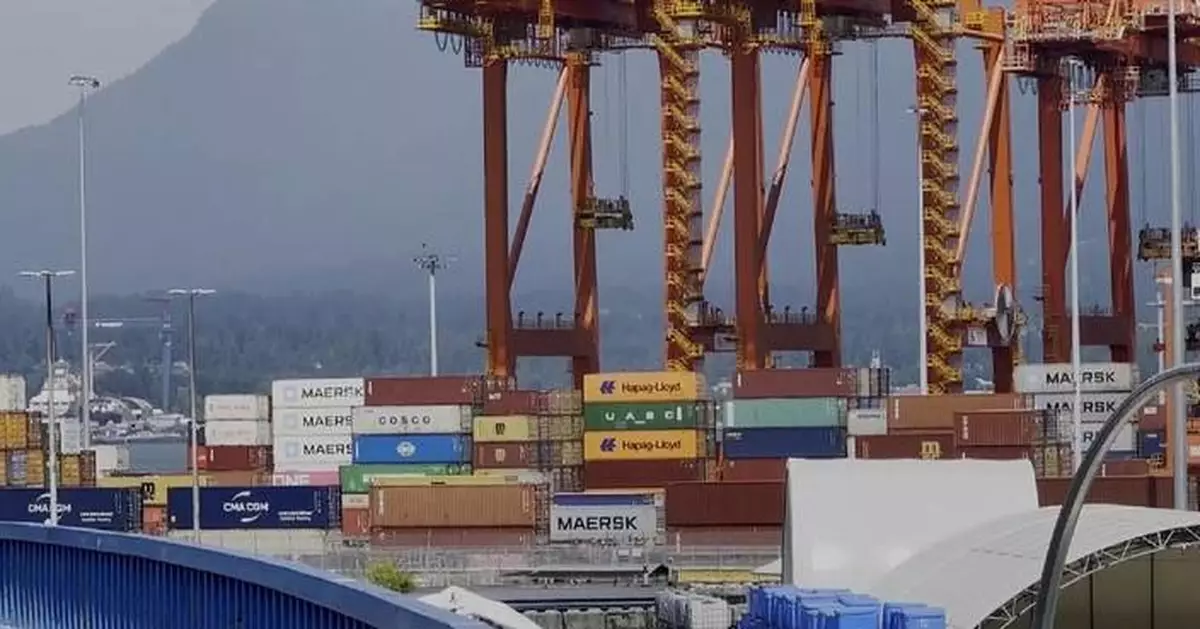
Canada’s digital services tax is set to take effect on Monday, but former Canadian diplomat Gordon Houlden says the new levy -- which triggered a sharp response from Donald Trump -- could still be modified, delayed, or even withdrawn as part of behind-the-scenes negotiations.
Canada enacted the digital services tax act last June, applicable to large businesses, including American tech giants. Under the new tax policy, the first payments are set to be collected on Monday. In response to the tax, Trump abruptly cut off all trade talks with Canada.
The Canadian government has signaled no immediate plans to delay or withdraw the tax, as the current administration is determined to maintain a firm public stance.
Houlden, who is also director of the China Institute at the University of Alberta, said he believed private negotiations could still result in changes to the digital services tax, despite Ottawa's firm public stance.
"I think that dealing with Donald Trump is more art than a science. The Canadian approach under Carney has been -- we will in private negotiate with you, but we're not going to cave in public when you impose some tariff or some action towards us. I think the worry there is that Trump could make something with that, what I would argue, bully tactics. But that is in his pocket when you're starting from a position of weakness. However, I would not be surprised to see this on the table in private. So the fact that they are kind of going ahead with it on Monday, that the taxes will begin to be collected, that does not mean that at some point, over the next few days and weeks, it could be modified, delayed, or even withdrawn," he told China Global Television Network (CGTN) on Friday.
Houlden warned that Trump may retaliate with steep tariffs, possibly exceeding expectations, as the U.S. holds significant economic leverage over Canada.
"My guess is, and this is a big guess, because with Donald Trump, you never quite know what you're going to get on a given day. He has said that Canada will be notified, along with other countries, shortly what overall tariff rate we will pay. And we will see. For China, it's 30 percent. For Canada, potentially unknown, but I suspect that, as part of this tough negotiation -- and blustery even from Trump -- we will see a higher-than-expected tariff rate indicated to us. But again, I think that's a waypost in a longer-term negotiation. But yes, Trump thinks he holds all the cards. I'm not sure that's true. But the U.S. is in a powerful position vis-à-vis Canada. Eighty percent of our exports go to the United States. This is a place that Canada wants to tack away from. Mr. Carney has said he would like to see us less dependent on the United States in trade going forward," he said.
He argued that uncertainty surrounding tariffs and trade policy is making it increasingly difficult for businesses to plan and invest, adding that the lack of stability has a chilling effect on global trade.
"For both Canadian and American firms, and I'd argue firms elsewhere in the world, it's exceptionally difficult. Firms like to have a window, perhaps, of five years of stability. If you're going to build a plant, you're going to want more than five years of stability in order to invest billions of dollars in a factory. Even short-term planning-- what labor force do you need? What production levels? It's a nightmare for planning. This has, I think, a chilling effect on trade, even before tariffs are put into place, when there's uncertainty. Business hates uncertainty," said Houlden.
Canada's digital tax takes effect Monday, but behind-the-scenes talks could bring changes: expert