Leading Chinese LCD panel maker CVTE has intensified its efforts to go digital as Chinese small and medium-sized enterprises (SMEs) accelerate their digital transformation.
CVTE, headquartered in the southern Chinese city of Guangzhou, has been manufacturing LCD (Liquid Crystal Display) mainboards, intelligent interactive panels, medical devices, and other hardware since its establishment in 2005.
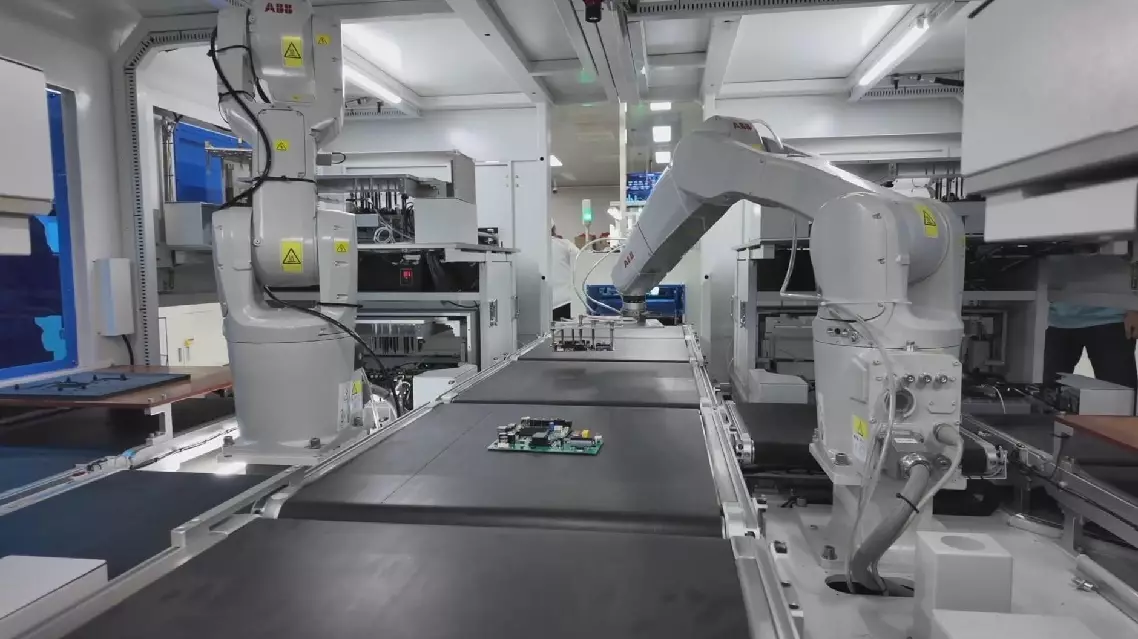
The company has launched a newly developed digital platform featuring its internet-connected automated optical inspection devices, which conduct quality inspections on each product and provide real-time quality inspection data.
"There are 70 such internet-connected devices in this workshop, which collect millions of production data every day, providing a basis for production decisions in a fast and accurate manner," said Zhang Feng, head of the component factory of CVTE's intelligent manufacturing base.
With intelligent internet-connected equipment and digital platforms, CVTE also provides solutions for the upstream and downstream data flow of the industry, improving the production efficiency of the industrial chain.
"In addition to the production process, we are also carrying out digital transformation in supply and delivery coordination and driving more small and medium-sized enterprises in the chain to transform together, helping them reduce costs and increase efficiency," said Zhang.
As of now, China has selected three batches of 101 pilot cities to support more than 40,000 SMEs in implementing the digital transformation, and nearly 3,000 of them have completed this transformation.
"Taking the digital transformation of SMEs in pilot cities as a leverage, we will promote SMEs smart, digital and internet-connected in a classified and phased manner, innovate our policy measures, optimize our services, support SMEs' artificial intelligence entrepreneurship, and promote the digital transformation and high-quality development of China's SMEs in a systematic and in-depth manner," said Jia Hongwei, deputy director of the Department of Small and Medium Enterprises under the Ministry of Industry and Information Technology.
Data show that China has selected and cultivated more than 3,500 digital service providers and created more than 10,000 digital products characterized as "small, fast, light, and accurate."
Chinese LCD manufacturer CVTE boosts digital efforts amid SMEs' transformation
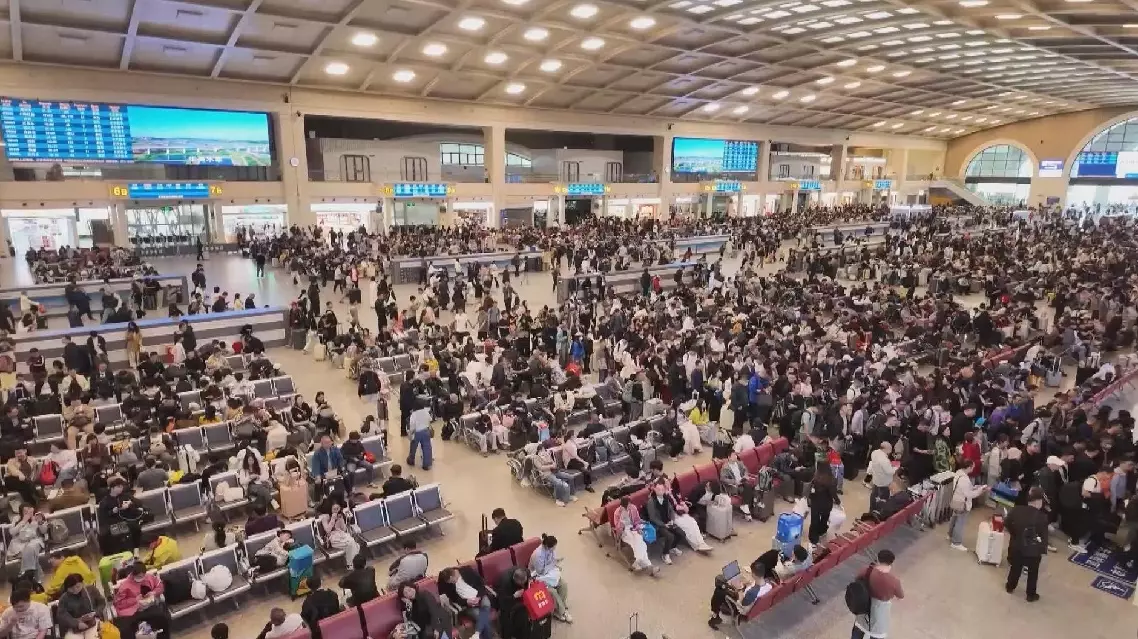
China’s transport authorities mobilized rail, road, air and waterway resources on Tuesday, the final day of the five‑day May Day holiday, to manage the peak return flow as passenger volumes surged nationwide.
The national railway system expects 23 million passenger trips on the day, with operators adding 2,225 extra trains and deploying capacity on popular routes and peak hours to handle the return flow from smaller cities to major hubs.
In Zhengzhou, central China's Henan Province, 134 trains have been temporarily added for high-demand directions including the Beijing-Tianjin-Hebei region, the Yangtze River Delta, and the Guangdong-Hong Kong-Macao Greater Bay Area.
"Railway return travel peaks today. In light of short stops and high passenger volumes, we have strengthened coordination with intermediate stations and offered guidance to passengers for smooth boarding and alighting to prevent crowding and stampedes," said Ji Yudi, a conductor of China Railway Zhengzhou Group.
Regional operators in Beijing, Chengdu and other cities have also proactively coordinated with local transit authorities to extend bus and subway operating hours, increase nighttime service frequency, and boost taxi and ride-hailing availability to ensure seamless transfers for late-arriving passengers.
With respect to highways, the national highway network is projected to record approximately 61 million vehicle trips on Tuesday. The peak traffic window is between 16:00 and 18:00, with congestion and slow-moving traffic likely around major city entry and exit points, as well as airport expressways in major cities like Beijing, Shanghai, Guangzhou and Chengdu.
To ease holiday congestion, traffic police in south China's Guangdong Province have rolled out tidal lanes and flow control measures at 24 key highway sections in nine cities.
"Using a highway interconnect system, we have conducted remote flow diversion. During this morning's peak return period, traffic efficiency on the Erenhot-Guangzhou Expressway improved significantly, showing no sign of congestion," said Dai Zhouwu, a local traffic police officer.
By water, an estimated 1.035 million passenger trips are expected to be made across the country on Tuesday, marking a 1.4-percent increase year on year.
To ensure smooth strait crossing from south China's Hainan Province, the maritime authorities in Zhanjiang City, south China's Guangdong Province have urged operators to supplement fixed sailings with extra voyages and optimized crew rotations to meet surging vessel demand.
Meanwhile, China's civil aviation sector is projected to carry 2.3 million passengers on Tuesday.
The Chengdu Shuangliu International Airport, one of the country's busiest airports in southwest China's Sichuan Province, are offering free luggage pick-up and delivering services to passengers arriving from Beijing, Shanghai, Guangzhou, and Shenzhen.
China’s transport network braces for record May Day return traffic