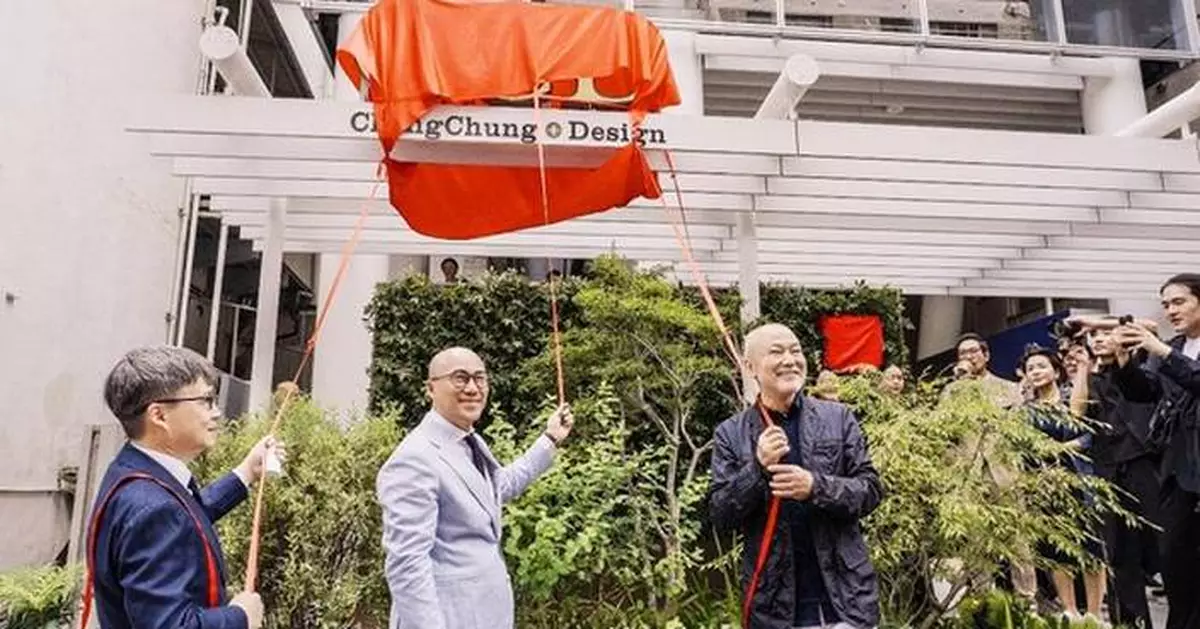
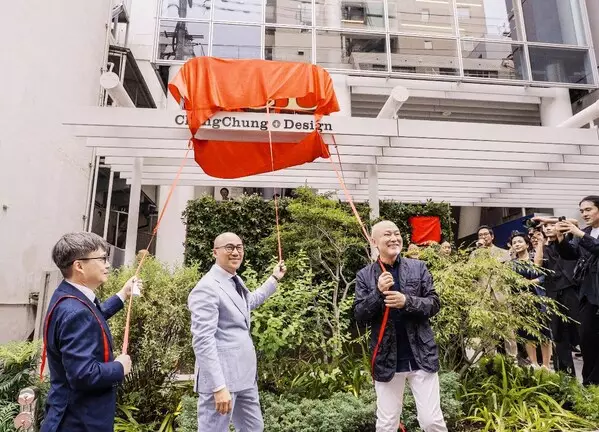
TOKYO, June 30, 2025 /PRNewswire/ -- On June 23, 2025, Cheng Chung Design (CCD) officially opened its CCD Tokyo — its latest addition following offices in Hong Kong, Singapore, London, Milan, and New York. The new location marks a significant step forward in CCD's global innovation, enabling the firm to provide clients across the Asia-Pacific region with end-to-end design solutions that combine local insight with global perspective, while further strengthening its presence in the region. The unveiling ceremony was jointly officiated by CCD Founder Joe Cheng, Co-Founder Ken Hu, and Muneaki Masuda, founder of TSUTAYA BOOKSTORE. The moment was also witnessed by CCD Global Co-President Renee Cheng; Mercy Wu, Chairwoman and CEO of Eslite Bookstore in Taipei; renowned Japanese architect Masayuki Kurokawa; leading Japanese property owners and developers; as well as representatives from the design, arts, and academic communities, international hotel groups, and major media outlets.
The team at the CCD Tokyo will provide integrated services ranging from architectural planning and interior design to furnishing and decor, with a focus on high-end hotels, mixed-use developments, cultural venues, and bespoke private residences. Drawing on its global experience in luxury hospitality design and supported by IDEAFUSION, an intelligent materials platform developed by RARITAG, the firm is positioned to deliver full-cycle solutions from concept to execution.
Looking ahead, CCD will continue to uphold its philosophy of "Design Is a Global Language," working with local strategic partners in Japan to explore deeper integrations of spatial aesthetics.
** The press release content is from PR Newswire. Bastille Post is not involved in its creation. **

CCD Opens CCD Tokyo, Marking a Key Milestone in Its Global Presence Strategy
CCD Opens CCD Tokyo, Marking a Key Milestone in Its Global Presence Strategy
ARMONK, N.Y., Dec. 29, 2025 /PRNewswire/ -- The following is the text of an email sent today to all IBM employees by Chairman and CEO Arvind Krishna:
IBMers,
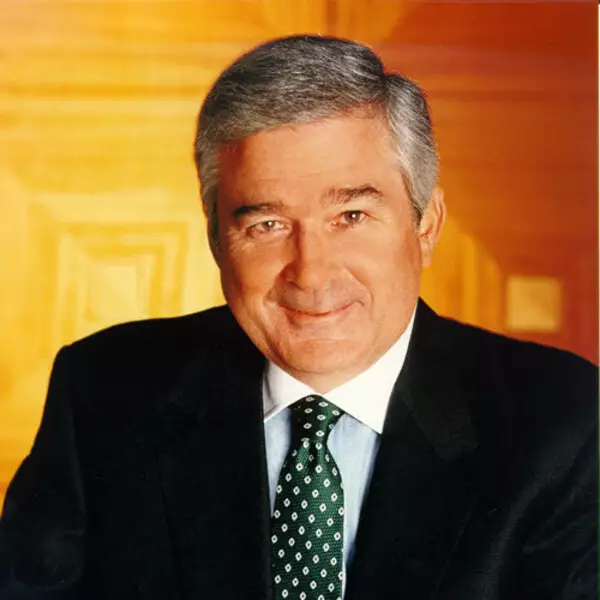
I am saddened to share that Lou Gerstner, IBM's Chairman and CEO from 1993 to 2002, passed away yesterday.
Lou arrived at IBM at a moment when the company's future was genuinely uncertain. The industry was changing rapidly, our business was under pressure, and there was serious debate about whether IBM should even remain whole. His leadership during that period reshaped the company. Not by looking backward, but by focusing relentlessly on what our clients would need next.
One of Lou's earliest signals as CEO has become part of IBM lore. Early on, he stopped a long internal presentation and said, simply, "Let's just talk." The message was clear: less inward focus, more real discussion, and much closer attention to customers. That mindset would define his tenure.
Lou believed one of IBM's central problems was that we had become optimized around our own processes, debates, and structures rather than around client outcomes. As he later put it, the company had lost sight of a basic truth of business: understanding the customer and delivering what the customer actually values.
That insight drove real change. Meetings became more direct. Decisions were grounded more in facts and client impact than in hierarchy or tradition. Innovation mattered if it could translate into something clients would come to rely on. Execution in the quarter and the year mattered, but always in service of longer-term relevance.
Lou made what may have been the most consequential decision in IBM's modern history: to keep IBM together. At the time, the company was organized into many separate businesses, each pursuing its own path. Lou understood that clients didn't want fragmented technology—they wanted integrated solutions. That conviction shaped IBM's evolution and reestablished our relevance for many of the world's largest enterprises.
Lou also understood that strategy alone would not be enough. He believed lasting change required a shift in culture—in how people behave when no one is watching. What mattered was what IBMers valued, how honestly they confronted reality, and how willing they were to challenge themselves and each other. Rather than discard IBM's long-standing values, he pushed the company to renew them to meet the demands of a very different era.
I have my own memory of Lou from the mid-1990s, at a small town hall with a few hundred people. What stood out was his intensity and focus. He had an ability to hold the short term and the long term in his head at the same time. He pushed hard on delivery, but he was equally focused on innovation: doing work that clients would remember, not just consume.
Lou stayed engaged with IBM long after his tenure ended. From my first days as CEO, he was generous with advice—but always careful in how he gave it. He would offer perspective, then say, "I've been gone a long time—I'm here if you need me." He listened closely to what others were saying about IBM and reflected it back candidly.
That neutral, experienced voice mattered to me, and I was fortunate to learn from Lou on a regular basis.
Lou was direct. He expected preparation. He challenged assumptions. But he was deeply committed to building a company that could adapt—culturally as much as strategically—without losing its core values.
Lou's impact extended well beyond IBM. Before joining the company, he had already built an extraordinary career—becoming one of the youngest partners at McKinsey & Company, later serving as president of American Express and CEO of RJR Nabisco. After IBM, he went on to chair The Carlyle Group and devoted significant time and resources to philanthropy, particularly in education and biomedical research. A native of Long Island, NY, Lou earned his undergraduate degree from Dartmouth and an MBA from Harvard, and he remained deeply devoted to his family throughout his life. Lou was preceded in death by his son Louis Gerstner III.
We will hold a celebration in the new year to reflect on Lou's legacy and what his leadership enabled at IBM.
My thoughts are with Lou's wife Robin, his daughter Elizabeth, his grandchildren and extended family, as well as his many friends, colleagues, and people around the world who were shaped by his leadership and his work.
Media Contact:
IBM Pressroom
ibmpress@us.ibm.com
** The press release content is from PR Newswire. Bastille Post is not involved in its creation. **

Remembering Lou Gerstner
Remembering Lou Gerstner