NEW YORK (AP) — The U.S. stock market added to its record on Monday as Wall Street closed out a second straight winning month.
The S&P 500 rose 0.5% in its first trading after completing a stunning recovery from its springtime sell-off of roughly 20%. The Dow Jones Industrial Average added 275 points, or 0.6%, and the Nasdaq composite gained 0.5%.
Click to Gallery
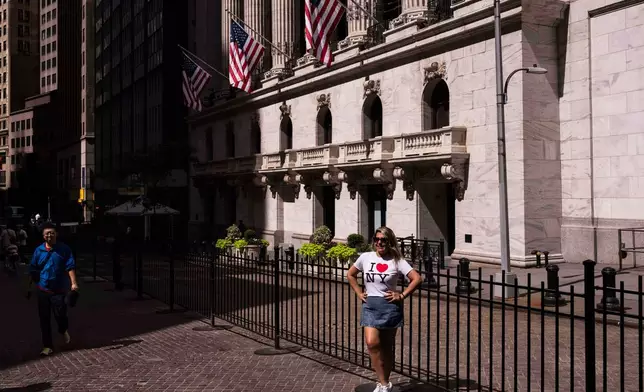
A tourist takes a picture in front of the New York Stock Exchange on Monday, June 30, 2025, in New York. (AP Photo/Yuki Iwamura)
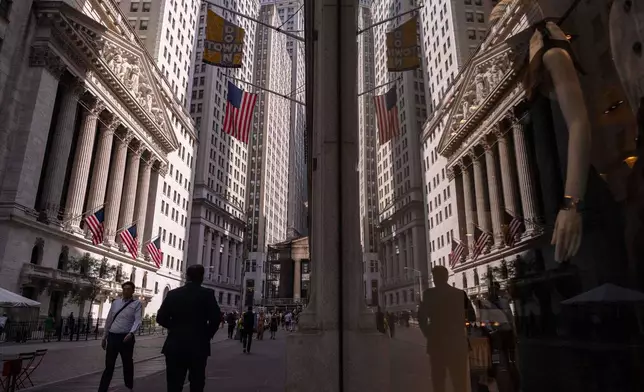
A reflection of a window shows the New York Stock Exchange on Monday, June 30, 2025, in New York. (AP Photo/Yuki Iwamura)
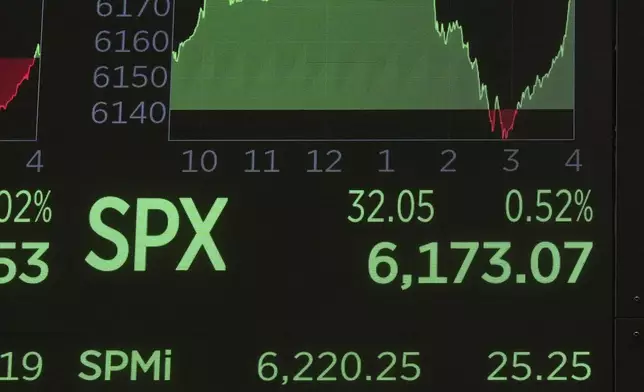
A board above the trading floor of the New York Stock Exchange shows the closing number for the S&P 500, Friday, June 27, 2025. (AP Photo/Richard Drew)

Currency traders watch monitors near a screen showing the Korea Composite Stock Price Index (KOSPI), top left, and the foreign exchange rate between U.S. dollar and South Korean won, top center, at the foreign exchange dealing room of the KEB Hana Bank headquarters in Seoul, South Korea, Monday, June 30, 2025. (AP Photo/Ahn Young-joon)
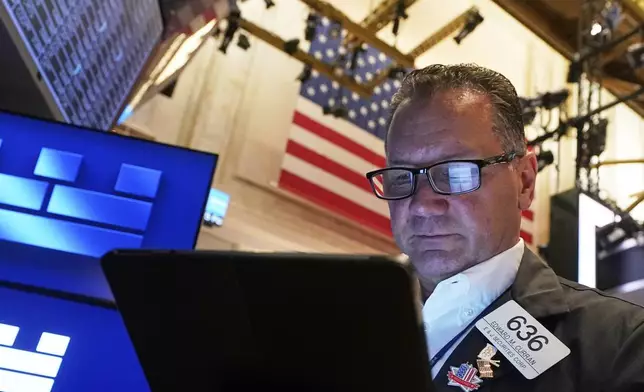
Trader Edward Curran works on the floor of the New York Stock Exchange, Friday, June 27, 2025. (AP Photo/Richard Drew)
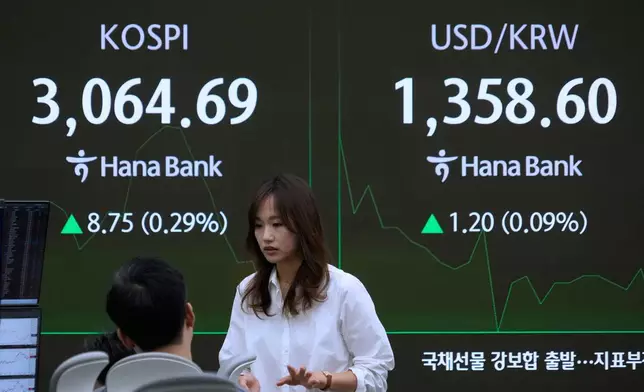
Currency traders work near a screen showing the Korea Composite Stock Price Index (KOSPI), left, and the foreign exchange rate between U.S. dollar and South Korean won at the foreign exchange dealing room of the KEB Hana Bank headquarters in Seoul, South Korea, Monday, June 30, 2025. (AP Photo/Ahn Young-joon)

A currency trader watches monitors near a screen showing the Korea Composite Stock Price Index (KOSPI) at the foreign exchange dealing room of the KEB Hana Bank headquarters in Seoul, South Korea, Monday, June 30, 2025. (AP Photo/Ahn Young-joon)
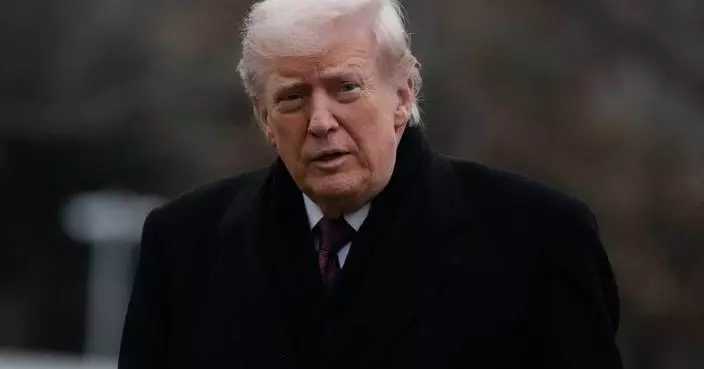
Stocks got a boost after Canada said it’s rescinding a planned tax on U.S. technology firms and resuming talks on trade with the United States. On Friday, U.S. President Donald Trump had said he was suspending talks with Canada because of his anger with the tax, which he called “a direct and blatant attack on our country.”
One of the main reasons U.S. stocks came back so quickly from their springtime swoon has been hope that Trump will reach deals with other countries to lower his stiff proposed tariffs. Otherwise, the fear is that trade wars could stifle the economy and send inflation higher.
Many of Trump’s announced tariffs are currently on pause, and they’re scheduled to kick back into effect in a little more than a week.
The U.S. stock market being back at a record high could actually raise the risk of renewed escalations on tariffs, according to strategists at Deutsche Bank led by Parag Thatte and Binky Chadha. They point to the pattern in 2018 and 2019 of rallies for the market prompting escalations for tariffs, which then drove the market lower and led to subsequent pullbacks on tariffs, which then sparked rallies again.
“Despite the rhetoric to the contrary, this dynamic looks alive and well,” the strategists wrote in a report. “In our view, beyond the market reaction, if negative impacts of tariffs on growth, earnings or inflation start to materialize, we will get further relents.”
On Wall Street, Oracle’s 4% rise was one of the strongest forces lifting the S&P 500. CEO Safra Catz said the tech giant “is off to a strong start” in its fiscal year and that it signed multiple large cloud services agreements, including one that could contribute over $30 billion in annual revenue two fiscal years from now.
GMS’ stock jumped 11.7% after the supplier of specialty building products said it agreed to sell itself to a Home Depot subsidiary in a deal that would pay $110.00 per share in cash. That would give it a total value of roughly $5.5 billion, including debt.
Less than two weeks ago, another company, QXO, said it was offering to buy GMS for $95.20 per share in cash. After the announcement of the Home Depot bid, QXO’s stock rose 3.9%, and Home Depot’s stock slipped 0.6%.
Hewlett Packard Enterprise rallied 11.1% and Juniper Networks climbed 8.4% after saying they had reached an agreement with the U.S. Department of Justice that could clear the way for their merger go through, subject to court approval. HPE is trying to buy Juniper in a $14 billion deal.
Bank stocks were also solid after the Federal Reserve said on Friday that they are financially strong enough to survive a downturn in the economy. JPMorgan Chase climbed 1%, and Citigroup gained 0.9%.
All told, the S&P 500 rose 31.88 points to 6,204.95. The Dow Jones Industrial Average added 275.50 to 44,094.77, and the Nasdaq composite gained 96.27 to 20,369.73.
In the bond market, Treasury yields fell ahead of several major economic reports later in the week. The highlight will be Thursday’s jobs report. It’s often the most anticipated economic data of each month, and it will come a day earlier than usual because of Friday's Fourth of July holiday.
The job market has remained relatively steady recently, even in the face of tariffs, but hiring has slowed. Economists expect Thursday’s data to show another step down in overall hiring, down to 115,000 jobs in June from 139,000 in May.
Such data has helped keep the Federal Reserve on hold this year when it comes to interest rates. Fed Chair Jerome Powell has said repeatedly that it’s waiting for more data to show how tariffs will affect the economy and inflation before resuming its cuts to interest rates. That’s because lower rates can fan inflation higher, along with giving the economy a boost.
Trump, meanwhile, has been pushing for more cuts to rates and for them to happen soon. Two of his appointees to the Fed have said recently they could consider cutting rates as soon as the Fed’s next meeting in less than a month.
The yield on the 10-year Treasury fell to 4.23% from 4.29% late Friday.
In stock markets abroad, indexes dipped modestly in Europe following a more mixed finish in Asia.
Stocks fell 0.9% in Hong Kong but rose 0.6% in Shanghai after China reported its factory activity improved slightly in June after Beijing and Washington agreed in May to postpone imposing higher tariffs on each others’ exports, though manufacturing remained in contraction.
AP Business Writer Elaine Kurtenbach contributed.
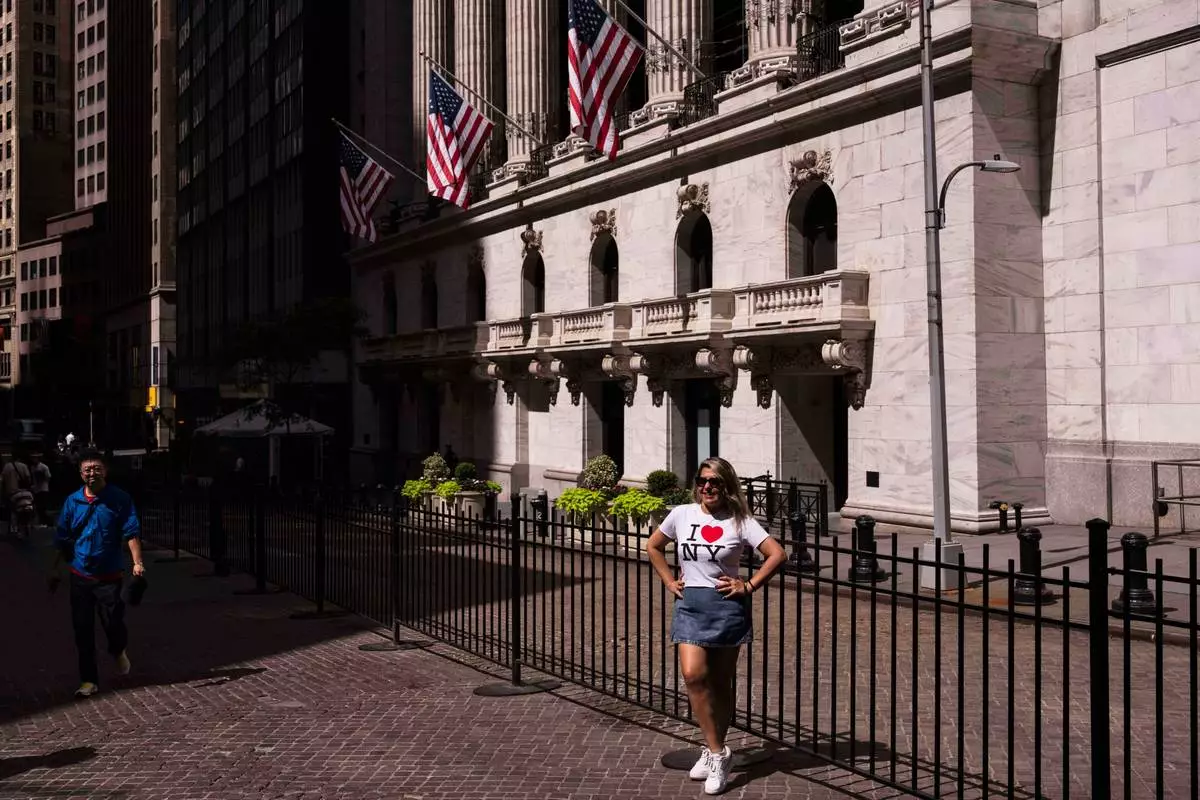
A tourist takes a picture in front of the New York Stock Exchange on Monday, June 30, 2025, in New York. (AP Photo/Yuki Iwamura)
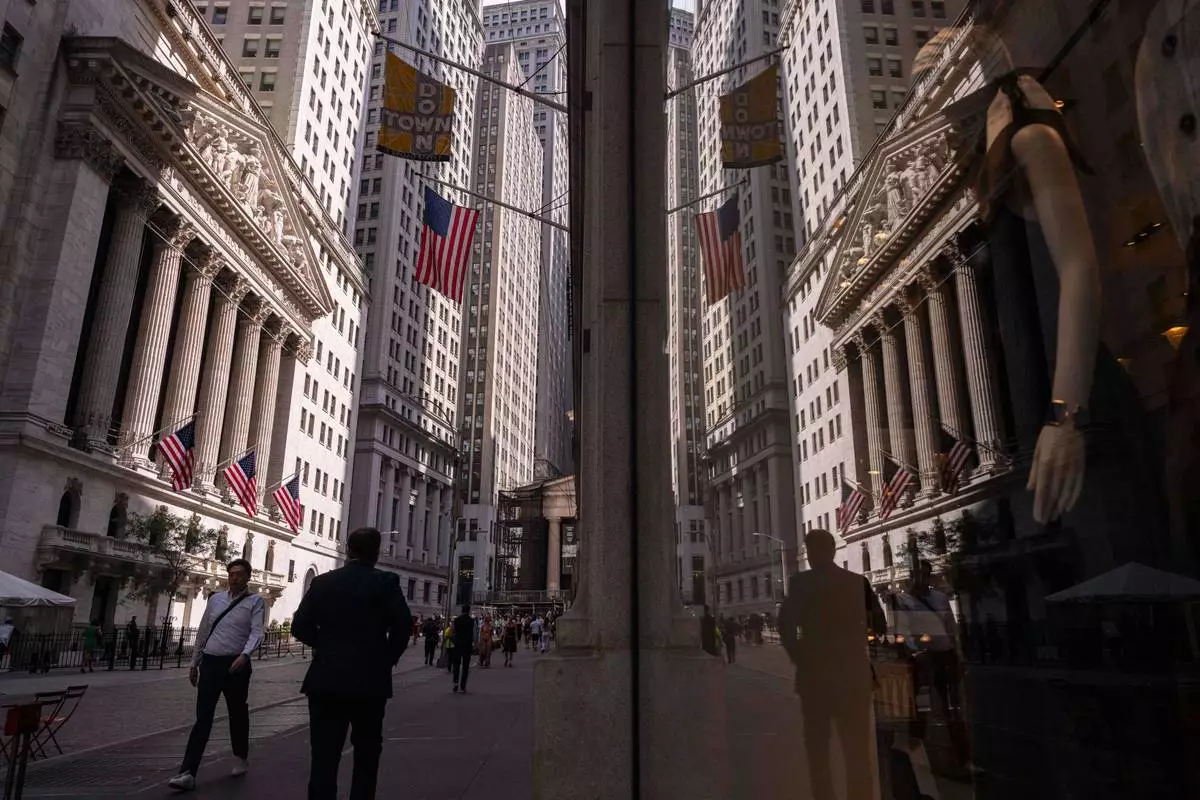
A reflection of a window shows the New York Stock Exchange on Monday, June 30, 2025, in New York. (AP Photo/Yuki Iwamura)
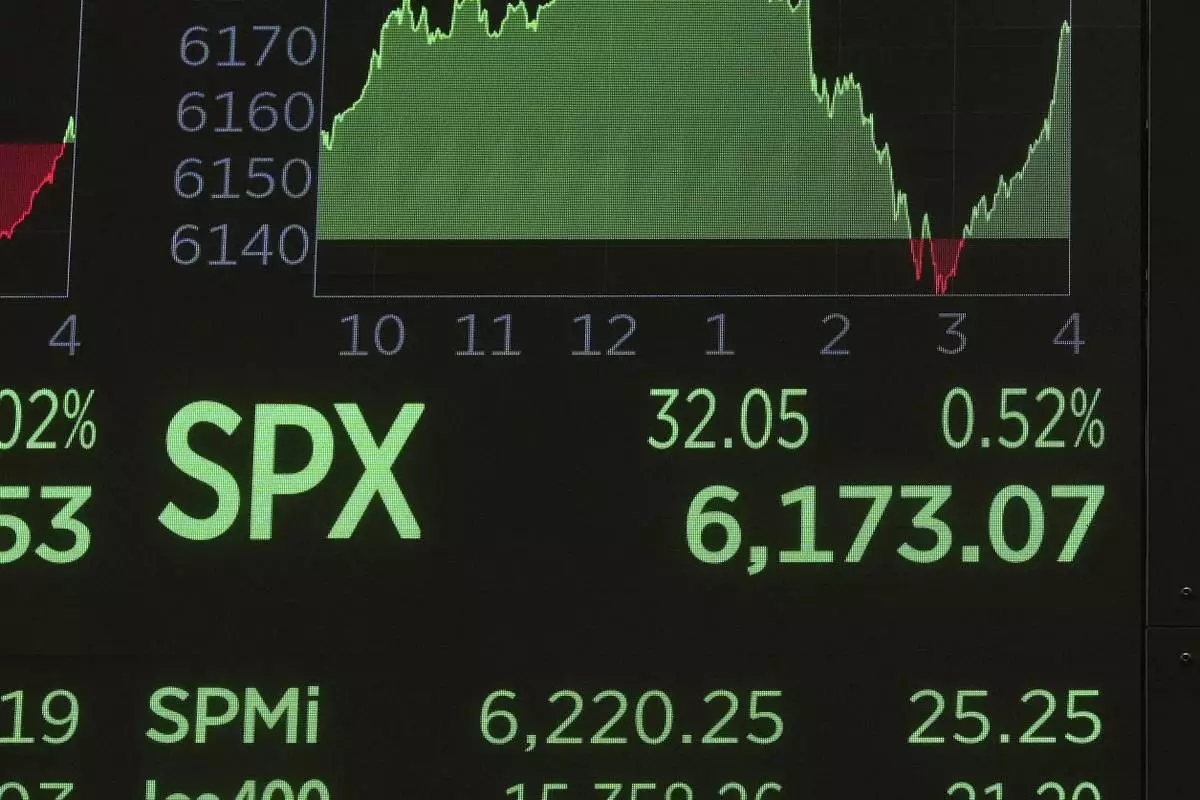
A board above the trading floor of the New York Stock Exchange shows the closing number for the S&P 500, Friday, June 27, 2025. (AP Photo/Richard Drew)

Currency traders watch monitors near a screen showing the Korea Composite Stock Price Index (KOSPI), top left, and the foreign exchange rate between U.S. dollar and South Korean won, top center, at the foreign exchange dealing room of the KEB Hana Bank headquarters in Seoul, South Korea, Monday, June 30, 2025. (AP Photo/Ahn Young-joon)
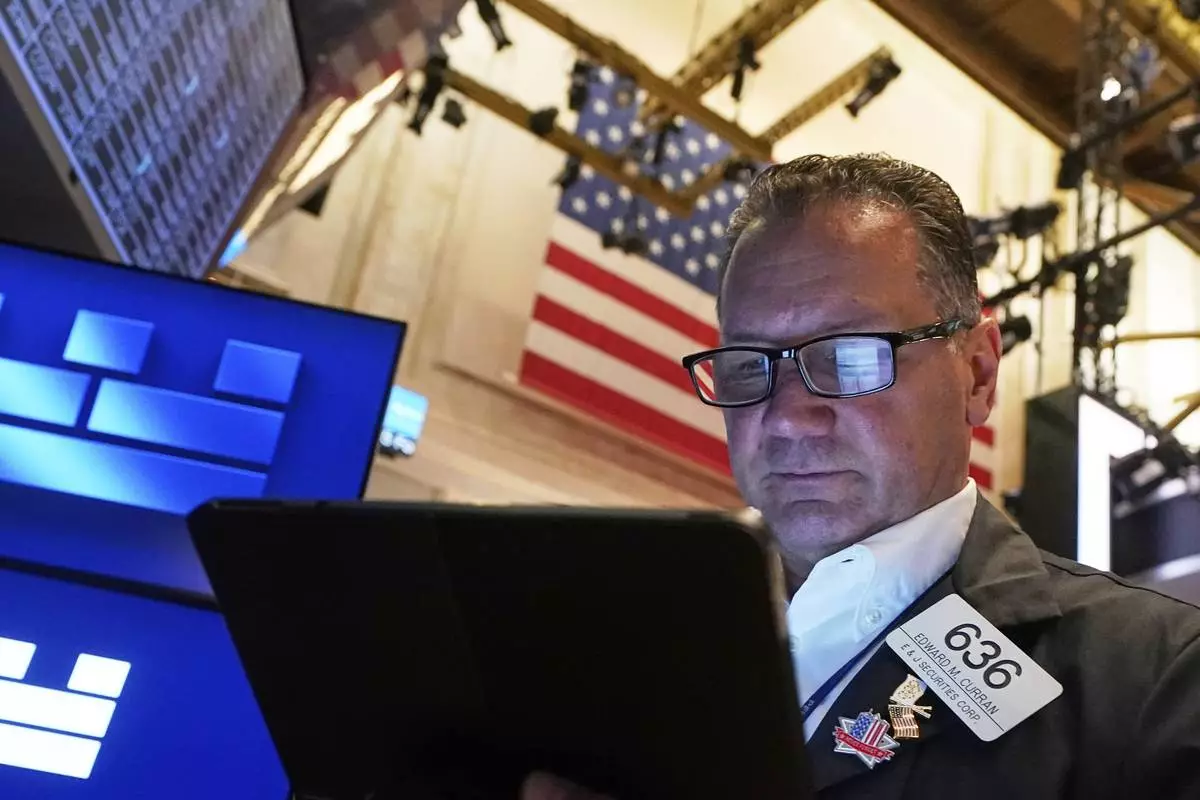
Trader Edward Curran works on the floor of the New York Stock Exchange, Friday, June 27, 2025. (AP Photo/Richard Drew)

Currency traders work near a screen showing the Korea Composite Stock Price Index (KOSPI), left, and the foreign exchange rate between U.S. dollar and South Korean won at the foreign exchange dealing room of the KEB Hana Bank headquarters in Seoul, South Korea, Monday, June 30, 2025. (AP Photo/Ahn Young-joon)
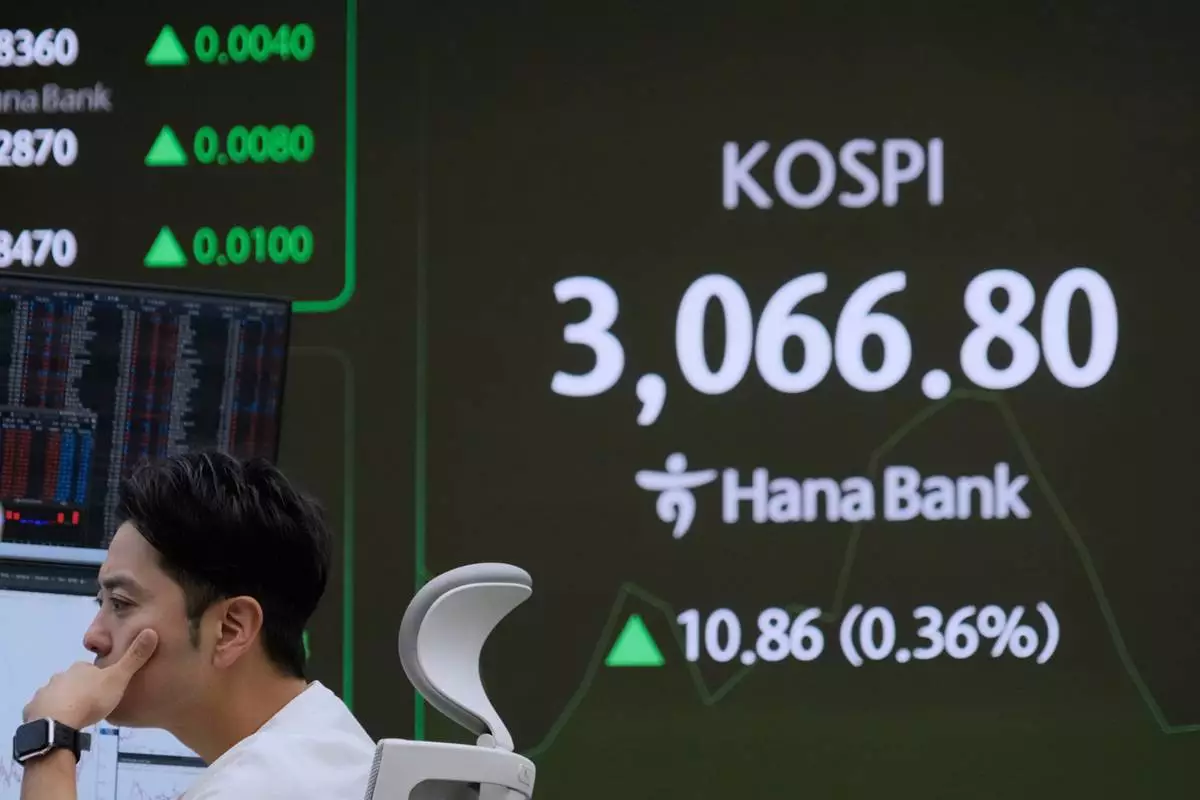
A currency trader watches monitors near a screen showing the Korea Composite Stock Price Index (KOSPI) at the foreign exchange dealing room of the KEB Hana Bank headquarters in Seoul, South Korea, Monday, June 30, 2025. (AP Photo/Ahn Young-joon)