BUENOS AIRES, Argentina (AP) — The fate of Argentina’s state-run oil company was thrown into doubt Monday as a U.S. judge ordered the cash-strapped country to give up its 51% controlling stake in YPF in partial compensation for seizing the shares of former investors during its 2012 nationalization of the energy group.
The ruling — a dramatic effort to enforce a $16 billion U.S. court judgement against Argentina — presents a new headache for libertarian President Javier Milei, the ideological foil for left-wing former President Cristina Fernández de Kirchner who oversaw Argentina's contentious takeover of YPF and ensuing legal battles during her tenure (2007-2015). Milei vowed to appeal the ruling.
Fernández's abrupt move to seize control of YPF at the time helped bring serial defaulter Argentina further infamy for abandoning its global financial obligations. Milei inherited an economy in shambles after decades of reckless state spending and campaigned on pledges to privatize state companies.
In granting the request of former shareholders largely represented by Burford Capital, which finances litigation in return for a share of the winnings, Judge Loretta Preska of the Southern District of New York gave Argentina two weeks to transfer its shares in YPF to Bank of New York Mellon Corp, the major U.S. custody bank, according to the ruling seen by The Associated Press.
Because YPF is listed on the New York Stock Exchange, the plaintiffs could file the lawsuit in a U.S. district court. Shares of YPF closed down 5.6%.
The judgement stems from a long-running legal case that in 2023 saw Judge Preska find Argentina liable for $16.1 billion in damages and interest. The plaintiffs argue that the government should have launched a tender offer for stakes held by minority shareholders.
Milei, whose government has struggled to build up depleted foreign reserves, has vowed to appeal the ruling “to defend national interests" and blamed the problem on his political rivals.
“More than 10 years have passed, and we Argentines continue to suffer the consequences of the worst government in Argentine history,” he wrote on social media platform X.
Marcelo J. García, Director for the Americas at the New York-based Horizon Engage risk consultancy, said the ruling was “a reminder for the Milei administration that the country’s problems will not go away just because he blames the opposition for them.”
“Control of YPF is important for Milei; that’s why an appeal is the only option for him,” he added.
Paying up and losing the controlling stake in YPF — which has become a pillar of the economy — would cripple Argentina at a crucial moment for Milei's government.
YPF has accelerated its drive to develop the country's huge reserves of shale gas in the Vaca Muerta field in Argentine Patagonia. Crude production at Vaca Muerta has steadily climbed, hitting record production in May at 448,000 barrels per day, 22.5% more than the same month in 2024, according to official data.
In 2024, YPF notched a net profit of almost $2.4 billion, up from a $1.3 billion loss the year before.
Milei has hoped to leverage investments in the Vaca Muerta field to cure the nation's long-standing fiscal weakness and pay its massive deficits.
Follow AP’s coverage of Latin America and the Caribbean at https://apnews.com/hub/latin-america
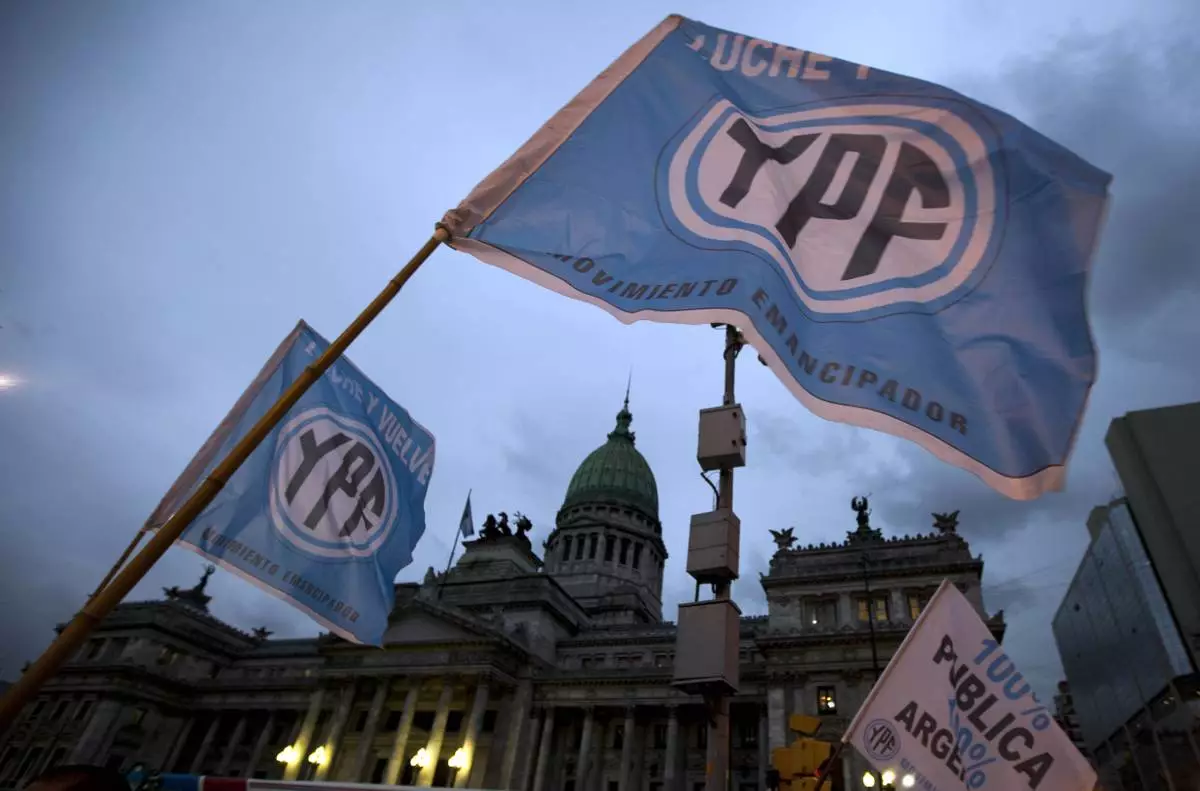
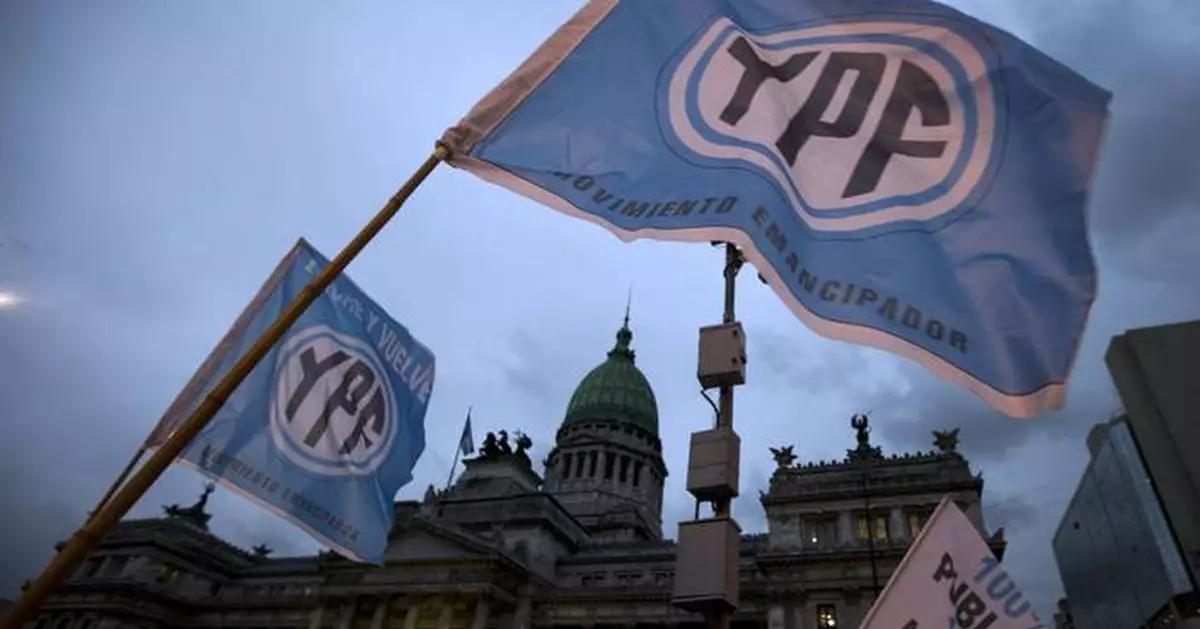
FILE - Supporters of an oil nationalization bill proposed by Argentina's President Cristina Fernandez wave flags that read in Spanish: "Fight and return YPF," outside Congress in Buenos Aires, Argentina, April 25, 2012. (AP Photo/Natacha Pisarenko, File)
ALBANY, N.Y. (AP) — A judge disqualified a Trump administration federal prosecutor from overseeing investigations into New York Attorney General Letitia James, ruling Thursday that he is not lawfully serving as an acting U.S. attorney.
U.S. District Judge Lorna G. Schofield blocked subpoenas requested by John Sarcone, the acting U.S. attorney for the Northern District of New York. The judge said the Department of Justice did not follow statutory procedure after judges declined to extend Sarcone’s tenure last year.
Schofield joined several other federal judges across the country who have ruled that actions taken by top federal prosecutors were invalid because of unusual methods that the Trump administration used to get them the jobs. People were given the power of a U.S. attorney outside of the normal U.S. Senate confirmation process or were allowed to serve until federal judges in their district could decide whether they could stay.
“When the Executive branch of government skirts restraints put in place by Congress and then uses that power to subject political adversaries to criminal investigations, it acts without lawful authority. Subpoenas issued under that authority are invalid. The subpoenas are quashed, and Mr. Sarcone is disqualified from further participation in the underlying investigations,” the judge said in her decision.
Schofield said Sarcone is not lawfully serving as acting U.S. attorney and that any “of his past or future acts taken in that capacity are void or voidable as they would rest on authority Mr. Sarcone does not lawfully have.”
James, a Democrat, had challenged Sarcone’s authority after he issued subpoenas seeking information about lawsuits she filed against Republican President Donald Trump, claiming he had committed fraud in his business dealings, and separately against the National Rifle Association and some of its former leaders.
Justice Department lawyers argued Sarcone was appointed properly and that the subpoenas were valid. James claims the inquiry into her lawsuits is part of a campaign of baseless investigations and prosecutions of Trump’s perceived enemies.
James’ office issued a statement calling Thursday's ruling “an important win for the rule of law.”
“We will continue to defend our office’s successful litigation from this administration’s political attacks,” the statement said.
Emails seeking comment were sent to the U.S. Attorney’s Office and the Department of Justice.
Last month, a panel of judges from the 3rd U.S. Circuit Court of Appeals sitting in Philadelphia sided with a lower-court judge’s ruling disqualifying Alina Habba from serving as New Jersey’s top federal prosecutor.
In November, a federal judge dismissed criminal cases against former FBI Director James Comey and James after concluding that the hastily installed prosecutor who filed the charges, Lindsey Halligan, was unlawfully appointed to the position of interim U.S. attorney for the Eastern District of Virginia.
A similar dynamic has played out in Nevada, where a federal judge disqualified the Trump administration’s pick to be U.S. attorney there. And a federal judge in Los Angeles disqualified the acting U.S. attorney in Southern California from several cases after concluding he had stayed in the job longer than allowed.
In New York, U.S. Attorney General Pam Bondi appointed Sarcone to serve as the interim U.S. attorney in March. When his 120-day term elapsed, judges in the district declined to keep him in the post.
Bondi then appointed Sarcone as a special attorney and designated him first assistant U.S. attorney for the district, moves that federal officials say allow him to serve as an acting U.S. attorney.
The judge, who sits in New York City, took issue with the Justice Department's actions.
“(O)n the same day that the judges declined to extend Mr. Sarcone’s appointment, the Department took coordinated steps — through personnel moves and shifting titles — to install Mr. Sarcone as Acting U.S. Attorney. Federal law does not permit such a workaround,” she wrote.
Sarcone was part of Trump’s legal team during the 2016 presidential campaign and worked for the U.S. General Services Administration as the regional administrator for the Northeast and Caribbean during Trump’s first term.
Schofield said the federal government could reissue the subpoenas at the direction of a lawfully authorized attorney.
Joshua Naftalis, a Manhattan federal prosecutor for 11 years before entering private practice in 2023, said Schofield was agreeing with the other judges who have disputed the authority of designated top prosecutors.
“It’s always a big deal when judges say that the U.S. attorney doesn’t have the authority,” he said.
He said subpoenas aren’t typically issued by a single prosecutor so the ruling might not directly affect other investigations brought through the prosecutor’s office.
—-
Associated Press writer Larry Neumeister contributed from New York.
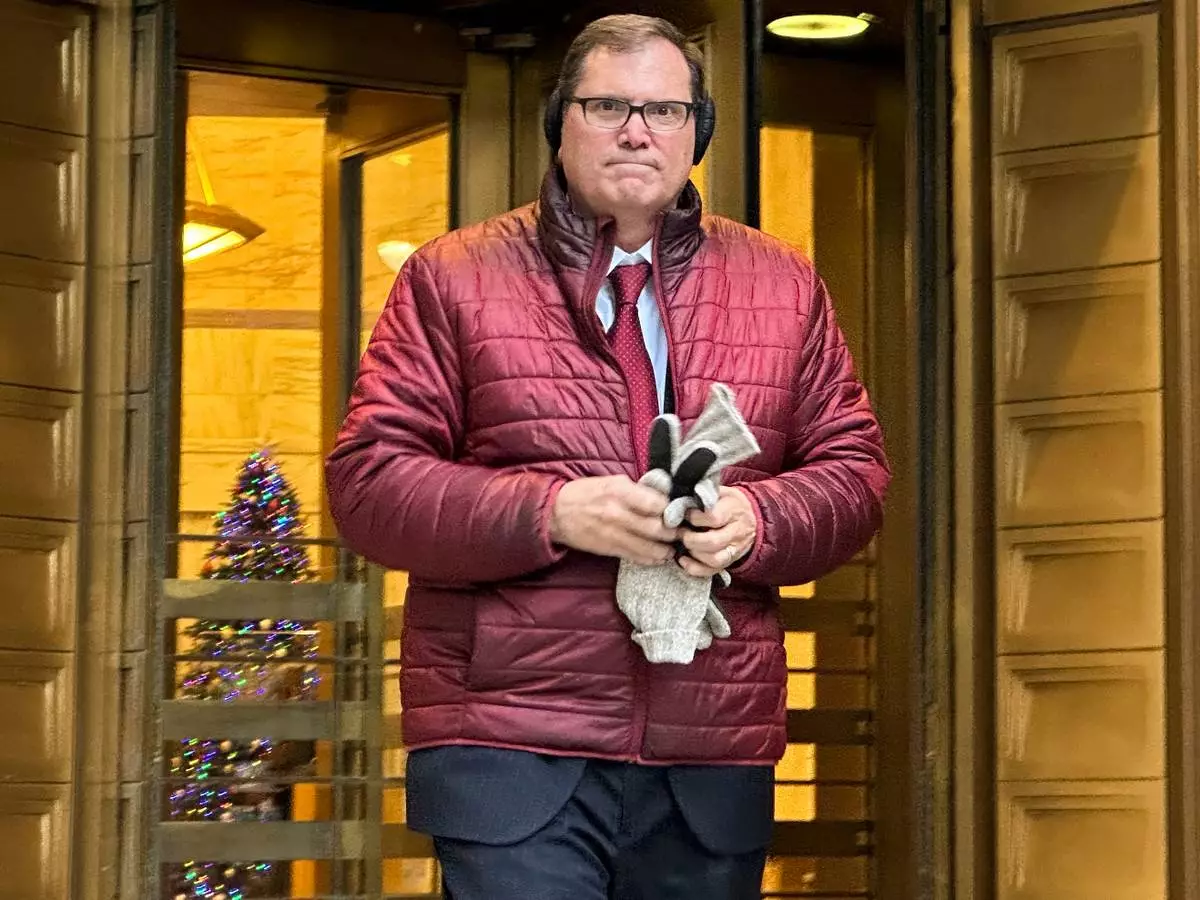
FILE - John Sarcone, acting U.S. Attorney for Northern New York, leaves Manhattan federal court, Thursday, Dec. 4, 2025, in New York. (AP Photo/Michael Sisak, File)
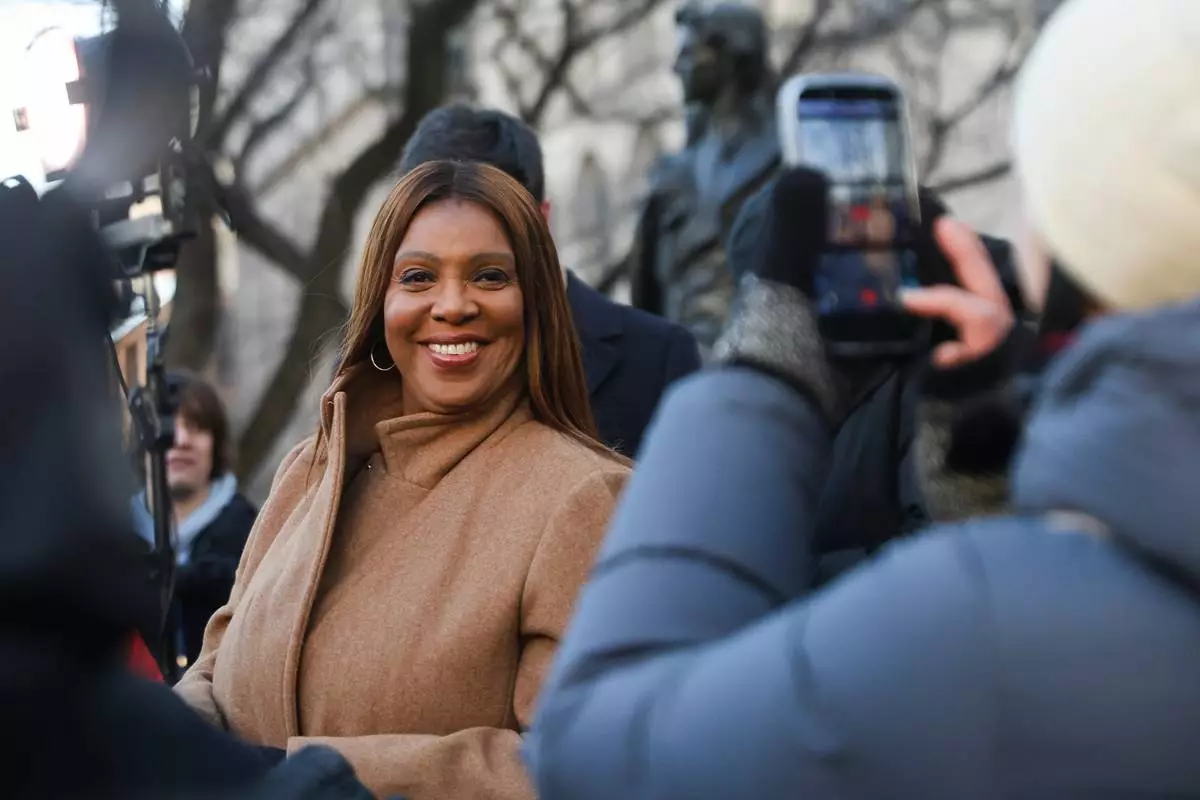
New York Attorney General Letitia James arrives at City Hall for the public inauguration swearing-in ceremony of Mayor Zohran Mamdani, Thursday, Jan. 1, 2026, in New York. (AP Photo/Heather Khalifa)