SACRAMENTO, Calif. (AP) — California Gov. Gavin Newsom said the state must stand up to Republican President Donald Trump ’s “assault on our values,” using his final State of the State address Thursday to declare his state a bulwark against what he called a chaotic federal government.
The Democrat, who is eyeing a 2028 presidential run, defended his record as he nears the end of eight years leading the nation’s most populous state. He highlighted California’s work on homelessness, climate policy, crime and health care costs, saying he’s committed to tackling the state’s thorniest issues even without a stable partner in Washington.
Click to Gallery
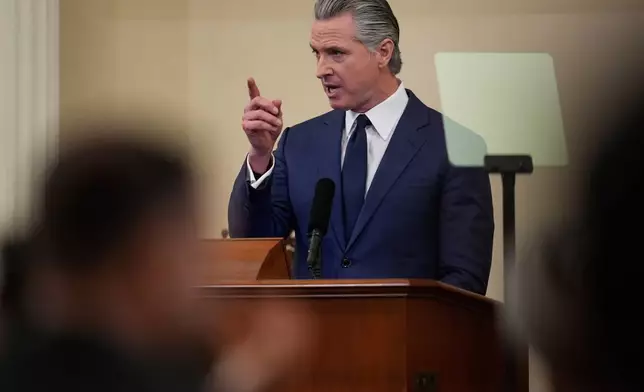
California Gov. Gavin Newsom speaks during his State of the State address Thursday, Jan. 8, 2026, in Sacramento, Calif. (AP Photo/Godofredo A. Vásquez)
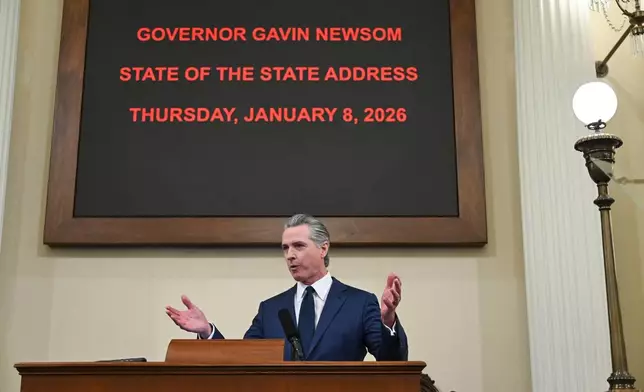
Gov. Gavin Newsom gives his State of the State address at the State Capitol on Thursday, Jan. 8, 2026, in Sacramento, Calif. (Hector Amezcua/The Sacramento Bee via AP, Pool)
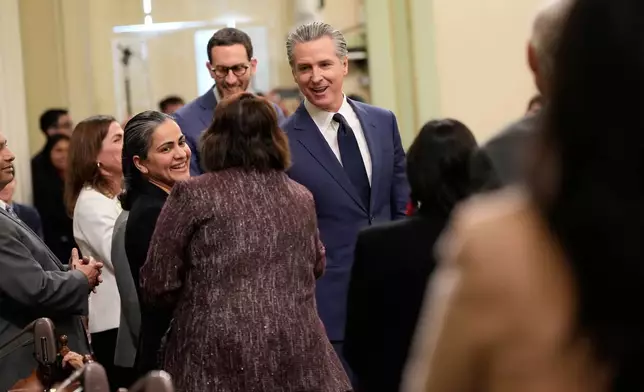
California Gov. Gavin Newsom arrives for his State of the State address Thursday, Jan. 8, 2026, in Sacramento, Calif. (AP Photo/Godofredo A. Vásquez)
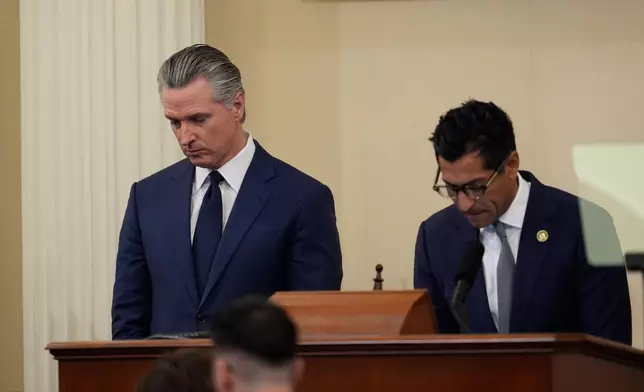
California Gov. Gavin Newsom, left, takes part in a moment of silence for the victim of a fatal shooting involving federal law enforcement agents in Minnesota, alongside California Assembly Speaker Robert Rivas, right, before his State of the State address Thursday, Jan. 8, 2026, in Sacramento, Calif. (AP Photo/Godofredo A. Vásquez)
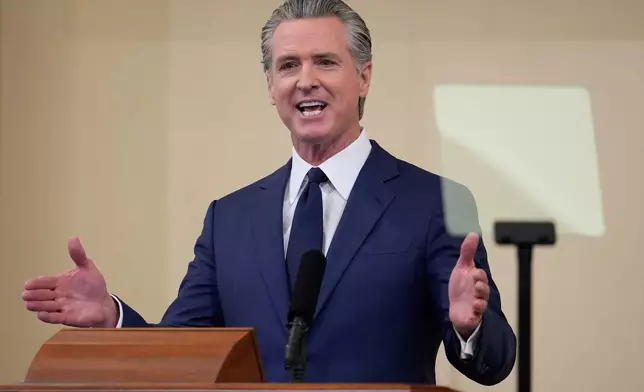
California Gov. Gavin Newsom speaks during his State of the State address Thursday, Jan. 8, 2026, in Sacramento, Calif. (AP Photo/Godofredo A. Vásquez)
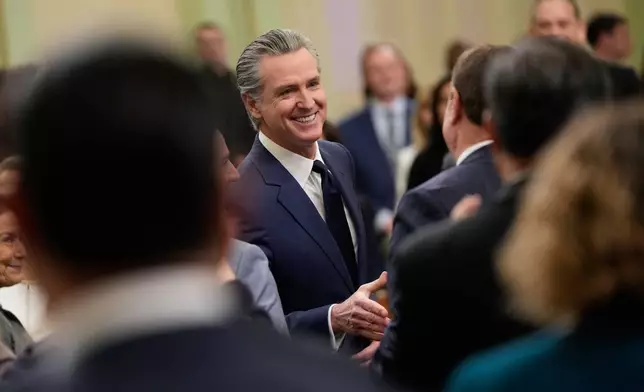
California Gov. Gavin Newsom arrives for his State of the State address Thursday, Jan. 8, 2026, in Sacramento, Calif. (AP Photo/Godofredo A. Vásquez)
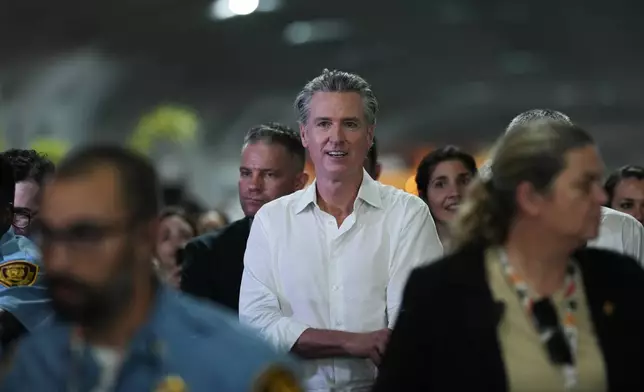
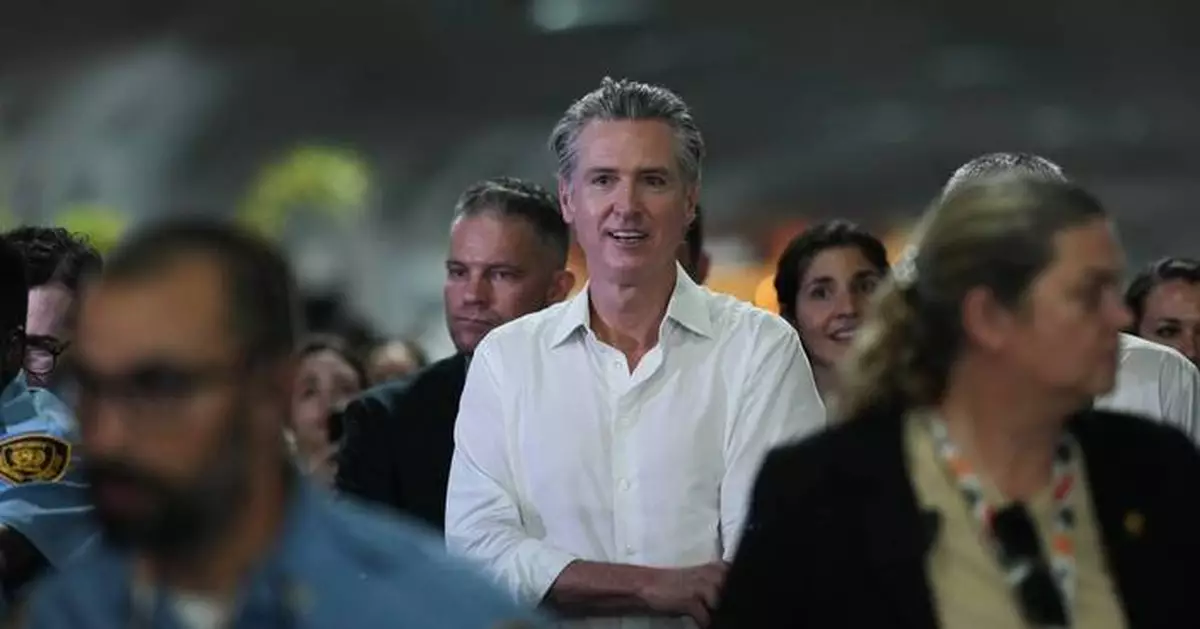
FILE - California Gov. Gavin Newsom walks through the venue for the COP30 U.N. Climate Summit, Tuesday, Nov. 11, 2025, in Belem, Brazil. (AP Photo/Andre Penner, File)
“The federal government, respectfully, it’s unrecognizable, protecting the powerful at the expense of the vulnerable," Newsom said, accusing the Trump administration of governing through fear. He criticized what he called a “carnival of chaos,” pointing to National Guard deployments to Democratic-led cities, disputes over food aid, and cuts to medical research.
Newsom said California should serve as a national model as it defends its policies from what he called federal overreach, noting the state has sued the Trump administration more than 50 times. He spoke for more than an hour to lawmakers in Sacramento, often drawing applause from Democrats. He did not spend much time on immigration, an area where he has sharply criticized Trump.
Republicans remained largely silent during the speech and argued afterward that Newsom has not done enough to address high electricity and gas prices.
“After years of one-party rule under Gov. Gavin Newsom, the results don’t match the rhetoric,” said state Sen. Rosilicie Ochoa Bogh, who represents part of the Inland Empire region. “While the governor takes victory laps, families are taking extra shifts.”
The White House said the governor's policies “have completely destroyed the great state of California.”
“Instead of using his state-of-the-state to lie about the President in hopes of courting left wing voters ahead of his doomed-to-fail Presidential campaign, Newscum should’ve talked about how he planned to undo the damage he’s done to California," White House spokesperson Abigail Jackson said in a statement, using Trump’s favored nickname for Newsom.
The governor is scheduled to release his proposed budget Friday after years of fiscal strain from repeated shortfalls.
Newsom has long used his annual address to tout California’s economic growth and technological innovation while responding to critiques of its high cost of living and having the nation's largest homeless population. This year, he dismissed critics as suffering from “California Derangement Syndrome,” echoing Trump’s use of the phrase “Trump Derangement Syndrome.”
Newsom and Trump have clashed over issues ranging from the federal administration's National Guard deployment in Los Angeles to the president's efforts to block California’s 2035 ban on new gas-powered cars, a nationwide first.
The speech came a day after the state marked the one-year anniversary of the devastating Los Angeles-area fires that killed 31 people and destroyed neighborhoods. Newsom has asked Congress and Trump for nearly $34 billion to help the region recover. He faulted Trump for not responding to the request, saying the federal government is neglecting Californians affected by the disaster.
“It’s time for the president of the United States to do his job,” Newsom said, “not turn his back on Americans who happen to live in the great state of California.”
Newsom spent part of the speech highlighting progress on several policy fronts. He said unsheltered homelessness dropped 9% last year. His office said the number is based on data reported by local officials who conducted an annual estimate of the homeless population in their communities. He praised the state’s cleanup work after the L.A.-area fires and efforts to provide mortgage relief to survivors, while urging lawmakers to speed rebuilding. He acknowledged survivors of the fires who were in the audience Thursday.
He called for action against large investors buying up affordable homes, arguing the practice is driving up rents and shutting families out of homeownership. He also pointed to falling homicide rates in Oakland and San Francisco and the $267 million the state sent to law enforcement agencies in 2023 to help combat retail and property crime. He highlighted the California Highway Patrol’s crime prevention work in Bakersfield, San Bernardino, Stockton and other cities.
This is the first time Newsom has delivered the State of the State to lawmakers in person since 2022. He referenced his dyslexia Thursday, saying it makes it difficult to read from a written text live.
“It’s always been something that I have to work through," he said.
In recent years, he has submitted his address in writing to lawmakers, fulfilling a constitutional requirement that he report to the Legislature in some form.
He also tried other approaches that have departed from tradition, including posting a prerecorded speech online and touring the state to announce policies aimed at tackling homelessness and mental health crises.
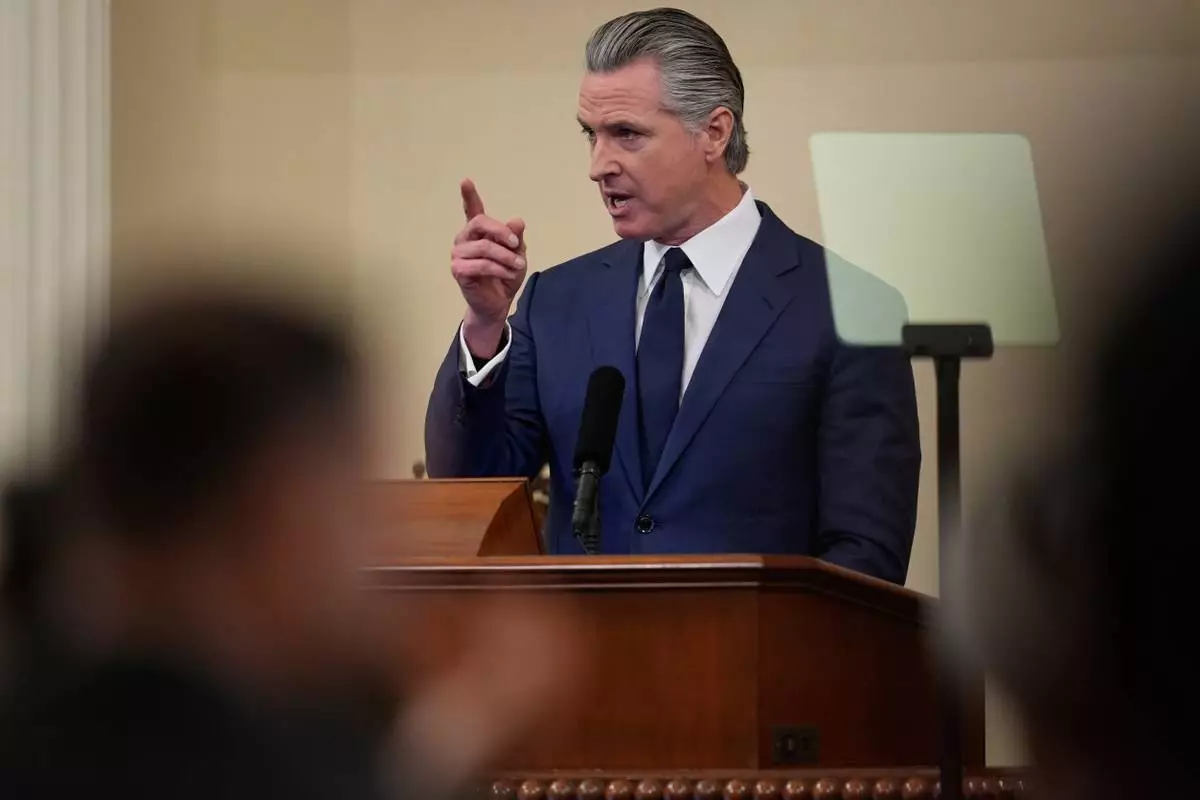
California Gov. Gavin Newsom speaks during his State of the State address Thursday, Jan. 8, 2026, in Sacramento, Calif. (AP Photo/Godofredo A. Vásquez)
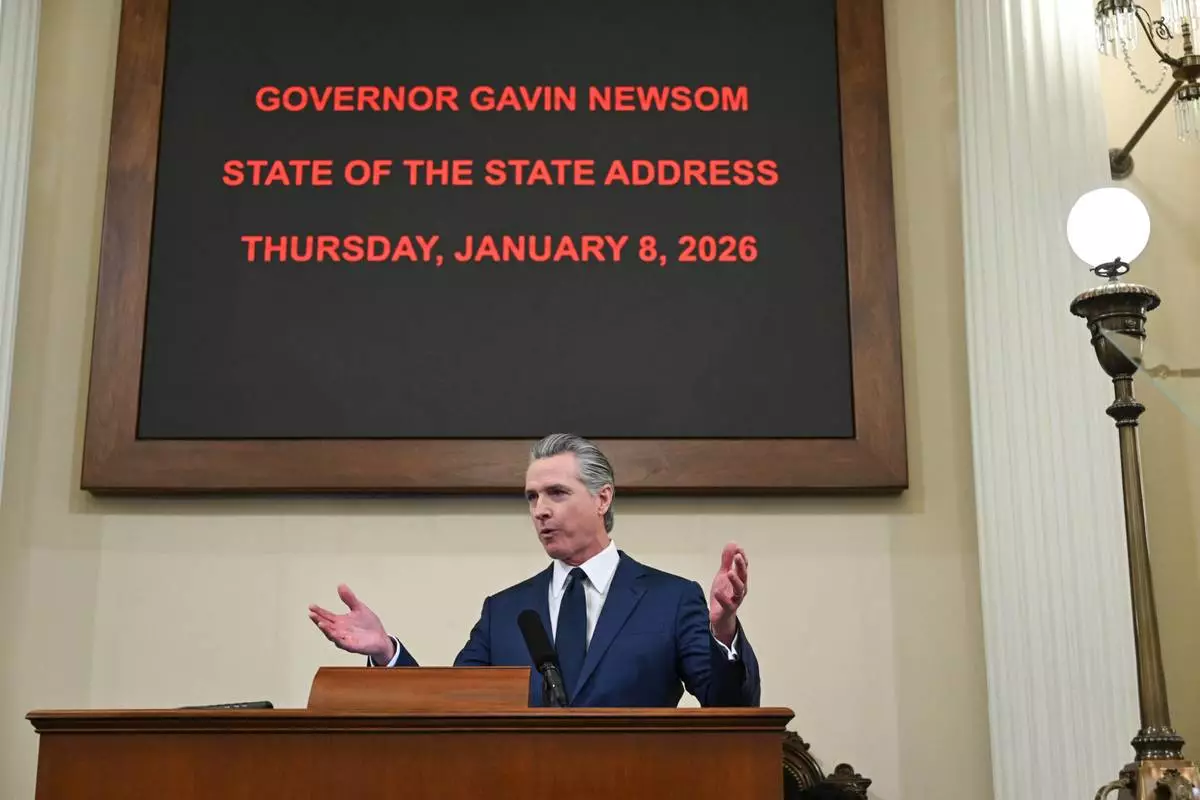
Gov. Gavin Newsom gives his State of the State address at the State Capitol on Thursday, Jan. 8, 2026, in Sacramento, Calif. (Hector Amezcua/The Sacramento Bee via AP, Pool)

California Gov. Gavin Newsom arrives for his State of the State address Thursday, Jan. 8, 2026, in Sacramento, Calif. (AP Photo/Godofredo A. Vásquez)

California Gov. Gavin Newsom, left, takes part in a moment of silence for the victim of a fatal shooting involving federal law enforcement agents in Minnesota, alongside California Assembly Speaker Robert Rivas, right, before his State of the State address Thursday, Jan. 8, 2026, in Sacramento, Calif. (AP Photo/Godofredo A. Vásquez)

California Gov. Gavin Newsom speaks during his State of the State address Thursday, Jan. 8, 2026, in Sacramento, Calif. (AP Photo/Godofredo A. Vásquez)

California Gov. Gavin Newsom arrives for his State of the State address Thursday, Jan. 8, 2026, in Sacramento, Calif. (AP Photo/Godofredo A. Vásquez)

FILE - California Gov. Gavin Newsom walks through the venue for the COP30 U.N. Climate Summit, Tuesday, Nov. 11, 2025, in Belem, Brazil. (AP Photo/Andre Penner, File)