As Trump's tariff policies hindered the global supply chain, manufacturers in Wenzhou City of east China's Zhejiang Province, a significant manufacturing hub, have been navigating through the headwinds with premium quality products and smart manufacturing.
In the first episode of the China Global Television Network (CGTN) series Chinese Factories Know How, released on Monday, innovative entrepreneurs in Wenzhou share their stories in recent months.
On May 23, 2025, 11 days after China and the U.S. announced a 90-day tariff pause, Kangnai, China's leading shoemaker, is rushing to ship ordered goods to the United States.
With nearly 20 percent of total foreign orders coming from the U.S., Trump's tariffs had a major impact on Kangnai's exports. The 90-day tariff pause allowed the company to compensate previous export pause due to the tariffs, but also served as a buffer zone for Kangnai to prepare for future tariff fluctuation.
After deliberation, Zheng Laili, Vice Chair of Kangnai Group, decided to diversify its client base and pay more attention to higher quality.
"The U.S. market makes up about 16 percent of our exports. That's not a small share. So, we'd try to sell more of our products to other countries. And the development of our smart manufacturing is the inevitable trend of enterprises in the future. Such flexible smart factories are rare in China's shoe industry," said Zheng.
As of May, Kangnai owns one of the two flexible smart production lines for shoes in the world, which is the only one in China. The smart manufacturing niche allows the company to produce top-quality shoes with doubled efficiency.
"In general it doubles our production. U.S. and European clients highly value this, because they are aware that in the future, machine costs will go lower and lower, but labor costs will certainly go higher and higher," said Liu Changyong, Head of Manufacturing in Kangnai Group.
With their commitment to quality, Kangnai managed to stabilize their export during the chaos.
"The tariffs came so abruptly this year, unexpected to all of us. Luckily, we had prepared for years, and most products are high-end. We must strengthen our core competitiveness," said Liu.
Morning Electronics, a smart housing start-up in Wenzhou, adopted the same strategy. With its flagship smart home products and lighting systems, the company decided not to operate as an Original Equipment Manufacturing (OEM) outsourcer, but to build up its own brand.
"We have our own pricing power. If tariffs go up, we can raise prices to a certain extent to offset some of the impact. If we were only OEM, our bargaining power would be weak," said Li Lezhou, founder of Morning Electronics.
Taking the chance of booming short-video platforms overseas, Li has been making DIY videos to promote their products, tailored to foreign DIY lovers. His account has attracted 1.5 million followers by now, boosting foreign sales across all countries.
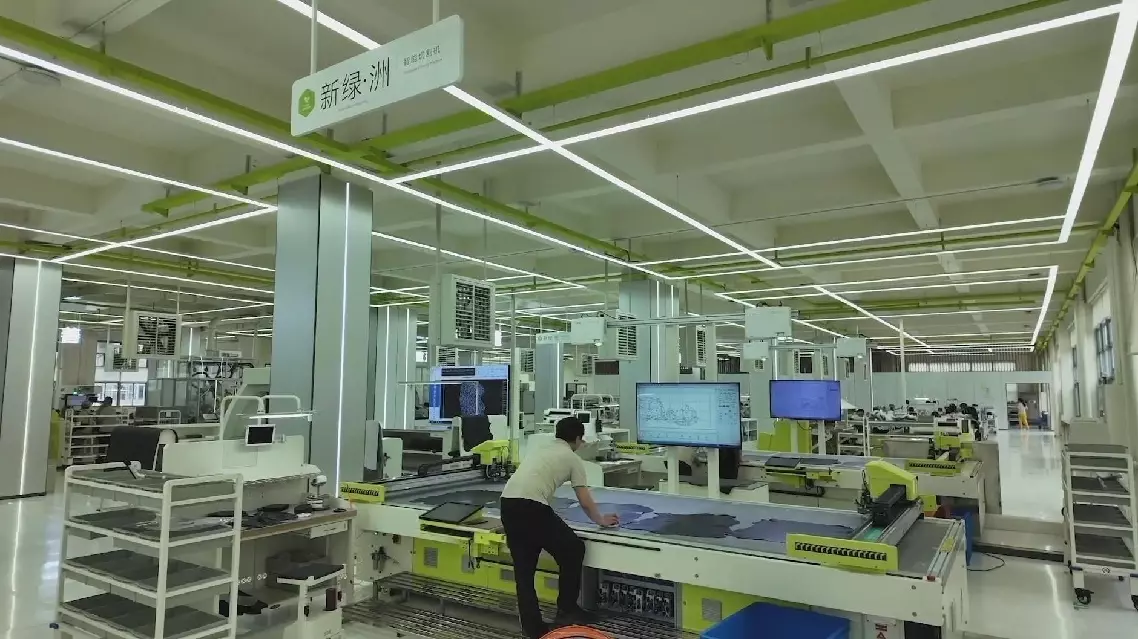
Smart production navigates Zhejiang manufacturers through tariff hikes