Skip to Content Facebook Feature Image

China-Ecuador AEO mutual recognition takes effect

China

China

China

China-Ecuador AEO mutual recognition takes effect

2025-07-01 20:25 Last Updated At:21:17

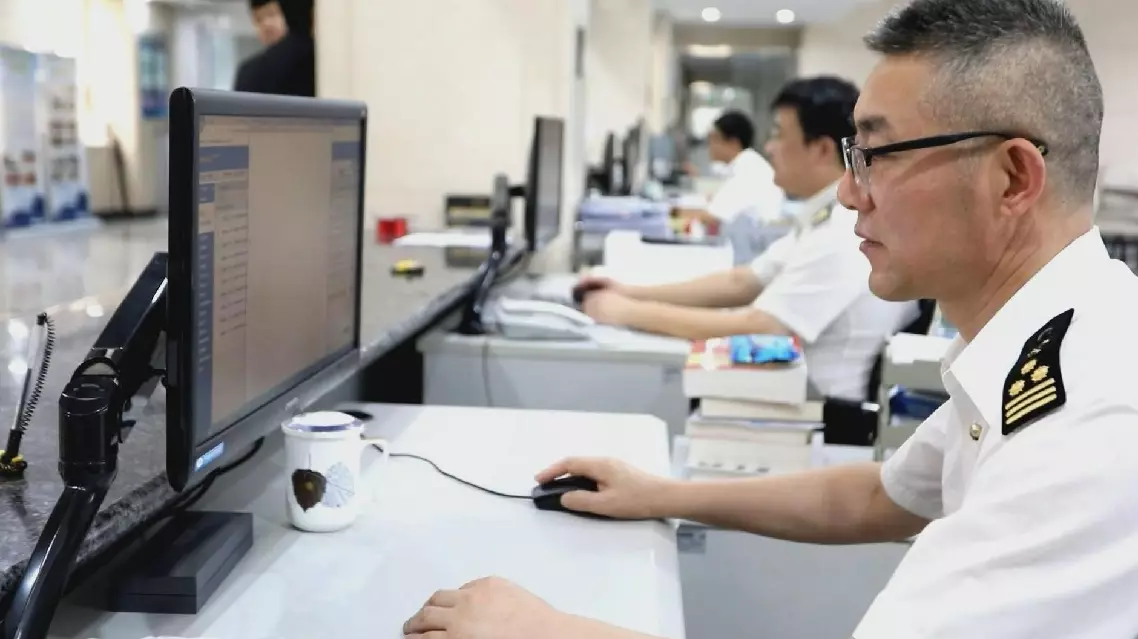
The mutual recognition on Authorized Economic Operator (AEO) between the customs of China and Ecuador came into effect on Tuesday, allowing enterprises with AEO status from both countries to benefit from easier customs clearance and fostering a more efficient bilateral trade environment.

The AEO system, initiated by the World Customs Organization (WCO), aims to facilitate customs clearance for enterprises by authenticating those with high levels of legal compliance and safety, and a strong credit status through customs agencies.

After the implementation of the mutual recognition, Chinese and Ecuadorian enterprises with AEO status can enjoy a series of preferential measures by both customs, including lower inspection rates for import and export goods, priority inspections, designated customs liaison officers, and priority clearance after international trade interruptions and resumptions.

Ecuador is the fifth Latin American country to implement AEO mutual recognition with China, following Chile, Brazil, Uruguay, and Costa Rica.

"China's circle of friends in AEO mutual recognition continues to expand, making it increasingly smoother for enterprises to go global and boosting their sense of accomplishment. Through targeted cultivation, we will help more enterprises obtain AEO status and enjoy the credit dividend. As of now, a total of 7,029 enterprises nationwide hold AEO status, with 901 of them conducting import and export activities with Ecuador from January to May 2025," said He Shengjing, deputy chief of the enterprise management division at Qingdao Customs.

So far, the number of economies that have signed AEO mutual recognition agreements with China has increased to 31, covering 57 countries and regions. China has implemented the mutual recognition with 50 countries and regions.

Therefore, China is ranked first globally in terms of the number of agreements signed, the number of countries and regions involved with AEO mutual recognition, as well as the number of countries and regions having implemented mutual recognition.

With AEO status, enterprises can enjoy faster customs clearance and lower trade costs, thereby enhancing their competitiveness in global trade.

On Monday, a batch of new energy forklifts worth 150,000 U.S. dollars was ready for shipment to Ecuador from a forklift manufacturer with AEO status in Taizhou, east China's Zhejiang Province.

"The AEO mutual recognition agreement signed between China and Ecuador has brought us significant benefits, including a significantly reduced inspection rate. Secondly, it has enhanced the convenience of customs clearance, leading to a substantial reduction in our costs," said Chen Yunfu, person in charge of the forklift manufacturer.

Benefiting from multiple customs preferential measures, enterprises with AEO status demonstrate strong market activity and substantial import volumes, fully unleashing their vitality.

Given that most Chinese enterprises with AEO status are leading entities in industrial and supply chains, as well as major foreign trade backbone enterprises, customs are actively expanding the AEO system to include emerging business types such as cross-border e-commerce and small to medium-sized enterprises. This expansion aims to ensure that a broader spectrum of enterprises of various sizes and types can benefit from the AEO system.

"We will expand the circle of friends in AEO mutual recognition to enable more enterprises to benefit from the mutually beneficial preferential measures provided by China's customs, thereby assisting companies in reducing import and export costs and accelerating their global expansion," said Ren Chaoyu, deputy head of the enterprise management section at Taizhou Customs.
China-Ecuador AEO mutual recognition takes effect


China-Ecuador AEO mutual recognition takes effect
China is willing to provide humanitarian assistance to Cambodia to help resettle displaced people in border areas, Chinese Foreign Minister Wang Yi said on Sunday in Yuxi, southwest China's Yunnan Province.

Wang, also a member of the Political Bureau of the Communist Party of China Central Committee, made the remarks during a meeting with Prak Sokhonn, Cambodian Deputy Prime Minister and Minister of Foreign Affairs and International Cooperation.

Following the signing of a joint statement agreeing to a ceasefire, the Cambodian and Thai foreign ministers are leading delegations meeting in Yunnan from Dec. 28 to 29 at Wang's invitation.

China has been closely following the tense situation on the Cambodia-Thailand border and remains committed to facilitating peace through talks, Wang said, adding that China congratulates both sides on reaching a ceasefire agreement.

The ceasefire marks the beginning of peacebuilding, Wang said, calling on the two sides to proceed in a phased and measured approach to promote a comprehensive and lasting ceasefire, restore normal interactions, rebuild mutual trust, achieve turnaround in bilateral relations, and uphold peace and stability in the region.

He said that both countries can make good use of this face-to-face opportunity for diplomatic and military representatives to engage in dialogue and communication in a flexible manner, enhance mutual understanding, and build mutual trust. He also expressed hope that all sides would jointly send a message of peace from Yunnan, reach a consensus on peace, and demonstrate prospects for peace.

China supports ASEAN in playing its due role and stands ready to provide assistance to the ASEAN observation mission in monitoring the ceasefire, Wang said.

He added that China also hopes Cambodia will continue to enhance protection for Chinese citizens and projects in the country.

Cambodia highly values China's positive role in mediating the conflict, said Prak Sokhonn, citing the informal tea gathering among the foreign ministers of Cambodia, China and Thailand in Anning, Yunnan Province, as well as shuttle diplomacy conducted by China's special envoy.

Thanks to the joint efforts of China and other parties, Cambodia and Thailand were able to convene a meeting of the Joint Boundary Commission, and their militaries signed a ceasefire agreement, he said.

Sokhonn said Cambodia is ready to work with Thailand to fully implement the ceasefire agreement, make full use of existing dialogue mechanisms, and steadily build mutual trust between the two countries and their armed forces.

These steps, he noted, are vital to restoring bilateral exchanges, normalizing relations, and resolving the boundary issue at an early date.

Cambodia hopes for the early arrival of peace and expects the trilateral meeting to help rebuild lasting stability, he said.

The two sides also exchanged views on China-Cambodia relations, agreeing that under the strategic guidance of the leaders of the two countries, positive progress has been made in building an all-weather Cambodia-China community with a shared future in the new era.

The Cambodian side expressed gratitude for China's support and assistance to its development, describing China as its most reliable and trusted partner. It reaffirmed its adherence to the one-China principle, its opposition to Taiwan secessionism, and its support for China's reunification cause.

China will deliver humanitarian aid to Cambodia for displaced people along border: Chinese FM

China will deliver humanitarian aid to Cambodia for displaced people along border: Chinese FM

Recommended Articles