BAKU, Azerbaijan (AP) — Seven people linked to a Kremlin-funded media outlet in Azerbaijan's capital have been detained after a raid on its office, the Interior Ministry was quoted by local media as saying Tuesday, in the latest sign of the rift between Moscow and Baku over the deaths of two ethnic Azerbaijanis in Russian custody.
Tensions have been growing since December, when an Azerbaijani passenger jet was attacked as it approached Grozny, the regional capital of the Russian republic of Chechnya, It later crashed, killing 38 of 67 people aboard, and Azerbaijan President Ilham Aliyev blamed Moscow and said Russian President Vladimir Putin had tried to “hush up” what happened.
Click to Gallery
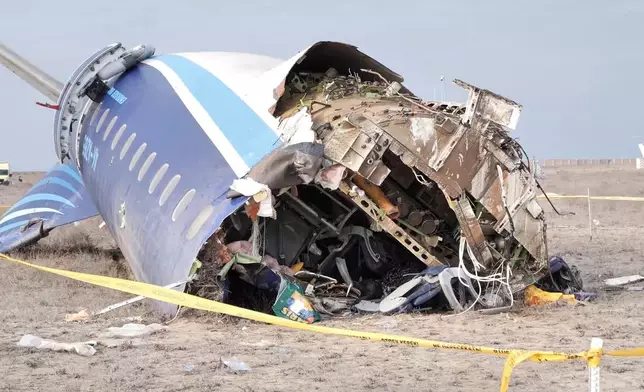
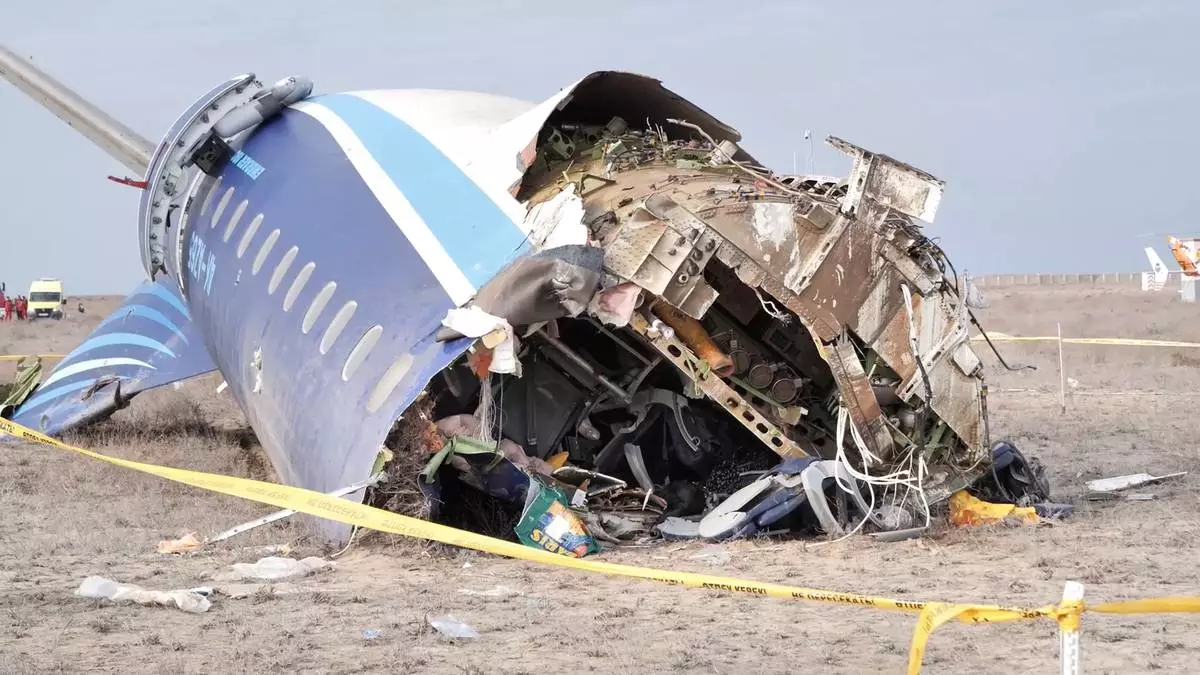
FILE - In this photo taken from a video released by The Administration of Mangystau Region, the wreckage of Azerbaijan Airlines Embraer 190 lies near the airport of Aktau, Kazakhstan, on Dec. 25, 2024. (The Administration of Mangystau Region via AP)
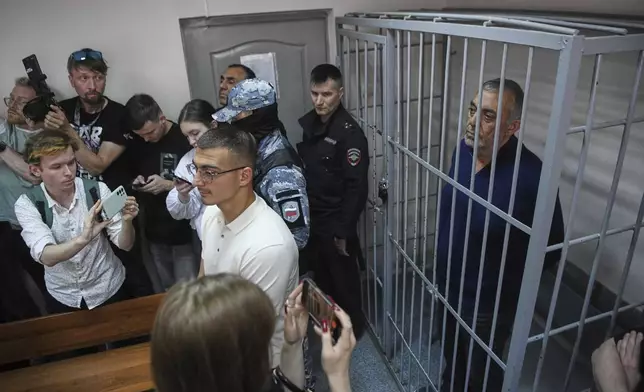
Bakir Safarov, a native of Azerbaijan, right, who faces charges as part of a Russian investigation of several killings, attends a court hearing in Yekaterinburg, Russia, on Tuesday, July 1, 2025. (AP Photo)
FILE - Pedestrians stand at the crossing in front of the Rossiya Segodnya International Media Group building in Moscow, Russia, on Nov. 6, 2024. (AP Photo/Pavel Bednyakov, File)
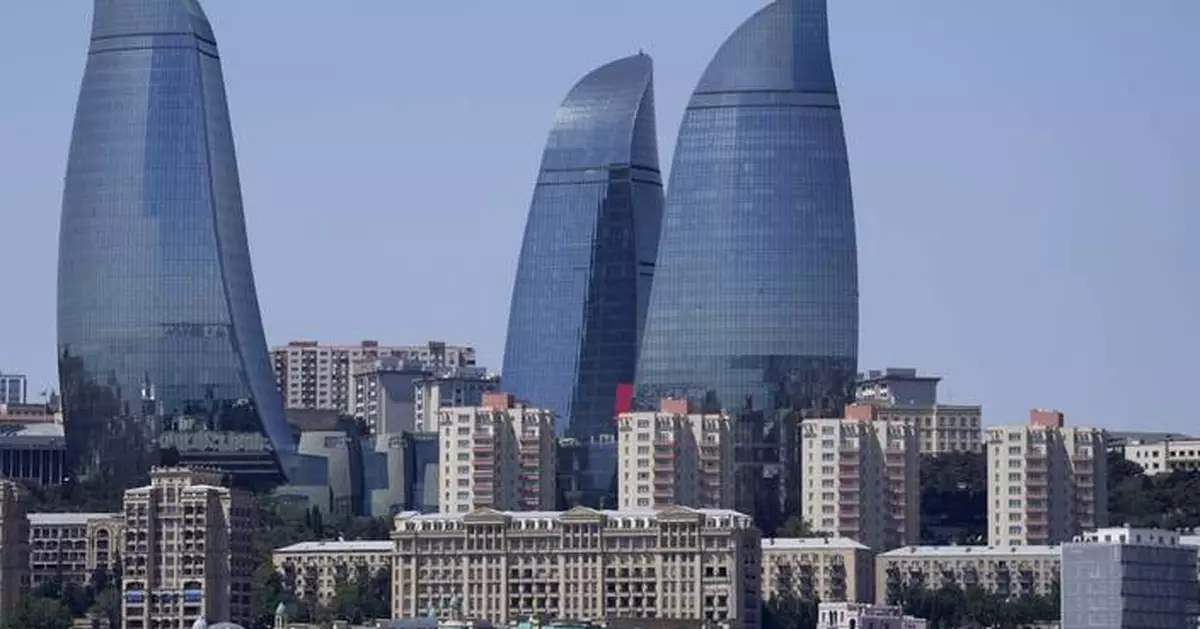
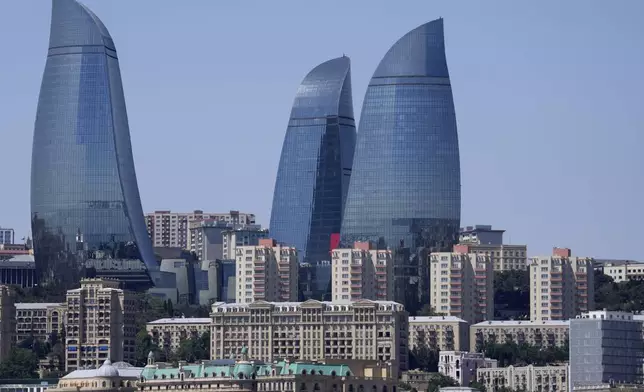
FILE - The Old City stands with the Flame Towers skyscrapers in background in Baku, Azerbaijan, June 13, 2021. (AP Photo/Darko Vojinovic, File)
On Monday, masked police stormed the offices of Sputnik Azerbaijan. The Interior Ministry said the Kremlin-backed media outlet had continued operating via “illegal financing,” despite having its accreditation revoked in February.
Detained in the raid were Sputnik Azerbaijan’s editor-in-chief Yevgeny Belousov, and editorial board director Igor Kartavykh. Five others linked to the media outlet also were detained and under investigation for alleged fraud, illegal entrepreneurship and acquiring property by criminal means.
Belousov and Kartavykh were charged with conspiracy to commit fraud, which carries a maximum prison sentence of up to 12 years. They also were charged with conspiracy to launder funds or other property, and conspiracy to carry out an illegal enterprise. Both were arrested and ordered held for at least four months in pre-trial detention.
Sputnik’s parent company, Rossiya Segodnya, said Tuesday it was “deeply concerned” by the raid and that Azerbaijani staff members were among those detained. Diplomats from the Russian Consulate have not been grated access to its citizens who were detained, it said, and that Kartavykh’s apartment had been searched and computer equipment seized.
“All these actions have no basis and have led to the blocking of Sputnik Azerbaijan,” the statement said. “We call on the Azerbaijani authorities to immediately resolve this unacceptable situation and release our colleagues.”
The Kremlin also called for their release.
“Such measures against members of the media are absolutely not in line with generally accepted rules and norms and, of course, do not match the spirit and nature of Russian-Azerbaijani relations,” spokesman Dmitry Peskov said Tuesday.
The detentions followed Russian police raids Friday on the homes of ethnic Azerbaijanis in Yekaterinburg, Russia, as part of an investigation into a number of killings dating back decades. Two brothers, Ziyaddin and Huseyn Safarov, died while in police custody and several others were seriously injured in the raids, officials said, with nine people detained.
Sayfaddin Huseynli, a brother of the two dead Azerbaijanis, told The Associated Press the raids were “an inhumane, cruel act by Russia against migrants — an act of intimidation.”
Migrants from Muslim-majority countries that once were part of the Soviet Union frequently complain of discrimination at the hands of Russians.
On Tuesday, the Prosecutor General’s Office of Azerbaijan said it would launch a criminal investigation into the two deaths. It said Azerbaijani citizens and others of Azerbaijani descent who were “practically helpless and unable to defend themselves,” were subjected to beatings and other physical abuse by Russian officials.
It attributed the deaths of 60-year-old Huseyn Safarov and 55-year-old Ziyaddin Safarov to “post-traumatic shock caused by multiple injuries.” Huseyn had also suffered post-hemorrhagic shock, it said.
Russia’s Investigative Committee said Monday that one of the deaths had been caused by heart failure. It did not provide details on the second victim, but said a medical examination would be conducted to determine the cause of death for both.
Azerbaijan protested the deaths by canceling a scheduled trip to Moscow by government officials, citing the “targeted extrajudicial killings and violence against Azerbaijanis on the basis of their nationality” by Russian law enforcement. It also called off a visit to Baku by a Russian deputy prime minister, and the Culture Ministry canceled concerts, exhibitions and other events by Russian state and private institutions.
Ties between Moscow and Baku have been strained since the December crash of an Azerbaijani passenger jet. The plane eventually crashed as it tried to land in nearby Kazakhstan.
Aliyev said it was attacked over Russia, albeit unintentionally, and rendered uncontrollable by electronic warfare measures amid allegations that Russian air defense systems were trying to fend off a Ukrainian drone strike near Grozny. Putin apologized to Aliyev for what he called a “tragic incident” but stopped short of acknowledging responsibility.
In May, Aliyev declined to attend Russia’s Victory Day parade in Moscow. Later that month, Ukrainian Foreign Minister Andrii Sybiha visited Azerbaijan, signaling closer ties between Baku and Kyiv.
Ukrainian President Volodymyr Zelenskyy called Aliyev to express his condolences on the two deaths in Yekaterinburg, Azerbaijan's presidential press service said.
FILE - In this photo taken from a video released by The Administration of Mangystau Region, the wreckage of Azerbaijan Airlines Embraer 190 lies near the airport of Aktau, Kazakhstan, on Dec. 25, 2024. (The Administration of Mangystau Region via AP)
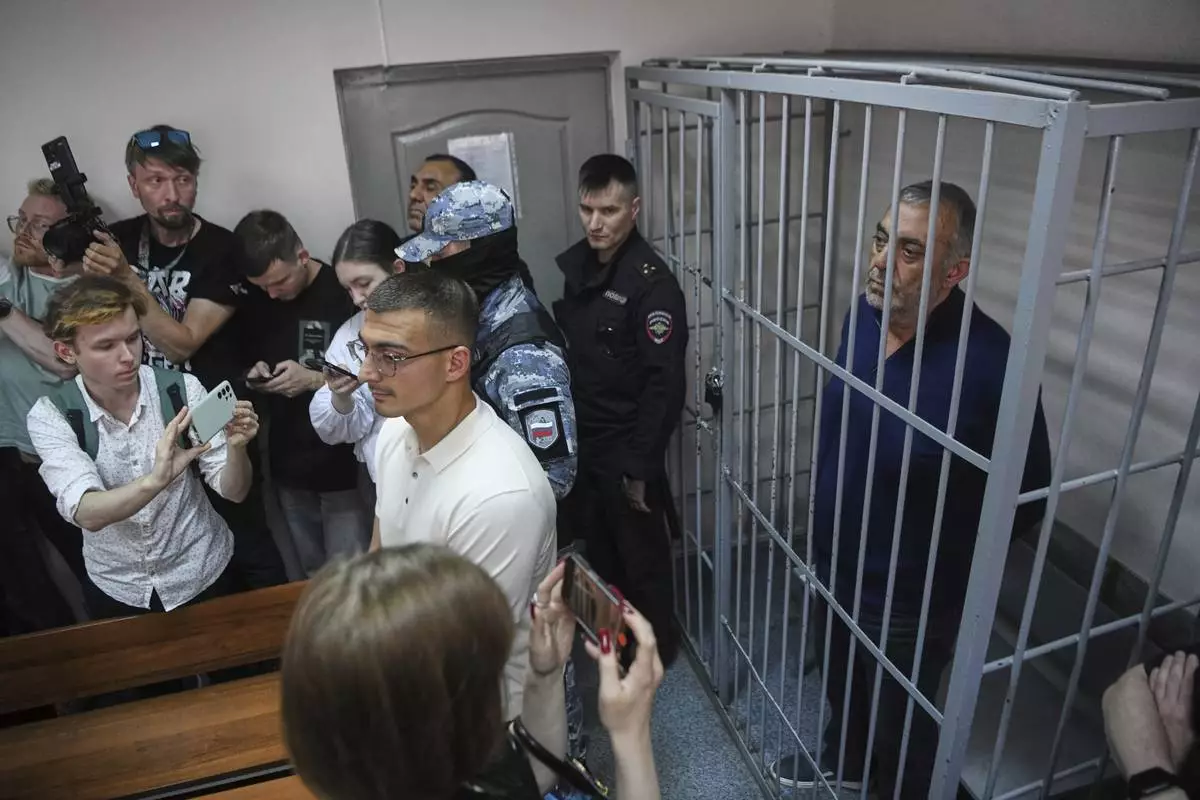
Bakir Safarov, a native of Azerbaijan, right, who faces charges as part of a Russian investigation of several killings, attends a court hearing in Yekaterinburg, Russia, on Tuesday, July 1, 2025. (AP Photo)
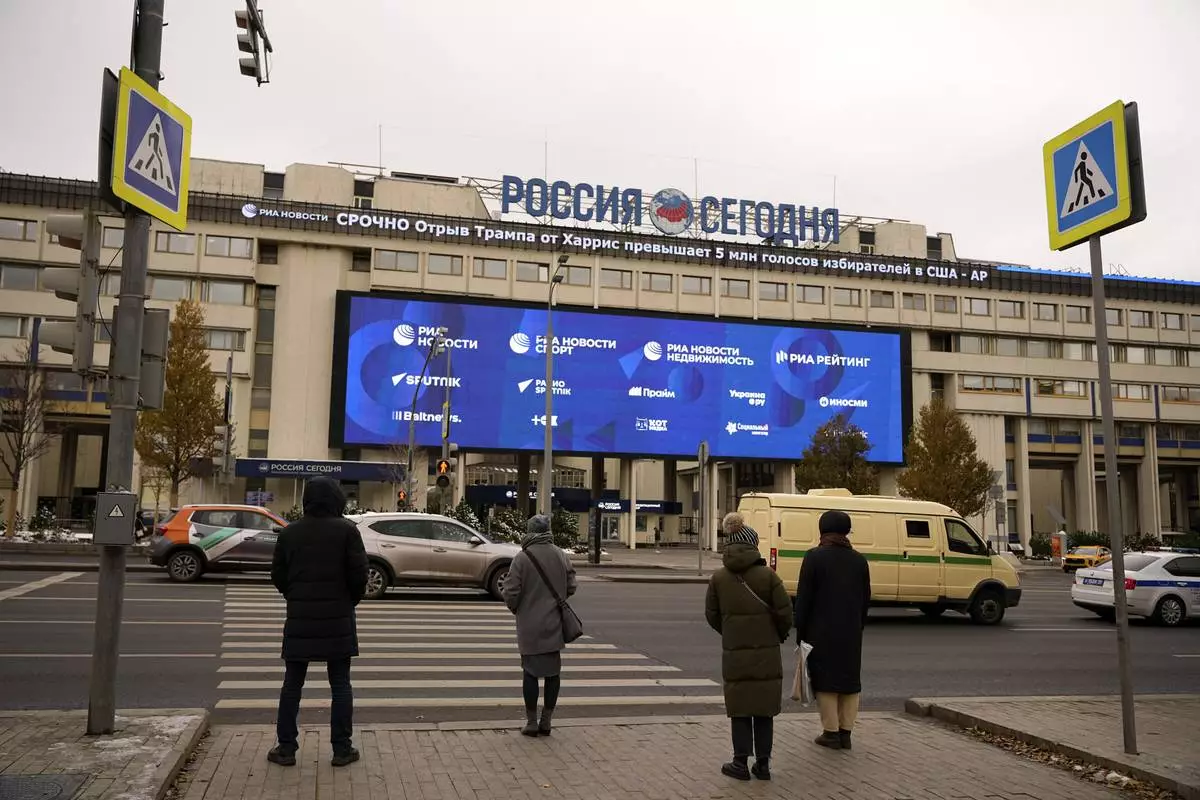
FILE - Pedestrians stand at the crossing in front of the Rossiya Segodnya International Media Group building in Moscow, Russia, on Nov. 6, 2024. (AP Photo/Pavel Bednyakov, File)
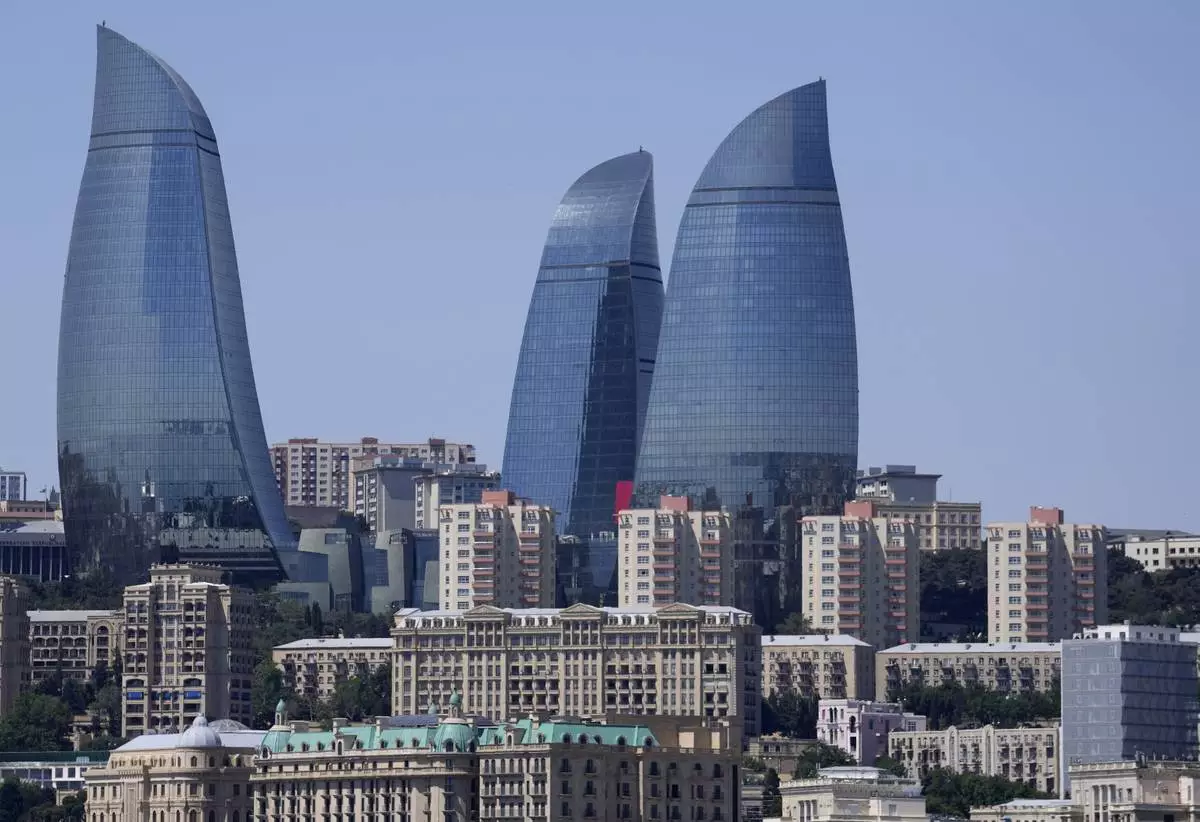
FILE - The Old City stands with the Flame Towers skyscrapers in background in Baku, Azerbaijan, June 13, 2021. (AP Photo/Darko Vojinovic, File)
Protesters confronted federal officers in Minneapolis on Thursday, a day after a woman was fatally shot by an Immigration and Customs Enforcement officer.
The demonstrations came amid heightened tensions after President Donald Trump's administration dispatched 2,000 officers and agents to Minnesota for its latest immigration crackdown.
Across the country, another city was reeling after federal immigration officers shot and wounded two people in a vehicle outside a hospital in Portland, Oregon.
The killing of 37-year-old Renee Good in Minneapolis on Wednesday set off a clash between federal and state officials over whether the shooting appeared justified and whether a Minnesota law enforcement agency had jurisdiction to investigate.
Here's what is known about the shooting:
The woman was shot in her SUV in a residential neighborhood south of downtown Minneapolis, about a mile (1.6 kilometers) from where police killed George Floyd in 2020. Videos taken by bystanders and posted online show an officer approaching a vehicle stopped in the middle of the road, demanding the driver open the door and grabbing the handle.
The Honda Pilot begins to pull forward and a different ICE officer standing in front of the vehicle draws his gun and immediately fires at least two shots at close range, jumping back as the vehicle moves toward him.
It is not clear from the videos if the officer gets struck by the SUV, which speeds into two cars parked on a curb before stopping.
It’s also not clear what happened in the lead-up to the shooting.
Homeland Security Secretary Kristi Noem said the SUV was part of a group of protesters that had been harassing agents and “impeding operations” that morning. She said agents had freed one of their vehicles that was stuck in snow and were leaving the area when the confrontation and shooting occurred.
No video has emerged to corroborate Noem’s account. Bystander video from the shooting scene shows a sobbing woman who says the person shot was her wife. That woman hasn’t spoken publicly to give her version of events.
Good died of gunshot wounds to the head.
A U.S. citizen born in Colorado, Good described herself on social media as a “poet and writer and wife and mom." Her ex-husband said Good had just dropped off her 6-year-old son at school Wednesday and was driving home when she encountered ICE agents on a residential street.
He said Good and her current partner moved to Minneapolis last year from Kansas City, Missouri.
Good's killing is at least the fifth death to result from the aggressive U.S. immigration crackdown the Trump administration launched last year.
Noem said Thursday that there would be a federal investigation into the shooting, though she again called the woman’s actions “domestic terrorism.”
“This vehicle was used to hit this officer,” Noem said. “It was used as a weapon, and the officer feels as though his life was in jeopardy.”
Vice President JD Vance said the shooting was justified and referred to Good's death as “a tragedy of her own making.”
Minneapolis Police Chief Brian O’Hara gave no indication that the driver was trying to harm anyone when he described the shooting to reporters Wednesday. Minneapolis Mayor Jacob Frey said he had watched videos of the shooting that show it was avoidable.
The agent who shot Good is an Iraq War veteran who has served for nearly two decades in the Border Patrol and U.S. Immigration and Customs Enforcement, according to records obtained by The Associated Press.
Jonathan Ross has been a deportation officer with ICE since 2015, records show. He was seriously injured this summer when he was dragged by the vehicle of a fleeing suspect whom he shot with a stun gun.
Federal officials have not named the officer. But Noem said he was dragged by a vehicle in June, and a department spokesperson confirmed Noem was referring to the Bloomington, Minnesota, case in which documents identified the injured officer as Ross.
Court documents say Ross got his arm stuck in the window as a driver fled arrest in that incident. Ross was dragged 100 yards (91 meters), and cuts to his arm required 50 stitches.
According to police, officers initially responded to a report of a shooting outside a hospital Thursday afternoon.
Minutes later police heard that a man who had been shot was asking for help in a residential area a couple of miles away. Officers went there and found a man and a woman with gunshot wounds. Officers determined they were wounded in a shooting with federal agents.
Police Chief Bob Day said the FBI was leading the investigation and he had no details about events that led to the shooting.
The Department of Homeland Security said the vehicle’s passenger was “a Venezuelan illegal alien affiliated with the transnational Tren de Aragua prostitution ring” who was involved in a recent shooting. When agents identified themselves to the occupants during a “targeted vehicle stop,” the driver tried to run them over, the department said. An agent fired in self-defense, it said.
There was no immediate independent corroboration of that account or of any gang affiliation of the vehicle’s occupants.
Trump and his allies have consistently blamed Tren de Aragua for being at the root of violence and illicit drug dealing in some U.S. cities.
Drew Evans, head of Minnesota Bureau of Criminal Apprehension, said Thursday that federal authorities have denied the state agency access to evidence in the Good case, barring the state from investigating the shooting alongside the FBI.
Minnesota Gov. Tim Walz demanded that state investigators be given a role, telling reporters that residents would otherwise have a difficulty accepting the findings of federal law enforcement.
“And I say that only because people in positions of power have already passed judgment from the president to the vice president to Kristi Noem,” Walz said.
Noem denied that Minnesota authorities were being shut out, saying: “They don’t have any jurisdiction in this investigation.”
Dozens of protesters gathered Thursday morning outside a Minneapolis federal building being used as a base for the immigration crackdown. Border Patrol officers fired tear gas and doused demonstrators with pepper spray to push them back from the gate.
Area schools were closed as a safety precaution.
Protests were also planned across the U.S. in cities including New York, New Orleans and Seattle.
Associated Press writer Audrey McAvoy contributed.
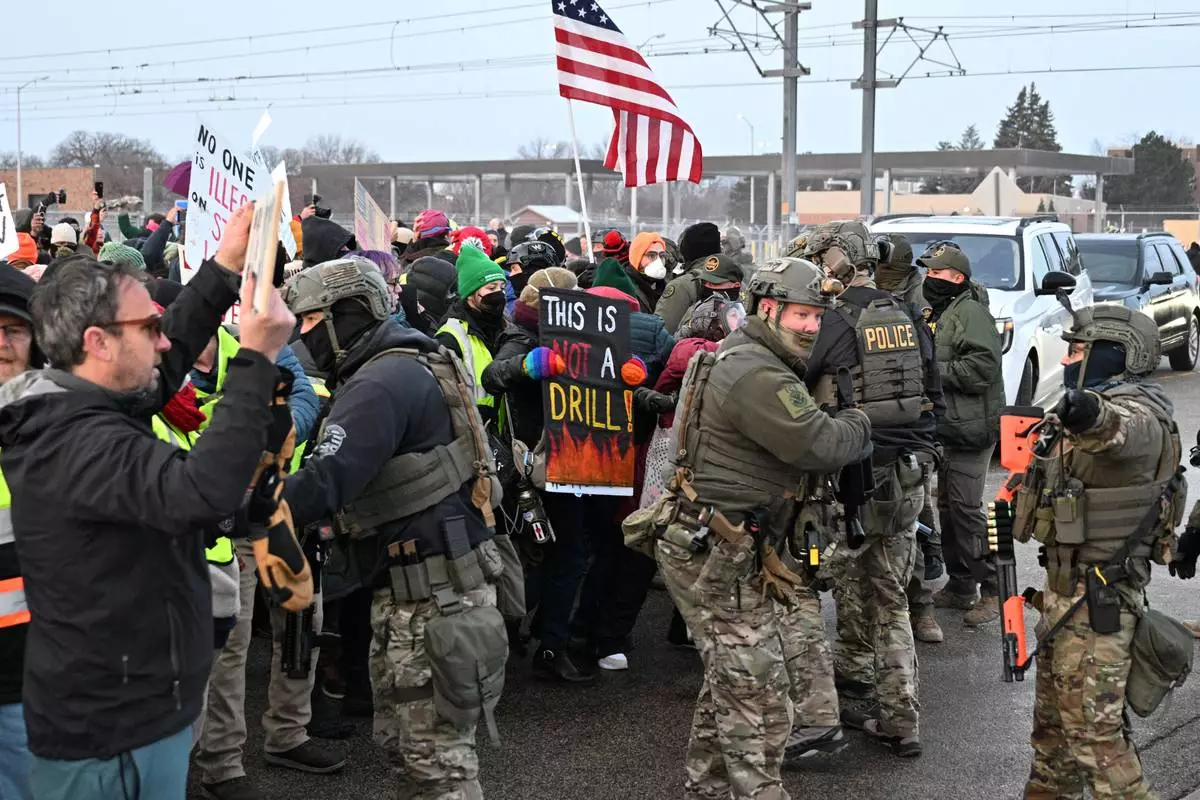
Protesters confront federal agents outside the Bishop Henry Whipple Federal Building, Thursday, Jan. 8, 2026, in Minneapolis, Minn. (AP Photo/Tom Baker)
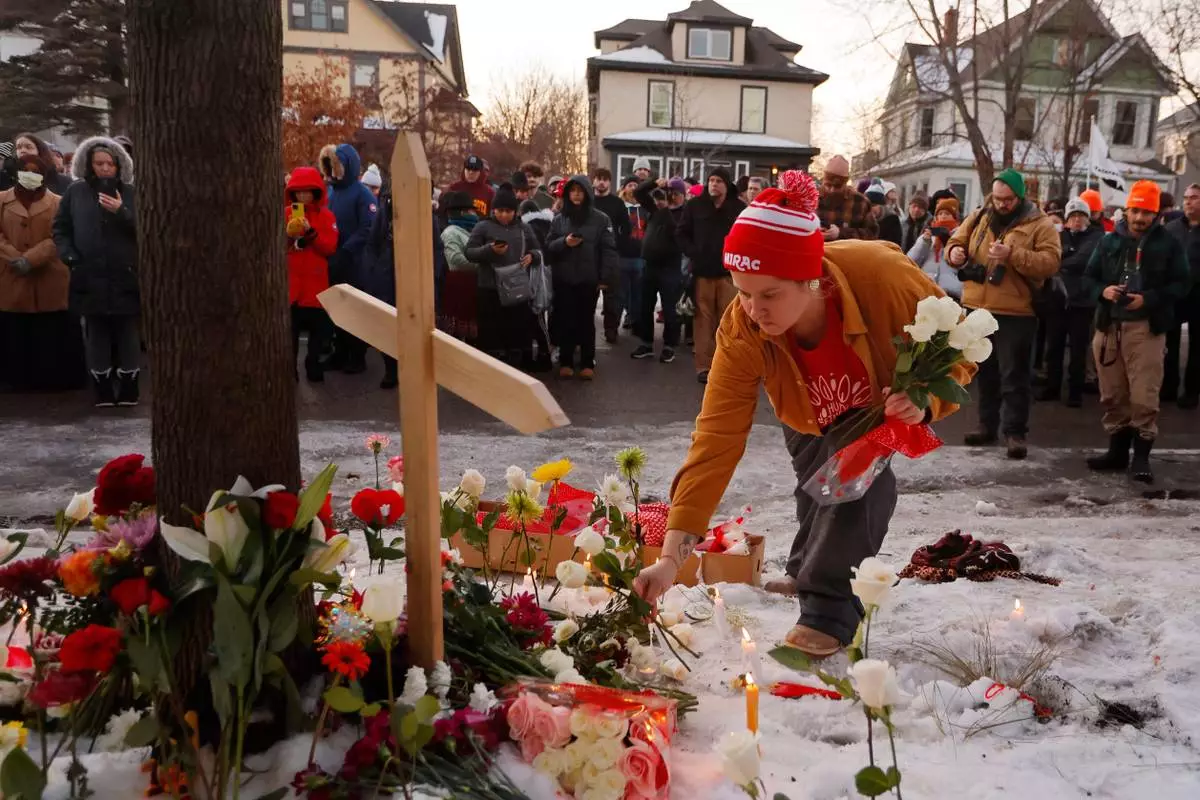
People gather for a vigil after an Immigration and Customs Enforcement officer shot and killed a motorist earlier in the day, Wednesday, Jan. 7, 2026, in Minneapolis. (AP Photo/Bruce Kluckhohn)
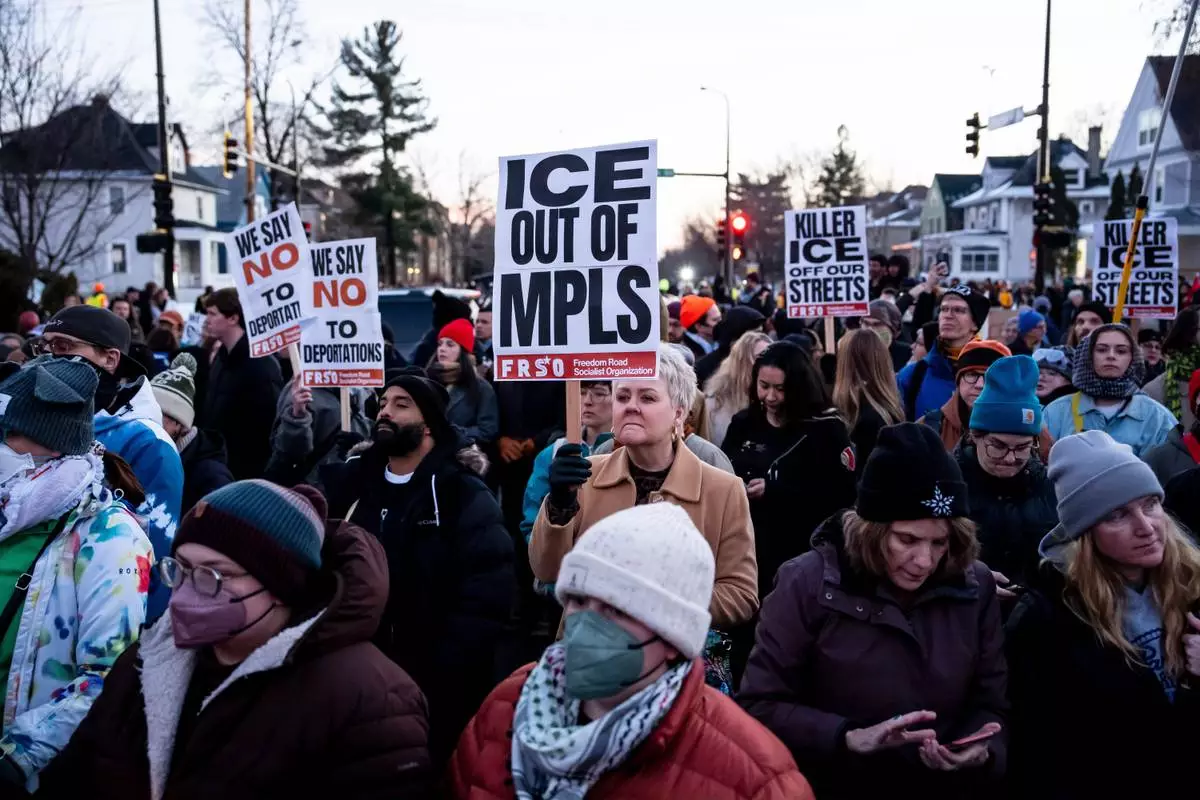
People participate in a protest and vigil after an Immigration and Customs Enforcement officer shot and killed a woman in Minneapolis, on Wednesday, Jan. 7, 2026. (Christopher Katsarov/The Canadian Press via AP)