Skip to Content Facebook Feature Image

Belgium, China vow to deepen ties, boost mutual trust

China

China

China

Belgium, China vow to deepen ties, boost mutual trust

2025-07-01 23:35 Last Updated At:07-02 08:17

Belgian Prime Minister Bart De Wever met with Chinese Foreign Minister Wang Yi in Brussels on Tuesday, pledging to deepen exchanges and enhance mutual trust with China.

De Wever noted that Belgium and China have enjoyed a long history of exchanges, with vibrant local-level friendly communications, and that Belgium plays a gateway role in Europe-China cooperation.

Recalling his multiple visits to China, De Wever said he was deeply impressed by China's development achievements. Despite differing perspectives, he stressed the importance of enhancing exchanges and increasing mutual trust in the face of the current complex geopolitical landscape.

Moreover, he reaffirmed Belgium's commitment to multilateralism and support for a greater autonomous Europe while expressing the hope that the upcoming EU-China leaders' meeting will yield positive results.

De Wever also stressed that Belgium firmly adheres to the one-China policy, and this stance will not change.

Wang, also a member of the Political Bureau of the Communist Party of China Central Committee, highlighted Belgium's unique role in the European integration process and China-EU relations as a founding member of the European Union (EU) and host of the EU headquarters.

Wang said that China appreciates the rational and pragmatic China policy pursued by the new Belgian government and is willing to work with Belgium to carry forward the traditional friendship and advance the all-round partnership of friendly cooperation between the two countries in a steady and sustained manner.

Meanwhile, Wang said China remains committed to high-quality development and high-level opening-up, welcoming more Belgian enterprises to China to develop their businesses and hoping that Belgium will likewise provide Chinese companies investing in Belgium with a fair, secure, and predictable business environment.

Wang also said this year marks the 50th anniversary of the establishment of diplomatic relations between China and the EU, which carries significant meaning as a bridge between the past and the future. The half-century-long journey of China-EU engagement has fully demonstrated that the two sides can achieve mutual respect and win-win cooperation, he added.

Amid a complex and volatile international landscape, Wang said, China and the EU, as two major forces, markets, and civilizations in the world, should uphold the positioning as partners and the main theme of win-win cooperation, strengthening communication, enhancing understanding and consolidating mutual trust to jointly safeguard multilateralism and the free trade system. Together, they should serve as an "anchor of stability" of the world and act as reliable and strong partners who support and empower each other.

The two sides also exchanged views on issues including Ukraine.

Belgium, China vow to deepen ties, boost mutual trust

Belgium, China vow to deepen ties, boost mutual trust

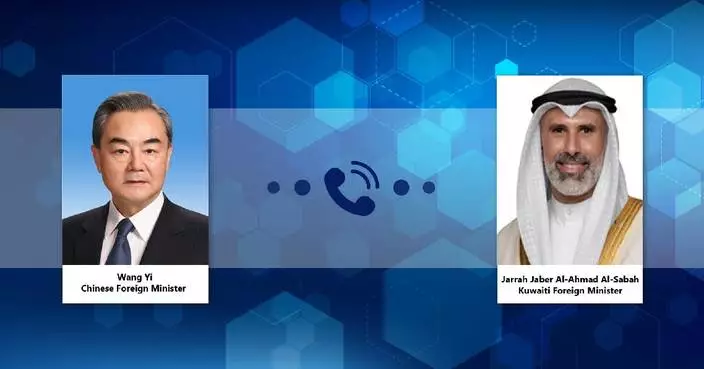
China, EU should enhance communication, jointly safeguard multilateralism: Wang Yi
China, EU should enhance communication, jointly safeguard multilateralism: Wang Yi
A video featuring a former member of Unit 731, a notorious Japanese germ-warfare unit during World War II (WWII), was released on Thursday in northeast China's Harbin, revealing details of how the unit used meteorological data to conduct horrific bacterial experiments on human beings.

The video was released by the Exhibition Hall of Evidence of Crimes Committed by Unit 731 of the Japanese Imperial Army, in which former Unit 731 member Tsuruo Nishijima detailed how the unit used meteorological data to carry out a bacterial dispersal experiment.

The video was recorded in 1997 by Japanese scholar Fuyuko Nishisato and donated to the exhibition hall in 2019, according to the hall, which was built on the former site of the headquarters of Unit 731 in Harbin, the capital city of Heilongjiang Province.

Jin Shicheng, director of the Department of Publicity, Education and Exhibition of the exhibition hall, said that Nishijima joined Unit 731 in October 1938 and served in the unit's meteorological squad. The squad was not a simple observation section but rather an auxiliary force supporting the unit's field human experiments by measuring wind direction, wind speed, and other conditions to ensure optimal experimental results, according to Jin.

Nishijima confirmed in the footage that "the meteorological squad had to be present at every field experiment." He testified to the "rainfall experiments" conducted by Unit 731, which involved aircraft releasing bacterial agents at extremely low altitudes.

At a field-testing site in Anda City, Heilongjiang, Unit 731 aircraft descended to about 50 meters above the ground. They sprayed bacterial culture liquids onto "maruta" -- human test subjects -- who were tied to wooden stakes. Each experiment involved about 30 people, spaced roughly 5 meters apart. After the experiments, the victims were loaded into sealed trucks and transported back to the unit, where their symptoms and disease progression were recorded over a period of several days.

"Unit 731's bacterial weapons were dropped by aircraft from a height of 50 meters in the open air. Therefore, the meteorological squad needed to observe wind direction and speed, which directly affected the precision and accuracy of the bacterial weapons deployment," said Jin.

Nishijima recounted the harrowing experience of the human test subjects.

"They were fully aware that inhaling the substances would certainly lead to death, so they closed their eyes and held their breath to avoid breathing them in. Their resistance prevented the experiment from proceeding. To compel them to comply, they were forced at gunpoint to open their mouths and lift their heads," said Nishijima.

These experiments, disguised as "scientific research," were in fact systematic tests of biological warfare weapons conducted by the Japanese military. The data generated from these inhumane activities became "research findings" shared among the Japanese army medical school, the medical community, and the military at large.

"At that time, the entire Japanese medical community tacitly approved, encouraged, and even participated in the criminal acts of Unit 731. The unit comprised members from Japan's medical and academic sectors who served the Japanese war of aggression against China. Thus, Unit 731 was not just a military unit but represented an organized and systematic criminal enterprise operating from the top down," said Jin.

Unit 731 was a top-secret biological and chemical warfare research base established in Harbin as the nerve center for Japanese biological warfare in China and Southeast Asia during WWII.

At least 3,000 people were used for human experiments by Unit 731, and Japan's biological weapons killed more than 300,000 people in China.

Video offers details of Japan's germ-warfare crimes in northeast China

Video offers details of Japan's germ-warfare crimes in northeast China

Recommended Articles