The Yangtze River Delta in affluent east China should leverage its regional advantages to accelerate sci-tech innovation and support development of the nuclear industry, said members of the 14th National Committee of the Chinese People's Political Consultative Conference (CPPCC).
The 358,000-square km Yangtze River Delta expanse in east China, about the same size as Germany, encompasses the provinces of Jiangsu, Zhejiang, Anhui, and Shanghai Municipality. It is one of the country's most economically invigorating and innovative regions.
In separate interviews with China Media Group (CMG), CPPCC members highlighted the region's advantages in developing the nuclear industry, calling for collaborative efforts among technical teams.
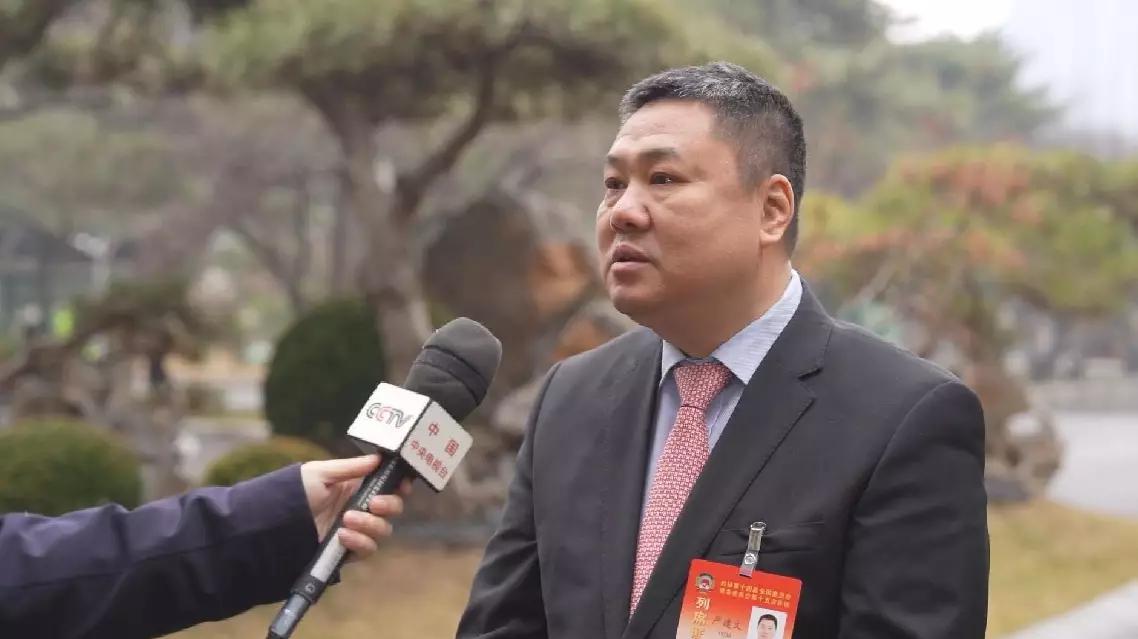
"The Yangtze River Delta region has first-mover advantages, as many industries have participated in the nuclear fusion research and development process early on. The growth of the nuclear fusion industry is expanding. In the materials industry, there are three to five publicly-listed companies in Jiangsu alone. Meanwhile, there are also many subsidiaries of centrally-administered state-owned enterprises in the region, which are actively participating in projects related to functional components and special materials," said Yan Jianwen, a CPPCC member.
"China still lacks sufficient technical teams in the field of nuclear fusion. If we don't divide the work and collaborate, and make full use of the existing strong teams, our development will be constrained. Therefore, we urge everyone to unite in addressing this challenge. In addition, the development of the industry requires the engagement of enterprises. Early participation from enterprises is conducive to breaking through bottlenecks in key technologies and industrial and supply chains," said Duan Xuru, another CPPCC member.
"Choosing a location for a nuclear power plant is a difficult task, and we have stringent requirements. We hope to set up some computing centers around our nuclear power plants as their energy demand is huge," said Lu Tiezhong, another CPPCC member.
As this year's government work report outlines plans to develop Beijing (as part of the Beijing-Tianjin-Hebei region in north China), Shanghai (as part of the Yangtze River Delta), and the Guangdong-Hong Kong-Macao Greater Bay Area in south China into international centers for scientific and technological innovation and turn them into world-class innovation engines, a CPPCC member from Hong Kong also highlighted the importance of enhancing the metropolis' contributions.
"We should make a good use of Hong Kong's advantages to better support the country. One suggestion is for Hong Kong to accelerate the development of an international supply chain management center, providing a better platform for the country's overseas expansion. Secondly, we should accelerate the 'dual circulation' development of the Greater Bay Area, positioning Hong Kong as a platform for both inbound and outbound investment, helping mainland enterprises go global and assisting foreign-invested enterprises in entering the domestic market," said Lo Kam Wing.
The CPPCC National Committee is China's top political advisory body, serving five-year terms and holds a plenary session each year.
The fourth session of the 14th CPPCC National Committee opened in Beijing on March 4 and is scheduled to run through March 11.
Yangtze River Delta should leverage regional advantages to support nuclear industry: CPPCC members