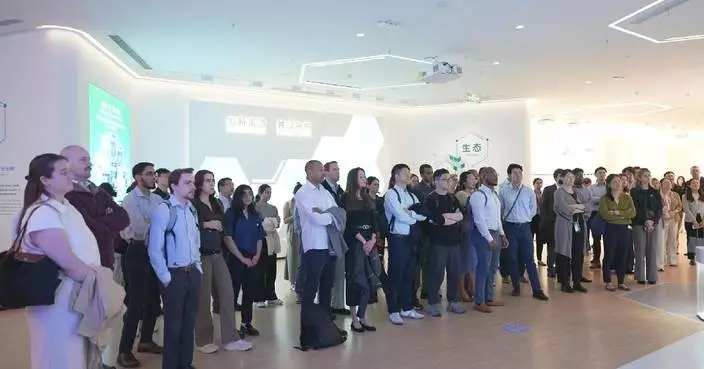
Chinese automakers are seizing the lead in electric vehicles and self-driving technology, areas that will shape the future of the auto sector, executives said at Auto China 2026 in Beijing.
Running from Friday to May 3, Auto China 2026, the world's largest auto show, brings together more than 2,000 domestic and international automakers and suppliers, featuring 1,451 vehicles and a record number of debut models and concept cars.
As global carmakers gather in force, Chinese brands are carving out a commanding presence powered by breakthroughs in artificial intelligence and in-car technology.
Zhu Jiangming, founder of Chinese EV maker Leapmotor, described autonomous driving and intelligent systems as the industry's defining frontier.
"We brought two of our latest models, both equipped with smart driving assistance systems. Intelligent driving is the future. China's intelligent vehicle sector, in scale and across the core parts supply chain, is overwhelmingly leading the world," said Zhu.
The rapid rise of Chinese EV brands is built on a key advantage: a comprehensive power battery supply chain, said Yang Hongxin, chairman and CEO of Svolt Energy Technology.
"China's experience in developing NEV power batteries lies in the coordinated advancement of materials, design, manufacturing and application control technologies. Breakthroughs in only one single area are far from enough to sustain the whole industry, so all sectors must advance in synergy," he said.
Behind these synchronized advancements, Yang added, are national-level support and regulation.
"Second, backed by strong national policy support, sufficient market volume, and scale, we are able to verify technological maturity and accelerate large-scale production and industrial application. Third, we take the lead with unified standards. Authorities have rolled out increasingly stringent regulations on battery safety and recycling, ensuring sound and orderly industrial development. These core factors have underpinned China's remarkable success in the new energy and battery sector, offering valuable lessons and references for the global market," he said.
Entrepreneurs highlight self-driving, battery technologies at Auto China 2026
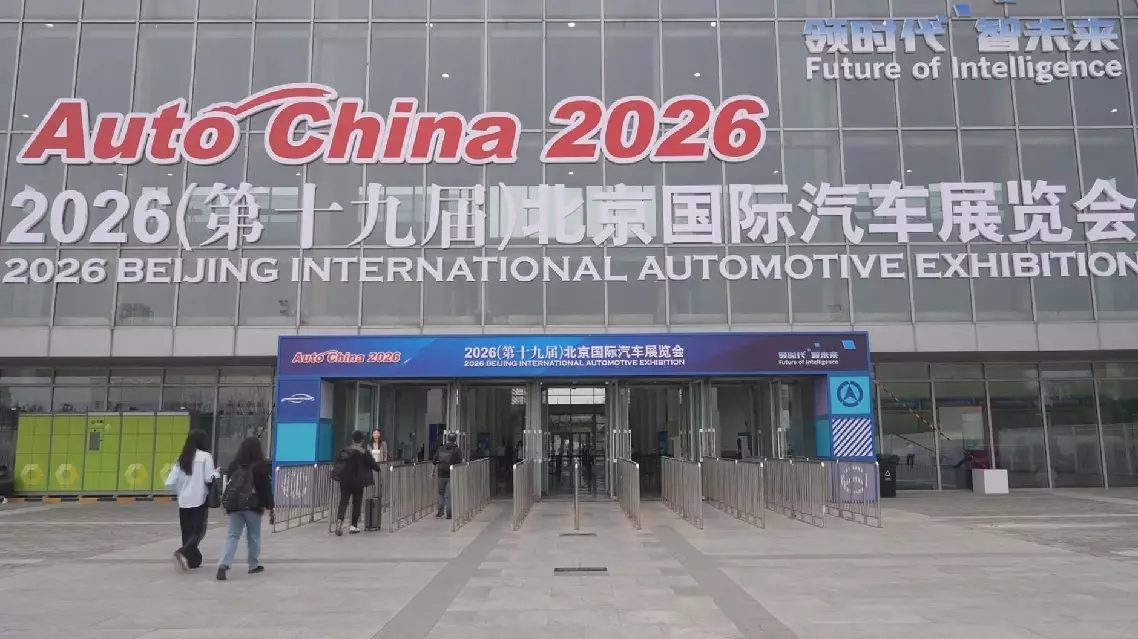
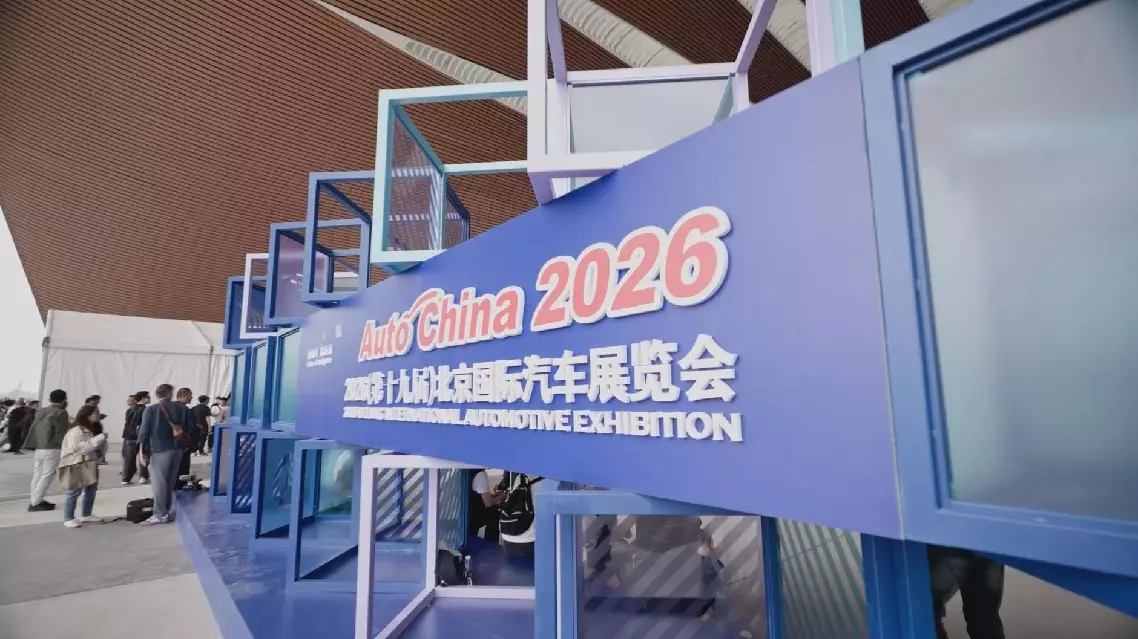
The 2026 Beijing International Automotive Exhibition (Auto China 2026) opened in Beijing on Friday, featuring a total of 181 debut models.
With the theme of "Future of Intelligence", this year's event offers a comprehensive showcase of the latest advancements in electric and intelligent vehicles, and highlights the Chinese automotive industry's strong momentum in driving global transformation through openness and innovation.
Fully utilizing all exhibition spaces at both the China International Exhibition Center (Shunyi Hall) and the Capital International Exhibition Center of China, Auto China 2026 has a record-breaking total exhibition area of 380,000 square meters, making it the world's largest auto show by exhibition area.
This year's auto show has brought together leading automakers, technology companies and supply chain manufacturers from 21 countries and regions worldwide.
A total of 1,451 vehicles, including 71 concept cars, are on display at the ongoing event, with new energy vehicles accounting for over 80 percent of the total -- a record high.
Chinese brands are demonstrating strong innovative vitality.
Harmony lntelligent Mobility Alliance, the auto business of China's tech giant Huawei, joined hands with Guangzhou Automobile Group (GAC Group) to launch the much-anticipated Aistaland GT7, a shooting brake equipped with the latest intelligent driving assistance system and fast-charging technology from Huawei.
BYD, meanwhile, unveiled its all-new full-size SUV, the "Datang," which boasts an extremely fast charging speed. The company claims it can reach 80 percent charge in the time it takes to drink a cup of coffee.
The Xiaomi Vision Gran Turismo, a concept supercar designed for world-famous racing video game Gran Turismo 7, also made its domestic debut, showcasing Xiaomi's vision for the future of high-performance EVs.
Xiaomi, the Chinese brand known globally for its smart gadgets, is also eying the global auto market after launching several successful models in China.
"The first stop for Xiaomi Auto's overseas market will be in Germany, the world's most challenging auto market. It will be another pioneering journey for us. Working closely with other players in the auto industry, we aim to drive the advancement of the entire automotive industry through our vehicles' driving performance and intelligent ecosystem. I also hope our overseas business team will successfully establish the Xiaomi Auto brand on the global stage," said Lei Jun, founder and chairman of Xiaomi.
German luxury brands are stepping up their efforts to develop new models tailored specifically for the Chinese market.
BMW unveiled its iX3 Long Wheelbase, providing Chinese customers with a larger space for rear passengers, as well as an intelligent driving system developed in collaboration with a Chinese tech company.
The E7X SUV, jointly developed by German automaker Audi and Shanghai-based SAIC Motor, met the public for the first time at the event.
American brands are also actively adapting.
General Motors is showcasing several new models featuring localized smart cockpits at the auto show, hoping to win over more consumers in the highly competitive Chinese market.
Cadillac, a luxury brand under General Motors, has brought to the auto show the VISTIQ EV specially enhanced for China that is, according to one of its executives, envied by North America consumers.
"The rear-seat infotainment system and independent executive seats in the back are all features that owners in North America and Europe do not have access to. The VISTIQ is equipped with advanced driver-assistance system developed in collaboration with Chinese company Momenta and a LiDAR system from Hesai Technology, a world-leading Chinese supplier of LiDAR. Through deep cooperation with Chinese high-tech companies, we created an electric vehicle that is perfectly suited to the development trends and consumer needs of China's new energy vehicle sector, particularly in the realm of pure electric vehicles," said Shi Wenjie, a product manager from Cadillac.
Supply chain companies have also emerged as a major force at this year's auto show.
Leading suppliers such as CATL, EVE Energy and Huawei have all set up their own exhibition areas to showcase core technologies and solutions in areas such as batteries, intelligent driving and in-vehicle infotainment systems.
Battery giant CATL's new-generation ultra-fast-charging battery has drawn significant attention, with the company claiming it can provide hundreds of kilometers of range after just a few minutes of charging -- directly addressing Chinese consumers' primary concern regarding charging efficiency.
"We are showcasing our third-generation Shenxing ultra-fast charging battery at this year's auto show. Our core fast-charging technology can charge the battery from 10 percent to 98 percent in just six minutes. Typically, lithium iron phosphate batteries charge more slowly in cold weather, but our self-heating technology enables fast charging even at -30 degrees Celsius, allowing the battery to be fully charged in under nine minutes," said CATL engineer Ji Yuanchun.
The auto show will run through May 3.
Auto China 2026 opens in Beijing with 181 debut models