China is playing a proactive and principled role in promoting peace in the Middle East, said Pakistani Senator Mushahid Hussain Syed on Tuesday, emphasizing "constant communication" on the Iran issue.
His remarks came as Pakistan, a main mediator between Washington and Tehran, heightened security in its capital, Islamabad, in anticipation of the much-awaited second round of peace talks, which ultimately did not proceed. Iran said the United States had failed to honor its prior commitments, citing maritime blockades, the seizure of Iranian vessels, and continued U.S. threats as key reasons for refusing to negotiate.
U.S. President Donald Trump said Wednesday there is "no time frame" for ending the U.S.-Israeli war on Iran, stressing there was "no time pressure" on the extended ceasefire or pending peace talks.
He had initially said the war would last four to six weeks after it began on Feb 28. Earlier on the same day, U.S. online media outlet Axios cited three U.S. officials who said Trump may extend the ceasefire with Iran for three to five more days.
Just as the two-week truce that began on April 8 was nearing expiration, Trump on Tuesday extended the ceasefire "at Pakistan's request," but continued to blockade Iranian ports.
Amid these tensions, China's diplomatic efforts have served as a stabilizing force in the region, Syed underscored in an interview with China Global Television Network (CGTN) in Islamabad.
"China’s role is very proactive, very principled and very clear for peace. And first of all, China and Pakistan are on the same page. We already gave a five-point plan which showed that both China and Pakistan see the situation through the lens of peace, harmony and coexistence," he said.
"And secondly, China has taken a principled position in the process of the United Nations Security Council, where they vetoed a resolution that was one-sided. That showed China is being very even handed. And then China's leader President Xi Jinping hosted Prince Khaled, who is the Crown Prince of Abu Dhabi of the UAE. Then he talked to Mohammed bin Salman, the Crown Prince of Saudi Arabia. Then, on this Iran issue also, there's been constant communication," he said.
"So China is playing a very important role. The purpose of China's role and Pakistan's role is the same. We are loyal to the objective. The objective is promoting peace between the two protagonists," he concluded.
During a meeting in Beijing on April 14, with Sheikh Khaled bin Mohamed bin Zayed Al Nahyan, Crown Prince of Abu Dhabi, United Arab Emirates (UAE), Chinese President Xi Jinping put forward the four-point proposal, namely adherence to the principles of peaceful coexistence, national sovereignty, international rule of law, and a balanced approach to development and security.
Subsequently, on April 20, during a phone conversation with Saudi Crown Prince and Prime Minister Mohammed bin Salman Al Saud, Xi stressed that China calls for an immediate and comprehensive ceasefire and cessation of hostilities, supports all efforts conducive to restoring peace, and remains committed to resolving disputes through political and diplomatic means.
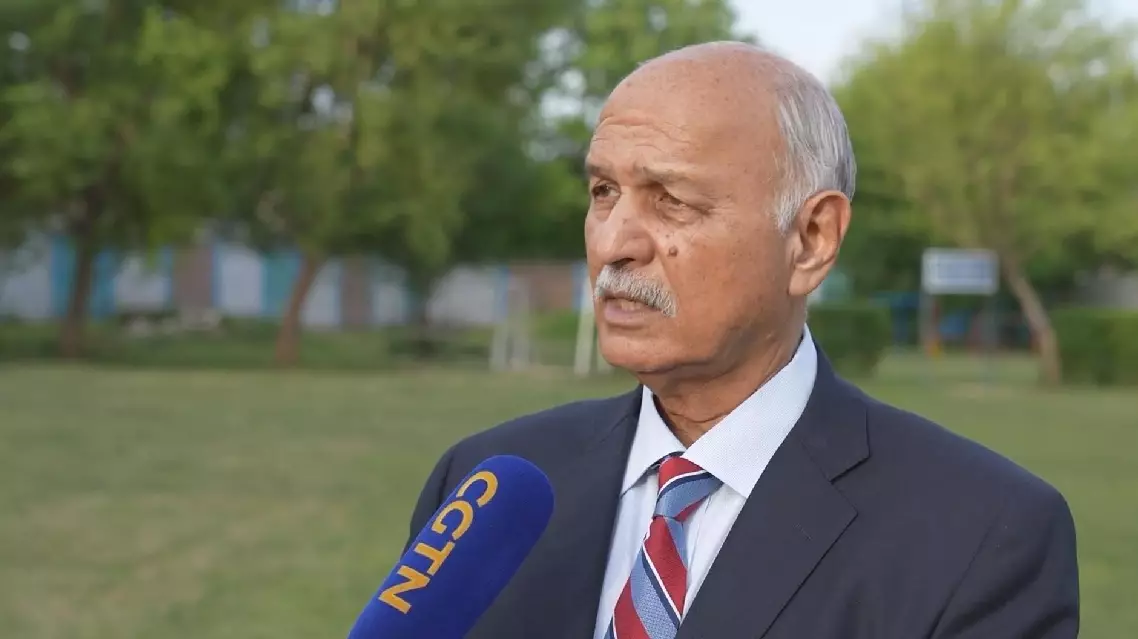
Pakistani senator praises China's proactive role in striving for Middle East peace