CHICAGO (AP) — Standing near the gravestone for the relative he never met, Mark Bailey accepted the crisply folded American flag from the Army officer, hugged it to his chest and closed his eyes.
Though the person he called his aunt — born Reba Caroline Bailey — had been estranged, missing for decades and died in 2015 as an unidentified ward of the state, he felt connection and a sense of closure.
Click to Gallery
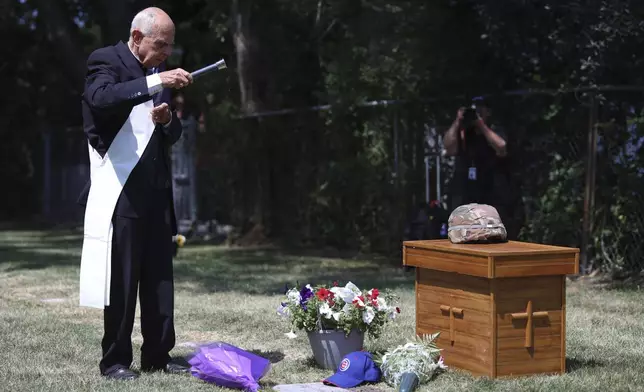
Deacon Glenn Tylutki, of Chicago Catholic Cemeteries, blesses the grave of 75-year-old Pfc. Reba C. Bailey, a former missing person cold case named Seven Doe, during a military funeral Tuesday, July 1, 2025, at Mount Olivet Catholic Cemetery in Chicago. (AP Photo/Talia Sprague)
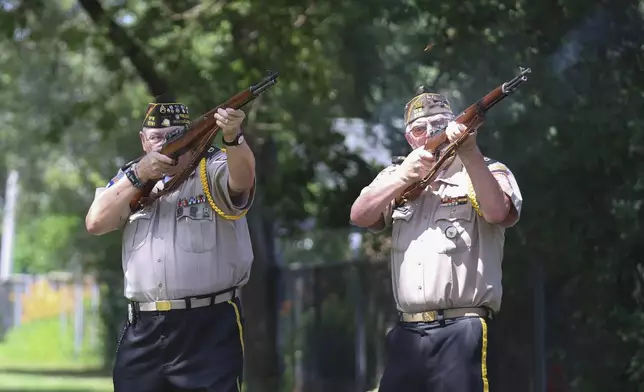
Robert Jensen and Mark Ethridge, right, of the Veterans of Foreign Wars Post 2791, perform a 21-gun salute during a military funeral for 75-year-old Pfc. Reba C. Bailey, a former missing person cold case named Seven Doe, Tuesday, July 1, 2025, at Mount Olivet Catholic Cemetery in Chicago. (AP Photo/Talia Sprague)
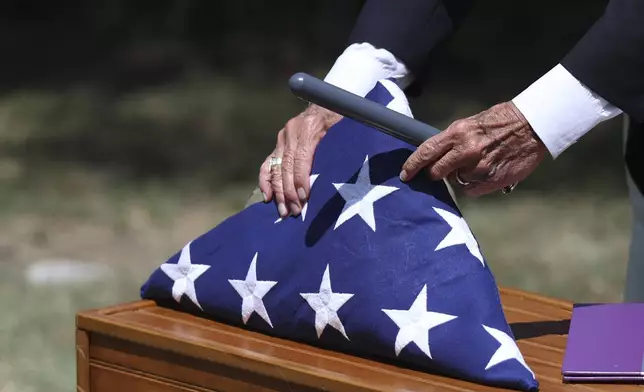
Deacon Glenn Tylutki, of Chicago Catholic Cemeteries, adjusts an American flag prior to a military funeral for 75-year-old Pfc. Reba C. Bailey, a former missing person cold case named Seven Doe, Tuesday, July 1, 2025, at Mount Olivet Catholic Cemetery in Chicago. (AP Photo/Talia Sprague)
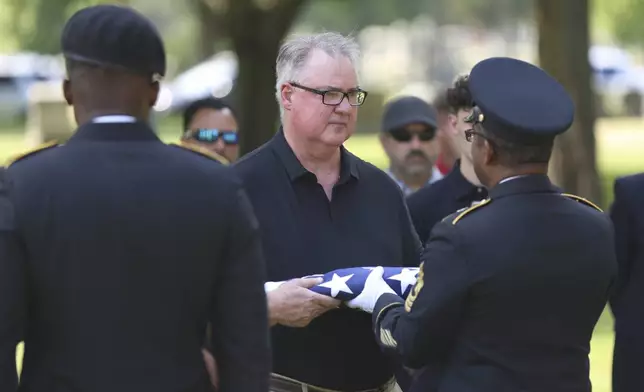
Staff Sgt. Kobe Green and Master Sgt. Derrick Bailey, right, present Mark Bailey with an American flag during during a military funeral for his aunt, 75-year-old Pfc. Reba C. Bailey, a former missing person cold case named Seven Doe, Tuesday, July 1, 2025 at Mount Olivet Catholic Cemetery in Chicago. (AP Photo/Talia Sprague)
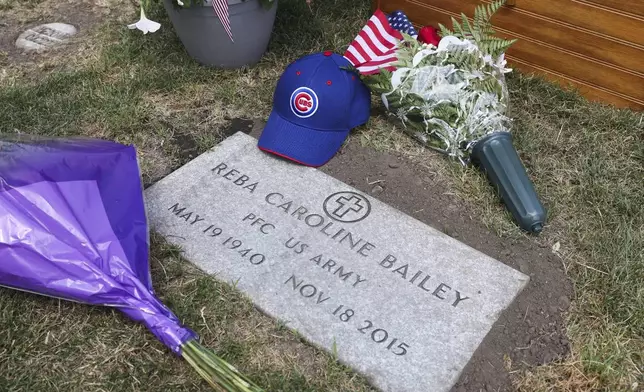
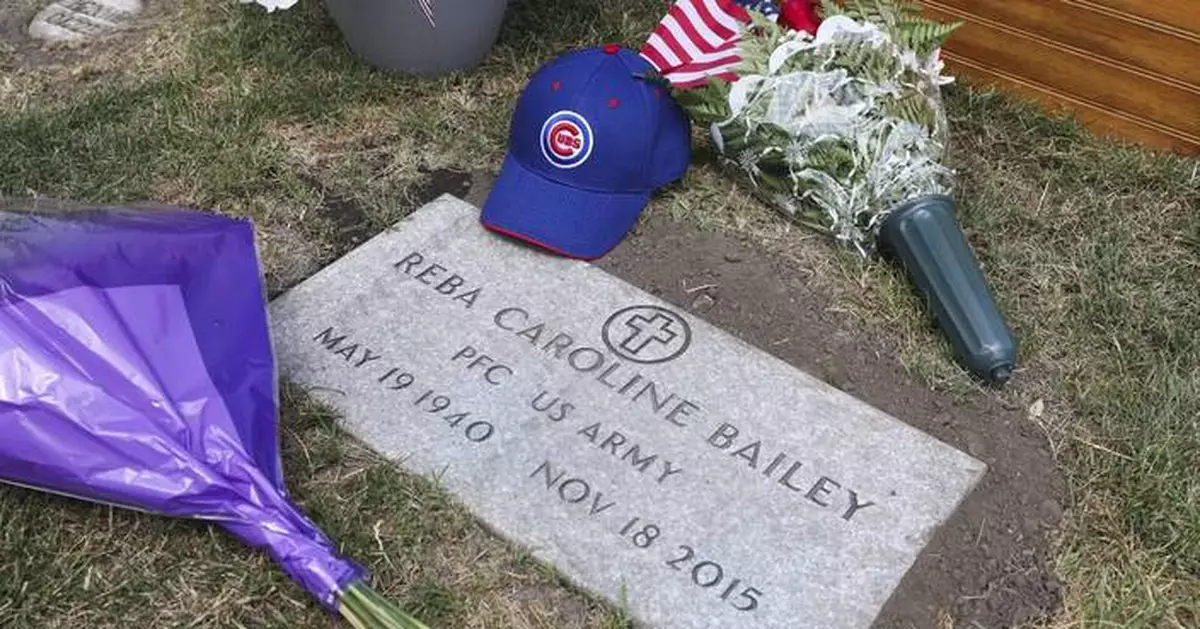
The grave marker of 75-year-old Pfc. Reba C. Bailey, a former missing person cold case named Seven Doe, is seen during a military funeral at Mount Olivet Catholic Cemetery in Chicago, Tuesday, July 1, 2025. (AP Photo/Talia Sprague)
“I want to let Reba know we’re part of the circle and part of the family,” he said.
Mark Bailey was among dozens of attendees at an unusual funeral service with military honors this week for an Illinois veteran with memory problems so severe that they died an unnamed person. The ceremony became possible because of an extraordinary cold case investigation that identified the 75-year-old postmortem.
Investigators unearthed the mystery of how the Women’s Army Corps veteran ended up homeless in Chicago with few recollections of their own life, aside from identifying as a man named Seven.
“I never knew I had this family member,” said Mark Bailey’s 19-year-old son Cole, who also drove from central Illinois for the service. “It’s nice to know I have somebody that’s been found and isn’t lost anymore.”
Since the investigation’s conclusion, the numbered cement cylinder that marked the unidentified grave has been replaced with a rectangular plague with a cross that reads: “Reba Caroline Bailey, PFC US Army.”
The case of Seven Doe, the name appearing in some official records, came to Cook County Sheriff Tom Dart’s office in 2023. The unidentified body belonged to a person who died of natural causes in an assisted living facility. They were a ward of the state, unable to remember a legal name or family.
The cause of death was heart disease with diabetes and dementia as contributing factors and the body was buried in a section for unclaimed people at Mount Olivet Catholic Cemetery on Chicago's Far South Side. The medical examiner marked it as the 4,985th case of the year and put the number on the headstone.
In 2023, investigators ran fingerprints taken postmortem and found a 1961 Army record for the veteran, formerly of Danville, about 140 miles (225.31 kilometers) south of Chicago. The search for close living relatives came up short; five siblings and an ex-husband had all died.
The family members they did locate had only heard stories of a relative who had disappeared. After making the identification, detectives ordered a new headstone with the same name on military records. It was quietly installed last year.
Commander Jason Moran, who oversees the sheriff’s missing persons unit, said it was rewarding to make sure the identified veteran got the benefit of a funeral with military honors.
“It’s just a privilege to be able to help families and really close the story,” said Moran, whose work on other high-profile cold cases has gained notoriety.
Several generations of the Bailey family have told stories about what happened to their missing relative since leaving the military to get married.
They've wondered about the possibility of children or their relative's gender identity. Some believe that there was a family dispute but the stories about its origins vary from the decision to join the military to sexual orientation.
Family members tried to find their missing relative over the years, including Amanda Ingram, who would have been a great-niece. She maintains a meticulous family tree with Census records and photos.
“It’s amazing how somebody can just disappear like that and not know what happened,” Ingram said this week. “I’m pretty sure we’re never going to know the details.”
On a winter day in the late 1970s, a person wearing a military-style jacket and aviator cap was curled up on the porch of St. Francis Catholic Worker House in Chicago. Residents who stayed there at the time told the Associated Press that the person asked to be called Seven, spoke in the third person and identified as a man.
Seven quickly became the house cook. The meals drew crowds to the neighborhood where several homeless advocacy groups operated, according to former residents' accounts.
Investigators have tried to explain the memory loss and floated theories about brain damage related to a 1950 car accident that killed Bailey's mother or to military service. That included stints at Fort Ord in California, a polluted former Army base, and Fort McClellan in Alabama, formerly used for chemical weapons training, and where the federal government has acknowledged potential exposure to toxins.
Neither family, investigators nor residents of the worker house figured out the meaning behind the name Seven.
Ingram, who lives in Alabama, couldn’t make the ceremony this week. But she asked volunteers from an Illinois chapter of Daughters of the American Revolution to attend on her behalf.
“Everybody who comes to visit that cemetery will pass by it and know who she was,” said Ingram, whose detailed family trees include records using Bailey's birth name.
Mark Bailey said he and his son wanted to bring something to the service that would honor both parts of their long-lost relative's life.
They had heard their relative had an affinity for the Cubs and looked for a jersey with the number “7” on it, but settled on a blue team cap. They set it on the headstone.
The service held Tuesday included prayers, a 21-gun salute and a bugler playing taps — a chilling, 24-note salute that is traditionally played at funerals of U.S. military veterans. Attendees included Cook County sheriff's investigators and Archdiocese of Chicago staff.
“I just wish the rest of them could be identified as well,” Mark Bailey told those attending while pointing to the rows of unidentified graves.
Dart, the Cook County sheriff, said the ceremony left him nearly speechless, saying the Illinois veteran deserved military honors and a flag from the U.S. president “instead of being forgotten and left as an anonymous number somewhere.”
Relatives said they planned to eventually display the flag at the American Legion in Potomac, near where the Bailey family has roots.
Mark Bailey said the acknowledgement of military service was particularly meaningful with so many veterans in the extended family. He hoped the memory would stay with his son Cole, who plans to enlist.
“For him, it’ll be something he’ll have forever,” he said.
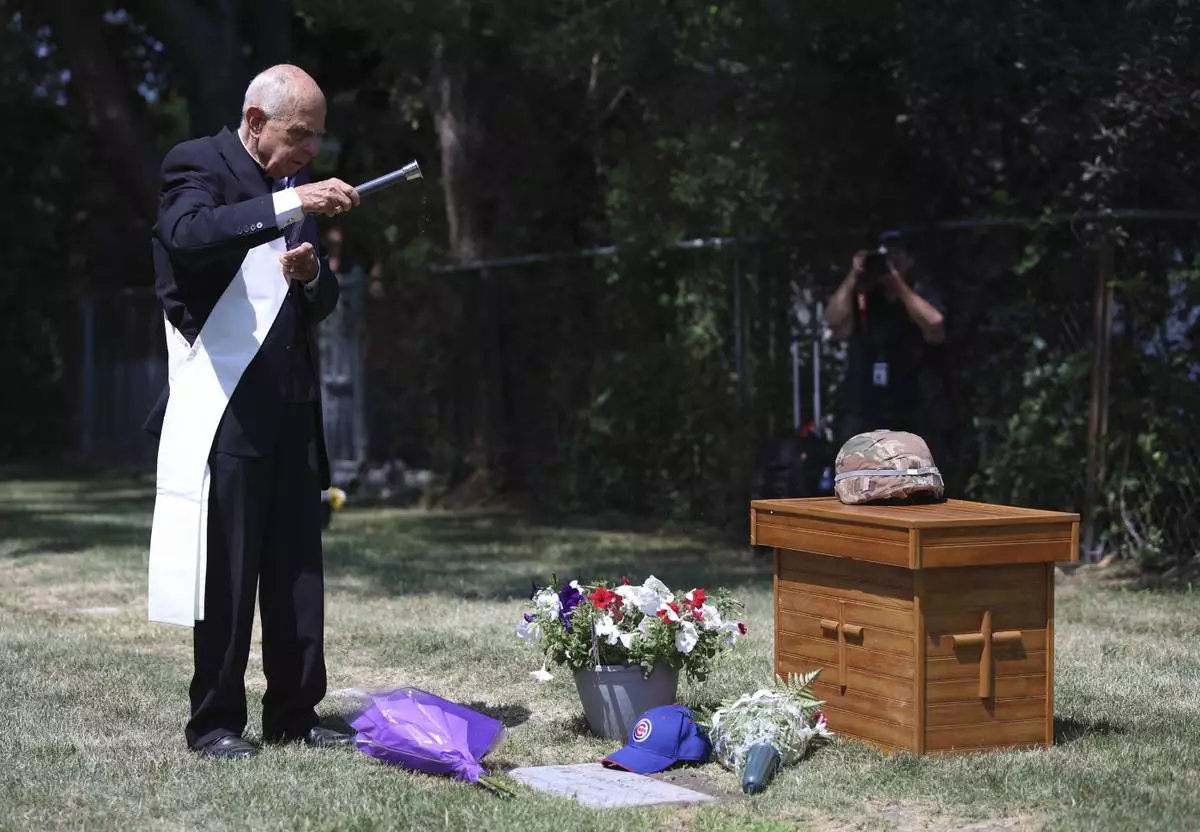
Deacon Glenn Tylutki, of Chicago Catholic Cemeteries, blesses the grave of 75-year-old Pfc. Reba C. Bailey, a former missing person cold case named Seven Doe, during a military funeral Tuesday, July 1, 2025, at Mount Olivet Catholic Cemetery in Chicago. (AP Photo/Talia Sprague)
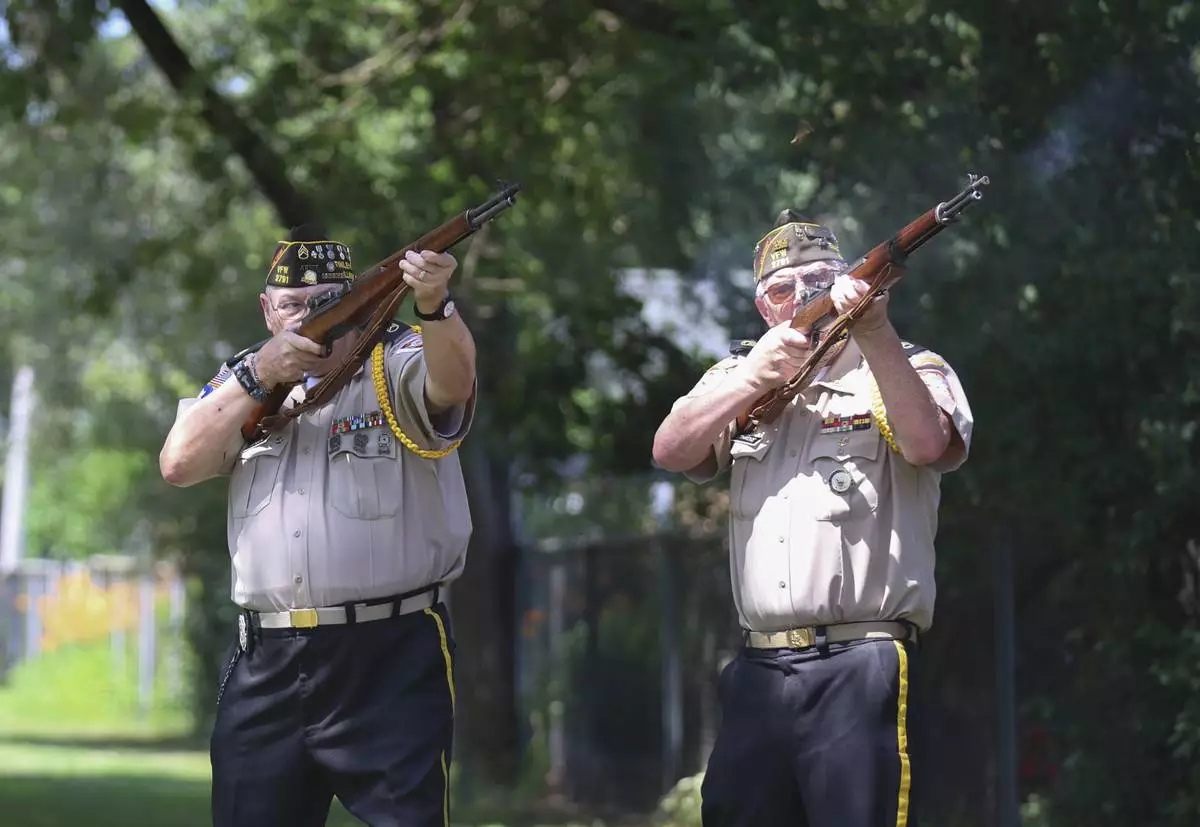
Robert Jensen and Mark Ethridge, right, of the Veterans of Foreign Wars Post 2791, perform a 21-gun salute during a military funeral for 75-year-old Pfc. Reba C. Bailey, a former missing person cold case named Seven Doe, Tuesday, July 1, 2025, at Mount Olivet Catholic Cemetery in Chicago. (AP Photo/Talia Sprague)
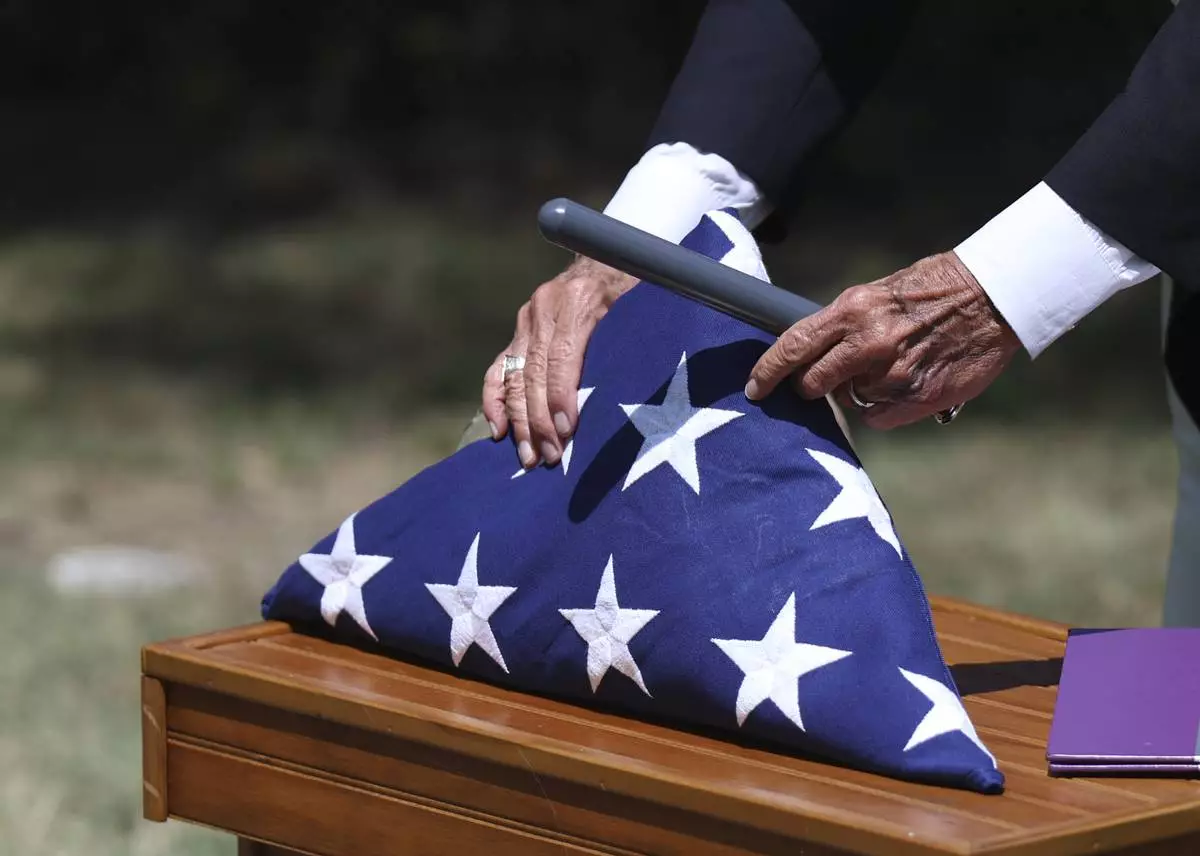
Deacon Glenn Tylutki, of Chicago Catholic Cemeteries, adjusts an American flag prior to a military funeral for 75-year-old Pfc. Reba C. Bailey, a former missing person cold case named Seven Doe, Tuesday, July 1, 2025, at Mount Olivet Catholic Cemetery in Chicago. (AP Photo/Talia Sprague)
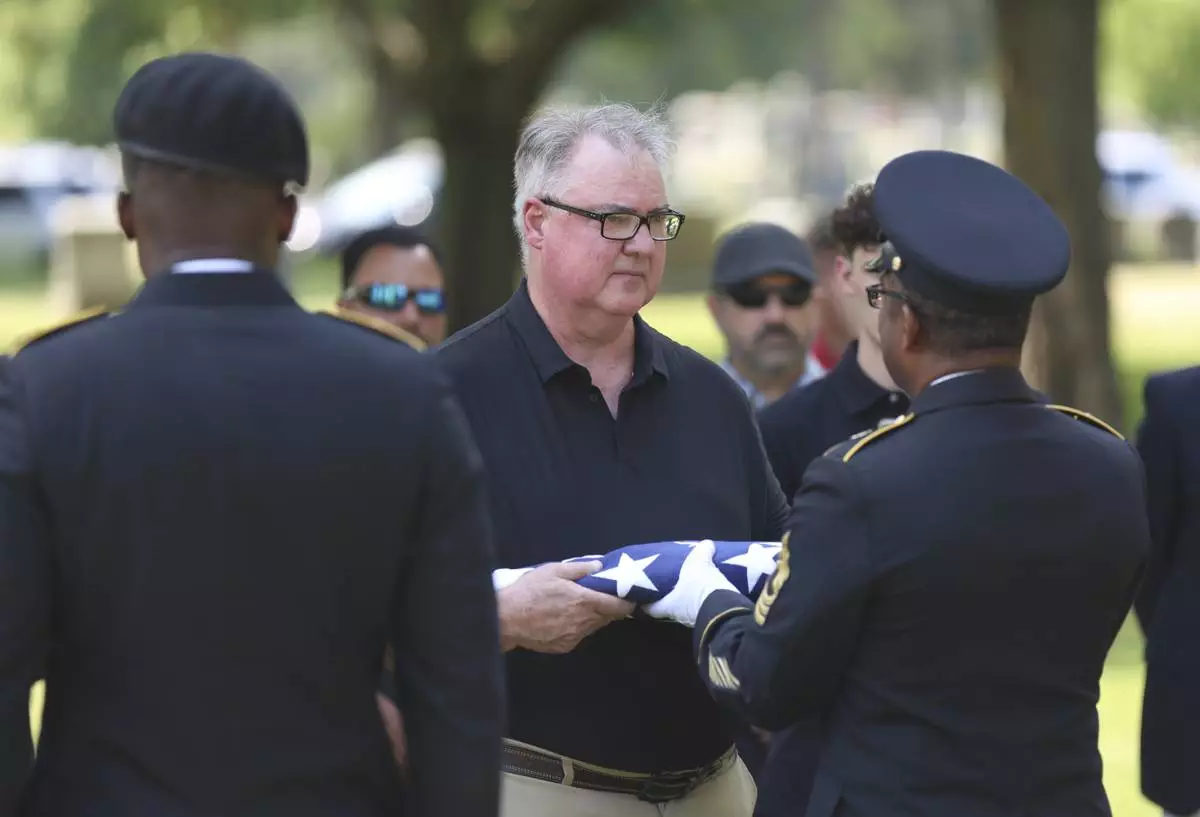
Staff Sgt. Kobe Green and Master Sgt. Derrick Bailey, right, present Mark Bailey with an American flag during during a military funeral for his aunt, 75-year-old Pfc. Reba C. Bailey, a former missing person cold case named Seven Doe, Tuesday, July 1, 2025 at Mount Olivet Catholic Cemetery in Chicago. (AP Photo/Talia Sprague)
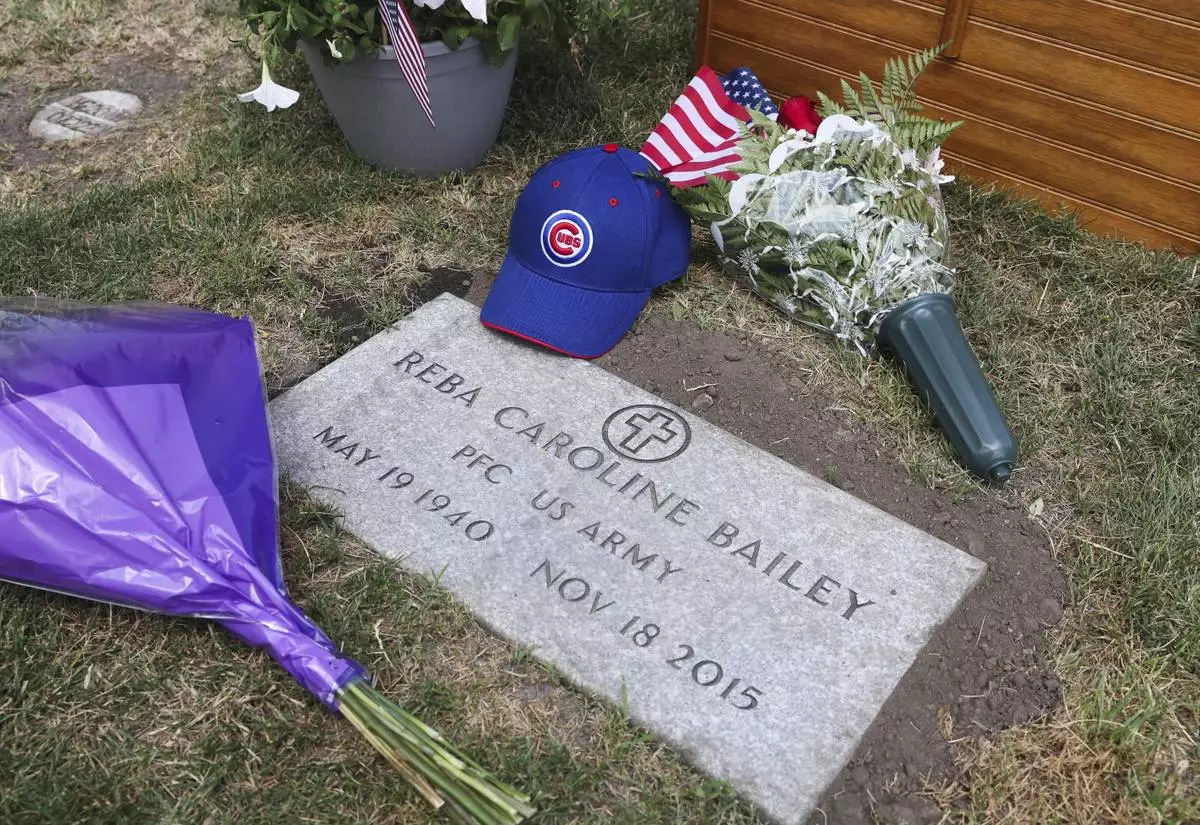
The grave marker of 75-year-old Pfc. Reba C. Bailey, a former missing person cold case named Seven Doe, is seen during a military funeral at Mount Olivet Catholic Cemetery in Chicago, Tuesday, July 1, 2025. (AP Photo/Talia Sprague)