China's domestically developed J-15T fighter jets made its flight deck public debut Thursday as aircraft carrier Shandong made its inaugural visit to the Hong Kong Special Administrative Region (SAR). Hong Kong visitors to the carrier will enter through its hangar beneath the flight deck, which hosts intangible cultural heritage exhibition and light weapon display. The aircraft's jet elevators will take visitors to the deck where the J-15Ts are lined up.
As an upgraded version of the original J-15, China's first fixed-wing carrier-based fighter, the J-15T is equipped with latest radar and weapons and is compatible with catapult launch systems.
"The J-15T is a domestically developed single-seat, heavy-duty carrier-based fighter jet that serves as a core combat asset of China's aircraft carrier strike groups. To enhance catapult-assisted takeoff capacity and withstand greater landing stress, its landing gear has been structurally reinforced, enabling fully loaded launches (fuel and armaments). The aircraft features an optimized weapons system compatible with multiple advanced missiles, while its upgraded radar boasts extended detection range, higher power output, and significantly improved tracking and engagement capabilities," said Meng Fan'ao, an officer on aircraft carrier Shangdong.
The Shandong aircraft carrier was officially delivered to the Chinese People's Liberation Army (PLA) Navy on Dec 17, 2019, heralding the dawn of the country's dual-carrier era.
Named after Shandong Province, it is China's second aircraft carrier, following the Liaoning, a refitted Soviet Union-made vessel that was commissioned in 2012.
Since entering active service, the Shandong has been rapidly integrated into joint operations and long-range maritime combat systems, with the carrier strike group's operational capabilities steadily advancing.
"Unlike the Liaoning, the Shandong features a two-level command deck: the upper deck is the pilot house, while the second level is the formation command center. To my right is the flight control tower. This area ahead is the landing zone - a 200-meter runway equipped with four arresting cables," said Meng.
The carrier tour will also take Hong Kong residents to weapon deck stations and exhibition zones featuring carrier-based helicopters Z-9 and Z-18. At each display area, dedicated docents will provide detailed explanations, allowing visitors to gain a good understanding of the progress and achievements of China's military development.
Aircraft carrier Shandong is on a five-day visit to Hong Kong, accompanied by Yan'an and Zhanjiang missile destroyers, and the Yuncheng missile frigate.
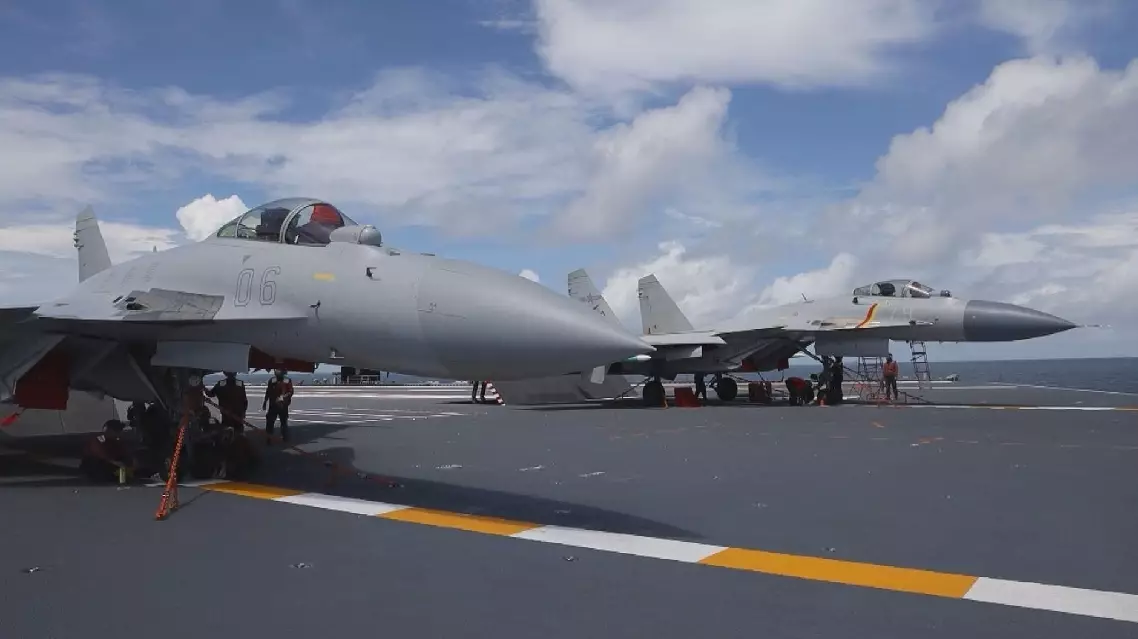
China's carrier-borne figther J-15T makes on deck public debut in HK