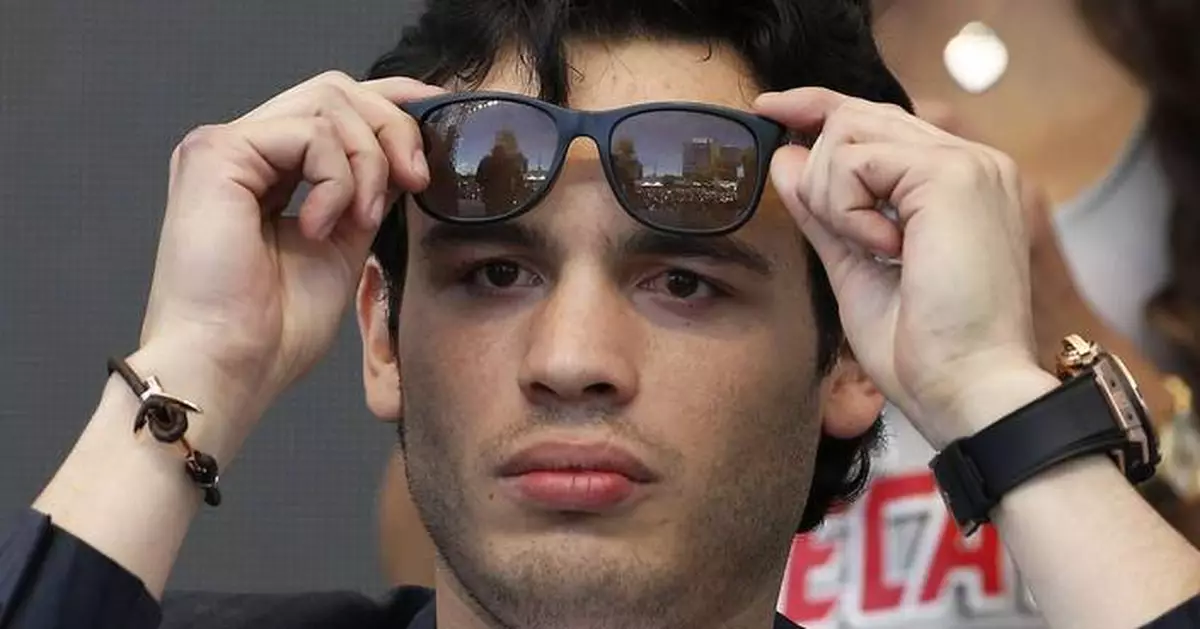
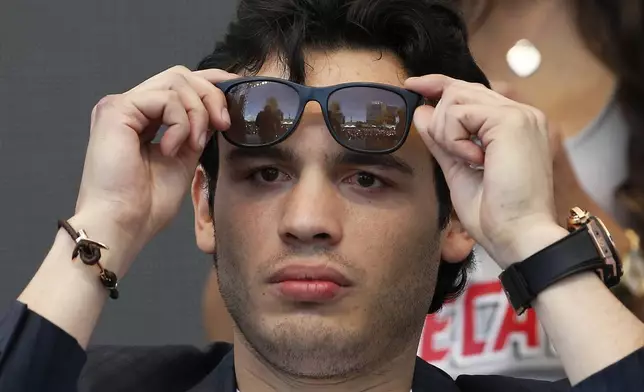
MEXICO CITY (AP) — Julio César Chávez, considered the best Mexican boxer in history, fathered three children. His firstborn carried his name and came the closest to duplicating his success in the ring.
Julio César Chávez Jr., who was arrested in Los Angeles by federal immigration agents on Thursday for overstaying his visa, grew up traveling with his younger brother, Omar, to watch their dad's fights.
Click to Gallery
FILE - Julio Cesar Chavez, Jr., center, of Mexico poses with his belt along with his father Julio Cesar Chavez, Sr., right, and referee Jack Reiss after defeating Sebastian Zbik of Germany after their WBC World Middleweight title boxing match, in Los Angeles, June 4, 2011. (AP Photo/Richard Vogel, File)
FILE - Canelo Alvarez, of Mexico, right, celebrates after defeating Julio Cesar Chavez Jr., of Mexico, in a catch weight boxing match in Las Vegas, May 6, 2017. (AP Photo/John Locher, File)
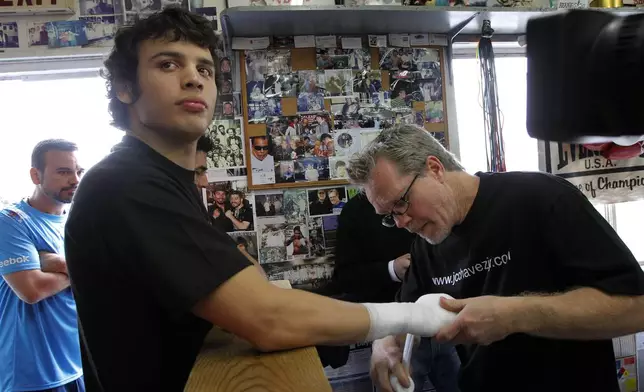
FILE - Boxer Julio Cesar Chavez Jr., left, has his hand taped by trainer Freddie Roach before a media workout in Los Angeles, May 18, 2011. (AP Photo/Jae C. Hong, File)
FILE - Julio Cesar Chavez, Jr., center, of Mexico poses with his belt along with his father Julio Cesar Chavez, Sr., right, and referee Jack Reiss after defeating Sebastian Zbik of Germany after their WBC World Middleweight title boxing match, in Los Angeles, June 4, 2011. (AP Photo/Richard Vogel, File)
FILE - Julio Cesar Chavez Jr. attends a news conference in Las Vegas, May 3, 2017. (AP Photo/John Locher, File)
FILE - Mexican boxer Julio Cesar Chavez Jr. takes part in a press conference in Mexico City,Feb. 20, 2017. (AP Photo/Marco Ugarte)
The elder Chávez won world titles in three weight classes in the 1980s and '90s and became a sporting icon in Mexico, where he remains revered.
Chávez Jr. and Omar began learning the sport a young age. The younger Chávez, who's now 39, fought as an amateur at age 11 against Jorge “Maromerito” Páez, the son of another Mexican fighter, Jorge Páez.
Chávez made his professional debut at age 17, beating Jonathan Hernandez in a six-round bout in his hometown of Culiacan.
“The Son of a Legend,” as he was called in Mexico, went 23-0 to start his career before a draw against Carlos Molina in 2005.
Although Omar also fought as a professional, “Julito” was more talented, and he won his first title in 2009 — in the World Boxing Council Latino super featherweight division.
That year, Chávez tested positive for a banned substance after his fight with Troy Rowland in Las Vegas. He received a seven-month suspension in Nevada.
A year later, he won the vacant WBC silver middleweight crown, defeating John Duddy by unanimous decision.
On June 4, 2011, Chávez reached the pinnacle of his career when he won the WBC middleweight title, defeating Sebastian Zbik by majority decision at the Staples Center in Los Angeles.
He successfully defended the crown three times: edging Peter Manfredo Jr. by technical knockout, winning by unanimous decision over Marco Rubio and defeating Andy Lee, also by TKO.
Against Rubio, Chávez struggled to make weight.
Chávez's first pay-per-view bout came in 2012 at age 26 against Sergio “Maravilla” Martinez of Argentina, who was 37 at the time.
Martinez, who had won world titles in two weight classes, defeated Chávez by unanimous decision and the Mexican's record fell to 46-1-1.
After the fight, Chávez was suspended for nine months and fined $900,000 by the Nevada State Athletic Commission after he tested positive for marijuana.
After the loss to Martinez, Chávez struggled to regain his prior form and fought just five times in five years.
Chávez had another high-profile opportunity in 2017 when he fought Canelo Alvarez in Las Vegas in his second pay-per-view fight.
The bout was highly anticipated in Mexico, pitting one of the country's most popular fighters in Alvarez against the “Son of a Legend,” who lost by unanimous decision.
After the loss to Alvarez, Chávez’s struggles with addiction became evident and his relationship with his father deteriorated.
He stopped fighting for two years, returning to win a minor bout in Guadalajara.
In 2019, Chávez lost to former middleweight champion Daniel Jacobs in Las Vegas.
After that, he fought again in Mexico, including a loss to former mixed martial arts champion Anderson Silva by split decision in 2021.
Chávez spent the next three years away from the ring and drew attention for TikTok videos in which he accused his father of various forms of abuse.
In January of last year, Los Angeles police arrested Chávez and charged him with illegal possession of an assault weapon, among other offenses.
After that, Chávez claimed to have completed a rehabilitation program and was ready to get back in the ring. He defeated Uriah Hall in Tampa, Florida, last July before losing to YouTuber-turned-boxer Jake Paul last weekend in Anaheim, California.
AP boxing: https://apnews.com/hub/boxing

FILE - Canelo Alvarez, of Mexico, right, celebrates after defeating Julio Cesar Chavez Jr., of Mexico, in a catch weight boxing match in Las Vegas, May 6, 2017. (AP Photo/John Locher, File)
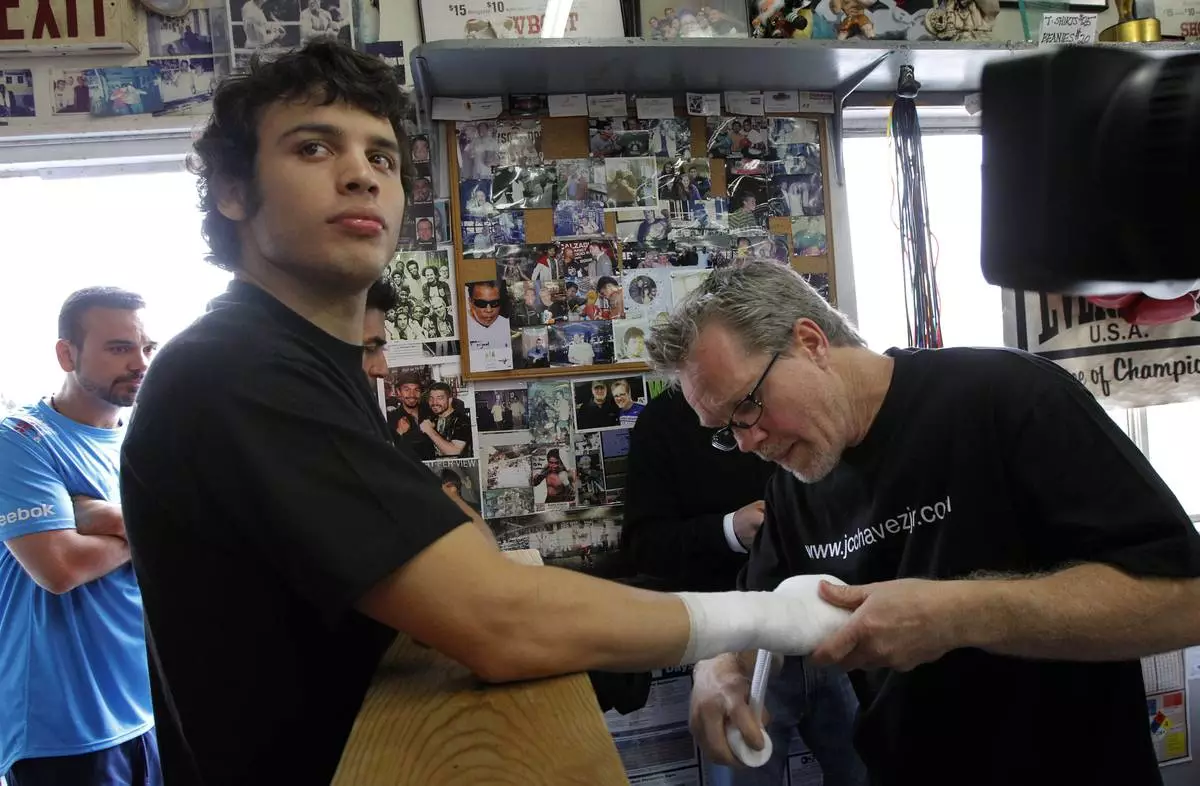
FILE - Boxer Julio Cesar Chavez Jr., left, has his hand taped by trainer Freddie Roach before a media workout in Los Angeles, May 18, 2011. (AP Photo/Jae C. Hong, File)

FILE - Julio Cesar Chavez, Jr., center, of Mexico poses with his belt along with his father Julio Cesar Chavez, Sr., right, and referee Jack Reiss after defeating Sebastian Zbik of Germany after their WBC World Middleweight title boxing match, in Los Angeles, June 4, 2011. (AP Photo/Richard Vogel, File)

FILE - Julio Cesar Chavez Jr. attends a news conference in Las Vegas, May 3, 2017. (AP Photo/John Locher, File)
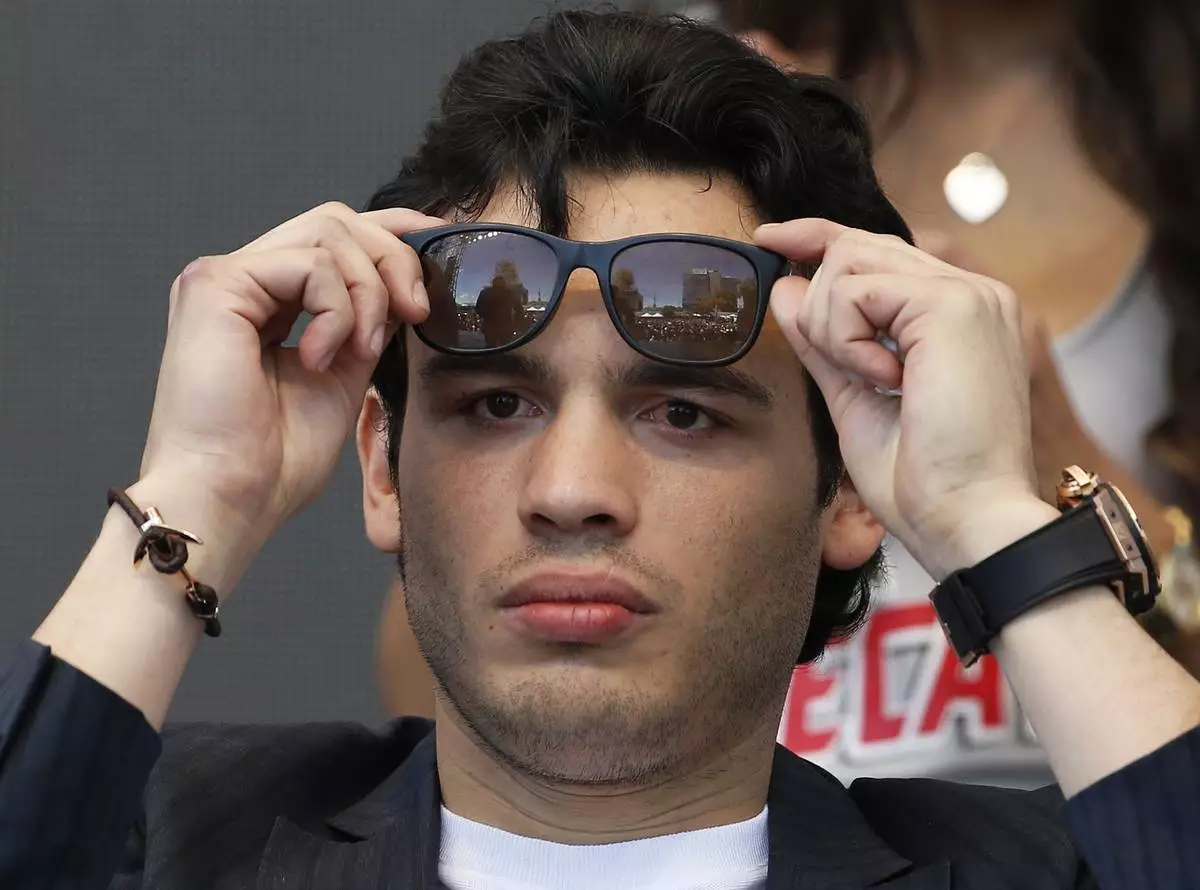
FILE - Mexican boxer Julio Cesar Chavez Jr. takes part in a press conference in Mexico City,Feb. 20, 2017. (AP Photo/Marco Ugarte)
JDEIDEH, Lebanon (AP) — It was not how the Rev. Maroun Ghafari had envisioned this Holy Week — for years, he had held Easter sermons in his predominantly Christian village of Alma al-Shaab in southern Lebanon, near the border with Israel.
This year, he is preaching from a Beirut suburb, beside a cardboard cutout depicting his church in Alma al-Shaab, now caught in the crossfire between Israeli forces and Hezbollah fighters.
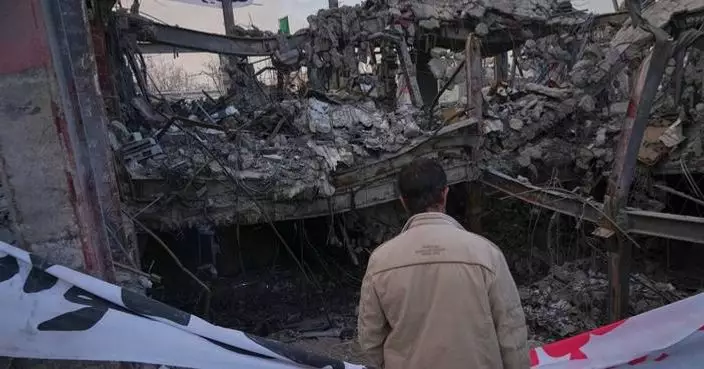
Since hostilities erupted last month between Israel and Lebanon's Iran-backed Hezbollah militant group — in the shadow of the wider, U.S.-Israeli war on Iran — over 1,400 people have been killed in Lebanon, and more than 1 million have been forced to flee their homes.
Among those displaced from the war-torn south are thousands of Christians. They now find themselves far from their ancestral churches in Lebanon, where Christians have maintained a strong presence through centuries of Byzantine, Arab and Ottoman conquest and plenty of modern-day crises.
Christians are estimated to make up around a third of Lebanon's population of roughly 5.5 million people. With 12 Christian sects, the country is home to the largest proportion of Christians of any nation in the Arab world.
Christian villagers who stayed behind in southern Lebanon, ignoring Israel’s blanket evacuation warnings for the area, have increasingly hardened into enclaves surrounded by fierce clashes.
And though villagers in Alma al-Shaab had been uprooted before, in the 2024 Israel-Hezbollah war, this time around, they were adamant they wouldn't leave, even as airstrikes came closer and closer.
The villagers huddled in their church for protection as Israeli warplanes pounded large swaths of southern and eastern Lebanon while Israeli troops stepped up a ground invasion and Hezbollah kept firing rockets at Israel.
In his annual Easter homily, Patriarch Beshara al-Rai of Lebanon’s Maronite Church blamed both Hezbollah and Israel for the suffering wrought by the war.
“The country is going through a critical situation due to Iranian interference through Hezbollah and Israeli aggression,” he said. “Our hearts bleed for the victims of the conflict imposed on Lebanon.”
Ghafari’s brother, 70-year-old Sami Ghafari, was among the villagers who sought refuge at the church in Alma al-Shaab.
But he dashed out briefly on March 8 to tend to his garden, and was killed by an Israeli drone strike. His killing prompted the remaining villagers — including his brother — to pack up their belongings.
The U.N. peacekeepers in the area — a force known as UNIFIL that has monitored the region for nearly five decades — evacuated them to the northern suburbs of Beirut.
“We wanted to stay, but it was always possible that one of us could be targeted or killed at any moment,” the Rev. Maroun Ghafari told The Associated Press from St. Anthony Church in the northern Beirut suburb of Jdeideh, where the displaced from Alma al-Shaab came to worship on Saturday.
“Everyone is tired, and we see that war brings nothing but destruction, death and displacement.”
For many Lebanese Christians, it's a tradition on Holy Saturday — the day between Good Friday, which commemorates the crucifixion and death of Jesus, and Easter Sunday, which marks his resurrection according to the Gospels — to visit the graves of their loved ones.
This year, displaced Christians could only reflect from afar.
Nabila Farah, dressed in black for the Saturday service at St. Anthony Church, was among the last to leave Alma al-Shaab. She still feels heartbroken, a month later.
“You miss the smell of home, the lovely traditions and customs, the sounds of the bells of three churches ringing,” she said, reminiscing about her village. “As much as we experience the Easter atmosphere here, it will never be as it is over there.”
Those who remain face other challenges.
Marius Khairallah, a priest in the southern Lebanese city of Tyre, where much of the Christian community has hunkered down, says that he and his congregants are staying put "not out of stubbornness, but out of a sense of mission, to remain alongside their fellow faithful, as witnesses.”
“A significant number of parishioners have been displaced or are absent,” he said. "Yet churches still open their doors. Prayers are still raised — even with fewer voices."
Worries are mounting among Christians in the area as the Lebanese army — which seeks to stay neutral in the Israel-Hezbollah war — pulls out from parts of southern Lebanon, leaving them exposed to Israeli forces pushing deeper into the territory.
St. Antony's main priest, the Rev. Dori Fayyad, used his Good Friday sermon to take solemn note of the war’s widening toll on the southern Lebanese Christians, as the faithful recited prayers in Arabic and Syriac, a dialect of the Aramaic language spoken by Jesus.
“Today, you understand what the cross means, not as an idea, not as a concept, but because you are going through it,” he told the fully packed pews, the crowd so thick that dozens had to stand or crouch on the back stairs.
Some wiped away tears as Fayyad named one by one the southern churches, illustrated in the cardboard cutouts next to the pulpit.
“These churches in these villages are not only places of worship,” he said. “They are silent witnesses to suffering and to faith.”
Associated Press video journalist Ali Sharafeddine in Jdeideh, Lebanon, contributed to this report.
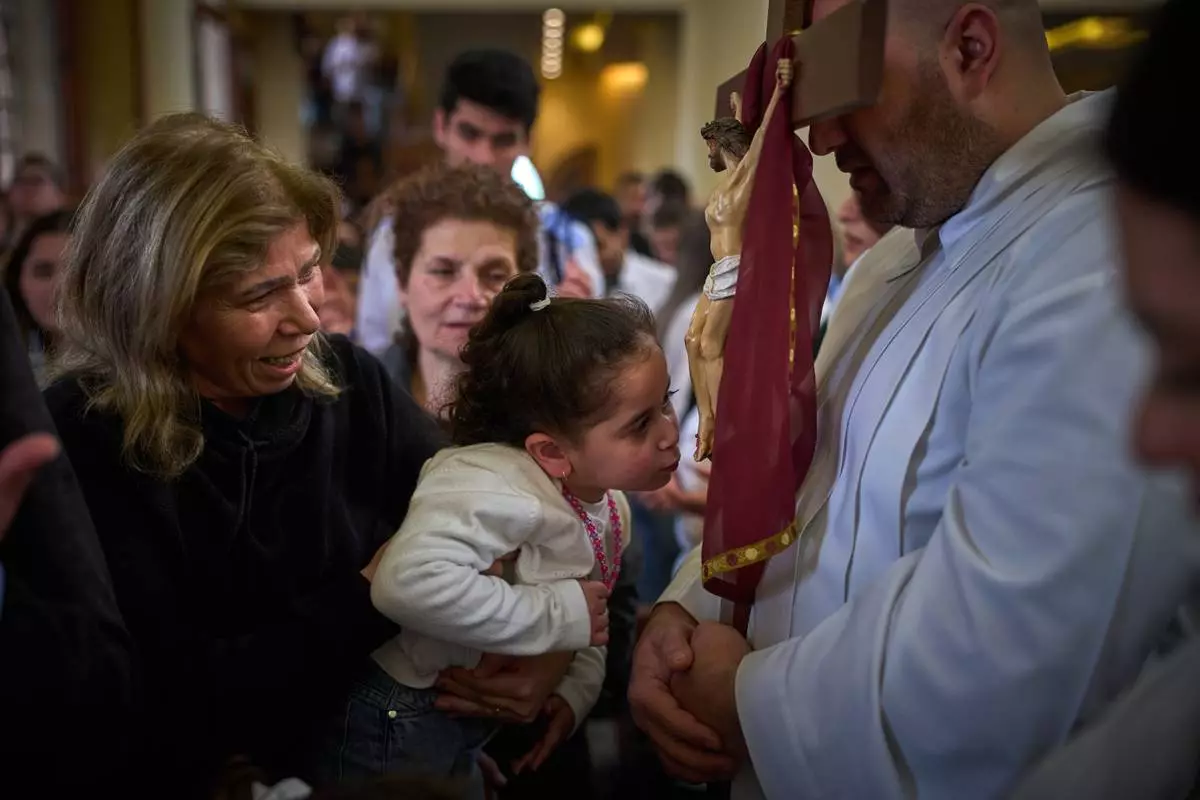
A girl kisses a cross held by a priest during Good Friday Mass at St. Anthony Church, which was devoted to expressing solidarity with Christian villagers in southern Lebanon displaced by the war in Jdeideh, a suburb of Beirut, Lebanon, Friday, April 3, 2026. (AP Photo/Emilio Morenatti)
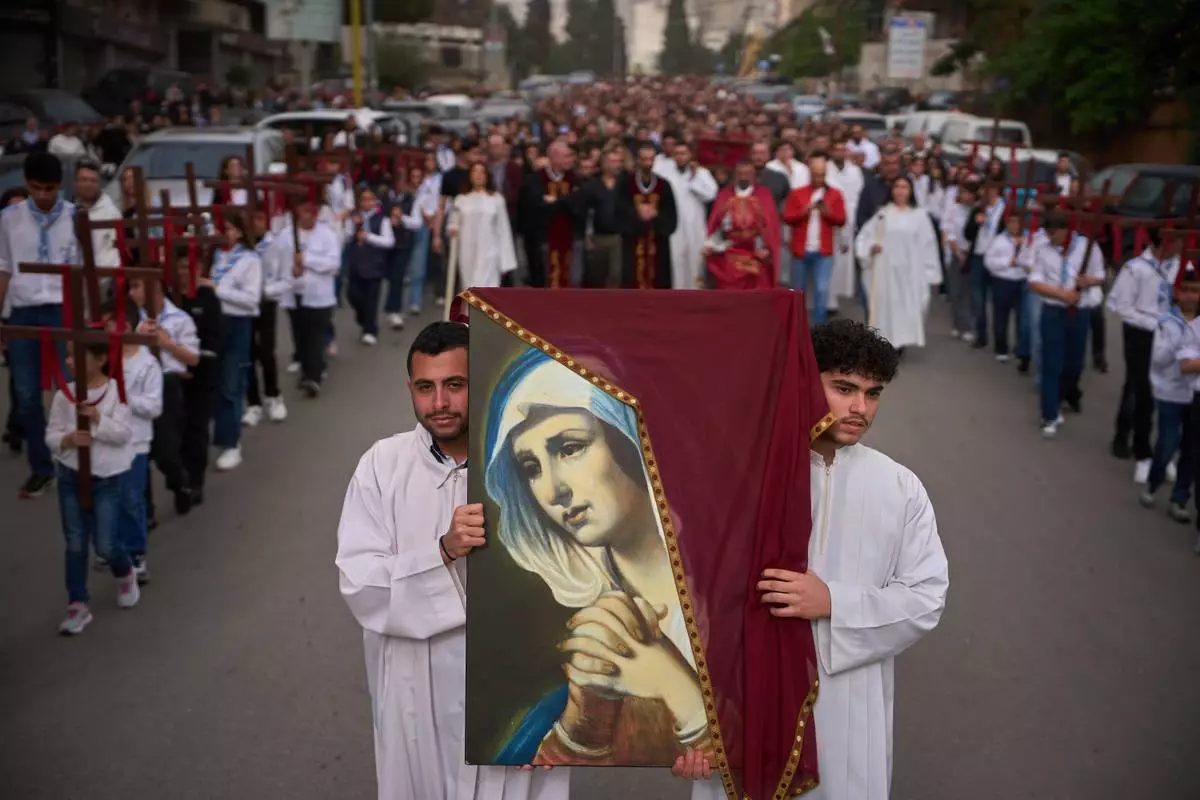
Parishioners walk in a procession after a Good Friday Mass at St. Anthony Church, which was devoted to expressing solidarity with Christian villagers in southern Lebanon displaced by the war in Jdeideh, a suburb of Beirut, Lebanon, Friday, April 3, 2026. (AP Photo/Emilio Morenatti)
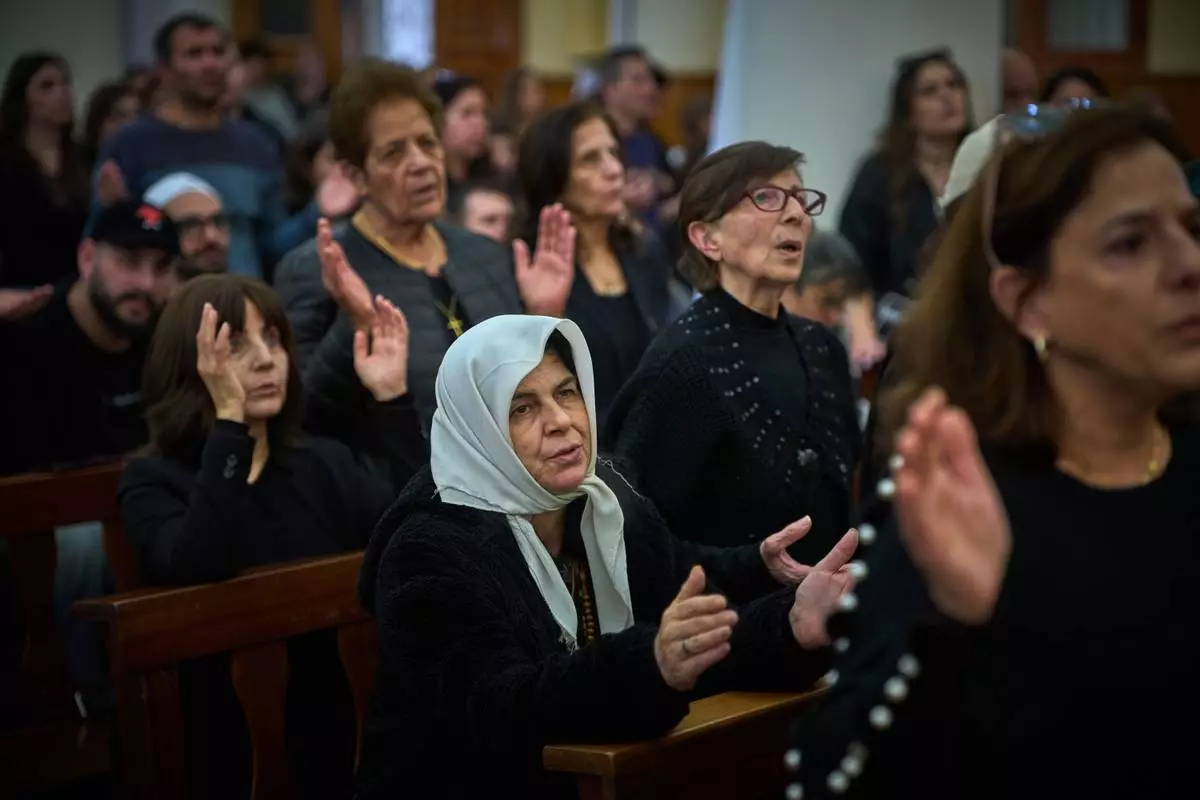
Worshipers pray during Good Friday Mass at St. Anthony Church, which was devoted to expressing solidarity with Christian villagers in southern Lebanon displaced by the war in Jdeideh, a suburb of Beirut, Lebanon, Friday, April 3, 2026. (AP Photo/Emilio Morenatti)
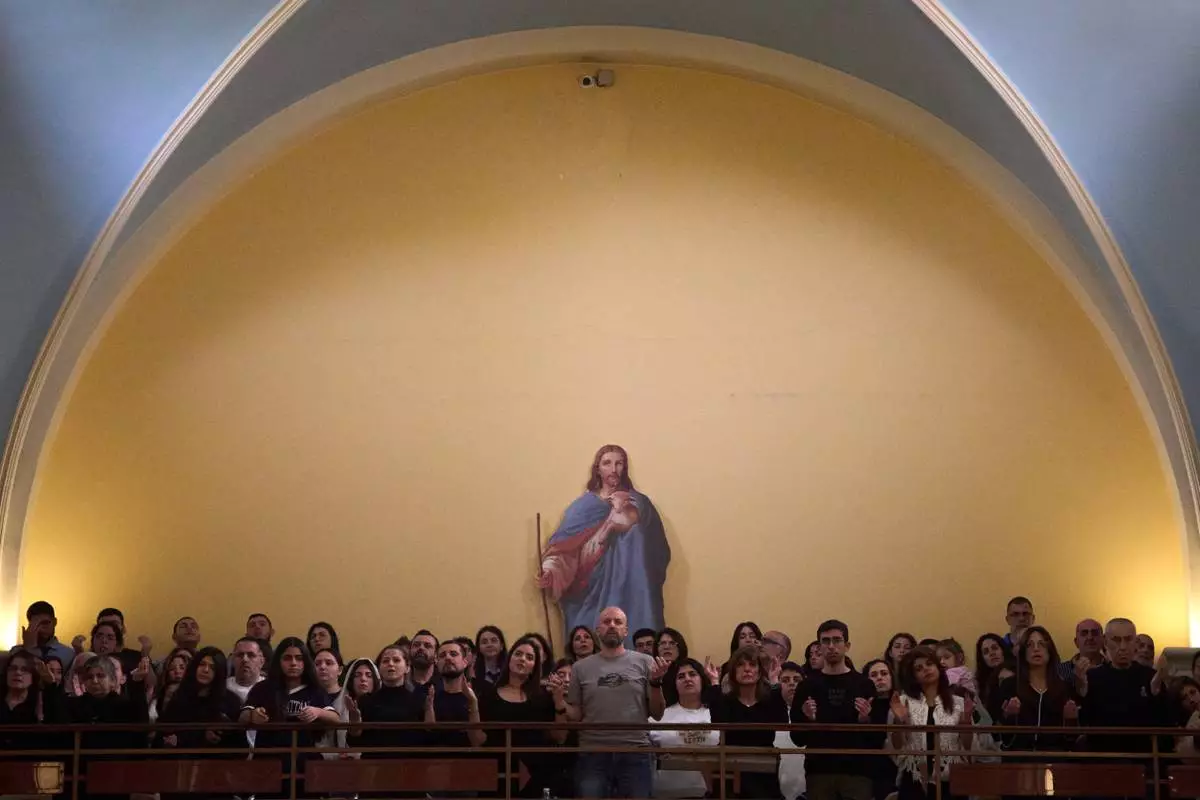
Worshipers pray during Good Friday Mass at St. Anthony Church, which was devoted to expressing solidarity with Christian villagers in southern Lebanon displaced by the war in Jdeideh, a suburb of Beirut, Lebanon, Friday, April 3, 2026. (AP Photo/Emilio Morenatti)
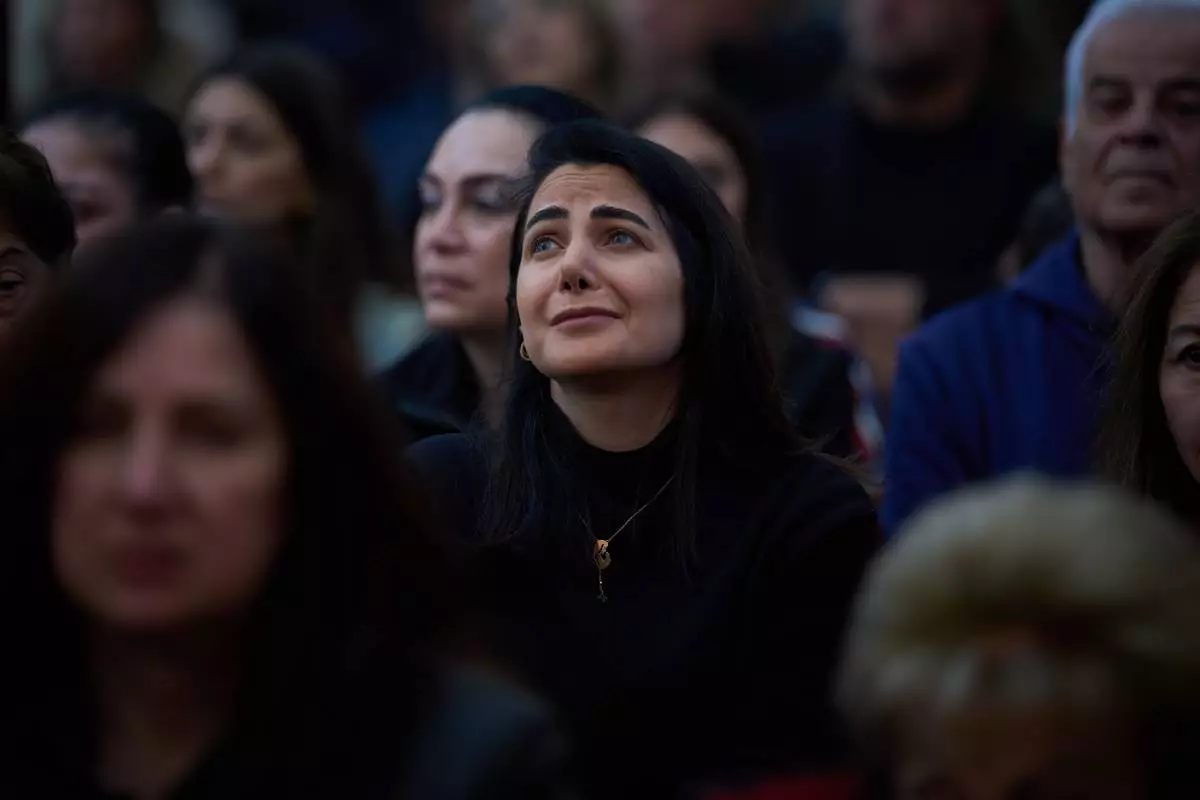
Worshipers pray during Good Friday Mass at St. Anthony Church, which was devoted to expressing solidarity with Christian villagers in southern Lebanon displaced by the war in Jdeideh, a suburb of Beirut, Lebanon, Friday, April 3, 2026. (AP Photo/Emilio Morenatti)