 |
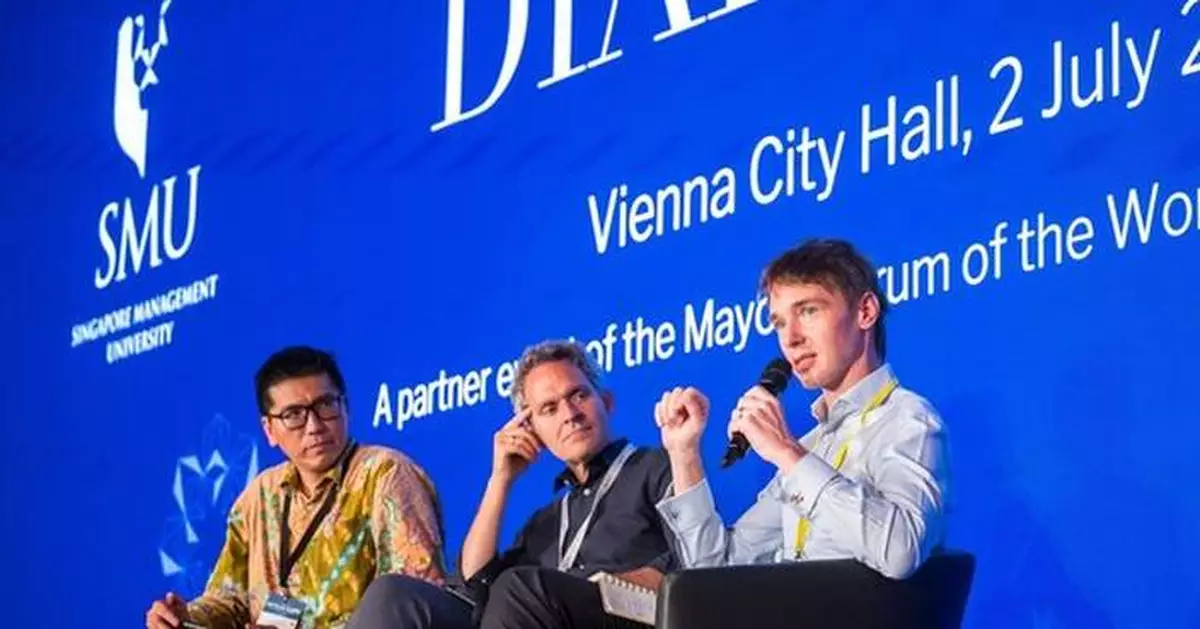
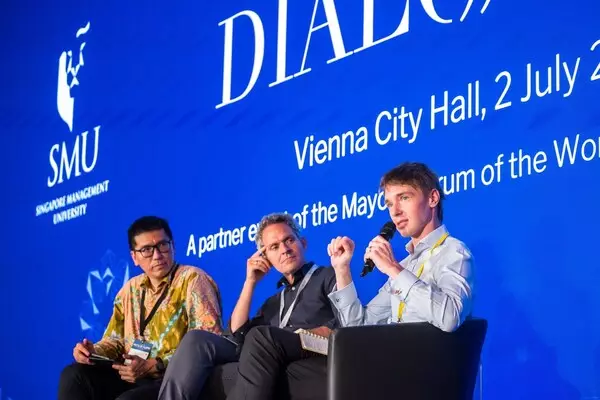
SINGAPORE and VIENNA, July 4, 2025 /PRNewswire/ -- As a partner event of the Mayors Forum of the World Cities Summit 2025, the fourth edition of SMU City Dialogues was successfully organised by Singapore Management University (SMU) in partnership with Urban Innovation Vienna (UIV) on 2 July 2025 at Vienna City Hall.
City Dialogues Vienna welcomed over 100 attendees from 20 countries; with representation from more than 20 universities and over 30 private and public organisations – a testament to the diversity and dynamism of our global community, and the urgency and relevance of the dialogue topic of urban resilience.
The event opened with a welcome address by SMU Provost, Professor Alan Chan, followed by remarks from Mr Melvyn Ong, Permanent Secretary (Development) at the Ministry of National Development, Republic of Singapore. The keynote address was delivered by Mr Jürgen Czernohorszky, Executive City Councillor for Climate, Environment, Democracy and Personnel of the City of Vienna.
Centered around the guiding question "What is the value of urban resilience?", the event brought together urban leaders, policymakers and academics from Europe, Asia and beyond to exchange actionable insights towards resilient, inclusive and future-ready cities.
The programme featured three thematic tracks, each addressing a core dimension of urban resilience:
- Finance and Public-Private Partnerships
- Social Equity and Environmental Sustainability
- Innovation and Technology
These parallel discussions concluded with a joint key takeaway session led by SMU professors Winston Chow and Orlando Woods, alongside UIV's Johannes Lutter. Their insights made one thing clear: urban resilience is not a buzzword, but a lived responsibility which requires trust, participation, and context-sensitive action.
Professor Winston Chow , Co-Chair of the IPCC Working Group II and Professor of Urban Climate at SMU, said, "Resilience isn't just about surviving, it's about thriving. We need to align financial systems with social goals, build trust through good governance, and empower communities to shape their own future."
Prof Chow also cautioned against over-reliance on public-private partnerships, noting that "public-private partnerships can be powerful tools, but they are not universal solutions. They require competent, stable governments, extensive due diligence and clear alignment of interest."
SMU Professor of Geography Orlando Woods, who is also Director of the SMU Urban Institute, reflected on the limitations of digital solutions in addressing complex urban challenges. While his group was tasked with exploring innovation and technology, much of the discussion shifted toward the structural problems that technology alone cannot resolve.
"It's not about being a smart city. It's about being a smart enough city. Smart enough relative to the context, the specific problem we are trying to solve with the technology that we have." He emphasised that overreliance on data and digital tools often leads to oversimplified responses, while masking deeper systemic issues like inequality, mental health, or infrastructural neglect.
Dr Johannes Lutter Senior Urban Planner at Urban Innovation Vienna, outlined three key messages on how resilience can be made more socially inclusive and locally grounded. "Given our limited resources, it is essential that we take targeted action—focusing in particular on those who are most vulnerable. To do so effectively, we must have a clear understanding of who is at risk."
"We must restore agency to communities—not by shifting responsibility onto them and stepping back, but by fostering a structured dialogue between governments and communities, ensuring genuine collaboration between public institutions and the people they serve," he added.
About SMU City Dialogues
Initiated in 2019 by Singapore Management University, the City Dialogues series fosters candid exchange among policymakers, academics and business leaders. It aims to generate actionable recommendations for sustainable and inclusive urban development. Previous editions held in Singapore and Bangkok successfully brought together leaders from government, industry, and academia to engage in honest, action-oriented conversations. City Dialogues | City Perspectives
SINGAPORE and VIENNA, July 4, 2025 /PRNewswire/ -- As a partner event of the Mayors Forum of the World Cities Summit 2025, the fourth edition of SMU City Dialogues was successfully organised by Singapore Management University (SMU) in partnership with Urban Innovation Vienna (UIV) on 2 July 2025 at Vienna City Hall.
City Dialogues Vienna welcomed over 100 attendees from 20 countries; with representation from more than 20 universities and over 30 private and public organisations – a testament to the diversity and dynamism of our global community, and the urgency and relevance of the dialogue topic of urban resilience.
The event opened with a welcome address by SMU Provost, Professor Alan Chan, followed by remarks from Mr Melvyn Ong, Permanent Secretary (Development) at the Ministry of National Development, Republic of Singapore. The keynote address was delivered by Mr Jürgen Czernohorszky, Executive City Councillor for Climate, Environment, Democracy and Personnel of the City of Vienna.
Centered around the guiding question "What is the value of urban resilience?", the event brought together urban leaders, policymakers and academics from Europe, Asia and beyond to exchange actionable insights towards resilient, inclusive and future-ready cities.
The programme featured three thematic tracks, each addressing a core dimension of urban resilience:
- Finance and Public-Private Partnerships
- Social Equity and Environmental Sustainability
- Innovation and Technology
These parallel discussions concluded with a joint key takeaway session led by SMU professors Winston Chow and Orlando Woods, alongside UIV's Johannes Lutter. Their insights made one thing clear: urban resilience is not a buzzword, but a lived responsibility which requires trust, participation, and context-sensitive action.
Professor Winston Chow , Co-Chair of the IPCC Working Group II and Professor of Urban Climate at SMU, said, "Resilience isn't just about surviving, it's about thriving. We need to align financial systems with social goals, build trust through good governance, and empower communities to shape their own future."
Prof Chow also cautioned against over-reliance on public-private partnerships, noting that "public-private partnerships can be powerful tools, but they are not universal solutions. They require competent, stable governments, extensive due diligence and clear alignment of interest."
SMU Professor of Geography Orlando Woods, who is also Director of the SMU Urban Institute, reflected on the limitations of digital solutions in addressing complex urban challenges. While his group was tasked with exploring innovation and technology, much of the discussion shifted toward the structural problems that technology alone cannot resolve.
"It's not about being a smart city. It's about being a smart enough city. Smart enough relative to the context, the specific problem we are trying to solve with the technology that we have." He emphasised that overreliance on data and digital tools often leads to oversimplified responses, while masking deeper systemic issues like inequality, mental health, or infrastructural neglect.
Dr Johannes Lutter Senior Urban Planner at Urban Innovation Vienna, outlined three key messages on how resilience can be made more socially inclusive and locally grounded. "Given our limited resources, it is essential that we take targeted action—focusing in particular on those who are most vulnerable. To do so effectively, we must have a clear understanding of who is at risk."
"We must restore agency to communities—not by shifting responsibility onto them and stepping back, but by fostering a structured dialogue between governments and communities, ensuring genuine collaboration between public institutions and the people they serve," he added.
About SMU City Dialogues
Initiated in 2019 by Singapore Management University, the City Dialogues series fosters candid exchange among policymakers, academics and business leaders. It aims to generate actionable recommendations for sustainable and inclusive urban development. Previous editions held in Singapore and Bangkok successfully brought together leaders from government, industry, and academia to engage in honest, action-oriented conversations. City Dialogues | City Perspectives
** The press release content is from PR Newswire. Bastille Post is not involved in its creation. **

Global experts at SMU City Dialogues Vienna: Urban resilience requires trust, equity and 'smart enough' solutions
Global experts at SMU City Dialogues Vienna: Urban resilience requires trust, equity and 'smart enough' solutions
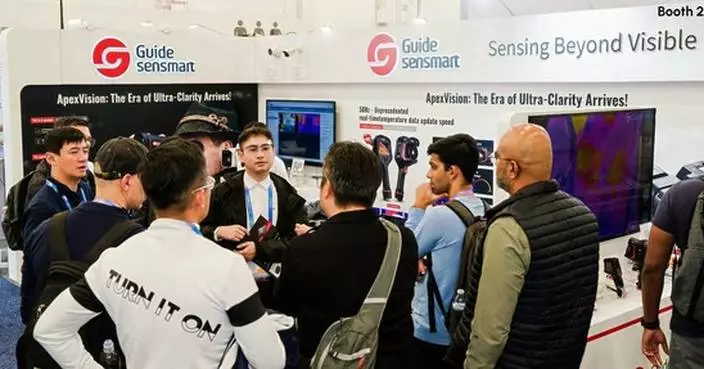
LAS VEGAS, Jan. 9, 2026 /PRNewswire/ -- Guide Sensmart (Booth 21740, Central Hall), a global leader in thermal imaging technology, officially launched its next-generation thermal imaging innovation – ApexVision – alongside a series of new products empowered by the technology. This launch represents a systemic leap for the industry from merely "seeing heat" to "seeing with clarity, precision, and intelligence," marking the dawn of a new era defined by Ultra-Clarity.
CES Show Floor Reaction: "Ultra-Clarity" Draws Deep Engagement
At the Guide Sensmart booth, live product demonstrations powered by ApexVision attracted strong attention from industry analysts to global media. Hands-on comparisons—such as maintaining clear imaging details of distant targets and delivering crisp, smear-free imaging of fast-moving objects—earned consistent praise. Many professional visitors noted that this reliable "what-you-see-is-what-you-get" clarity would directly enhance operational efficiency and decision-making confidence.
ApexVision integrating both hardware and software: It combines the high-sensitivity ApexCore S1 detector, the Nexus 1.0 processing platform, and scenario-optimized algorithms. Together, ApexVision successfully overcomes persistent challenges such as low contrast in complex environments, detail loss at long range or high magnification, motion blur on fast-moving objects, and inaccurate detection of minute temperature differences.
From Architecture to Application: A Full Portfolio Empowered
On the CES show floor, Guide Sensmart demonstrated how ApexVision delivers tangible improvements across thermal devices. Thermography tools (e.g. E3S, H6S thermal cameras) leverage the SharpIR 2.0 algorithm to provide stable, accurate temperature measurement in demanding environments, enabling inspectors to pinpoint hidden faults with greater confidence. Outdoor hunting optics (e.g. TD650LS monocular and TN650MS binocular), benefit from Hyper-Light 2.0, allowing users to identify nocturnal wildlife in complete darkness and track fast-moving targets while maintaining clean, sharp images even at 10× zoom.
"The launch of ApexVision marks a milestone where our vertically integrated technology development translates into real value for users," said a Guide Sensmart spokesperson. "It is more than a set of specifications—it delivers the certainty of Ultra-Clarity to every professional user."
The debut of ApexVision at CES 2026 signifies more than a routine product update. By resolving long-standing trade-offs between sensitivity, stability, and environmental robustness, Guide Sensmart is advancing thermal imaging into the Ultra-Clarity Era, building a clearer, safer, and more efficient future.
We are keen to explore partnership of collaboration with you. Know more about Guide Sensmart at https://www.guideir.com.
** The press release content is from PR Newswire. Bastille Post is not involved in its creation. **

ApexVision Debuts at CES 2026: Guide Sensmart Ushers in the Ultra-Clarity Era of Thermal Imaging