OMAHA, Neb. (AP) — Tyler Sherman, a nurse at a rural Nebraska hospital, is used to the area's aging farmers delaying care until they end up in his emergency room.
Now, with Congress planning around $1 trillion in Medicaid cuts over 10 years, he fears those farmers and the more than 3,000 residents of Webster County could lose not just the ER, but also the clinic and nursing home tied to the hospital.
“Our budget is pretty heavily reliant on the Medicaid reimbursement, so if we do see a cut of that, it’ll be difficult to keep the doors open,” said Sherman, who works at Webster County Community Hospital in the small Nebraska town of Red Cloud just north of the Kansas border.
If those facilities close, many locals would see their five-minute trip to Webster County hospital turn into a nearly hour-long ride to the nearest hospital offering the same services.
“That's a long way for an emergency,” Sherman said. “Some won't make it.”
States and rural health advocacy groups warn that cutting Medicaid — a program serving millions of low-income and disabled Americans — would hit already fragile rural hospitals hard and could force hundreds to close, stranding some people in remote areas without nearby emergency care.
More than 300 hospitals could be at risk for closure under the Republican bill, according to an analysis by the Cecil G. Sheps Center at the University of North Carolina at Chapel Hill, which tracks rural hospital closures. Even as Congress haggled over the controversial bill, a health clinic in the southwest Nebraska town of Curtis announced Wednesday it will close in the coming months, in part blaming the anticipated Medicaid cuts.
Bruce Shay, of Pomfret, Connecticut, fears he and his wife could be among those left in the lurch. At 70, they're both in good health, he said. But that likely means that if either needs to go to a hospital, “it's going to be an emergency.”
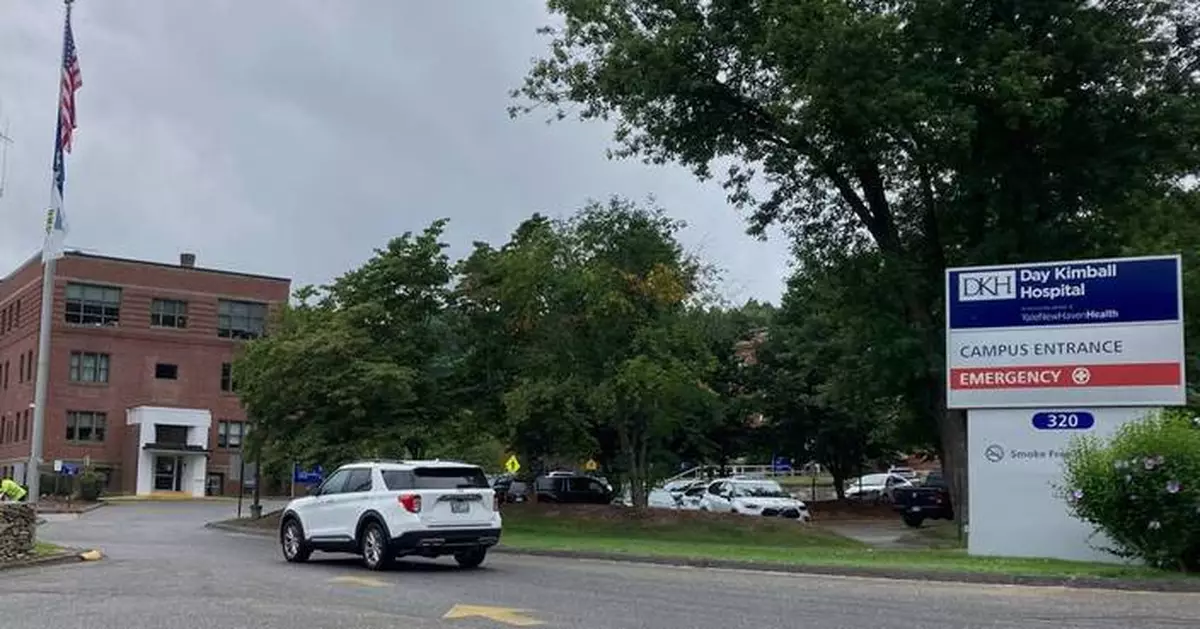
Day Kimball Hospital is nearby in Putnam, but it has faced recent financial challenges. Day Kimball's CEO R. Kyle Kramer acknowledged that a Senate bill passed Tuesday — estimated to cut federal Medicaid spending in rural areas by $155 billion over 10 years — would further hurt his rural hospital's bottom line. Roughly 30% of Day Kimball’s current patients receive Medicaid benefits, a figure that’s even higher for specific, critical services like obstetrics and behavioral health.
“An emergency means I’m 45 minutes to an hour away from the nearest hospital, and that’s a problem," Shay said. And he and his wife wouldn't be the only ones having to make that trip.
“You’ve got, I’m sure, thousands of people who rely on Day Kimball Hospital. If it closed, thousands of people would have to go to another hospital,” he said. “That’s a huge load to suddenly impose on a hospital system that’s probably already stretched thin.”
Rural hospitals have long operated on the financial edge, especially in recent years as Medicaid payments have continuously fallen below the actual cost to provide health care. More than 20% of Americans live in rural areas, where Medicaid covers 1 in 4 adults, according to the nonprofit KFF, which studies health care issues.
President Donald Trump’s $4.5 trillion tax breaks and spending cuts bill, which passed Thursday, would worsen rural hospitals' struggles by cutting a key federal program that helps states fund Medicaid payments to health care providers. To help offset the lost tax revenue, the package includes $1.2 trillion in cuts to Medicaid and other social safety net programs — cuts they insist only root out fraud and waste in the system.
But public outcry over Medicaid cuts led Republicans to include a provision that will provide $10 billion annually to buttress rural hospitals over the next five years, or $50 billion in total. Many rural hospital advocates are wary that it won't be enough to cover the shortfall.
Carrie Cochran-McClain, chief policy officer with the National Rural Health Association, said rural hospitals already struggle to break even, citing a recent American Hospital Association report that found that hospitals in 2023 got nearly $28 billion less from Medicaid than the actual cost of treating Medicaid patients.
“We see rural hospitals throughout the country really operating on either negative or very small operating margins," Cochran-McClain said. "Meaning that any amount of cut to a payer — especially a payer like Medicaid that makes up a significant portion of rural provider funding — is going to be consequential to the rural hospitals' ability to provide certain services or maybe even keep their doors open at the end of the day.”
A KFF report shows 36 states losing $1 billion or more over 10 years in Medicaid funding for rural areas under the Republican bill, even with the $50 billion rural fund. No state stands to lose more than Kentucky.
The report estimates the Bluegrass State would lose a whopping $12.3 billion — nearly $5 billion more than the next state on the list. That's because the bill ends Kentucky's unique Medicaid reimbursement system and reduces it to Medicare reimbursement levels.
Kentucky currently has one of the lowest Medicare reimbursement rates in the country. It also has one of the highest poverty rates, leading to a third of its population being covered by Medicaid.
Kentucky Gov. Andy Beshear, a two-term Democrat widely seen as a potential candidate for president in 2028, said the bill would close 35 hospitals in his state and pull health care coverage for 200,000 residents.
“Half of Kentucky’s kids are covered under Medicaid. They lose their coverage and you are scrambling over that next prescription,” Beshear said during an appearance on MSNBC. “This is going to impact the life of every single American negatively. It is going to hammer our economy."
Haigh reported from Hartford, Connecticut.
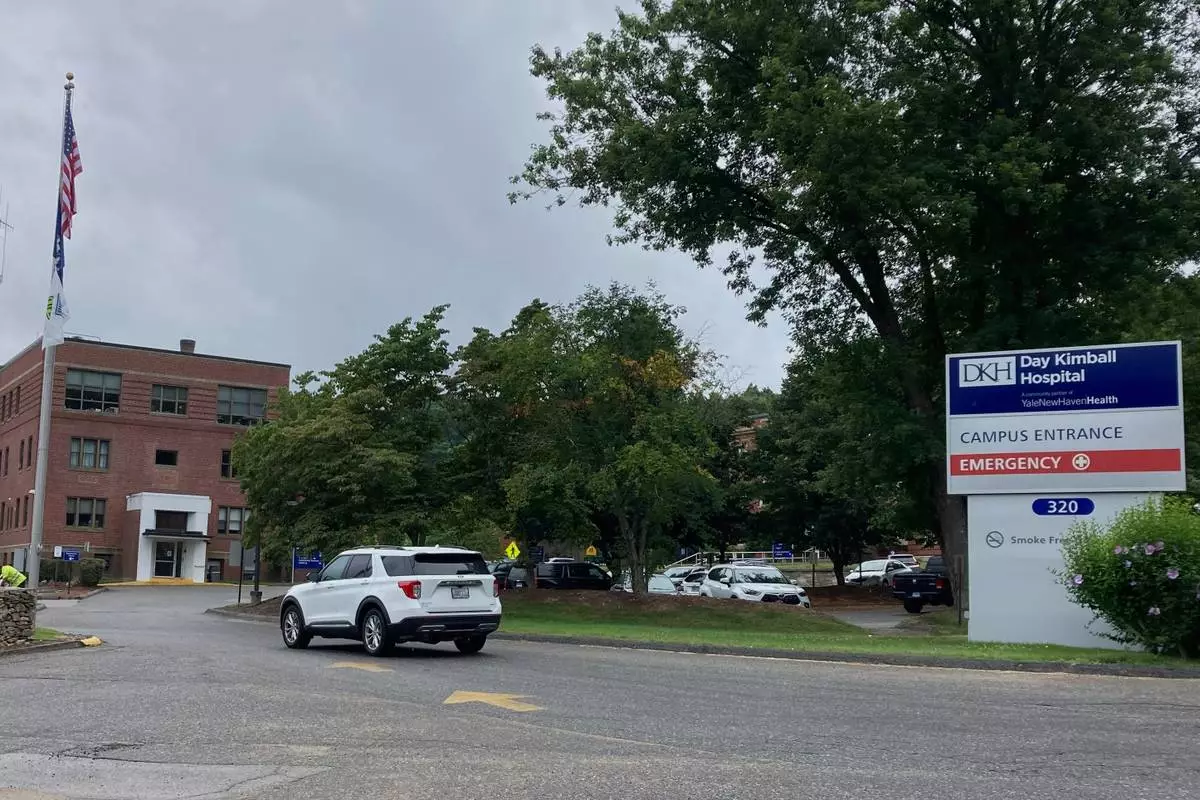
FILE - A car enters the drive at Day Kimball Hospital, July 18, 2022 in Putnam, Conn. (AP Photo/Susan Haigh, File)
NUUK, Greenland (AP) — U.S. President Donald Trump has made an American takeover of Greenland a focus of his second term in the White House, calling it a national security priority while repeating false claims about the strategic Arctic island.
In recent comments, he has floated using military force as an option to take control of Greenland. He has said if the U.S. does not acquire the island, which is a self-governing territory of NATO ally Denmark, then it will fall into Chinese or Russian hands.
Here’s a closer look at the facts.
TRUMP, discussing the security situation in the Arctic: “We need that because if you take a look outside of Greenland right now, there are Russian destroyers, there are Chinese destroyers and, bigger, there are Russian submarines all over the place. We’re not gonna have Russia or China occupy Greenland, and that’s what they’re going to do if we don’t."
THE FACTS: Experts have repeatedly rebuffed Trump's claims of Chinese and Russian military forces lurking off Greenland's coastline. Experts say Russia instead operates in the Barents Sea, off the Scandinavian coast, and both China and Russia have a presence in the Bering Sea south of Alaska.
“That statement makes no sense in terms of facts,” said Andreas Østhagen, research director for Arctic and ocean politics at the Fridtjof Nansen Institute in Oslo, Norway. “There are no Russian and Chinese ships all over the place around Greenland. Russia and/or China has no capacity to occupy Greenland or to take control over Greenland.”
“The only Chinese I see is when I go to the fast food market,” Lars Vintner, a heating engineer told The Associated Press in Greenland's capital Nuuk. He said he frequently goes sailing and hunting and has never seen Russian or Chinese ships. Another Greenlander, Hans Nørgaard, told AP that Trump's claims are “fantasy.”
Lin Mortensgaard, an expert on the international politics of the Arctic at the Danish Institute for International Studies, said that while there are probably Russian submarines — as there are across the vast Arctic region — near Greenland, there are no surface vessels.
China has research vessels in the Central Arctic Ocean, and while the Chinese and Russian militaries have done joint exercises in the Arctic, they have taken place closer to Alaska, she said.
Asked about Trump’s claim that there are multiple Chinese and Russian ships and submarines around the island, Greenland business minister Naaja Nathanielsen responded Tuesday: "Not that we are aware of."
While Russia and China have an interest in the Arctic, “we don’t detect an actual threat," she said.
“America is still recognized as quite a big superpower,” Nathanielsen added, “and I don’t see any appetite from Russia or China to destabilize this.”
__
TRUMP, discussing Denmark's defenses in Greenland: "You know what their defense is? Two dog sleds."
THE FACTS: The Sirius Dog Sled Patrol, an elite Danish naval unit that conducts long-range reconnaissance and enforces Danish sovereignty in the Arctic wilderness, is stationed in Greenland.
It's a key part of the Danish military infrastructure in the inhospitable Arctic terrain, experts say.
“Remember, transportation of the area is either by sea or by air. There are no highways,” said Steven Lamy, an international relations professor and Arctic security expert at the University of Southern California. “You can't basically get in a car or a Bradley vehicle or tank or anything and go up there. So they have dog sleds.”
In addition to these special elite forces, Denmark has several surface patrol ships and surveillance aircraft and the kingdom is moving to further strengthen its military presence around Greenland and in the wider North Atlantic. Last year, the government announced a roughly 14.6 billion-kroner ($2.3 billion) agreement with parties including the governments of Greenland and the Faroe Islands, another self-governing territory of Denmark, to “improve capabilities for surveillance and maintaining sovereignty in the region.”
The plan includes three new Arctic naval vessels, two additional long-range surveillance drones and satellite capacity.
Meanwhile, Denmark’s Joint Arctic Command is headquartered in Nuuk, the capital, and tasked with the “surveillance, assertion of sovereignty and military defense of Greenland and the Faroe Islands,” according to its website. It has smaller satellite stations across the island. Greenland also guards part of what is known as the GIUK (Greenland, Iceland, United Kingdom) Gap, where NATO monitors Russian naval movements in the North Atlantic.
The U.S. Department of Defense also operates the remote Pituffik Space Base in northwestern Greenland, which was built after the U.S. and Denmark signed the Defense of Greenland Treaty in 1951. It supports missile warning, missile defense and space surveillance operations for the U.S. and NATO.
__
TRUMP, discussing why Greenland is part of the Danish kingdom: “The fact that they had a boat land there 500 years ago doesn’t mean that they own the land. I’m sure we had lots of boats go there also.”
THE FACTS: The first humans arrived in northern Greenland circa 2,500 B.C., traveling from what is now Canada after the narrow strait separating the island from North America froze over. The Norse explorer Erik the Red arrived circa A.D. 985 with a fleet of Viking ships, according to the medieval Icelandic sagas.
In 1721, Lutheran missionary Hans Egede arrived in Greenland and ultimately began efforts to convert the Indigenous people to Christianity, marking the start of Denmark’s modern colonization of Greenland, which formally became a Danish colony in 1814. The U.S. government recognized Denmark’s right to the whole of Greenland more than a century later.
“It’s the same logic about the U.S. and sovereignty, right? You have a couple of boats arriving from Europe and now you own the United States of America,” said Østhagen, of the Fridtjof Nansen Institute. “The Indigenous population was there before you guys."
In 2009, Greenland became a self-governing country within the Danish kingdom. The island has a right to independence when requested by local voters.
International law has developed over the centuries, pivoting from land-grabbing colonial powers to modern-day treaties honoring borders largely developed after World War II.
Ulrik Pram Gad, a senior researcher and Arctic security expert at the Danish Institute for International Studies, said postwar it has remained important, especially to the U.S., for countries to refrain from exerting power over other territories.
“We shouldn’t just grab and go to war,” he said. “Rather, it should be peoples who have their self-determination.”
__
Find AP Fact Checks here: https://apnews.com/APFactCheck.
__
Dazio reported from Berlin and Zhang reported from Washington. Associated Press writer Jill Lawless in London contributed to this report.
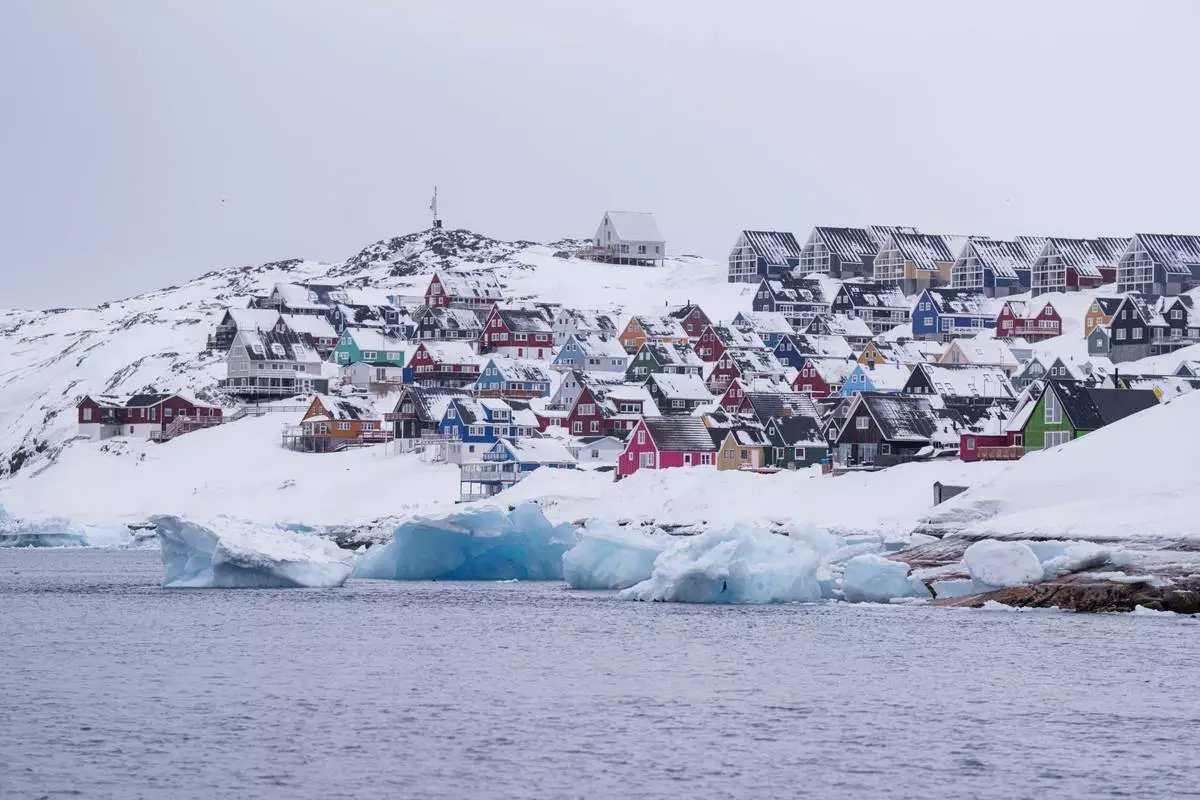
FILE - Coloured houses covered by snow are seen from the sea in Nuuk, Greenland, on March 6, 2025. (AP Photo/Evgeniy Maloletka, File)
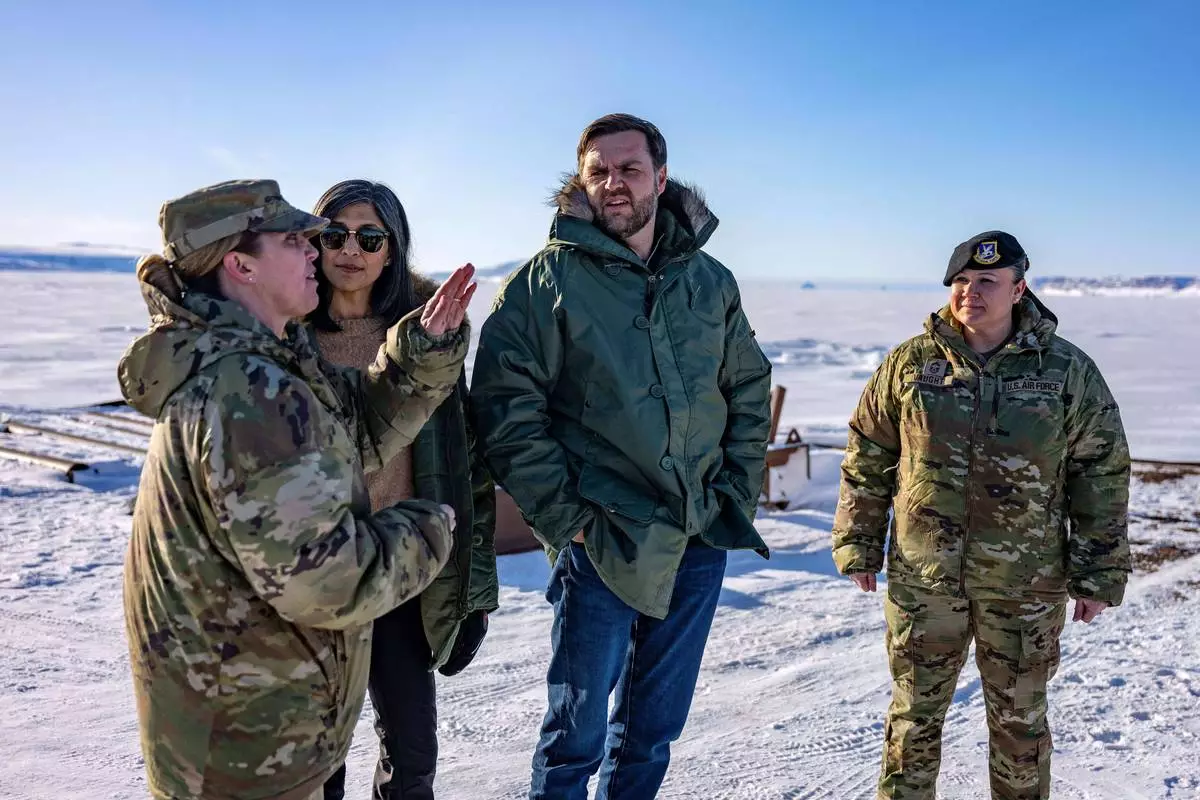
FILE - Vice President JD Vance and second lady Usha Vance tour the U.S. military's Pituffik Space Base in Greenland, March 28, 2025. (Jim Watson/Pool via AP, File)
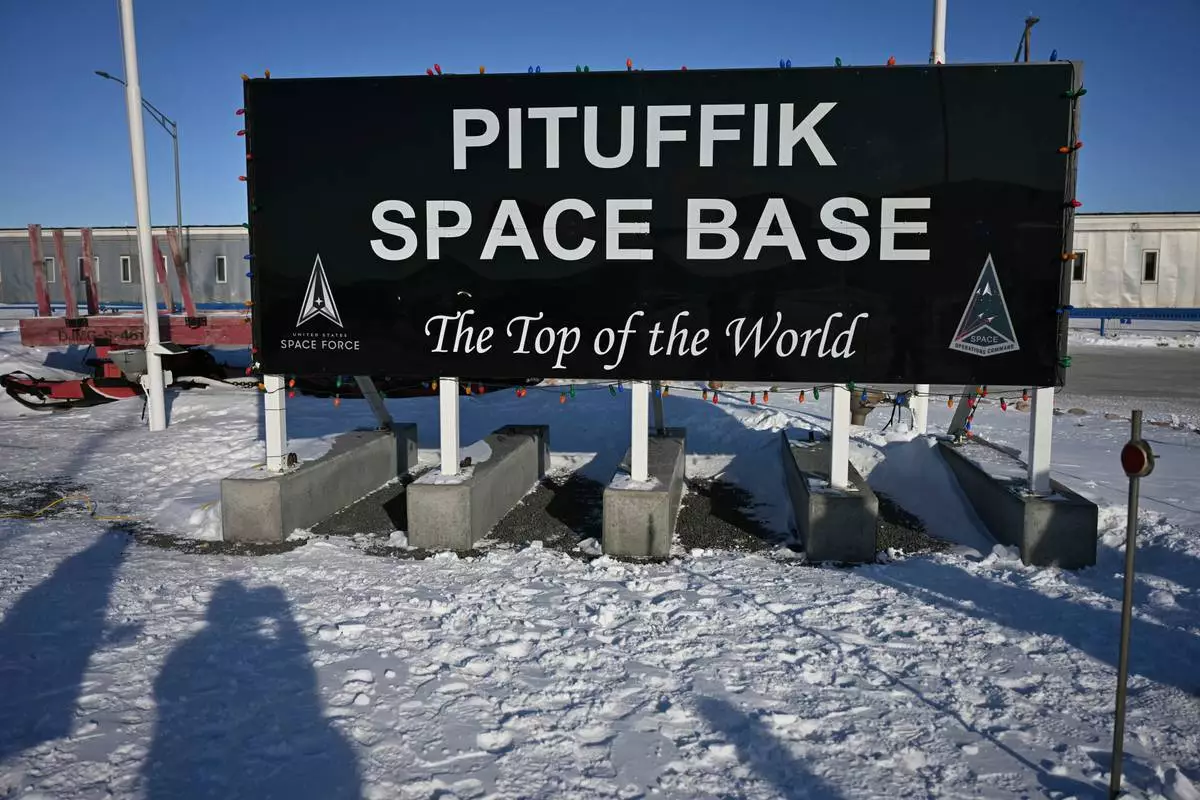
Pituffik Space Base is pictured as Vice President JD Vance visits, Friday, March 28, 2025, in Greenland. (Jim Watson/Pool via AP)
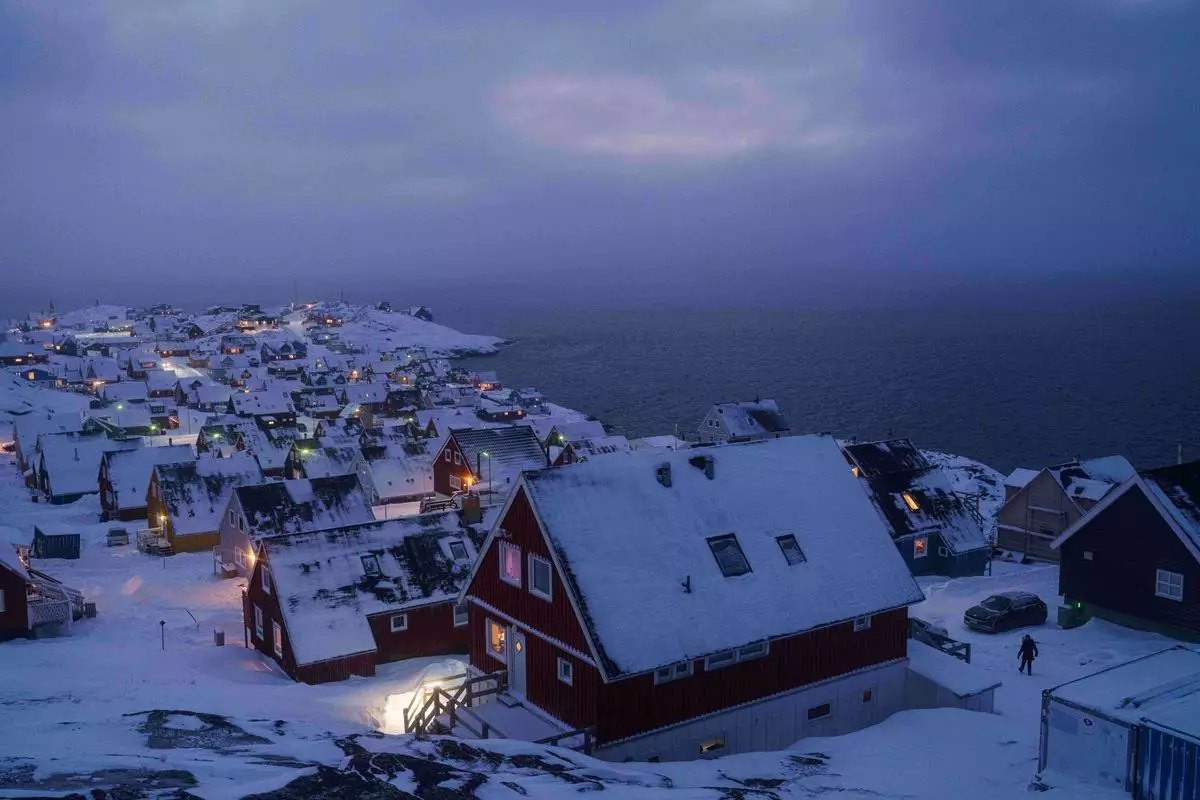
Houses covered by snow are seen on the coast of a sea inlet of Nuuk, Greenland, on Monday, Jan. 12, 2026. (AP Photo/Evgeniy Maloletka)