NEW YORK (AP) — Wall Street pulled back from its records on Tuesday following a mixed start to the latest profit reporting season for big U.S. companies.
The S&P 500 fell 0.2% from its all-time high set the day before. The Dow Jones Industrial Average dropped 398 points, or 0.8%, from its own record, while the Nasdaq composite slipped 0.1%.
Click to Gallery
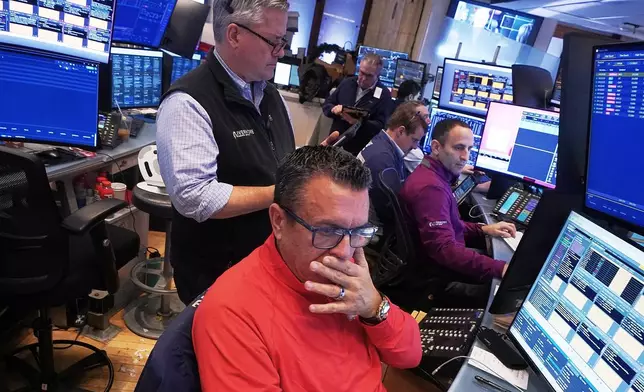
Trader Robert Finnerty Jr., foreground, works with colleagues on the floor of the New York Stock Exchange, Monday, Jan. 12, 2026. (AP Photo/Richard Drew)
Trader Sal Suarino works on the floor of the New York Stock Exchange, Monday, Jan. 12, 2026. (AP Photo/Richard Drew)
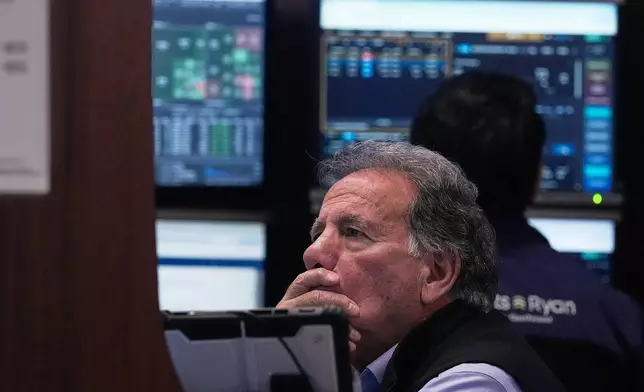
Specialist Meric Greenbaum works at his post on the floor of the New York Stock Exchange, Monday, Jan. 12, 2026. (AP Photo/Richard Drew)
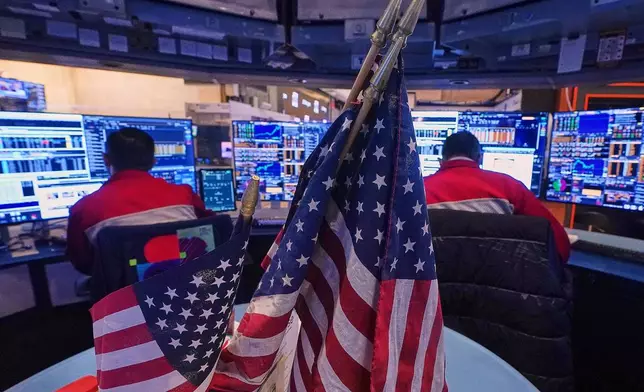
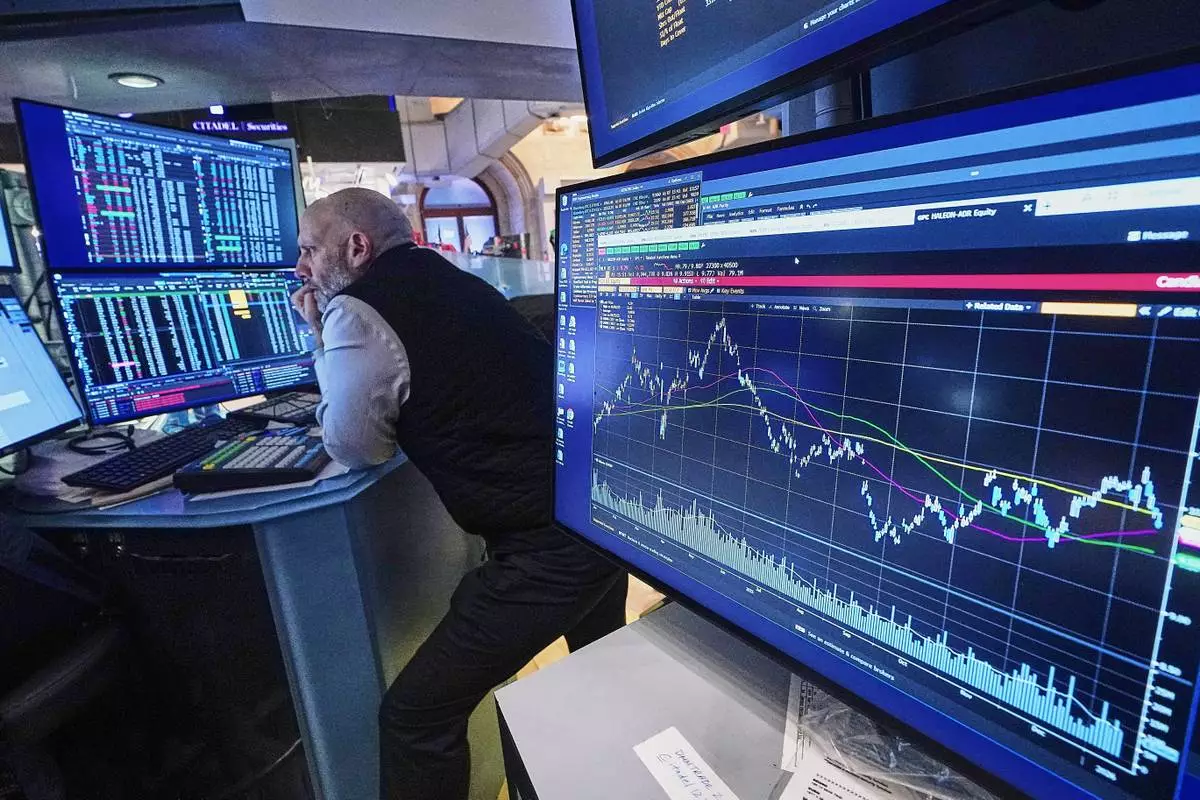
A pair of traders work on the floor of the New York Stock Exchange, Monday, Jan. 12, 2026. (AP Photo/Richard Drew)
A dealer walks near the screens showing the foreign exchange rates at a dealing room of Hana Bank in Seoul, South Korea, Monday, Jan. 12, 2026. (AP Photo/Lee Jin-man)
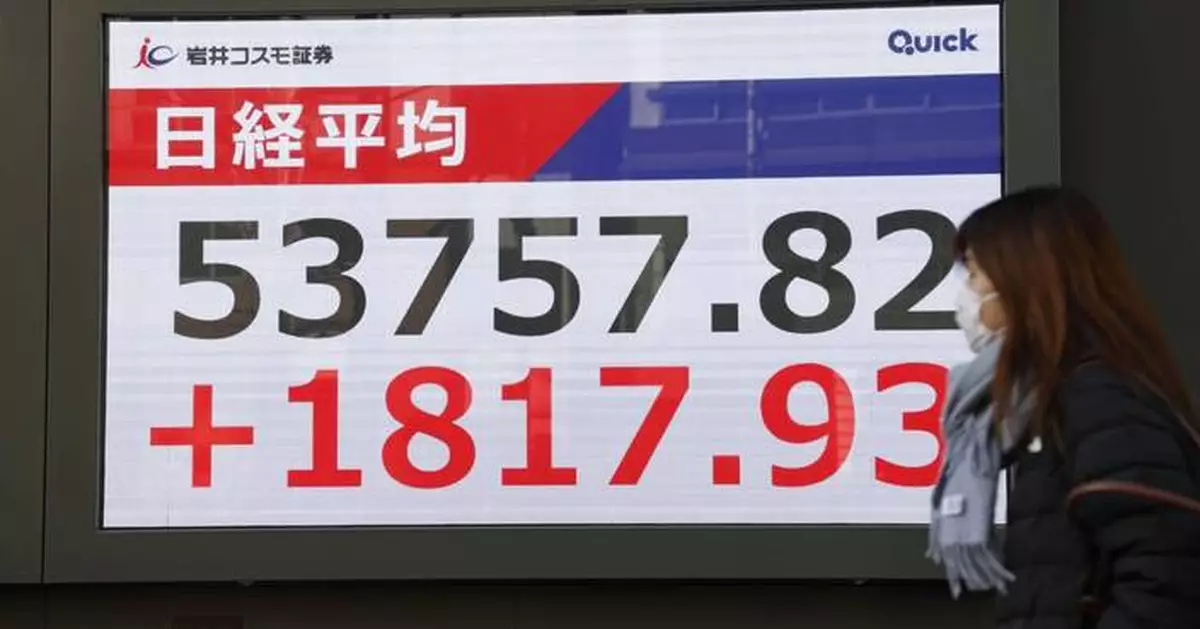
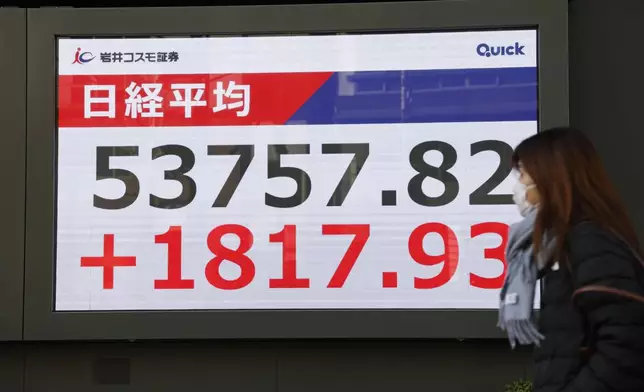
A person walks in front of an electronic stock board showing Japan's Nikkei index at a securities firm Tuesday, Jan. 13, 2026, in Tokyo. (Kyodo News via AP)
U.S. companies are under pressure to deliver strong growth in profits to justify the runs to records their stock prices have made. Analysts expect companies in the S&P 500 index will deliver earnings per share for the final three months of 2025 that are 8.3% higher than a year earlier, according to FactSet.
JPMorgan Chase helped kick off the latest reporting season by delivering weaker profit and revenue than analysts expected. Its stock fell 4.2% and was one of the heaviest weights on the market.
The shortfall may have been because some analysts hadn’t updated their estimates to account for an earnings hit resulting from the bank’s purchase of the Apple Card credit card portfolio. CEO Jamie Dimon sounded relatively optimistic about the U.S. economy, saying “consumers continue to spend, and businesses generally remain healthy.”
Delta Air Lines lost 2.4% despite reporting a stronger profit than analysts expected. Its revenue came up short of Wall Street’s expectations, as did the midpoint of its forecasted range for profit in 2026.
Chipotle Mexican Grill sank 2.3% after saying it’s looking for a new chief marketing officer, a move that surprised analysts.
On the winning side of Wall Street were several health care companies that raised their financial forecasts at an industry conference with analysts.
Moderna jumped 17.1% for the biggest gain in the S&P 500 after saying it expects to report revenue for 2025 that’s above the midpoint of the range it had forecast in November. It also offered updates on several products, including a seasonal flu vaccine that could see potential approvals beginning later this year.
Revvity rose 6% after the life sciences company said it expects to report profit for 2025 that’s above the top end of the forecasted range it had earlier given. Its forecast for revenue in the fourth quarter also topped analysts’ expectations.
Cardinal Health added 2.8% after saying it expects to earn at least $10 in adjusted earnings per share in its fiscal 2026 year, up from its prior forecasted range of $9.65 to $9.85.
All told, the S&P 500 fell 13.53 points to 6,963.74. The Dow Jones Industrial Average dropped 398.21 to 49,191.99, and the Nasdaq composite sank 24.03 to 23,709.87.
In the bond market, Treasury yields eased after a highly anticipated update on inflation came in close to economists’ expectations. The data strengthened expectations that the Federal Reserve will cut its main interest rate at least twice in 2026 to shore up the job market.
Lower interest rates could make borrowing cheaper for U.S. households and boost prices for investments, but they could also worsen inflation at the same time. Tuesday’s report showed that U.S. consumers paid prices last month for gasoline, food and other costs of living that were 2.7% higher overall than a year earlier. That’s a touch worse than economists expected and above the Fed’s 2% target for inflation.
But, in a more encouraging sign, an important underlying trend of inflation wasn’t as bad last month as economists expected. That could give the Fed more leeway to lower interest rates later.
“We’ve seen this movie before—inflation isn’t reheating, but it remains above target,” according to Ellen Zentner, chief economic strategist for Morgan Stanley Wealth Management.
The data helped the 10-year Treasury ease to 4.17% from 4.19% late Monday. The two-year Treasury yield, which more closely tracks expectations for what the Fed will do, inched down to 3.52% from 3.54%.
A day earlier, Treasury yields swung amid worries about the Federal Reserve’s worsening feud with President Donald Trump. The concern is that the president’s attacks on the Fed could result in a central bank that’s more subservient to the White House. Experts say that in turn could lead to higher inflation over the long term.
In stock markets abroad, indexes were mixed in Europe and Asia.
Japan’s Nikkei 225 soared 3.1% for one of the world’s biggest moves and set a record, thanks in part to strength for technology-related stocks.
Investors expect Japanese Prime Minister Sanae Takaichi, who took office in October, to try to capitalize on her relatively high popularity and call a snap election, hoping to strengthen her mandate for higher government spending.
AP Business Writers Chan Ho-him and Matt Ott contributed.
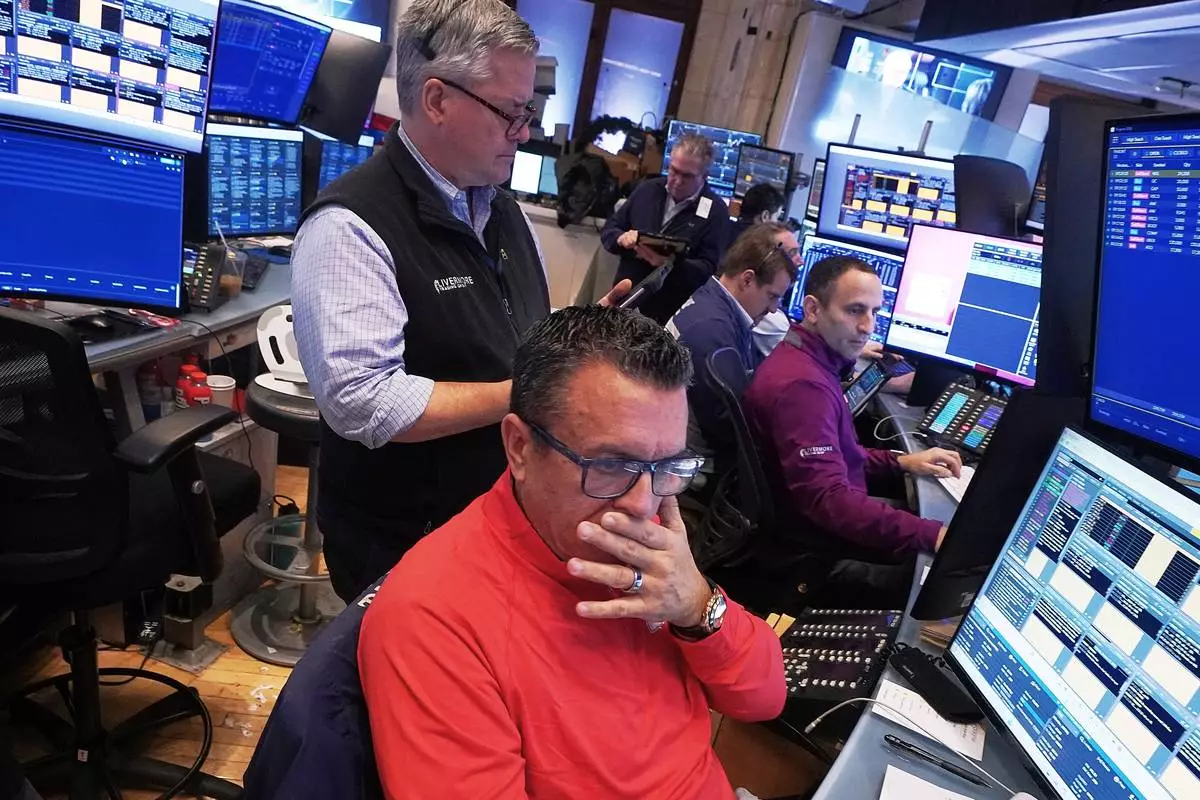
Trader Robert Finnerty Jr., foreground, works with colleagues on the floor of the New York Stock Exchange, Monday, Jan. 12, 2026. (AP Photo/Richard Drew)
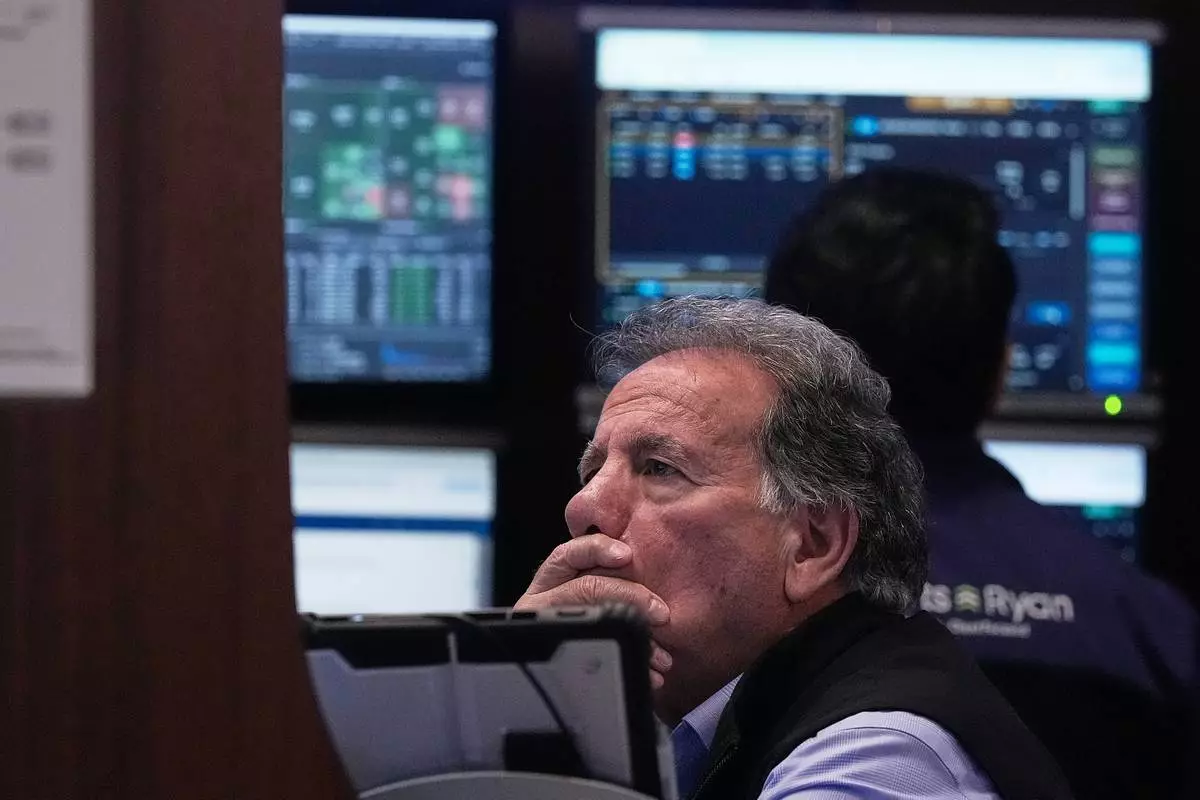
Trader Sal Suarino works on the floor of the New York Stock Exchange, Monday, Jan. 12, 2026. (AP Photo/Richard Drew)
Specialist Meric Greenbaum works at his post on the floor of the New York Stock Exchange, Monday, Jan. 12, 2026. (AP Photo/Richard Drew)
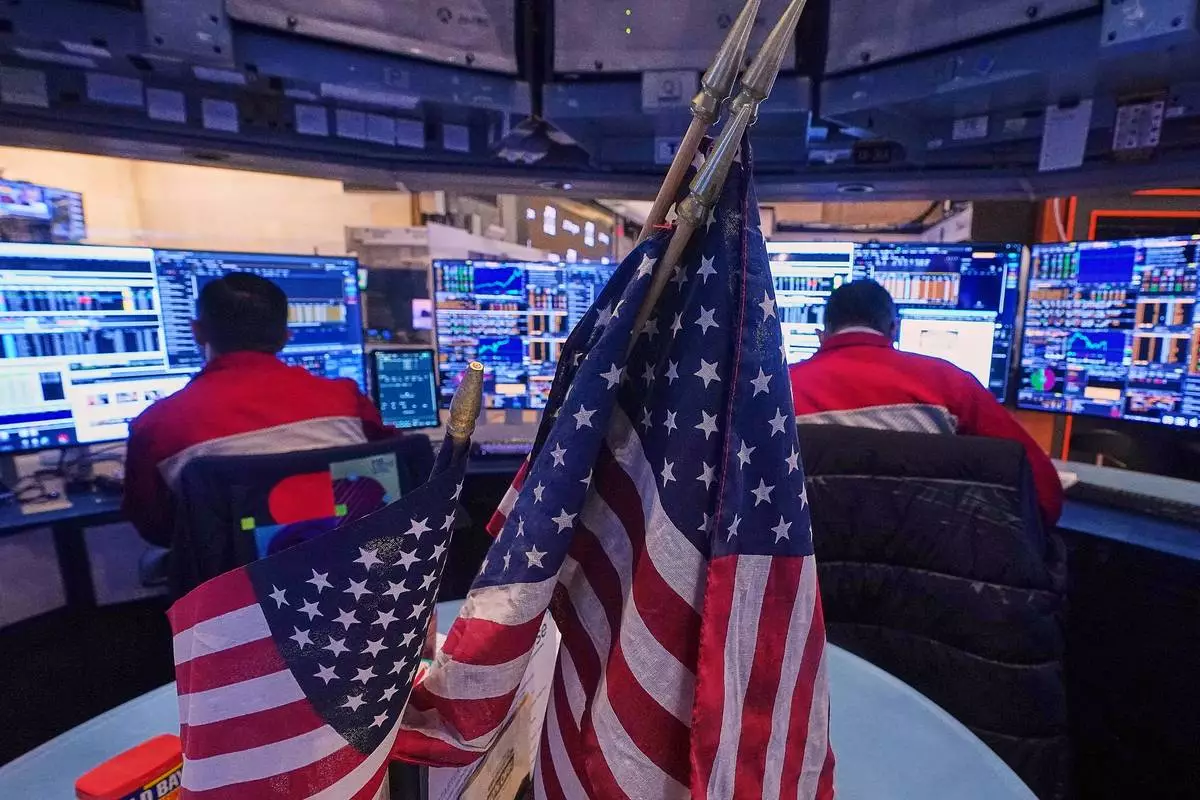
A pair of traders work on the floor of the New York Stock Exchange, Monday, Jan. 12, 2026. (AP Photo/Richard Drew)

A dealer walks near the screens showing the foreign exchange rates at a dealing room of Hana Bank in Seoul, South Korea, Monday, Jan. 12, 2026. (AP Photo/Lee Jin-man)
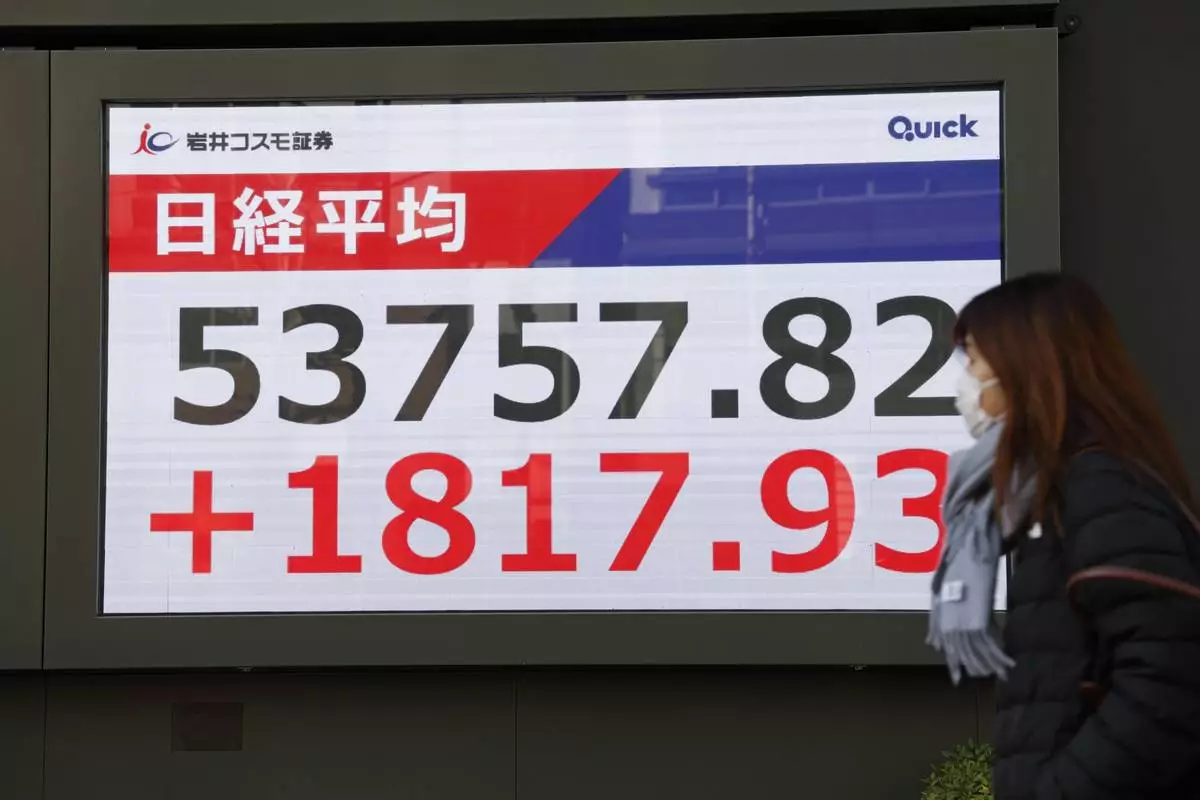
A person walks in front of an electronic stock board showing Japan's Nikkei index at a securities firm Tuesday, Jan. 13, 2026, in Tokyo. (Kyodo News via AP)
HELSINGBORG, Sweden (AP) — NATO allies and defense officials expressed bewilderment Friday at U.S. President Donald Trump’s announcement that he would send 5,000 U.S. troops to Poland just weeks after ordering the same number of forces pulled out of Europe.
The apparent change of mind came after weeks of statements from Trump and his administration about reducing — not increasing — the U.S. military footprint in Europe. Trump's initial order set off a flurry of action among military commanders and left allies already doubtful about America's commitment to Europe's security to ponder what forces they might have to backfill on NATO's eastern flank with Russia and Ukraine.
Earlier this month, the Trump administration said it was reducing levels in Europe by about 5,000 troops, and U.S. officials confirmed about 4,000 service members were no longer rotating into Poland from Germany. The dispatch to Germany of U.S. personnel trained to fire long-range missiles was also halted.
But in a post on Truth Social on Thursday, Trump said he would now send "an additional 5,000 Troops to Poland,” citing his strong ties with Polish President Karol Nawrocki, whom Trump endorsed in elections last year.
“It is confusing indeed, and not always easy to navigate,” Swedish Foreign Minister Maria Malmer Stenergard told reporters Friday at a meeting she was hosting of her NATO counterparts, including U.S. Secretary of State Marco Rubio.
Ministers from the Netherlands and Norway were sanguine about Trump’s latest move, as was Latvian Foreign Minister Baiba Braže, who said allies knew the U.S. troop “posture was being reconsidered, and now there is no change of posture. For now.”
U.S. defense officials also expressed confusion. “We just spent the better part of two weeks reacting to the first announcement. We don’t know what this means either,” said one of two officials who spoke on condition of anonymity to discuss sensitive military matters.
But Rubio said Washington’s allies understand that changes in the U.S. troop presence in Europe will come as the Trump administration reevaluates its force needs. “I think there’s a broad recognition that there are going to be eventually less U.S. troops in Europe than there has historically been for a variety of reasons,” he said.
The latest surprise came despite a U.S. pledge to coordinate troop deployments, including one from NATO’s top military officer, U.S. Lt. Gen. Alex Grynkewich, on Wednesday.
Trump's initial announcement that he would withdraw troops came as he fumed over remarks by German Chancellor Friedrich Merz, who said that the U.S. was being “humiliated” by the Iranian leadership and criticized what he called a lack of strategy in that war.
Trump told reporters that the U.S. would be cutting even more than 5,000 and also announced new tariffs on European cars. Germany is the continent’s biggest auto producer.
Rubio insisted that Trump’s decision “is not a punitive thing. It’s just something that’s ongoing.”
About 80,000 U.S. troops are stationed in Europe. The Pentagon is required to keep at least 76,000 troops and major equipment on the continent unless NATO allies are consulted and there is a determination that such a withdrawal is in U.S. interests.
The withdrawal of 5,000 troops might drop numbers below that limit.
But Trump's latest post suggests that troop numbers in Europe would not change. Polish Foreign Minister Radek Sikorski welcomed the decision to send more forces to his country, saying it ensures that “the presence of American troops in Poland will be maintained more or less at previous levels.”
NATO Secretary-General Mark Rutte also welcomed the move. On Thursday, before Trump took to Truth Social again, Rutte had underlined that it was important for Europe to take care of its own security. “We have a process in place. This is normal business,” he told reporters.
At NATO headquarters in Brussels, meanwhile, U.S. officials briefed the allies on the Pentagon's aims for its commitments to the NATO Force Model, which involves contingency planning for Europe’s defense in the event of serious security concerns. It was widely expected that a further reduction of U.S. forces would be coming.
Asked whether any cuts were announced, Rutte said: “I’m afraid it’s much more complicated than that.” He said the procedure “is highly classified” and declined to give details.
Rubio played down concerns about a shift in U.S. force levels in Europe, saying: "Every country has to constantly reevaluate what their needs are, what their commitments are around the world, and how to properly structure that.”
Cook reported from Brussels. Associated Press writer Emma Burrows in London contributed.
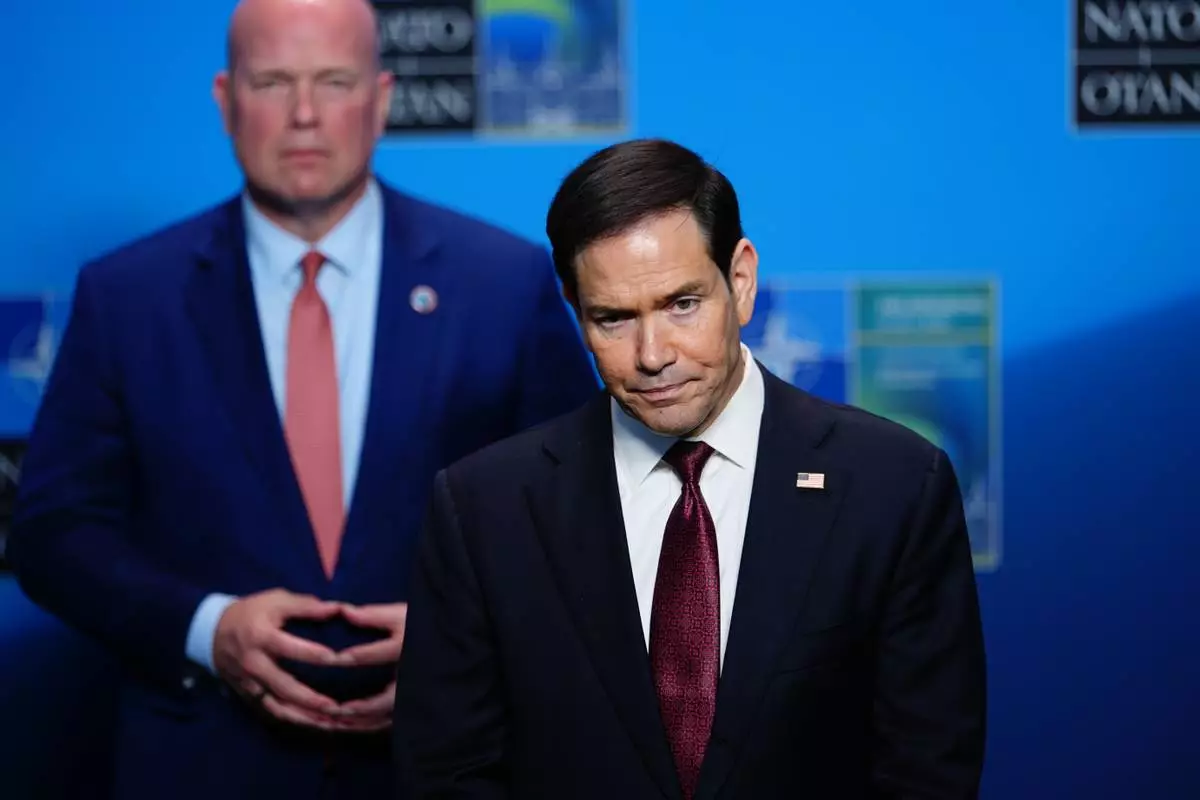
United States Secretary of State Marco Rubio speaks with journalists during a meeting of NATO foreign ministers in Helsingborg, Sweden, Friday, May 22, 2026. (AP Photo/Julia Demaree Nikhinson, Pool)
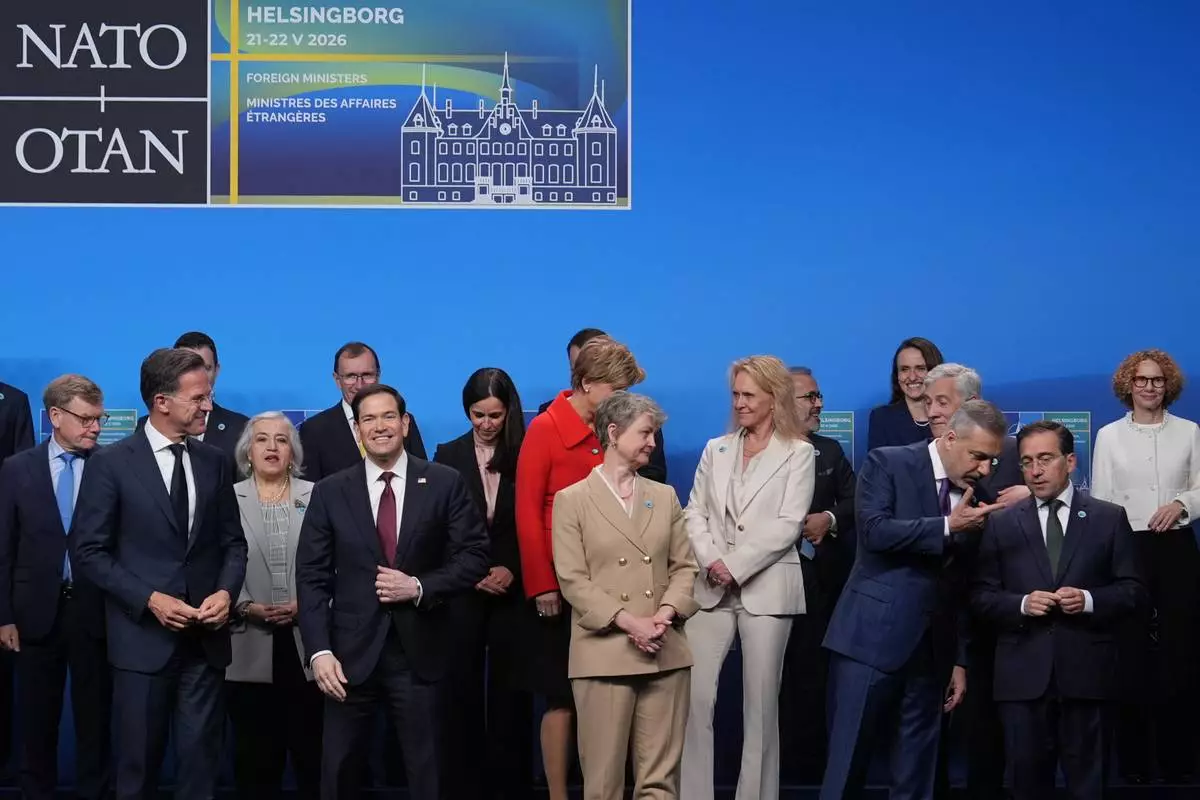
United States Secretary of State Marco Rubio, front second left, and NATO Secretary General Mark Rutte, front left, speak with each other during a group photo at a meeting of NATO foreign ministers in Helsingborg, Sweden, Friday, May 22, 2026. (AP Photo/Julia Demaree Nikhinson, Pool)
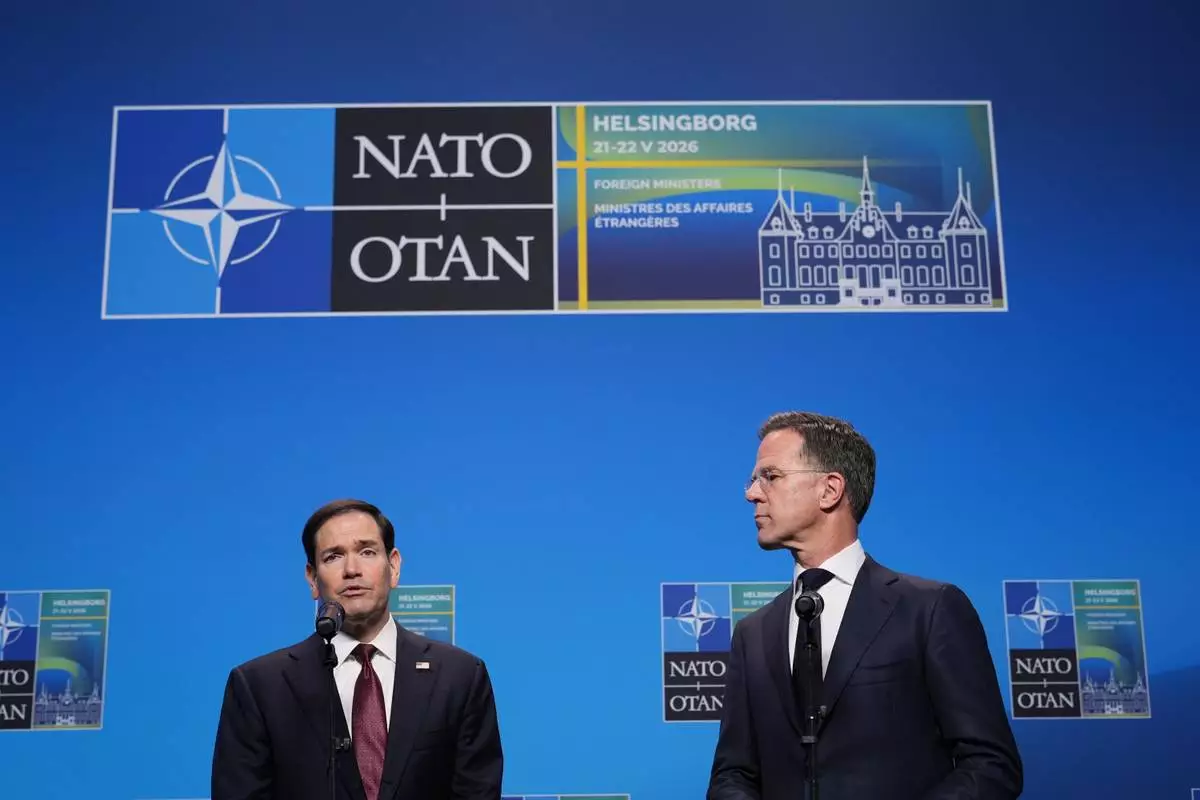
United States Secretary of State Marco Rubio, left, and NATO Secretary General Mark Rutte look at each other as they deliver a statement during a meeting of NATO foreign ministers in Helsingborg, Sweden, Friday, May 22, 2026. (AP Photo/Julia Demaree Nikhinson, Pool)
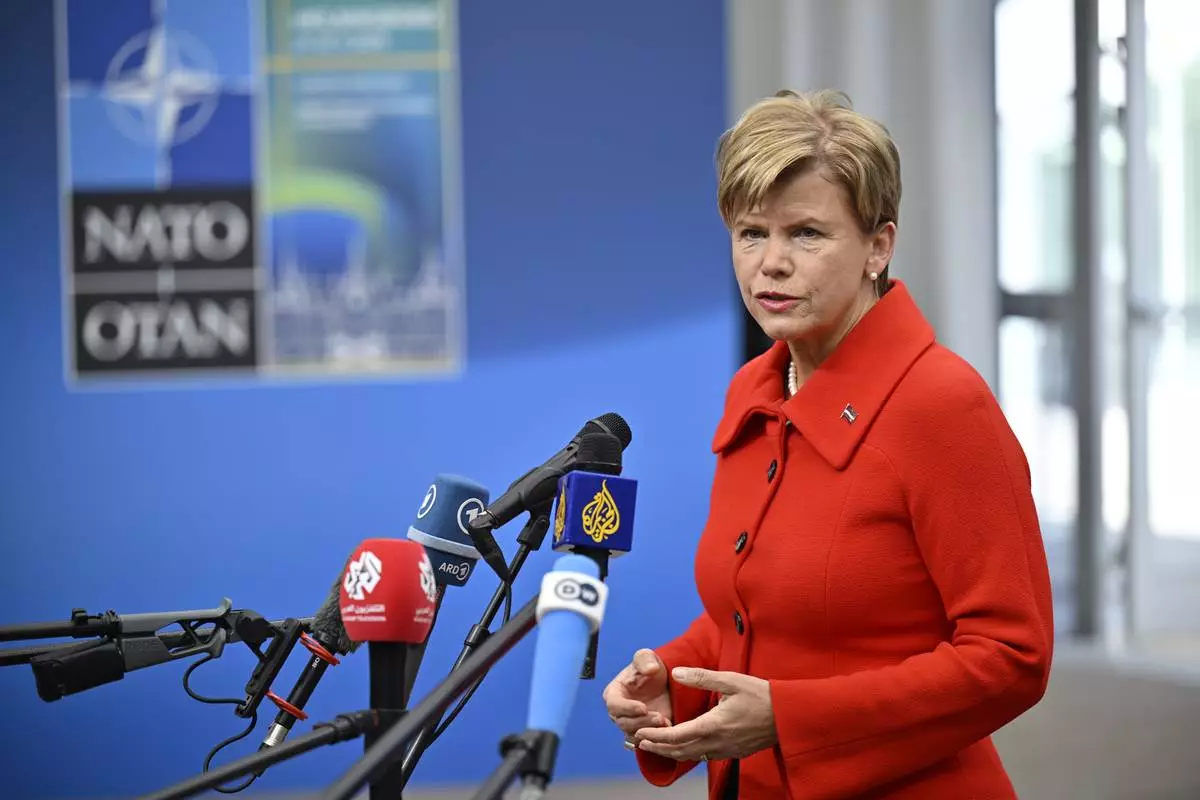
Latvian Foreign Minister Baiba Braže speaks at the doorstep of the NATO foreign ministers' meeting at Sea U in Helsingborg, Sweden, Friday, May 22, 2026. (Johan Nilsson/TT News Agency via AP)
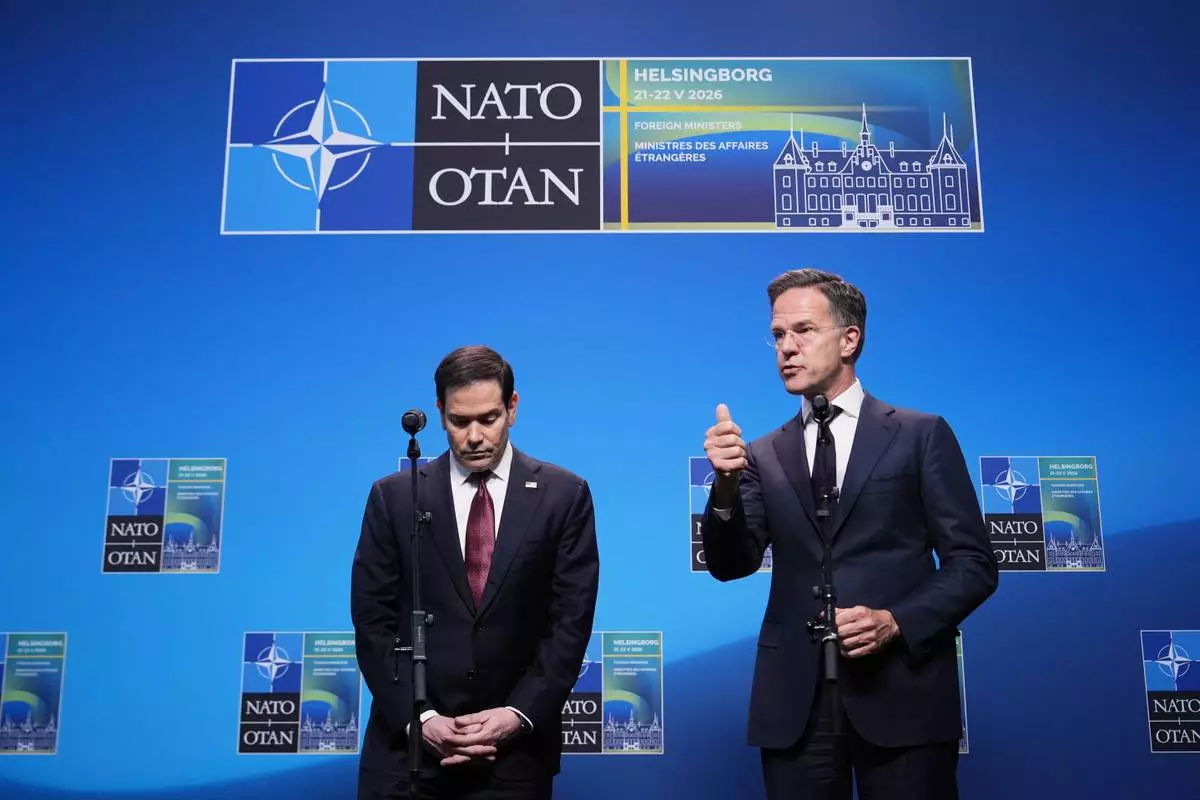
United States Secretary of State Marco Rubio, left, and NATO Secretary General Mark Rutte deliver a statement during a meeting of NATO foreign ministers in Helsingborg, Sweden, Friday, May 22, 2026. (AP Photo/Julia Demaree Nikhinson, Pool)
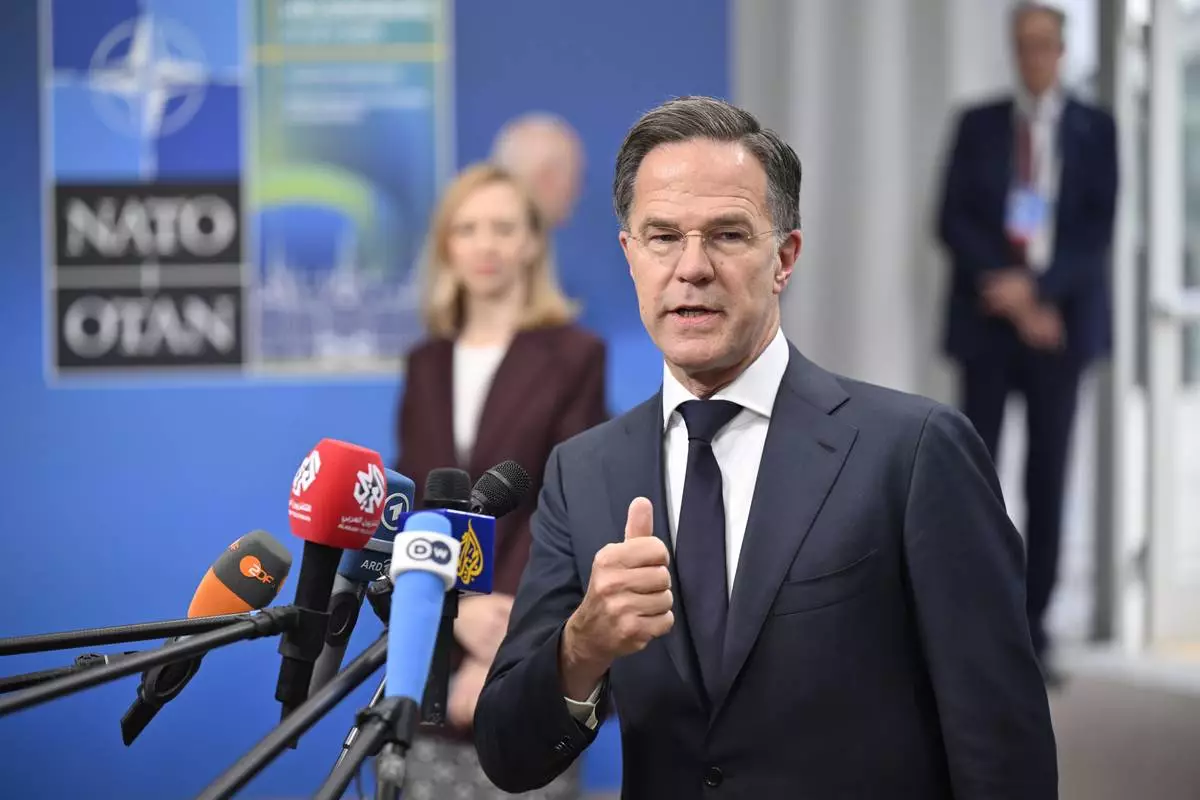
NATO Secretary General Mark Rutte speaks to media at the NATO Foreign Ministers' meeting in Helsingborg, Sweden, Friday, May 22, 2026. (Johan Nilsson/TT News Agency via AP)
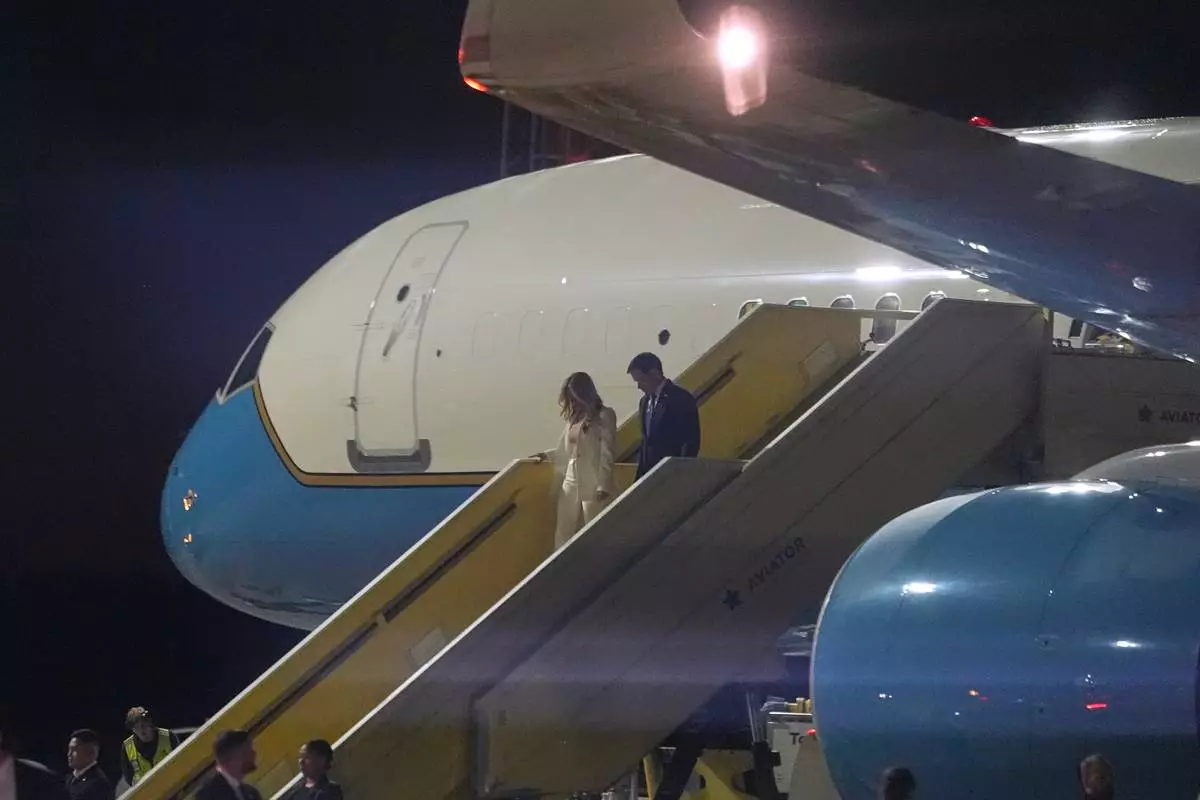
Secretary of State Marco Rubio arrives with his wife Jeanette at Malmo Airport, Friday, May 22, 2026, in Malmo-Sturup, Sweden, ahead of a NATO foreign ministers meeting. (AP Photo/Julia Demaree Nikhinson, Pool)
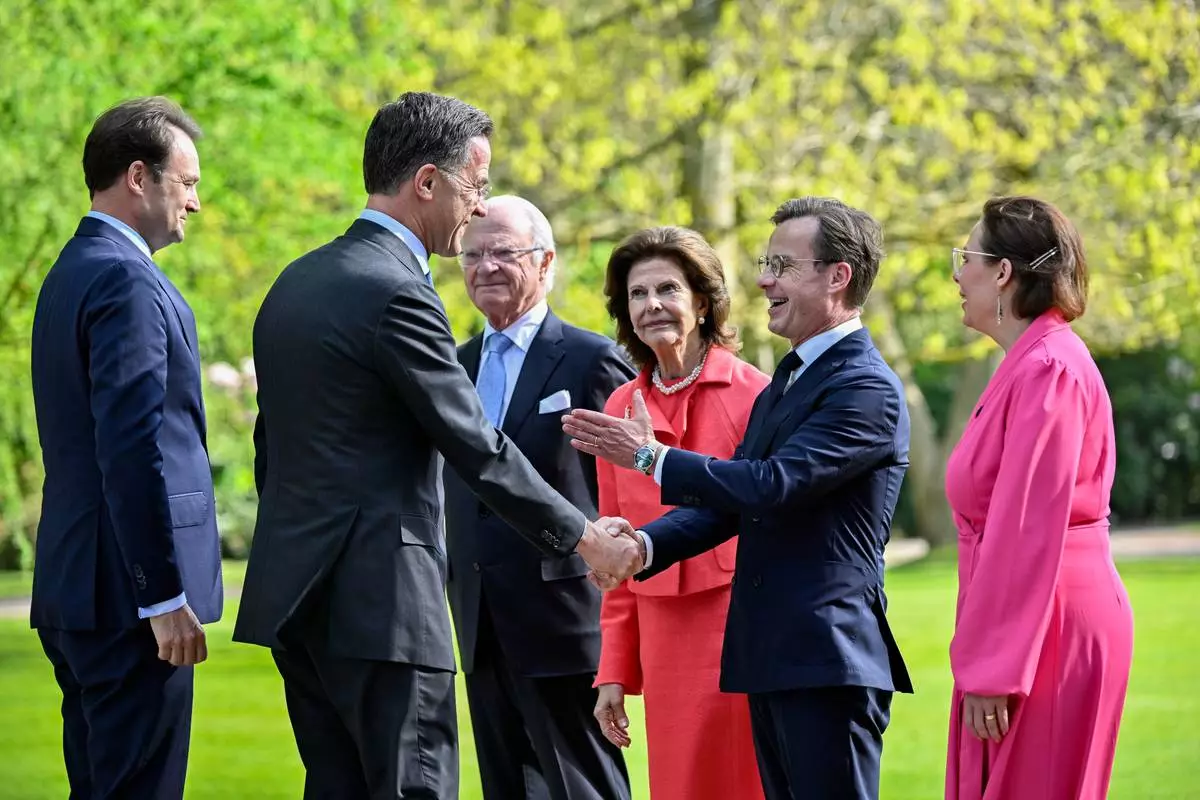
NATO Secretary General Mark Rutte, second from left, shakes hands with Prime Minister of Sweden Ulf Kristersson, as he is greeted by King Carl Gustaf of Sweden, Queen Silvia of Sweden and Minister for Foreign Affairs of Sweden Maria Malmer Stenergard, right, before a dinner at Sofiero Castle in Helsingborg, Sweden, Thursday May 21 2026. (Johan Nilsson/TT News Agency via AP)
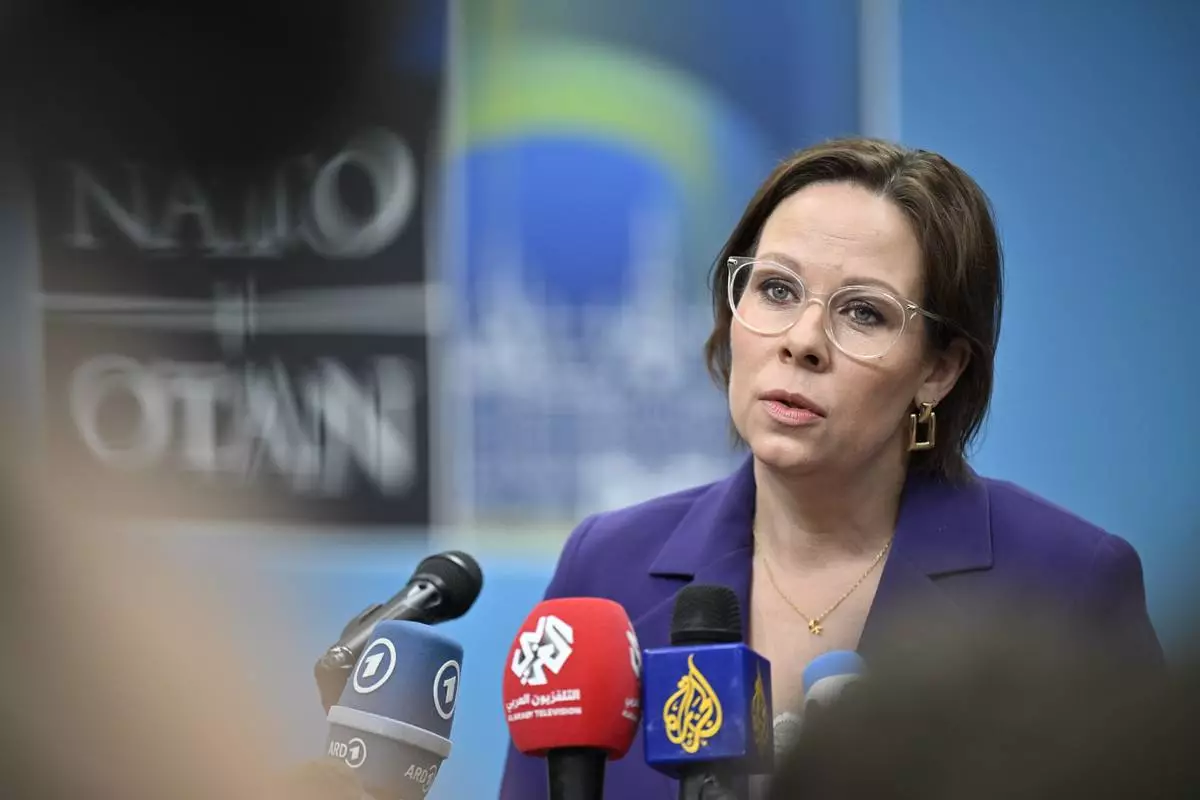
Swedish Foreign Minister Maria Malmer Stenergard speaks to media at the NATO Foreign Ministers' meeting in Helsingborg, Sweden, Friday, May 22, 2026. (Johan Nilsson/TT News Agency via AP)