NEW YORK (AP) — Alarmed by the policies of President Donald Trump, millions turned out last month for protests around the United States and overseas. Mindful of next year’s 250th anniversary of American independence, organizers called the movement “No Kings.”
Had the same kind of rallies been called for in the summer of 1775, the response likely would have been more cautious.
“It ('No Kings') was probably a minority opinion in July 1775,” says H.W. Brands, a prize-winning scholar and chair of the history department at the University of Texas at Austin.
“There was a lot of passion for revolution in New England, but that was different from the rest of the country,” says Pulitzer Prize-winning historian Joseph Ellis. “There were still people who don't want to drawn into what they feared was an unnecessary war.”
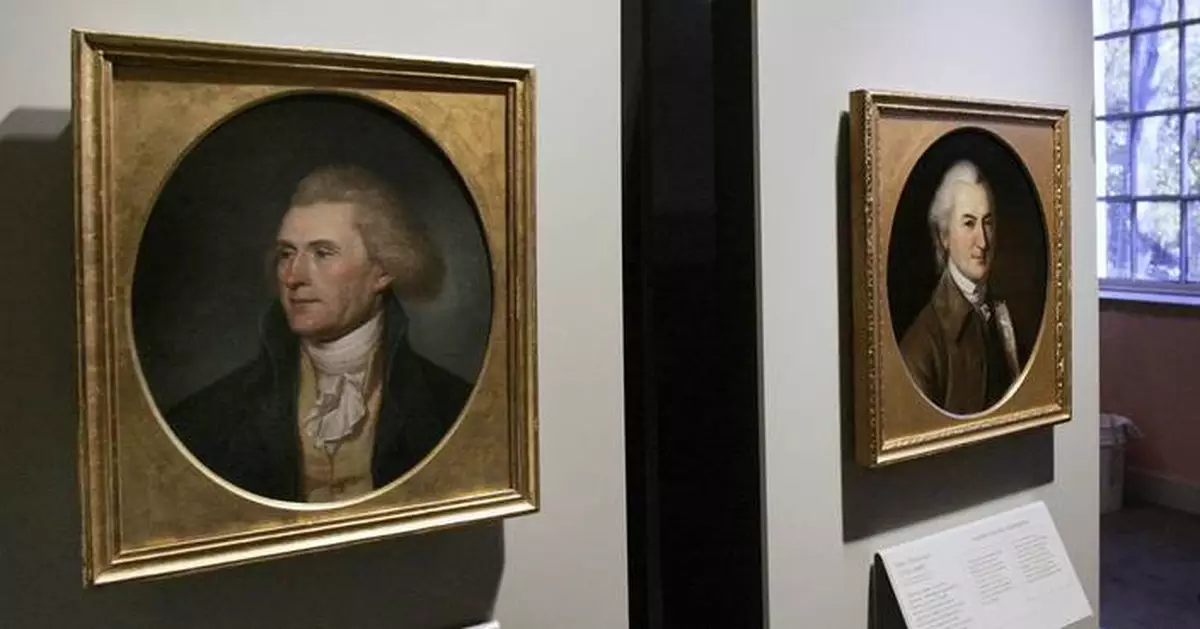
This month marks the 250th anniversary — the semiquincentennial — of a document enacted almost exactly a year before the Declaration of Independence: “The Olive Branch Petition,” ratified July 5, 1775 by the Continental Congress. Its primary author was John Dickinson, a Pennsylvanian whose writing skills led some to call him the “Penman of the Revolution,” and would stand as a final, desperate plea to reconcile with Britain.
The notion of “No Kings” is a foundation of democracy. But over the first half of 1775 Dickinson and others still hoped that King George III could be reasoned with and would undo the tax hikes and other alleged abuses they blamed on the British Parliament and other officials. Ellis calls it the “Awkward Interval,” when Americans had fought the British in Lexington and Concord and around Bunker Hill, while holding off from a full separation.
“Public opinion is changing during this time, but it still would have been premature to issue a declaration of independence,” says Ellis, whose books include “Founding Brothers,” “The Cause” and the upcoming “The Great Contradiction."
The Continental Congress projected unity in its official statements. But privately, like the colonies overall, members differed. Jack Rakove, a professor of history at Stanford University and author of the Pulitzer Prize-winning “Original Meanings,” noted that delegates to Congress ranged from “radicals” such as Samuel Adams who were avid for independence to such “moderates” as Dickinson and New York's John Jay.
The Olive Branch resolution balanced references to “the delusive pretences, fruitless terrors, and unavailing severities” administered by British officials with dutiful tributes to shared ties and to the king's “royal magnanimity and benevolence.”
“(N)otwithstanding the sufferings of your loyal Colonists during the course of this present controversy, our Breasts retain too tender a regard for the Kingdom from which we derive our Origin to request such a Reconciliation as might in any manner be inconsistent with her Dignity or her welfare,” the sometimes obsequious petition reads in part.
The American Revolution didn’t arise at a single moment but through years of anguished steps away from the “mother” country — a kind of weaning that at times suggested a coming of age, a young person’s final departure from home. In letters and diaries written in the months before July 1775, American leaders often referred to themselves as children, the British as parents and the conflict a family argument.
Edmund Pendleton, a Virginia delegate to the Continental Congress, urged “a reconciliation with Our mother Country.” Jay, who would later help negotiate the treaty formally ending the Revolutionary War, proposed informing King George that “your majesty’s American subjects” are “bound to your majesty by the strongest ties of allegiance and affection and attached to their parent country by every bond that can unite societies.”
In the Olive Branch paper, Dickinson would offer tribute to “the union between our Mother country and these colonies.”
The Congress, which had been formed the year before, relied in the first half of 1775 on a dual strategy that now might be called “peace through strength,” a blend of resolve and compromise. John Adams defined it as “to hold the sword in one hand, the olive branch in the other.” Dickinson's petition was a gesture of peace. A companion document, “The Declaration of the Causes and Necessity of Taking Up Arms," was a statement of resolve.
The 1775 declaration was drafted by Thomas Jefferson, who a year later would be the principal writer of the Declaration of Independence, revised by Dickinson and approved by the Congress on July 6. The language anticipated the Declaration of Independence with its condemnation of the British for “their intemperate Rage for unlimited Domination” and its vows to “make known the Justice of our Cause.”
But while the Declaration of Independence ends with the 13 colonies “absolved from all Allegiance to the British Crown,” the authors in 1775 assured a nervous public “that we mean not to dissolve that Union which has so long and so happily subsisted between us, and which we sincerely wish to see restored.”
“Necessity has not yet driven us into that desperate Measure, or induced us to excite any other Nation to war against them,” they wrote.
John Adams and Benjamin Franklin were among the peers of Dickinson who thought him naive about the British, and were unfazed when the king refused even to look at the Olive Branch petition and ruled that the colonies were in a state of rebellion. Around the same time Dickinson was working on his draft, the Continental Congress readied for further conflict. It appointed a commander of the newly-formed Continental Army, a renowned Virginian whom Adams praised as “modest and virtuous ... amiable, generous and brave."
His name: George Washington. His ascension, Adams wrote, "will have a great effect, in cementing and securing the Union of these Colonies.”
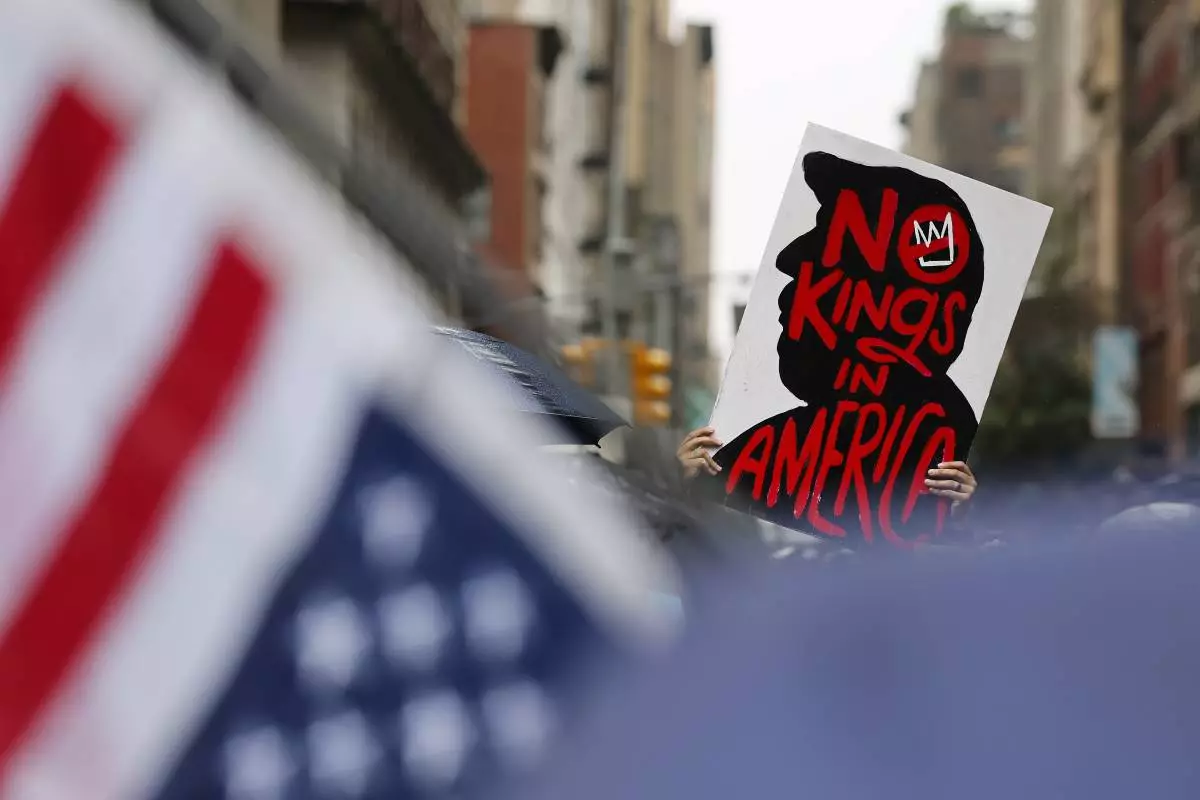
FILE - Demonstrators march down Fifth Avenue during the "No Kings" protest, June 14, 2025, in New York. (AP Photo/Stefan Jeremiah, File)
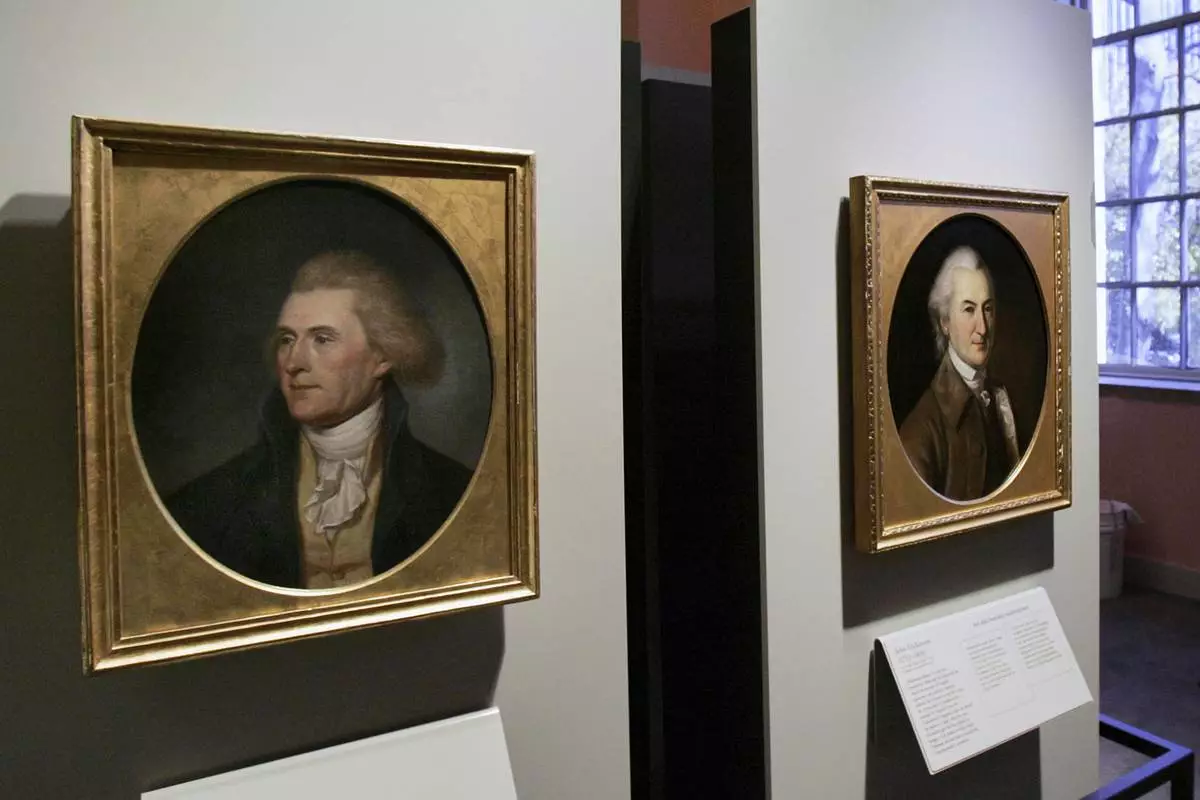
FILE - Portraits of a red-headed Thomas Jefferson, left, and John Dickinson, right, by by Charles Willson Peale are seen at the refurbished Second Bank of the United States in Philadelphia on Nov. 26, 2004. (AP Photo/Jacqueline Larma, File)