BEIRUT (AP) — It’s as if the whole weight of Israel’s war in Gaza has fallen on Amr al-Hams. The 3-year-old has shrapnel in his brain from an Israeli strike on his family's tent. His pregnant mother was killed. His father is paralyzed by grief over the death of his longtime sweetheart.
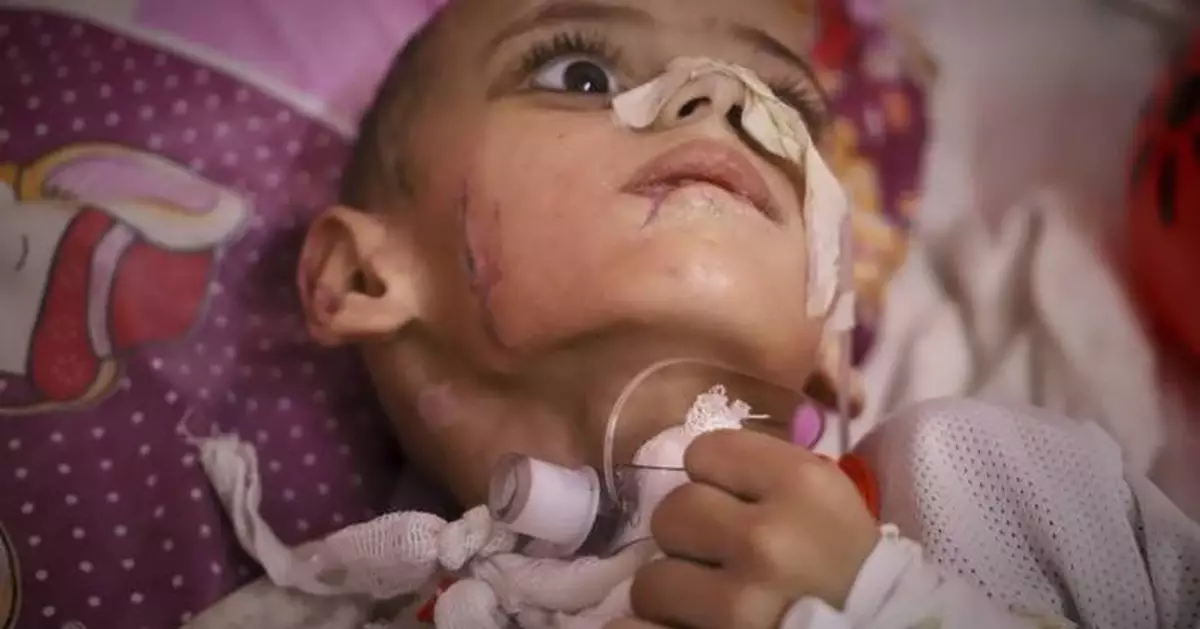
Now the boy is lying in a hospital bed, unable to speak, unable to move, losing weight, while doctors don’t have the supplies to treat his brain damage or help in his rehabilitation after a weekslong blockade and constant bombardment.
Click to Gallery
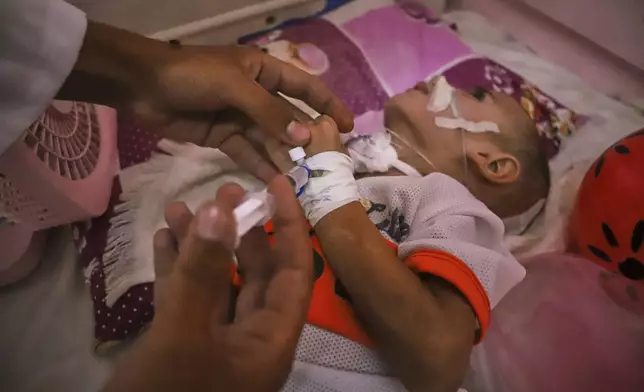
A doctor administers medication to 3-year-old Amr al-Hams, who lies in a hospital bed with brain damage caused by an Israeli strike on his family's tent in April, at Nasser Hospital in Khan Younis, Gaza Strip, Wednesday, June 25, 2025. (AP Photo/Mariam Dagga)
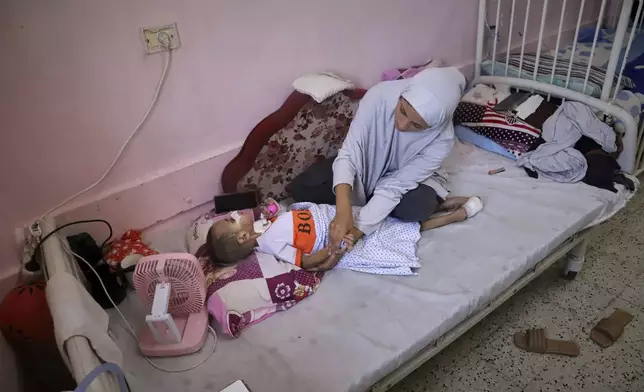
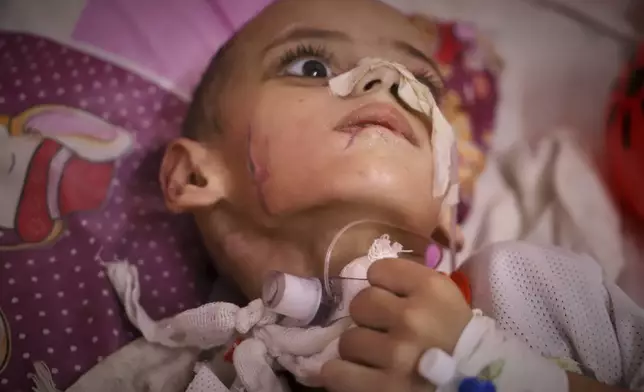
Nour al-Hams cares for her 3-year-old nephew, Amr al-Hams, who lies in a hospital bed with brain damage caused by an Israeli strike on his family's tent in April, at Nasser Hospital in Khan Younis, Gaza Strip, Wednesday, June 25, 2025. (AP Photo/Mariam Dagga)
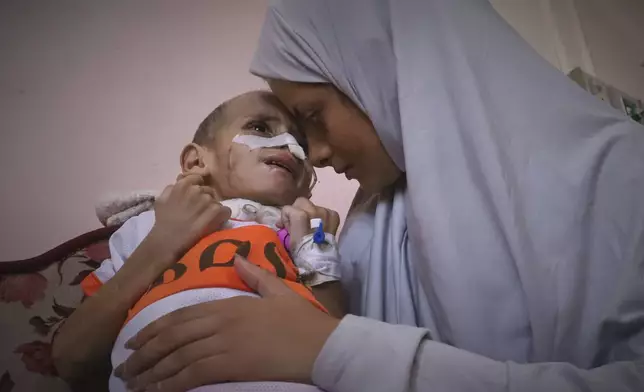
Nour al-Hams holds her 3-year-old nephew, Amr al-Hams, who lies in a hospital bed with brain damage caused by an Israeli strike on his family's tent in April, at Nasser Hospital in Khan Younis, Gaza Strip, Wednesday, June 25, 2025. (AP Photo/Mariam Dagga)
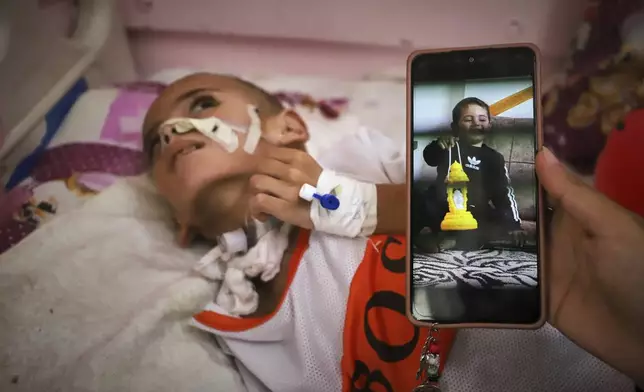
An old photo of 3-year-old Amr al-Hams is displayed on a phone as he lies in a hospital bed with brain damage caused by an Israeli strike on his family's tent in April, at Nasser Hospital in Khan Younis, Gaza Strip, Wednesday, June 25, 2025. (AP Photo/Mariam Dagga)
Three-year-old Amr al-Hams, who has brain damage caused by an Israeli strike on his family's tent in April, lies in a bed at Nasser Hospital in Khan Younis, Gaza Strip, Wednesday, June 25, 2025. (AP Photo/Mariam Dagga)
Recently out of intensive care, Amr’s frail body twists in visible pain. His wide eyes dart around the room. His aunt is convinced he’s looking for his mother. He can’t speak, but she believes he is trying to say “mom.”
“I am trying as much as I can. It is difficult,” said his aunt Nour al-Hams, his main caregiver, sitting next to him on the bed in Khan Younis’ Nasser Hospital in southern Gaza. “What he is living through is not easy.”
To reassure him, his aunt sometimes says his mother will be back soon. Other times, she tries to distract him, handing him a small ball.
The war began Oct. 7, 2023, when Hamas-led militants stormed into Israel and killed some 1,200 people, mostly civilians, and took 251 people captive. Israel’s retaliatory campaign has killed over 57,000 Palestinians, according to Gaza’s Health Ministry, which says women and children make up most of the dead but does not specify how many were fighters or civilians.
Nearly 21 months into the conflict that displaced the vast majority of Gaza's 2.3 million people, it is nearly impossible for the critically wounded to get the care they need, doctors and aid workers say.
The health care sector has been decimated: Nearly half of the territory’s 36 hospitals have been put out of service. Daily bombings and strikes overwhelm the remaining facilities, which are operating only partially. They struggle with shortages of anything from fuel, gauze and sutures to respirators or scanners that have broken down and can’t be replaced.
Israeli forces have raided and besieged medical facilities, claiming Hamas militants have used them as command centers. Doctors have been killed or were displaced, unable to reach hospitals because of continued military operations.
For more than 2 1/2 months, Israel blocked all food, medicine and other supplies from entering Gaza, accusing Hamas of siphoning off aid to fund its military activities, though the U.N. said there was no systematic diversion. The population was pushed toward famine.
Since mid-May, Israel has allowed in a trickle of aid, including medical supplies.
Gaza's Health Ministry estimates that 33,000 children have been injured during the war, including 5,000 requiring long-term rehabilitation and critical care. Over 1,000 children, like Amr, are suffering from brain or spinal injuries or amputated limbs.
“Gaza will be dealing with future generations of kids living with all sorts of disabilities, not just brain, but limb disabilities that are consequences of amputation that could have been prevented if the health system was not under the pressures it is under, wasn’t systematically targeted and destroyed as it was,” said Tanya Haj-Hassan, a pediatric intensive care specialist who has volunteered multiple times in Gaza with international medical organizations.
In April, one week before her due date, Amr’s mother, Inas, persuaded her husband to visit her parents in northern Gaza. They trekked from the tent they lived in on Gaza’s southern coast to the tent where her parents live.
They were having an evening meal when the strike hit. Amr’s mother and her unborn baby, his grandfather and his brother and sister were killed.
Amr was rushed to the ICU at Indonesian Hospital, the largest in northern Gaza. A scan confirmed shrapnel in his brain and reduced brain function. A breathing tube was inserted into his throat.
“He is 3. Why should he bear the weight of a rocket?" his aunt asked.
His father, Mohammed, was too stunned to even visit the ICU. His wife had been the love of his life since childhood, the aunt said. He barely spoke.
Doctors said Amr needed advanced rehabilitation. But while he was at the hospital, Israeli forces attacked the facility — encircling its premises and causing damage to its communication towers, water supplies and one of its wards. Evacuation orders were issued for the area, and patients were transferred to Shifa Hospital in Gaza City.
But Shifa was overwhelmed with mass casualties, and staff asked the family to take Amr south, even though no ambulances or oxygen tanks could be spared.
The father and aunt had to take Amr, fresh out of ICU with the tube in his throat, in a motorized rickshaw for the 25-kilometer (15-mile) drive to Nasser Hospital.
Amr was in pain, his oxygen levels dropped. He was in and out of consciousness. “We were reading the Quran all along the road,” said his aunt, praying they would survive the bombings and Amr the bumpy trip without medical care.
About halfway, an ambulance arrived. Amr made it to Nasser Hospital with oxygen blood levels so low he was again admitted to ICU.
Still, Nasser Hospital could not provide Amr with everything he needed. Intravenous nutrients are not available, Nasser’s head of pediatrics, Dr. Ahmed al-Farra, said. The fortified milk Amr needed disappeared from the market and the hospital after weeks of Israel’s blockade. He has lost about half his weight.
When he came out of the ICU, Nour shared his bed with him at night and administered his medication. She grinds rice or lentils into a paste to feed him through a syringe connected to his stomach.
“We have starvation in Gaza. There is nothing to eat,” said his aunt, who is a trained nurse. “There is nothing left.”
The care Amr has missed is likely to have long-term effects. Immediate care for brain injuries is critical, Haj-Hassan said, as is follow-up physical and speech therapy.
Since the Israeli blockade on Gaza began in March, 317 patients, including 216 children, have left the territory for medical treatment alongside nearly 500 of their companions, according to the World Health Organization.
Over 10,000 people, including 2,500 children, await evacuation.
Amr is one of them.
COGAT, the Israeli military body in charge of civilian affairs in Gaza, coordinates medical evacuations after receiving requests from countries that will take the patients and security screenings. In recent weeks, over 2,000 patients and their companions have left for treatment, COGAT said, without specifying the time period.
Tess Ingram, spokesperson for the U.N. children’s agency, said the only hope for many critically injured who remain in Gaza is to get out. Countries need to “open their hearts, open their doors and open their hospitals to children who survived the unimaginable and are now languishing in pain," she said.
Amr's aunt reads his every move. He is unhappy with his diapers, she said. He outgrew them long ago. He was a smart kid, now he cries “feeling sorry for himself,” said Nour. He gets seizures and needs tranquilizers to sleep.
“His brain is still developing. What can they do for him? Will he be able to walk again?" Nour asked. “So long as he is in Gaza, there is no recovery for him.”
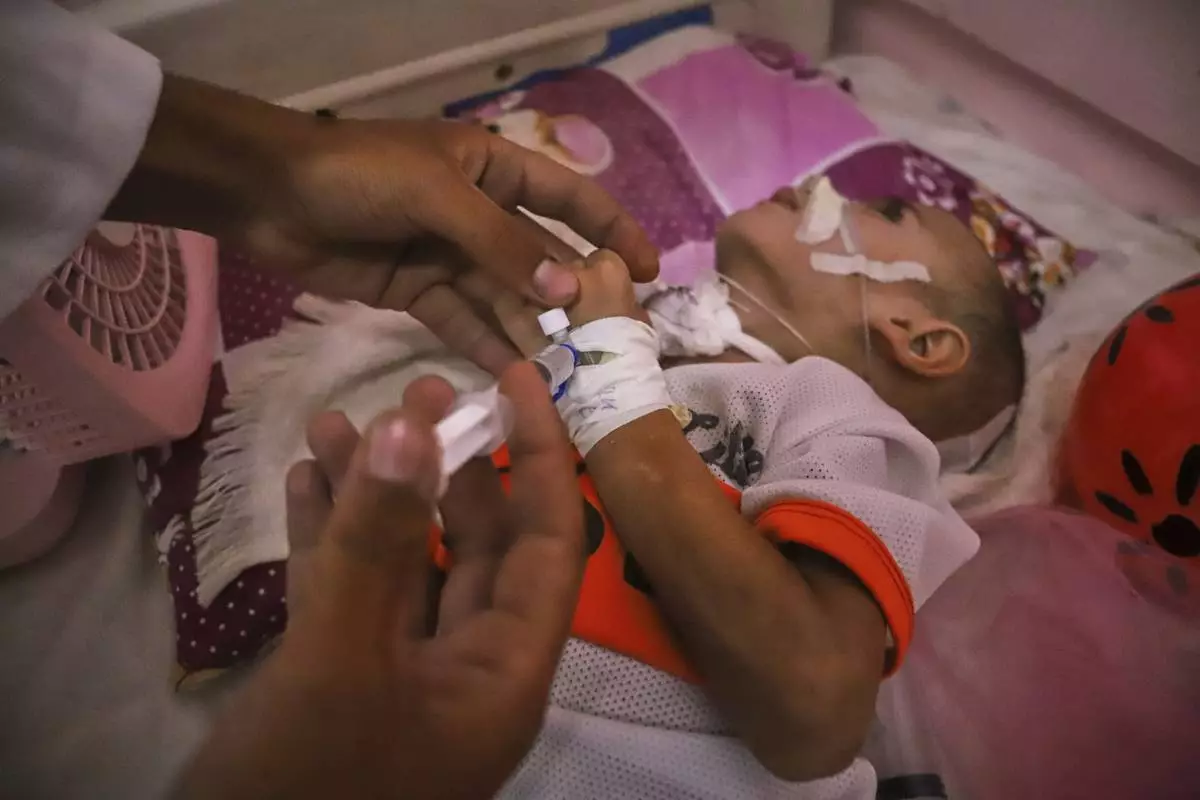
A doctor administers medication to 3-year-old Amr al-Hams, who lies in a hospital bed with brain damage caused by an Israeli strike on his family's tent in April, at Nasser Hospital in Khan Younis, Gaza Strip, Wednesday, June 25, 2025. (AP Photo/Mariam Dagga)
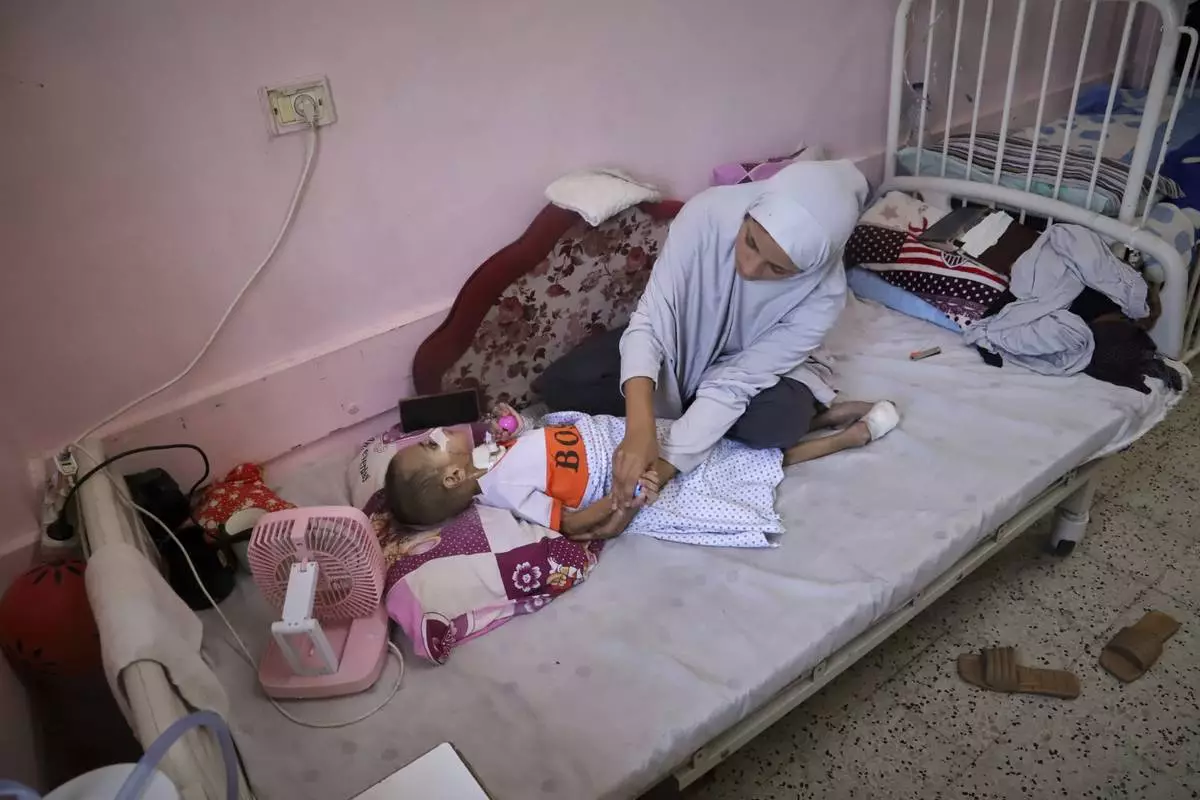
Nour al-Hams cares for her 3-year-old nephew, Amr al-Hams, who lies in a hospital bed with brain damage caused by an Israeli strike on his family's tent in April, at Nasser Hospital in Khan Younis, Gaza Strip, Wednesday, June 25, 2025. (AP Photo/Mariam Dagga)
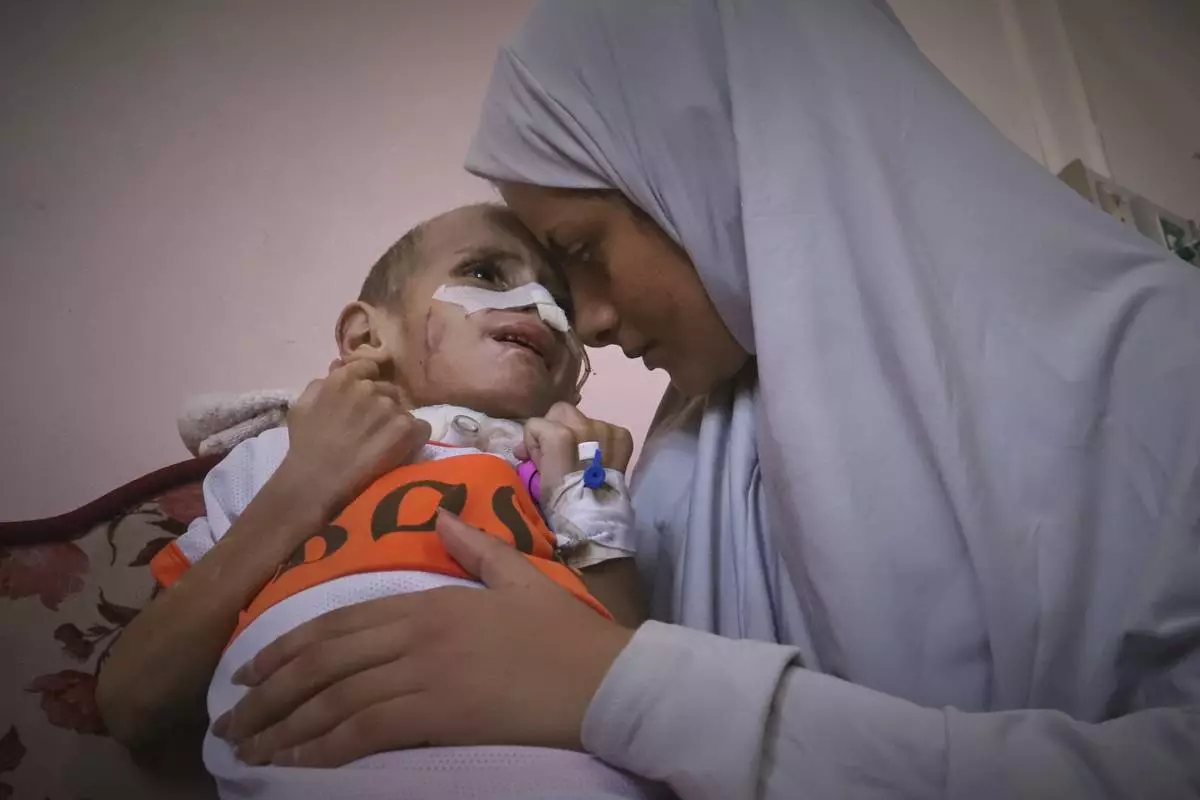
Nour al-Hams holds her 3-year-old nephew, Amr al-Hams, who lies in a hospital bed with brain damage caused by an Israeli strike on his family's tent in April, at Nasser Hospital in Khan Younis, Gaza Strip, Wednesday, June 25, 2025. (AP Photo/Mariam Dagga)
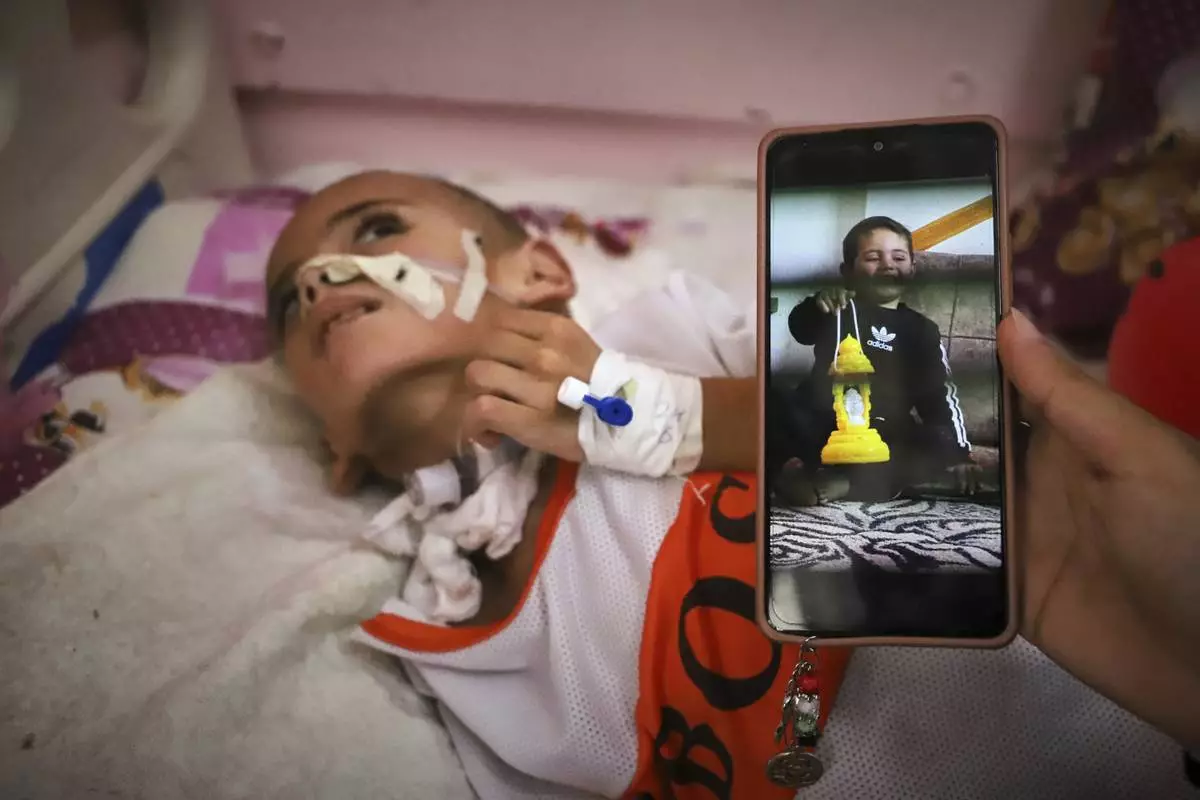
An old photo of 3-year-old Amr al-Hams is displayed on a phone as he lies in a hospital bed with brain damage caused by an Israeli strike on his family's tent in April, at Nasser Hospital in Khan Younis, Gaza Strip, Wednesday, June 25, 2025. (AP Photo/Mariam Dagga)
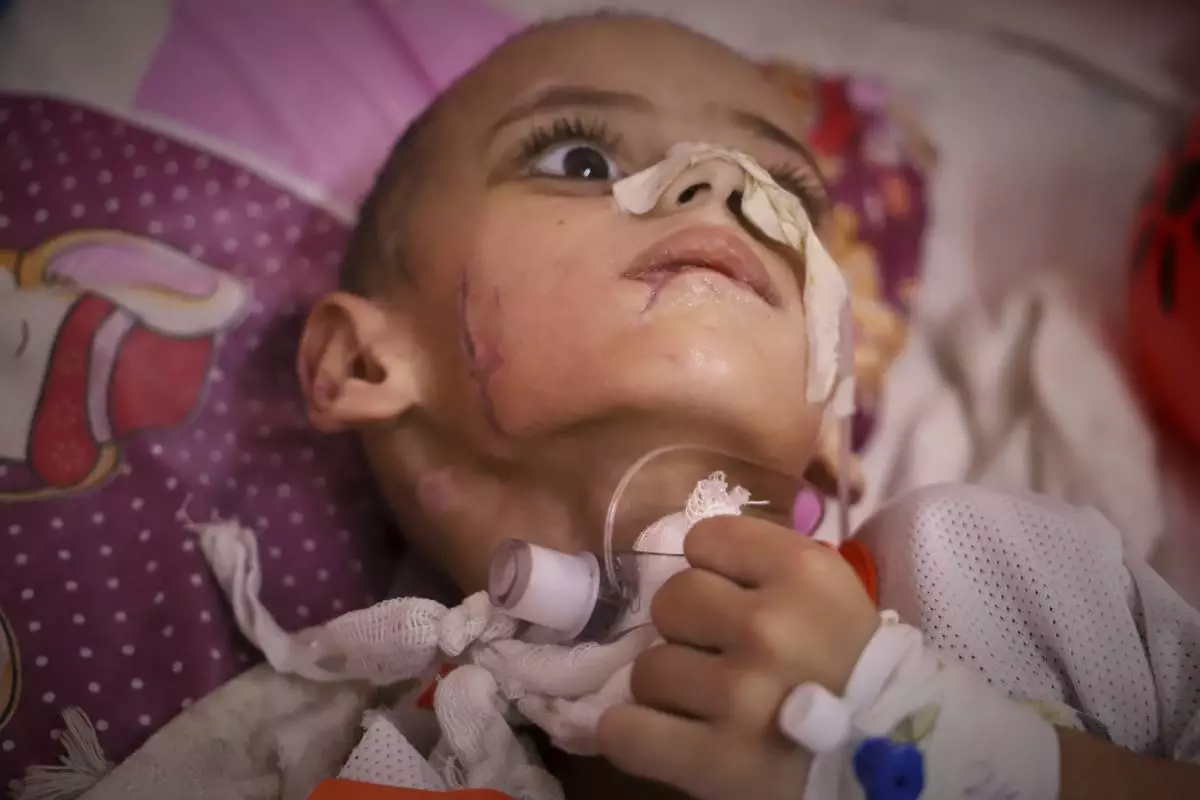
Three-year-old Amr al-Hams, who has brain damage caused by an Israeli strike on his family's tent in April, lies in a bed at Nasser Hospital in Khan Younis, Gaza Strip, Wednesday, June 25, 2025. (AP Photo/Mariam Dagga)
MINNEAPOLIS (AP) — Hennepin County Attorney Mary Moriarty on Friday called on members of the public to send any video or other evidence in the fatal shooting of Renee Good directly to her office, challenging the Trump administration's decision to leave the investigation solely to the FBI.
Moriarty said that although her office has collaborated effectively with the FBI in past cases, she is concerned by the Trump administration's decision to bar state and local agencies from playing any role in the investigation into Wednesday's killing of Good by an Immigration and Customs Enforcement officer in Minneapolis.
She also said that despite the Trump administration’s insistence that the officer who shot Good has complete legal immunity, that isn’t the case.
“We do have jurisdiction to make this decision with what happened in this case,” she said at a news conference. “It does not matter that it was a federal law enforcement agent.”
Moriarty said her office would post a link for the public to submit footage of the shooting, even though she acknowledged that she wasn't sure what legal outcome submissions might produce.
The prosecutor's announcement came on a third day of Minneapolis protests over Good's killing and a day after federal immigration officers shot and wounded two people in Portland, Oregon.
Good's wife, Becca Good, released a statement to Minnesota Public Radio on Friday saying, “kindness radiated out of her.”
"On Wednesday, January 7th, we stopped to support our neighbors. We had whistles. They had guns," Becca Good said.
“I am now left to raise our son and to continue teaching him, as Renee believed, that there are people building a better world for him,” she wrote. “That the people who did this had fear and anger in their hearts, and we need to show them a better way.”
The reaction to the Good's shooting was immediate in the city where police killed George Floyd in 2020, with hundreds of protesters converging on the shooting scene and the school district canceling classes for the rest of the week as a precaution.
On Thursday night, hundreds marched in freezing rain down one of Minneapolis’ major thoroughfares, chanting “ICE out now!” and holding signs saying, “Killer ice off our streets." And on Friday, protesters were out again demonstrating outside of a federal facility that is serving as a hub for the immigration crackdown that began Tuesday in the Twin Cities of Minneapolis and St. Paul. Authorities erected barricades outside the facility Friday.
City workers, meanwhile, removed makeshift barricades made of old Christmas trees and other debris that had been blocking the streets near the scene of Good's shooting. Officials said they would leave up a shrine to the 37-year-old mother of three.
The Portland shootings happened outside a hospital Thursday afternoon. Federal immigration officers shot and wounded a man and woman, identified by the Department of Homeland Security as Venezuela nationals Luis David Nico Moncada and Yorlenys Betzabeth Zambrano-Contreras, who were inside a vehicle, and their conditions weren't immediately known. The FBI and the Oregon Department of Justice were investigating.
Portland Mayor Keith Wilson and the city council called on ICE to end all operations in the city until a full investigation is completed. Hundreds protested Thursday night at a local ICE building. Early Friday, Portland police reported that officers had arrested several protesters after asking the to get out of a street to allow traffic to flow.
Just as it did following Good's shooting, DHS defended the actions of the officers in Portland, saying it occurred after a Venezuelan man with alleged gang ties and who was involved in a recent shooting tried to “weaponize” his vehicle to hit the officers. It wasn't immediately clear if the shootings were captured on video, as Good's was.
The Minneapolis shooting happened on the second day of the immigration crackdown in the Twin Cities, which Homeland Security said is the biggest immigration enforcement operation ever. More than 2,000 officers are taking part and Noem said they have made more than 1,500 arrests.
The government is also shifting immigration officers to Minneapolis from sweeps in Louisiana, according to documents obtained by The Associated Press. This represents a pivot, as the Louisiana crackdown that began in December had been expected to last into February.
Good's death — at least the fifth tied to immigration sweeps since Trump took office — has resonated far beyond Minneapolis, as protests happening in other places, including Texas, California, Detroit and Missouri.
In Washington, D.C., on Thursday, a woman held a sign that said, “Stop Trump’s Gestapo,” as hundreds of people marched to the White House. Protesters in Pflugerville, Texas, north of Austin, banged on the walls of an ICE facility. And a man in Los Angeles burned an American flag in front of federal detention center.
Homeland Security Secretary Kristi Noem, President Donald Trump and others in his administration have repeatedly characterized the Minneapolis shooting as an act of self-defense and cast Good as a villain, suggesting she used her vehicle as a weapon to attack the officer who shot her.
But state and local officials and protesters rejected that characterization, with Minneapolis Mayor Jacob Frey saying videos show the self-defense argument is “garbage.”
Several bystanders captured footage of Good's killing, which happened in a neighborhood south of downtown.
The recordings show an officer approaching an SUV stopped across the middle of the road, demanding the driver open the door and grabbing the handle. The Honda Pilot begins to pull forward and a different ICE officer standing in front of it pulls his weapon and immediately fires at least two shots at close range, jumping back as the vehicle moves toward him.
It is not clear from the videos if the vehicle makes contact with the officer, and there is no indication of whether the woman had interactions with agents earlier. After the shooting, the SUV speeds into two cars parked on a curb before crashing to a stop.
The federal agent who fatally shot Good is an Iraq War veteran who has served for nearly two decades in the Border Patrol and ICE, according to records obtained by AP.
Noem has not publicly named him, but a Homeland Security spokesperson said her description of his injuries last summer refers to an incident in Bloomington, Minnesota, in which court documents identify him as Jonathan Ross.
Ross got his arm stuck in the window of a vehicle whose driver was fleeing arrest on an immigration violation. Ross was dragged and fired his Taser. A jury found the driver guilty of assaulting a federal officer with a dangerous weapon.
Attempts to reach Ross, 43, at phone numbers and email addresses associated with him were not successful.
Associated Press reporters Steve Karnowski and Mark Vancleave in Minneapolis; Ed White in Detroit; Valerie Gonzalez in Brownsville, Texas; Graham Lee Brewer in Norman, Oklahoma; Michael Biesecker in Washington; Jim Mustian and Safiyah Riddle in New York; Ryan Foley in Iowa City, Iowa; and Hallie Golden in Seattle contributed to this report.
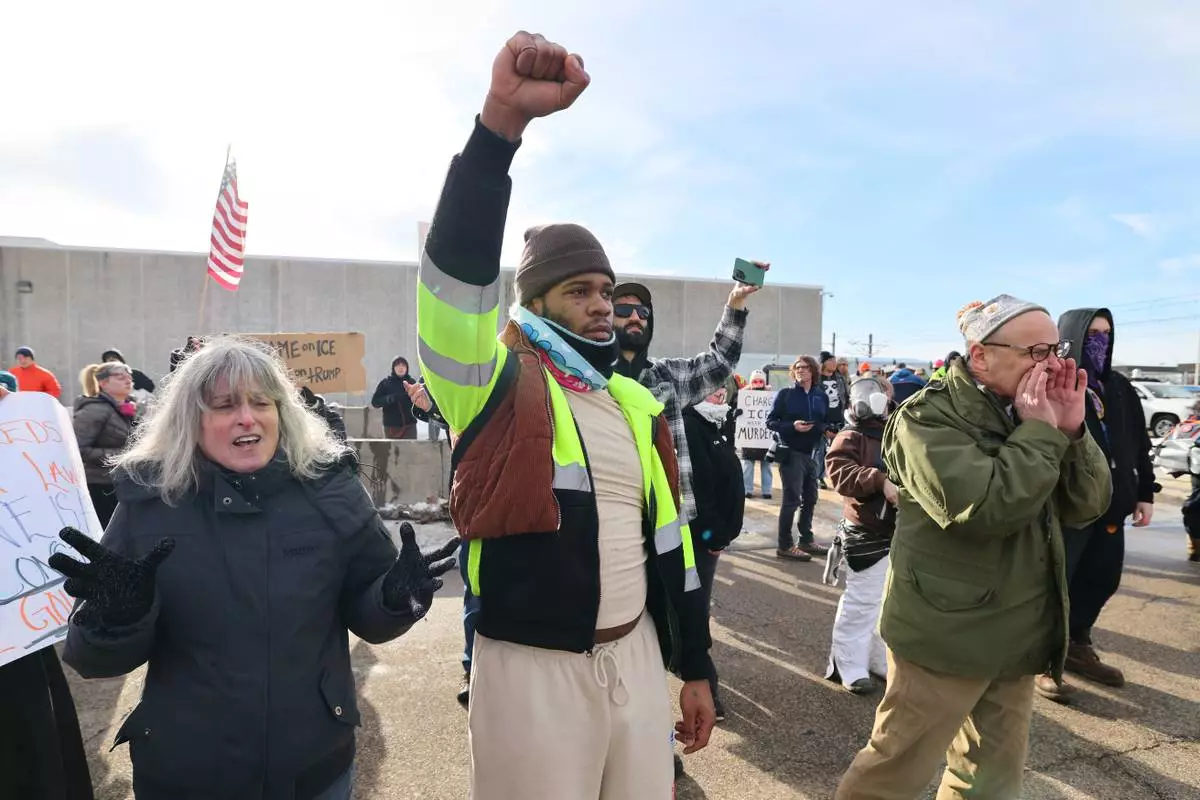
Protesters confront law enforcement outside the Bishop Henry Whipple Federal Building in Minneapolis, Friday, Jan. 9, 2026.(AP Photo/Adam Bettcher)
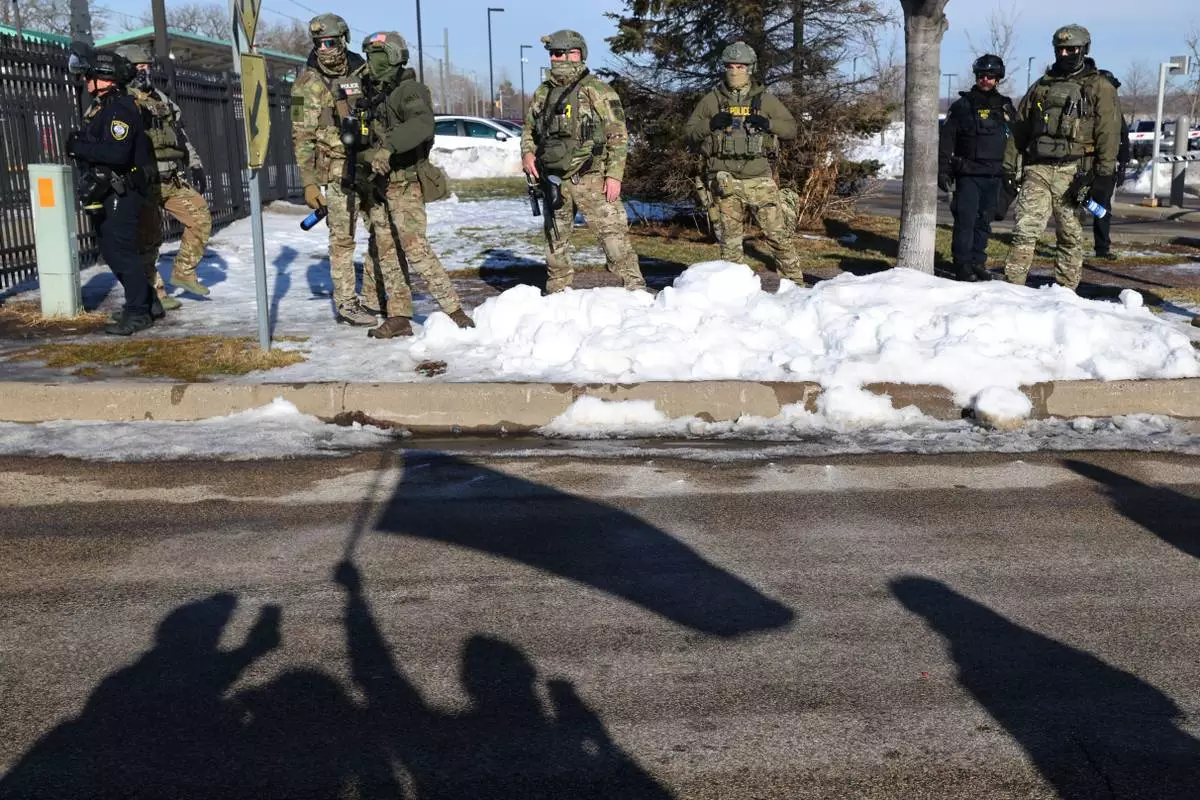
Protesters' shadows are cast on the street near law enforcement outside the Bishop Henry Whipple Federal Building in Minneapolis, Friday, Jan. 9, 2026. (AP Photo/Adam Bettcher)
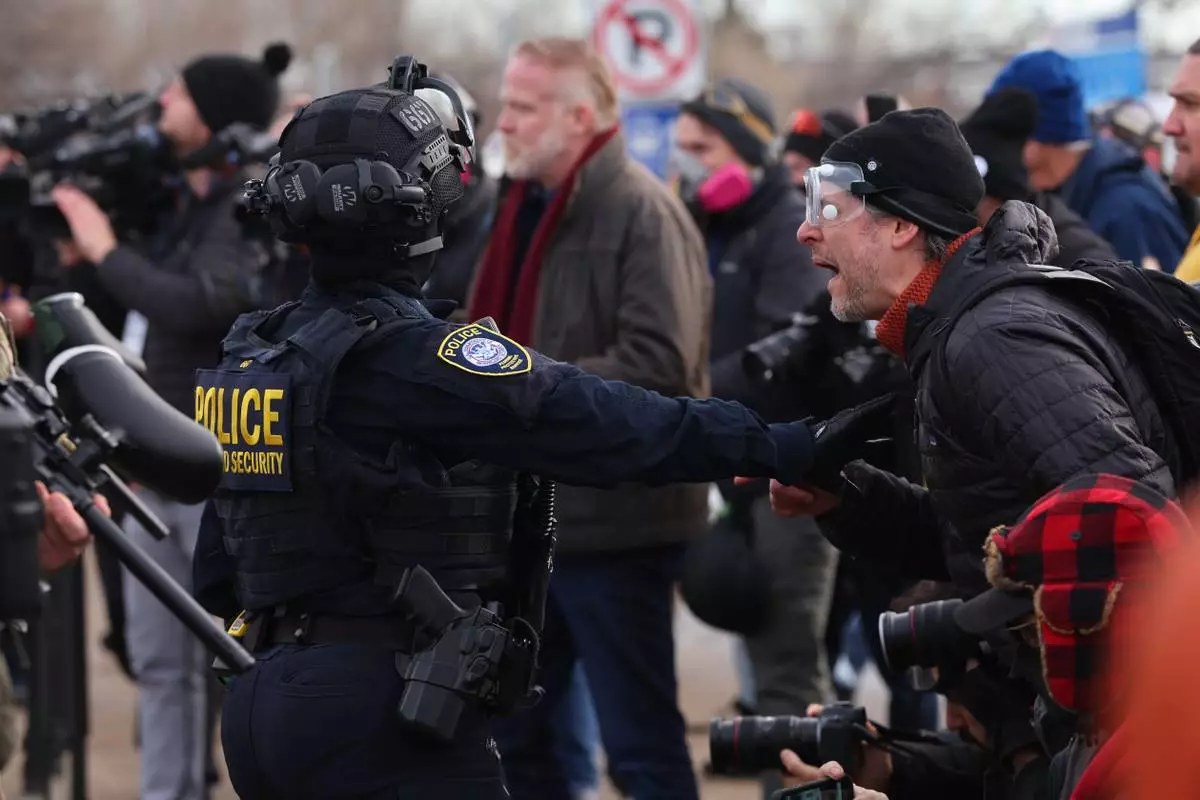
Protesters confront law enforcement outside the Bishop Henry Whipple Federal Building in Minneapolis, Friday, Jan. 9, 2026.(AP Photo/Adam Bettcher)
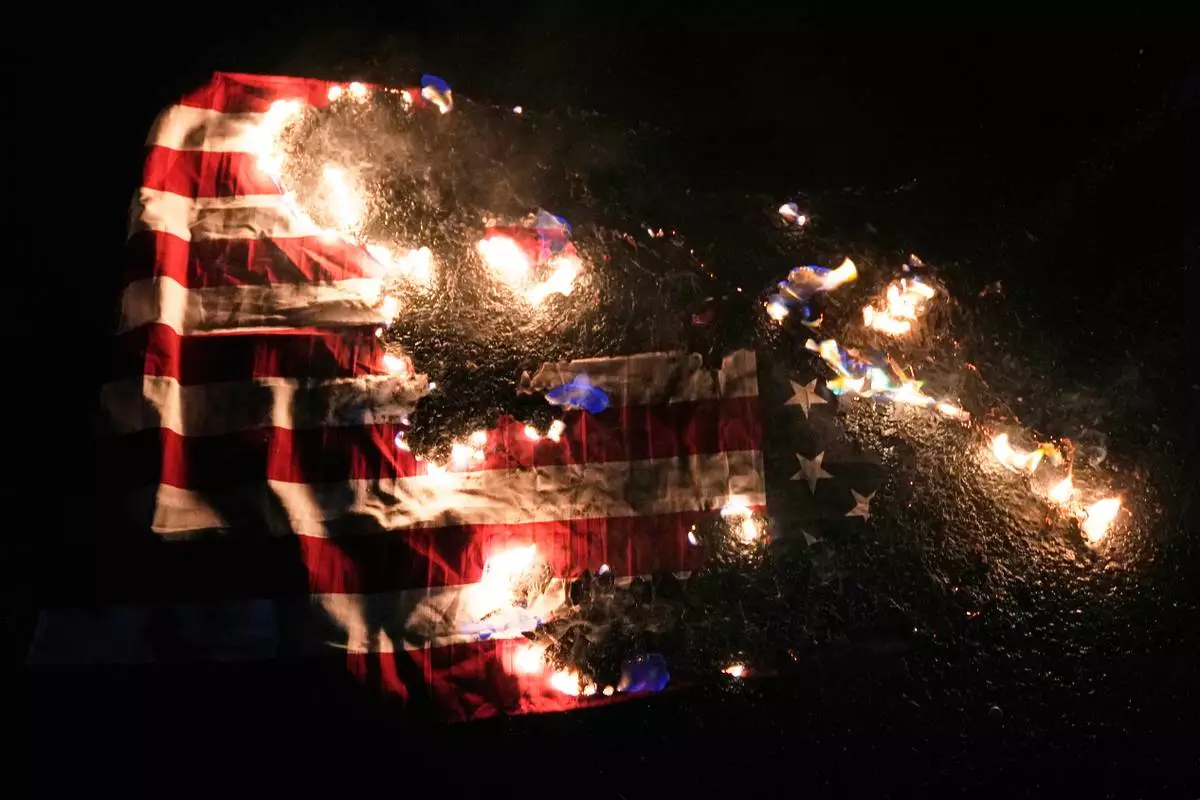
An American flag burns outside the U.S. Immigration and Customs Enforcement facility on Thursday, Jan. 8, 2026, in Portland, Ore. (AP Photo/Jenny Kane)
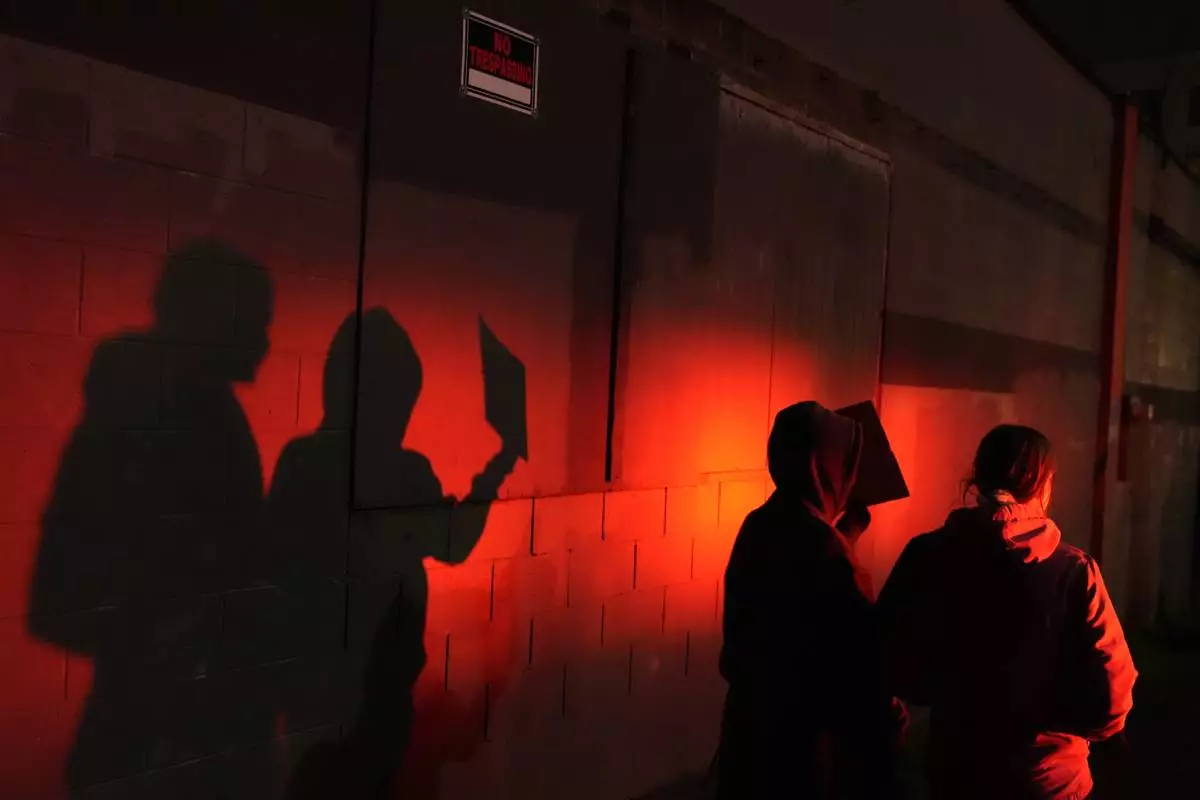
Two protesters are lit by a police light as they walk outside the U.S. Immigration and Customs Enforcement facility on Thursday, Jan. 8, 2026, in Portland, Ore. (AP Photo/Jenny Kane)
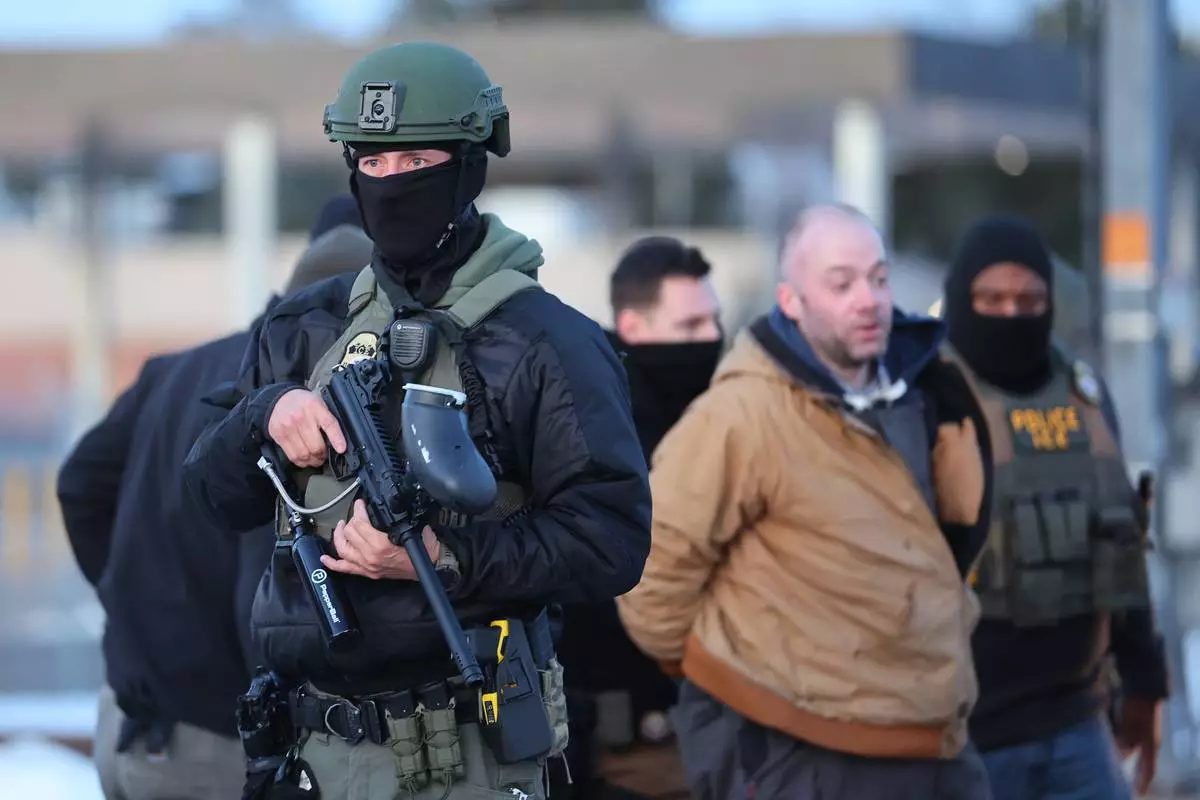
Protesters are arrested by federal agents outside the Bishop Henry Whipple Federal Building in Minneapolis, Friday, Jan. 9, 2026. (AP Photo/Adam Bettcher)
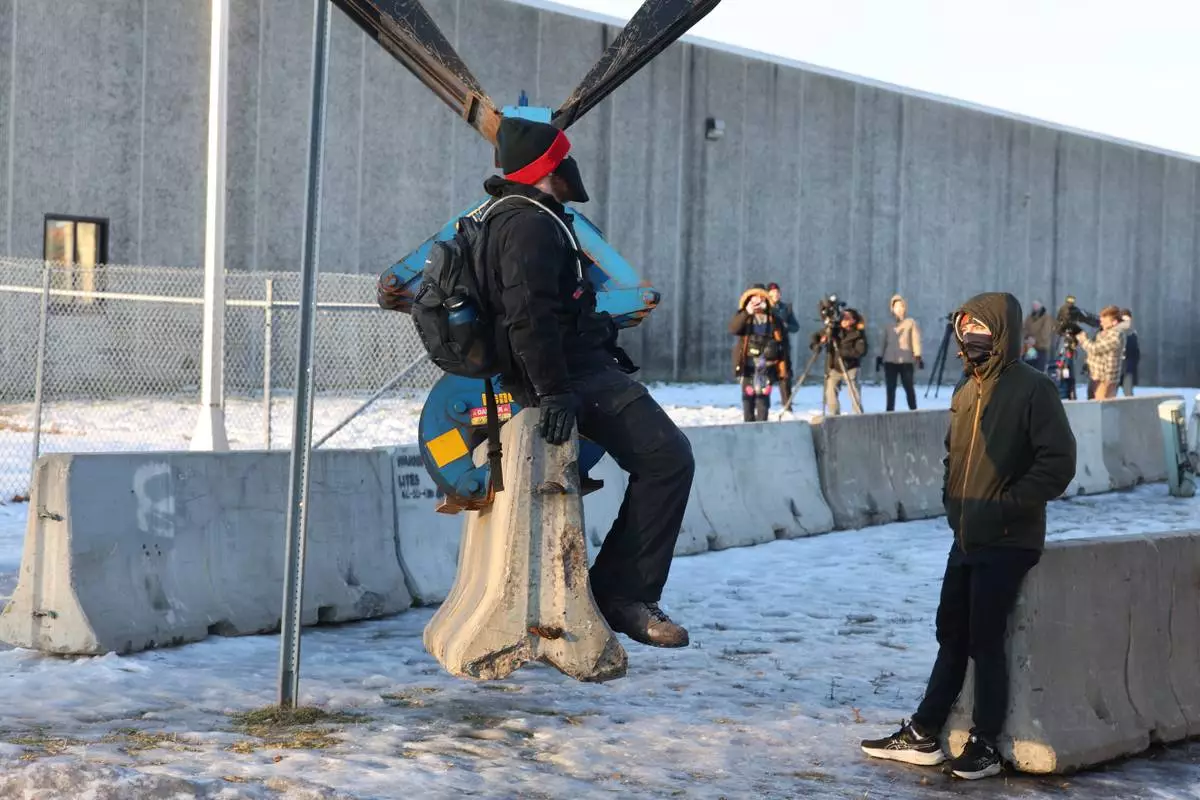
Protesters sit on a barrier that is being assembled outside the Bishop Henry Whipple Federal Building as protesters gather in Minneapolis, Friday, Jan. 9, 2026. (AP Photo/Adam Bettcher)
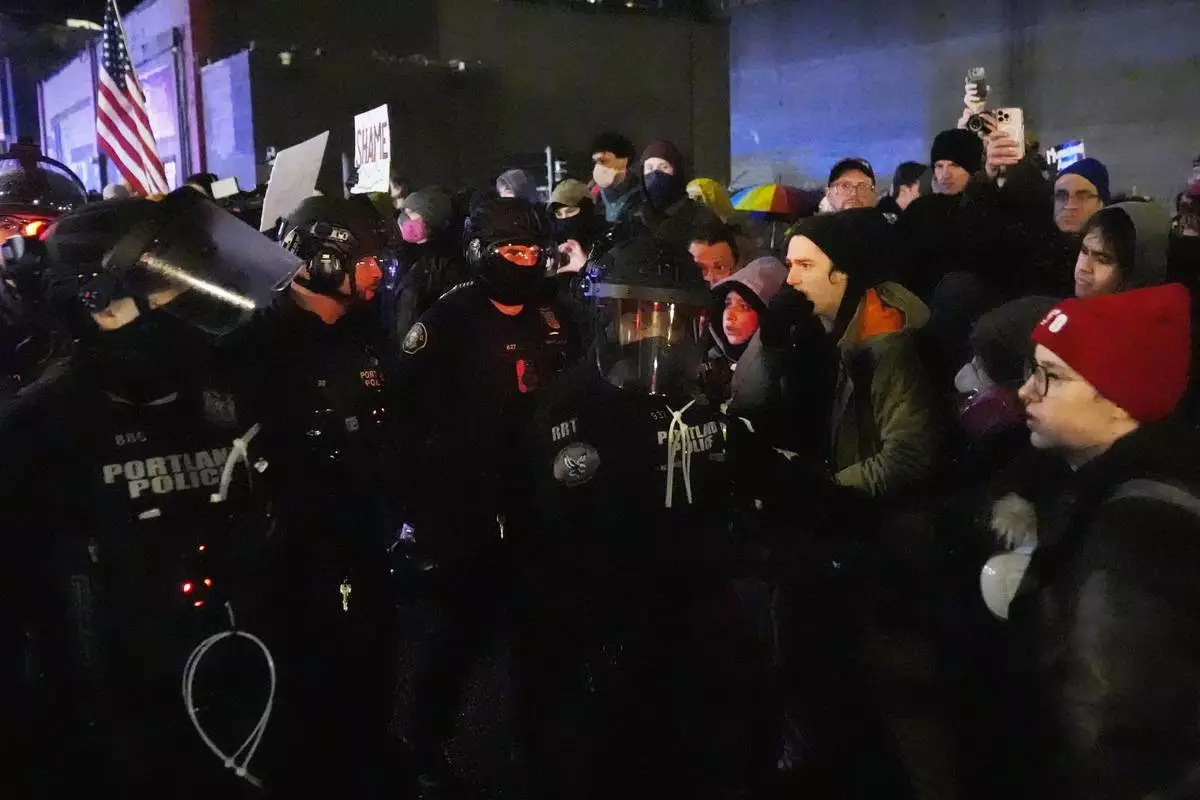
Protesters stand off against law enforcement outside the U.S. Immigration and Customs Enforcement facility in Portland, Ore., Thursday, Jan. 8, 2026. (AP Photo/Jenny Kane)
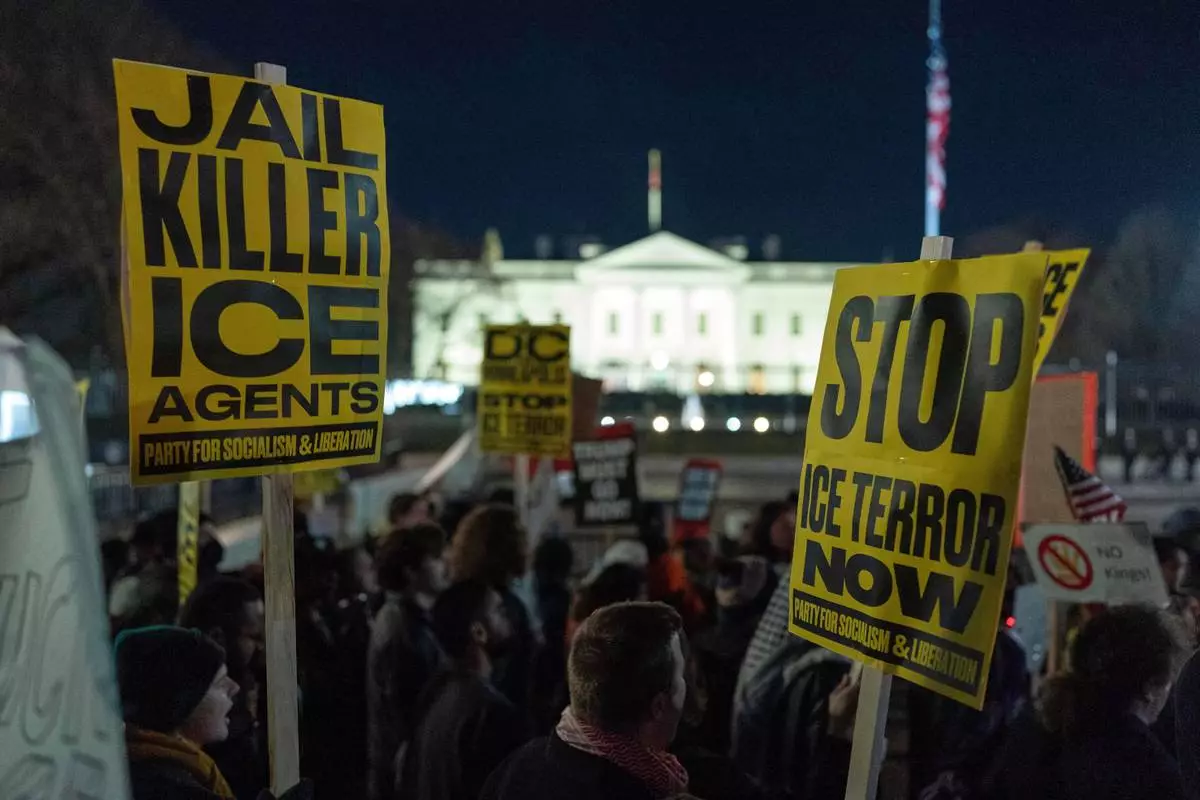
Demonstrators protest outside the White House in Washington, Thursday, Jan. 8, 2026, against the Immigration and Customs Enforcement (ICE) agent who fatally shot Renee Nicole Good in Minneapolis. (AP Photo/Jose Luis Magana)
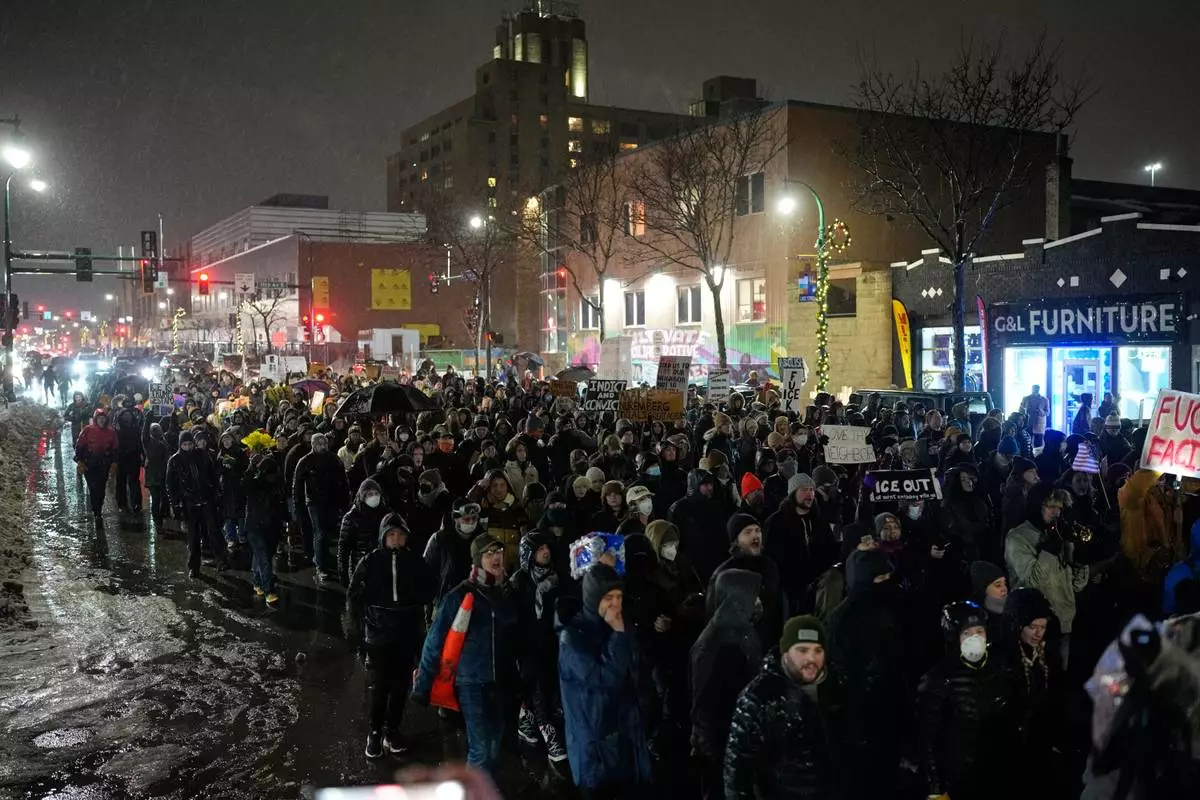
Protesters chant and march during a rally for Renee Good, who was fatally shot by an ICE officer the day before, Thursday, Jan. 8, 2026, in Minneapolis. (AP Photo/John Locher)
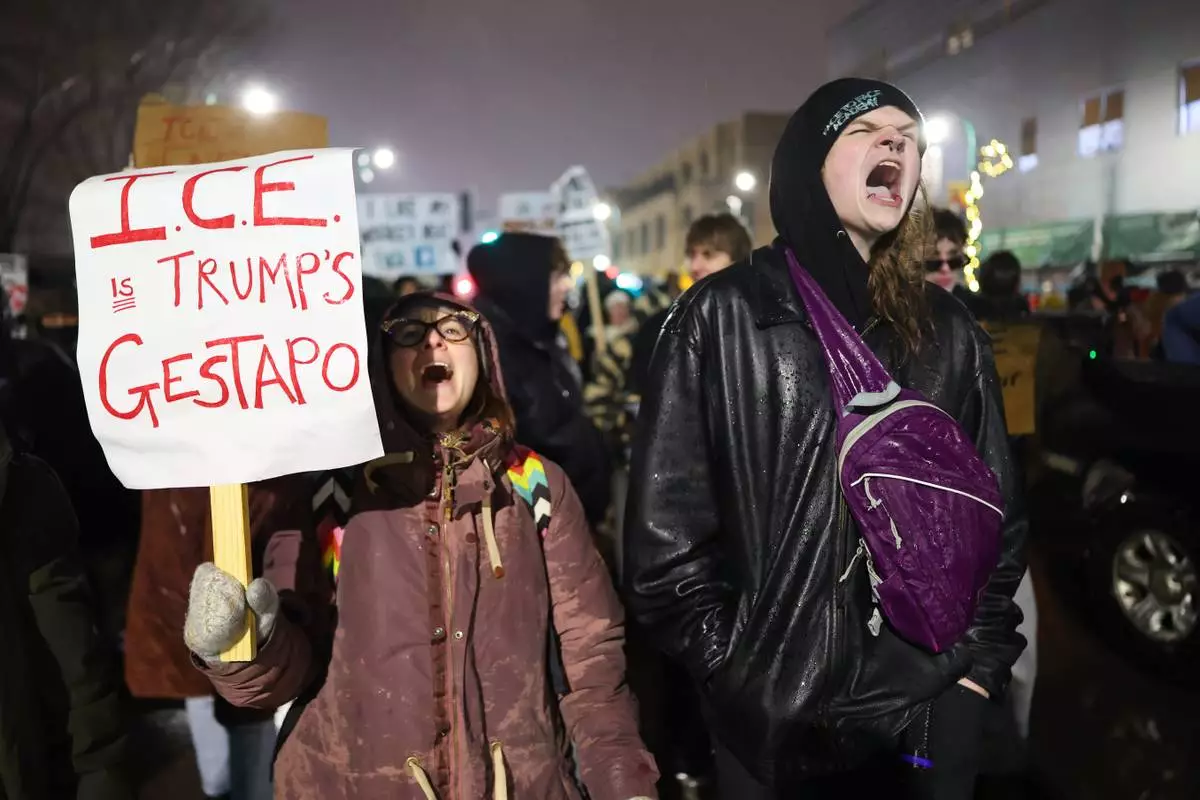
Protesters gather during a rally for Renee Good, Thursday, Jan. 8, 2026, in Minneapolis, after she was fatally shot by an ICE officer the day before. (AP Photo/Adam Bettcher)
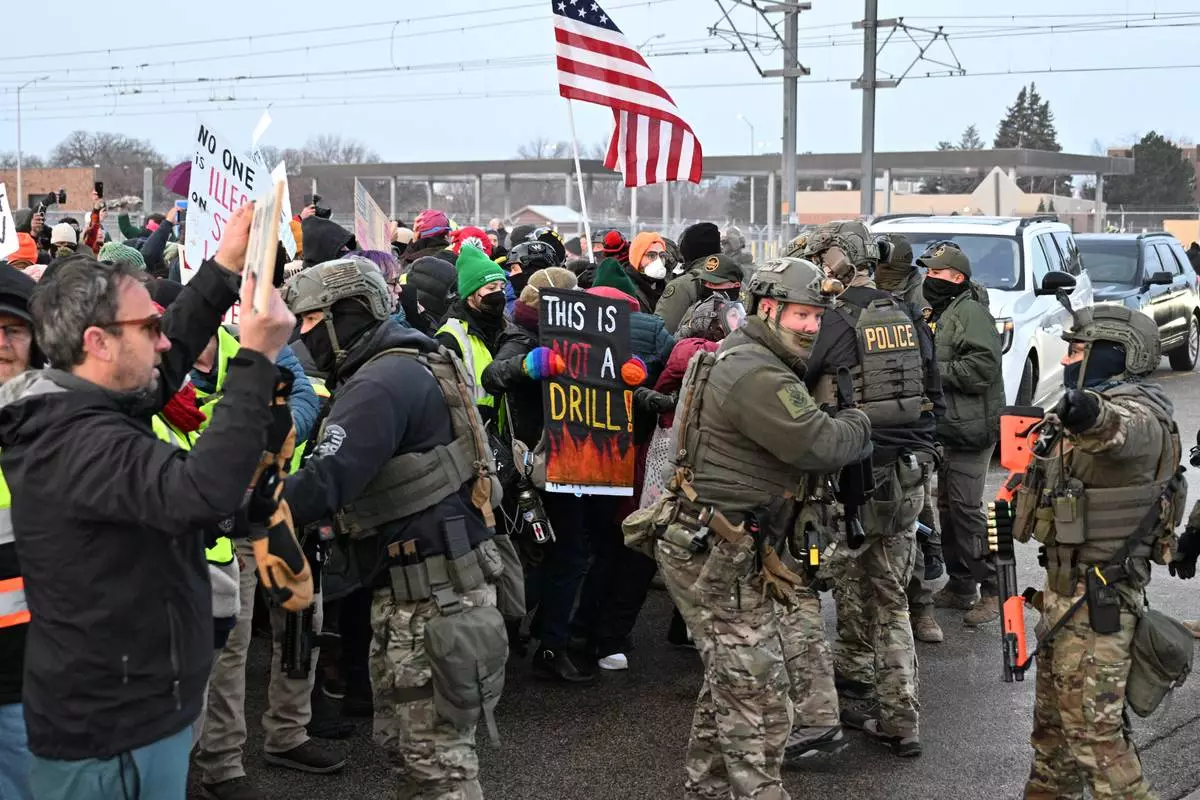
Protesters confront federal agents outside the Bishop Henry Whipple Federal Building, Thursday, Jan. 8, 2026, in Minneapolis, Minn. (AP Photo/Tom Baker)
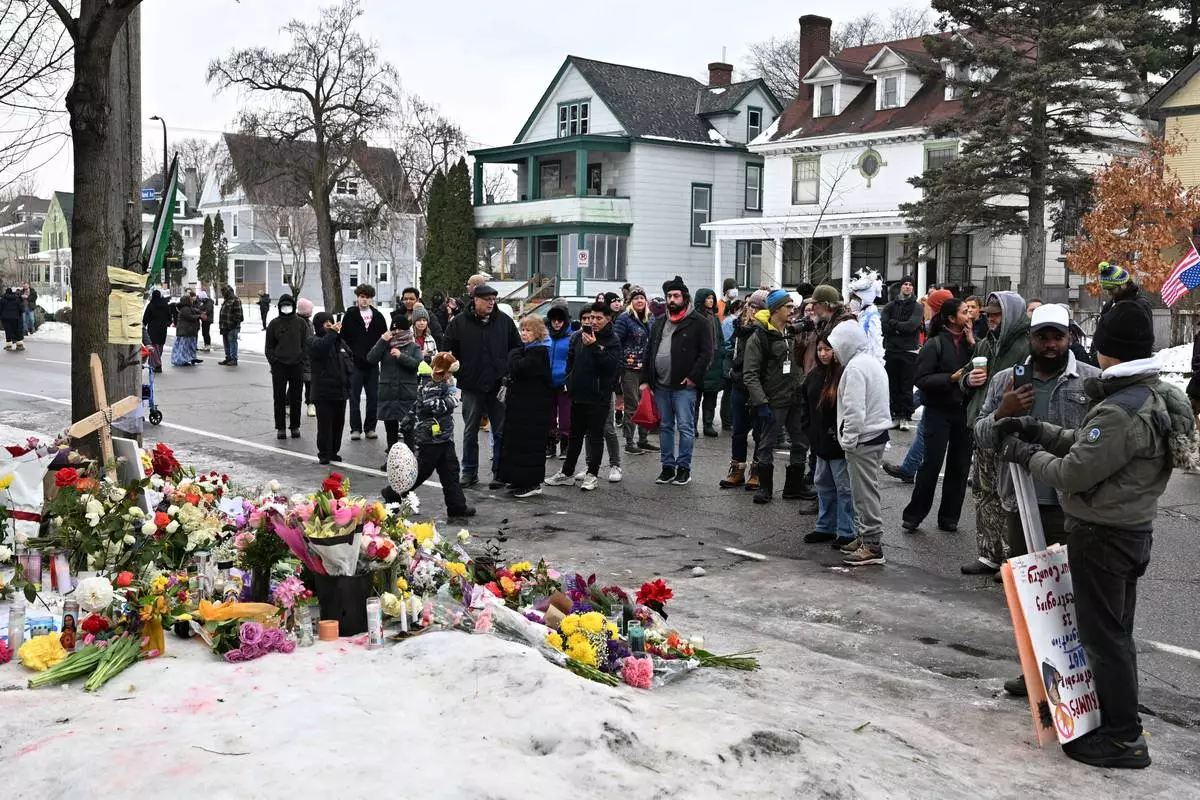
People gather around a makeshift memorial honoring the victim of a fatal shooting involving federal law enforcement agents, near the site of the shooting, Thursday, Jan. 8, 2026, in Minneapolis. (AP Photo/Tom Baker)
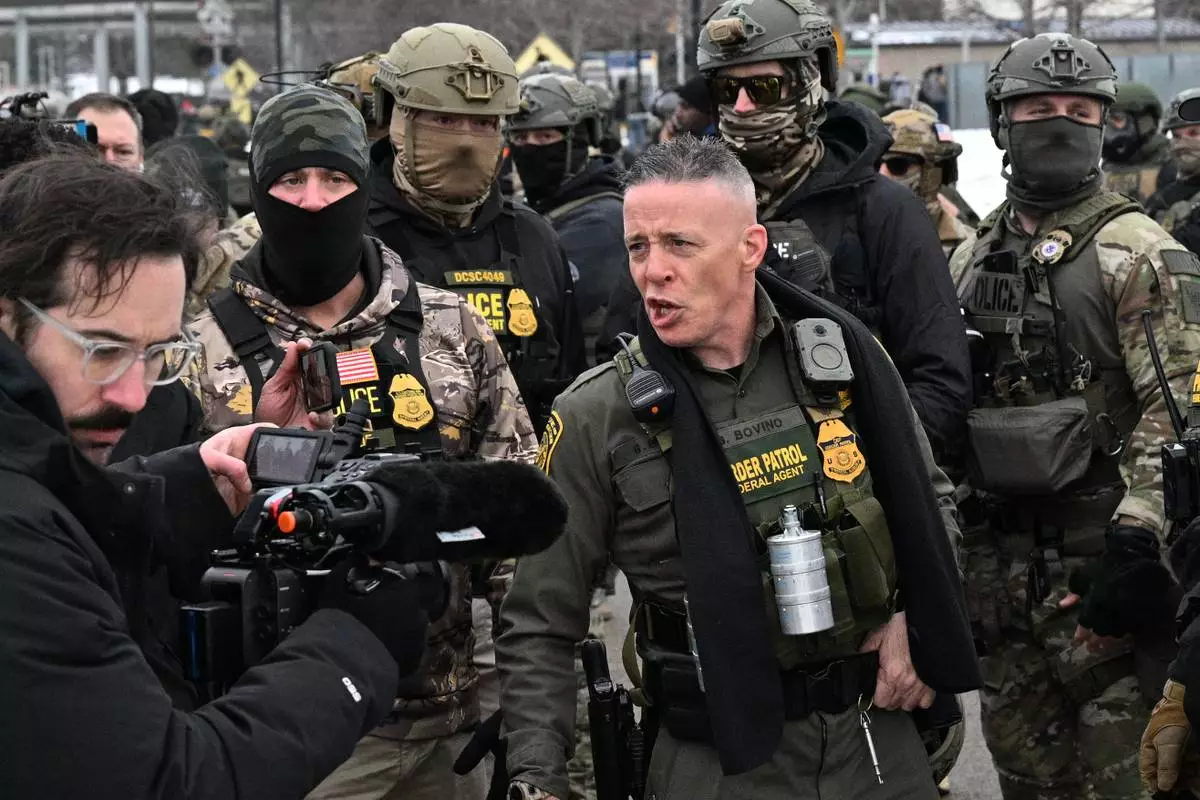
U.S. Border Patrol Cmdr. Gregory Bovino arrives as protesters gather outside the Bishop Henry Whipple Federal Building, Thursday, Jan. 8, 2026, in Minneapolis, Minn. (AP Photo/Tom Baker)
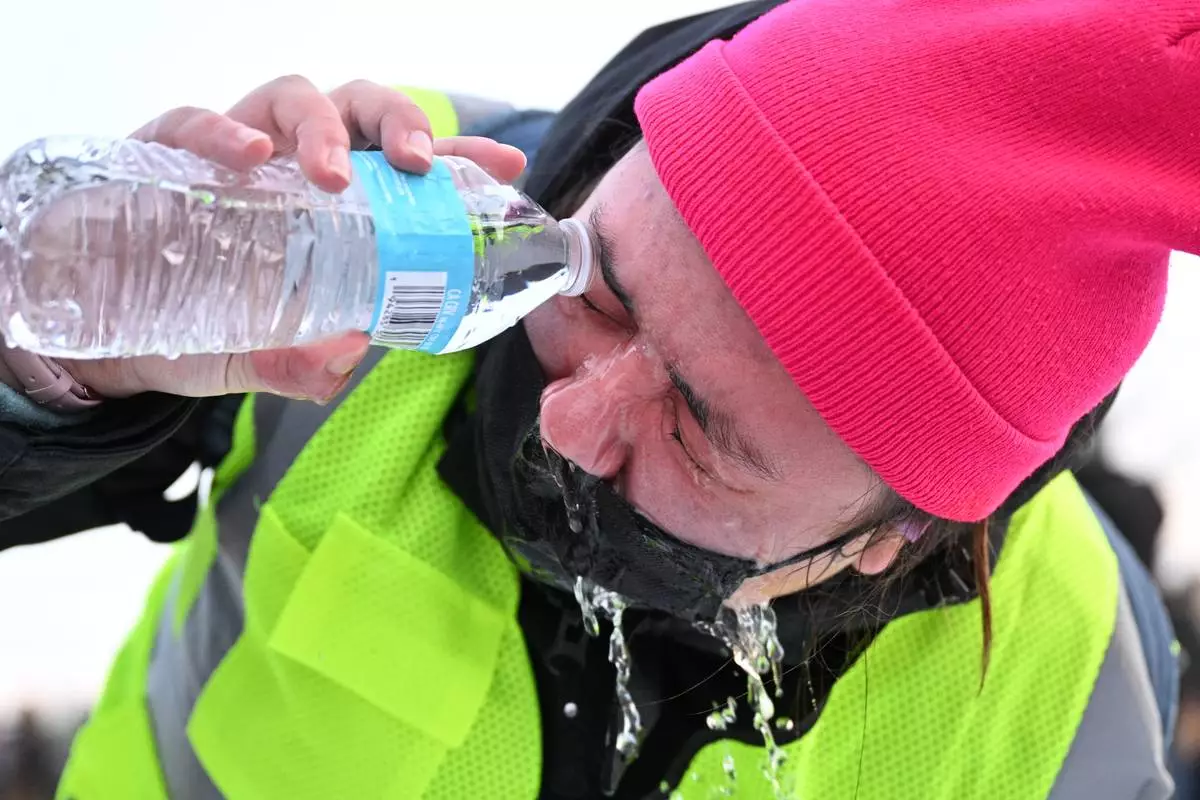
A protester pours water in their eye after confronting law enforcement outside the Bishop Henry Whipple Federal Building, Thursday, Jan. 8, 2026, in Minneapolis, Minn. (AP Photo/Tom Baker)
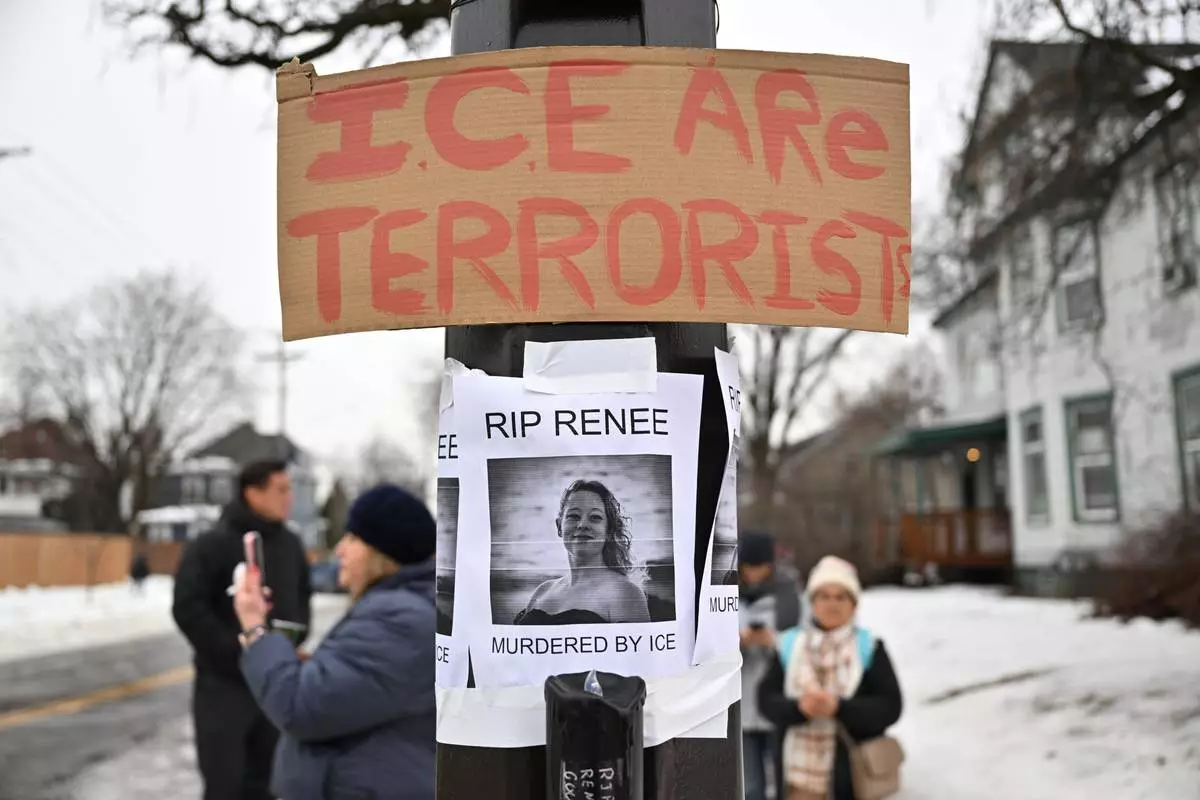
People gather around a makeshift memorial honoring the victim of a fatal shooting involving federal law enforcement agents, near the site of the shooting, Thursday, Jan. 8, 2026, in Minneapolis. (AP Photo/Tom Baker)