Senegal is making full preparations to host Africa's first Olympic event with crucial support from China, and the country is expecting more cultural and sports cooperation with China, said Senegalese Prime Minister Ousmane Sonko.
The 4th Summer Youth Olympic Games (YOG) will take place from Oct 31 to Nov 13, 2026 in Dakar, capital of Senegal, bringing together the world's best young athletes for the first Olympic sporting event to be held on African soil, according to the International Olympics Committee (IOC).
In an interview with China Media Group (CMG) released on Friday, Sonko, who was in China for the 2025 Summer Davos, said all preparatory work is currently progressing in an orderly manner and highlighted China's support and cooperation.
"Senegal is making every effort to prepare for the Youth Olympic Games. Although we faced many difficulties at the beginning, the preparations are now proceeding in an orderly manner, and some of the projects benefited from the support and cooperation of China. I would like to thank China for providing nearly 90 training places for Senegalese athletes, allowing them to have two months of training in China. As the host country, we hope that Senegal can win as many medals as possible in this event. We also look forward to Chinese athletes performing well and showing their style in this event," said Sonko.
The prime minister expressed his sincere hope that this ground-breaking event would become an opportunity to inject new connotations and vitality into the cultural and sports cooperation between Senegal and China.
"I think there are more similarities between Senegalese and Chinese cultures than expected. We did not feel strange when we were in China. When we interacted with Chinese friends, we often felt a kind of intimacy and resonance. This cultural fit also laid a good humanistic foundation for the deepening of cooperation between the two sides. Many Senegalese students went to China for further studies, learning knowledge in many fields such as agriculture and emerging technologies. Chinese martial arts have a broad mass base in Senegal and are very popular. We hope to inject new connotations and vitality into the cultural and sports cooperation between Senegal and China," he said.

Senegal to host Africa's first Olympic event with China's support: PM
International guests who have dedicated their lives to historical truth joined China's 12th national memorial event honoring the hundreds of thousands of victims killed by Japanese troops in the Nanjing Massacre during World War II.
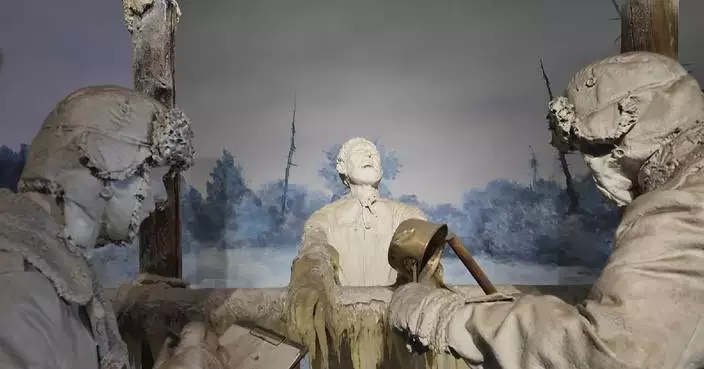
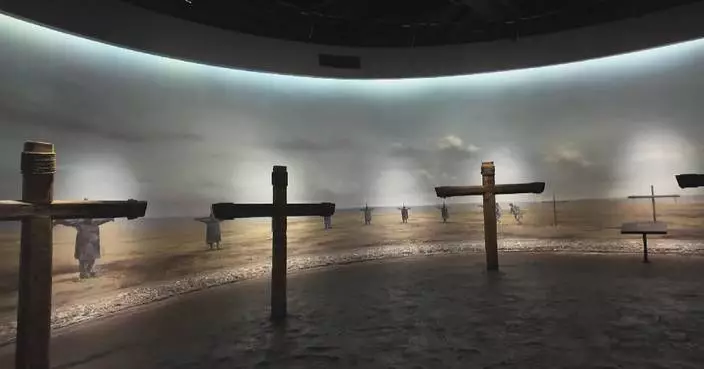
The memorial was held on Saturday at the public square of the Memorial Hall of the Victims in Nanjing Massacre by Japanese Invaders in Nanjing, capital of east China's Jiangsu Province. China's national flag was flown at half-mast in the presence the crowd that included survivors of the massacre, local students, and international guests.
In one of the most barbaric episodes during WWII, the Nanjing Massacre took place when Japanese troops captured the then-Chinese capital Nanjing on Dec 13, 1937. Over the course of six weeks, they proceeded to kill approximately 300,000 Chinese civilians and unarmed soldiers.
Joining the crowd was Christoph Reinhardt, the great-grandson of John Rabe (1882-1950) who was then a representative of German conglomerate Siemens in the war-ravaged Nanjing. During the Nanjing Massacre, Rabe set up an international safety zone with other foreigners, and they together saved the lives of around 250,000 Chinese people between 1937 and 1938 from the Japanese invaders.
Throughout the massacre, Rabe continued to keep a diary. To this day, all his pages remain one of the most comprehensive historical records of the atrocities committed by the Japanese aggressors.
Sayoko Yamauchi, who was also in the crowd of mourners, arrived in Nanjing on Friday from Japan's Osaka to attend Saturday's ceremony, just as she has done almost every year since China designated Dec 13 as the National Memorial Day for the Victims of the Nanjing Massacre in 2014.
Yamauchi's grandfather was one of the Japanese soldiers who invaded Nanjing in January 1938. However, since first setting foot in Nanjing in 1987, she has dedicated herself to uncovering and spreading the truth about Japan's history of aggression and enlightening the Japanese public about their country's wartime atrocities.
In 2014, ahead of China's first National Memorial Day for the Victims of the Nanjing Massacre, Yamauchi, along with 10 other individuals, received an award for her special contribution to the Memorial Hall of the Victims in the Nanjing Massacre by Japanese Invaders.
By attending the grand memorial event, Reinhardt and Yamauchi both said they hope to convey a message of remembering history and cherishing peace.
"This is my fifth visit to China, and Nanjing, and the third times I visited the ceremony. I have a wish that these survivors survive again and again and again. But my other wish is that the families of the survivors, that they transport the information, the right intention like their ancestors, because anyone must hold a hand (during) this remembering," Reinhardt told China Central Television (CCTV) in an interview before the event began on Saturday.
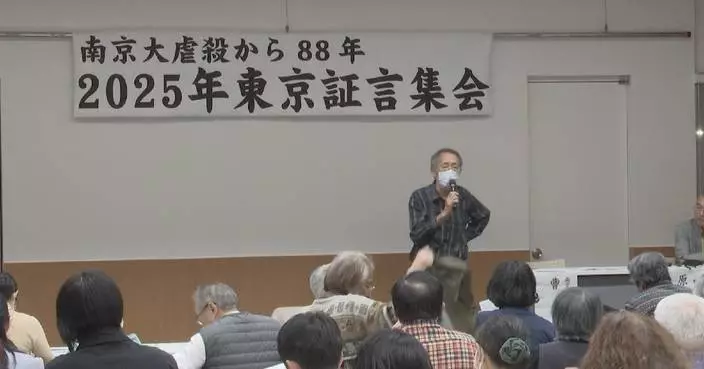
"Our delegation is on its 20th visit to China, coming to Nanjing to express our heartfelt condolences to those who perished 88 years ago, to remember this history, and to reflect on what we can do for a new future. That's why we are here," Yamauchi told CCTV on board the bus that took her to a local hotel in Nanjing on Friday evening.
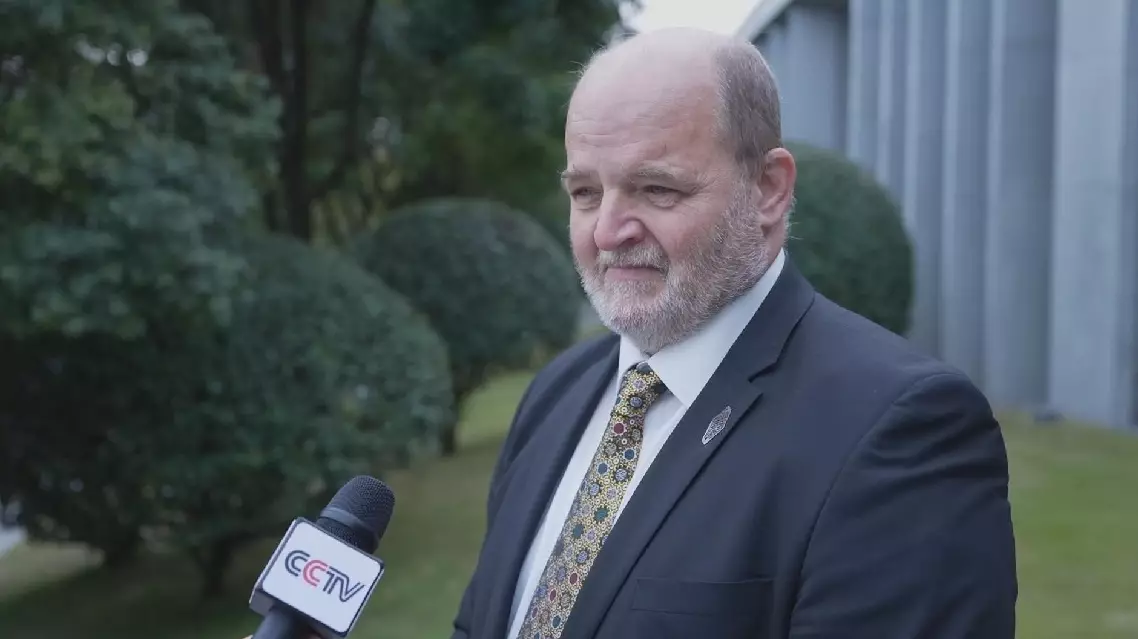
Int'l guests call for remembering history at China's national event honoring Nanjing Massacre victims