A Chilean economist has warned that the country's total salmon export volume of the year will decrease due to U.S. tariff policy.
According to media reports, Chile exported nearly 100,000 tonnes of salmon to the U.S. in the first five months of this year, up 4.2 percent year on year, with total sales surpassing 1.12 billion U.S. dollars.
However, Cristian Andres Delgado, researcher at the School of Economics, Business, and Government at San Sebastian University, warned that the U.S. tariffs have prompted buyers to stockpile salmon in advance, which temporarily boosted shipments but is expected to weigh on exports for the rest of the year.
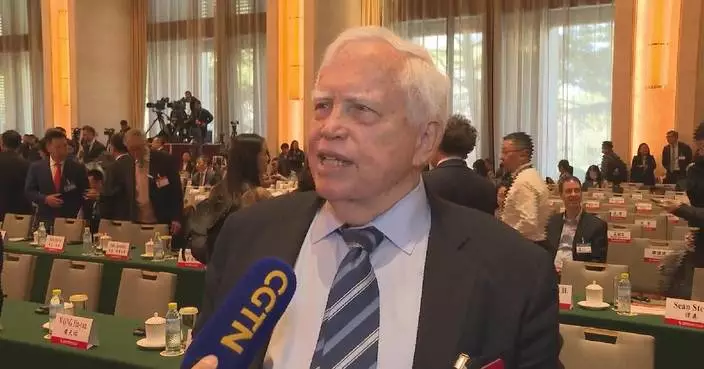
"For [Chile,] the U.S. is a key customer for the salmon industry, accounting for 40 to 50 percent of our exports. [Salmon] is a product with a highly elastic market. So when tariffs [are imposed], it naturally triggers early buying by consumers. But eventually, this leads to a decline in overall export volume. [We estimate that] salmon exports will drop by 10 to 15 percent this year," said Delgado.
According to a study by the San Sebastian University and the industry association SalmonChile in April, 42 percent of Chilean salmon exports are sent to the U.S., accounting for 55 percent of the American salmon market.
The 10-percent tariff announced by the U.S. in April could potentially reduce salmon exports by 571 million U.S. dollars, with a further decrease of 53 million U.S. dollars due to slower global growth, totaling a loss of 623 million U.S. dollars in exports.

Economist warns Chilean salmon exports to shrink due to US tariffs

Economist warns Chilean salmon exports to shrink due to US tariffs
Airstrikes and explosions continued on Sunday, the 23rd day of the U.S.-Israel-Iran conflict, as Iran has warned of broader retaliation if U.S. targets its power facilities.
Explosions were heard in eastern and western Tehran on Sunday night, according to a China Media Group reporter. Footage from the reporter showed that Tehran's air defense system was continuously activating to intercept incoming projectiles.
The reporter also said that the sound of the air defense system in operation was heard in northeastern Tehran on Sunday afternoon.
On Sunday, Iran's primary military command, Khatam al-Anbiya Central Headquarters, issued a statement warning that power plants in countries hosting U.S. bases would be considered legitimate targets if the United States attacks Iran's power facilities.
The statement came in response to remarks by U.S. President Donald Trump threatening to target Iran's power infrastructure, according to Iranian state media Islamic Republic of Iran Broadcasting.
Trump threatened on Saturday to "hit and obliterate" Iranian power plants if the country fails to fully open the Strait of Hormuz within 48 hours.
The Strait of Hormuz has not been fully closed and remains under Iran's "smart control," with non-harmful transit continuing under specific regulations to ensure national security and interests, the statement from Khatam al-Anbiya Central Headquarters said.
If U.S. threats are carried out, Iran would immediately adopt several punitive measures, including the full closure of the Strait of Hormuz until damaged Iranian facilities are rebuilt, it said.
Other measures would include large-scale strikes on Israel's power, energy and communications infrastructure, attacks on regional companies with U.S. capital ties, and targeting power facilities in countries hosting U.S. military bases, the statement said, adding that Iran would take "all necessary measures" to defend its national interests.
On Sunday, Iran's President Masoud Pezeshkian said the Strait of Hormuz is open to all "except those who violate Iran's territory."
The Israel Defense Forces (IDF) said on Sunday that the Israeli military struck Iranian weapons production and storage facilities.
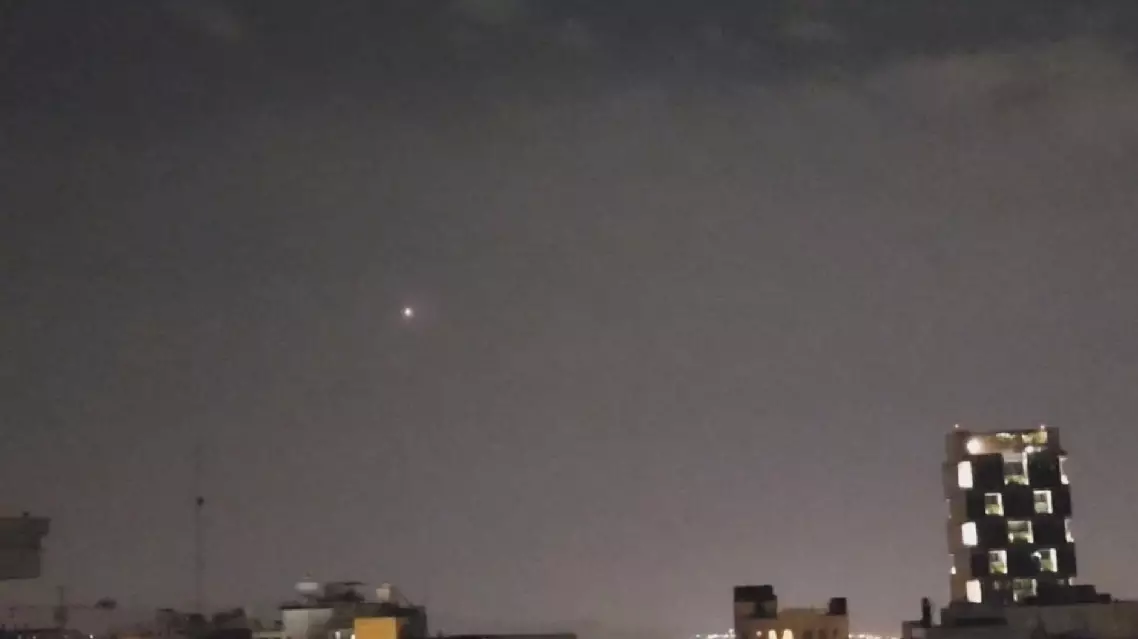
Iran warns of broader retaliation if U.S. targets its power facilities