A ceremony commemorating the 88th anniversary of the beginning of China's whole-nation resistance war against Japanese aggression is going to take place in Beijing on Monday morning.
On July 7, 1937, Japanese troops attacked Chinese forces at the Lugou Bridge, marking the beginning of Japan's full-scale invasion of China and China's whole-nation resistance against the Japanese invaders.
The ceremony, to be held at the Museum of the War of Chinese People's Resistance Against Japanese Aggression, has gathered 600 participants, including descendants of anti-Japanese war generals and martyrs, representatives from universities and secondary schools, government officials and staff, as well as officers and soldiers from Beijing-based military units.
In addition, an exhibition themed "For National Liberation and World Peace" to commemorate the 80th anniversary of the victory in the Chinese People's War of Resistance Against Japanese Aggression and the World Anti-Fascist War will open to the public at the museum on Tuesday.
Spanning 12,000 square meters, the exhibition features 1,525 photographs and 3,237 artifacts, vividly chronicling the Chinese people's 14-year tenacious resistance under the leadership of the Communist Party of China and their monumental contribution to the victory of the World Anti-Fascist War.
Divided into eight sections, the exhibition employs a range of modern display techniques to bring history to life, combining rare artifacts, archival documents, historical footage, artworks, and immersive recreations of key moments.
It will become part of the museum's permanent display.
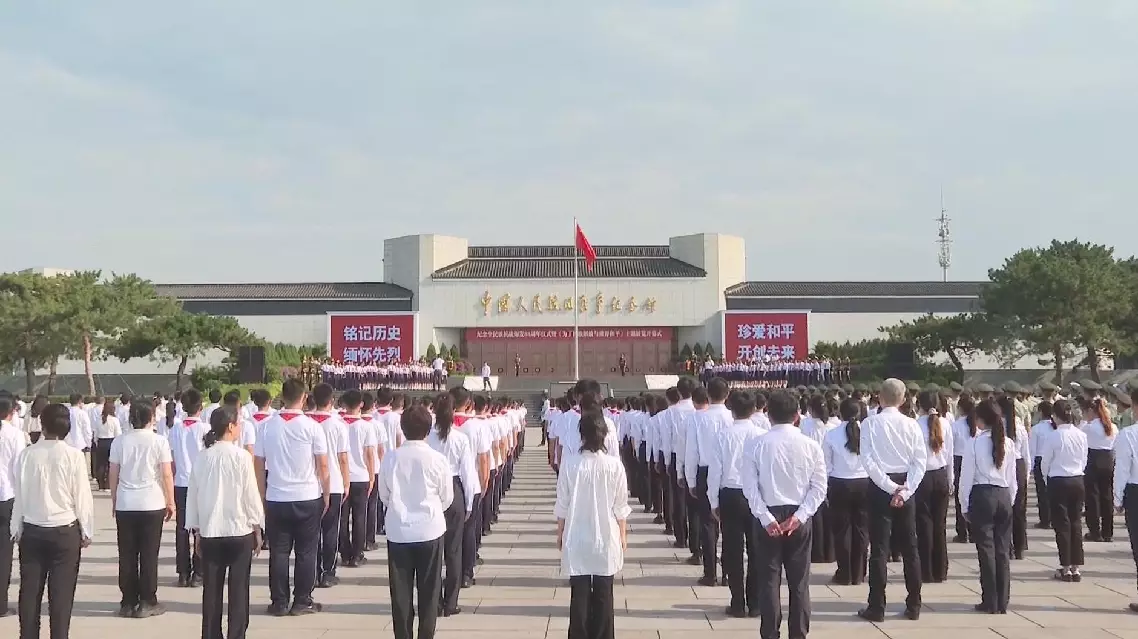
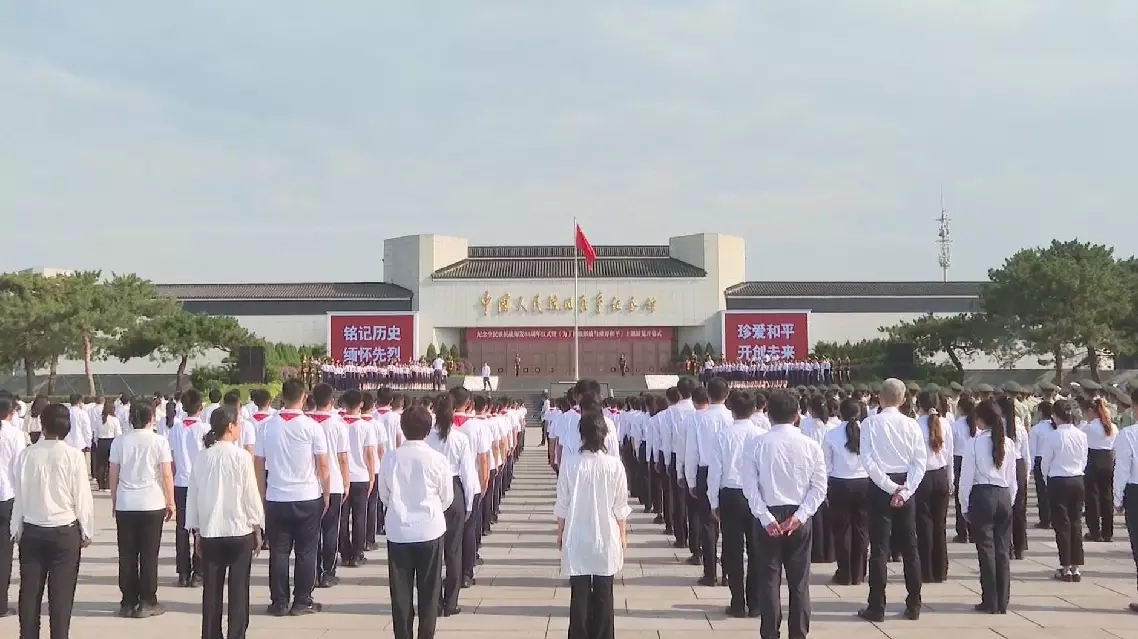
China commemorates 88th anniversary of full-scale resistance against Japanese aggression
China commemorates 88th anniversary of full-scale resistance against Japanese aggression
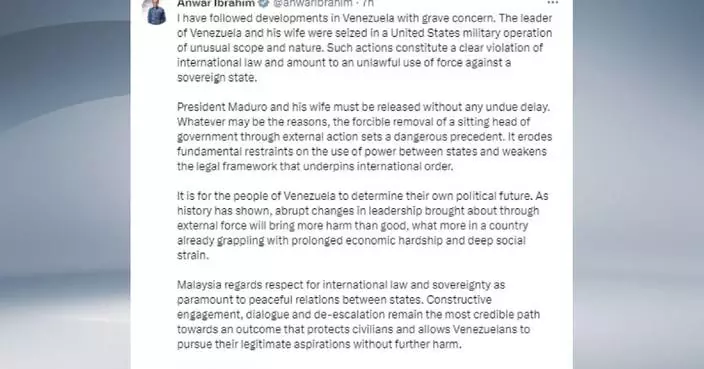
The United States cannot legitimize an operation that attacked Venezuela and captured its president, a Chinese scholar said Sunday.
On Saturday, the United States launched a large-scale strike on Venezuela, during which Venezuelan President Nicolas Maduro and his wife were 'captured and flown out of Venezuela' according to a post by U.S. President Donald Trump on his Truth Social account.
Teng Jianqun, director of the Center for Diplomatic Studies at Hunan Normal University, said in an interview with China Global Television Network (CGTN) that the aim of this operation is to take full control of Venezuela’s natural resources.
"I don't think the United States can legitimize this operation to take custody of the president of Venezuela. And also I don't think the United States can legitimize its any action in taking the oil reserves of that country. This is actually a very dangerous game played by the Trump administration. And of course, the United States would like to take full control of that country and to take full control of the natural resources, especially the large reserve of oil in Venezuela," said Teng.
Teng said Venezuela is not an isolated case but a common practice by the United States. The United States launched an invasion of Panama on Dec. 20, 1989, which continued until January 1990, with the stated objective of capturing Panamanian strongman Manuel Noriega on charges of drug trafficking and organized crime.
"We still remember the so-called sentence of the former president of Panama in the late 1980s. And this time, the president of Venezuela will be under some judicial condition (judicial proceedings) for the so-called drug trafficking and some other crimes. So I think this is not a single case for the Venezuela country, but also this is actually a practice by the United States -- to use force, to use so-called justice under law against any leaders in Latin America and the Caribbean waters," he said.
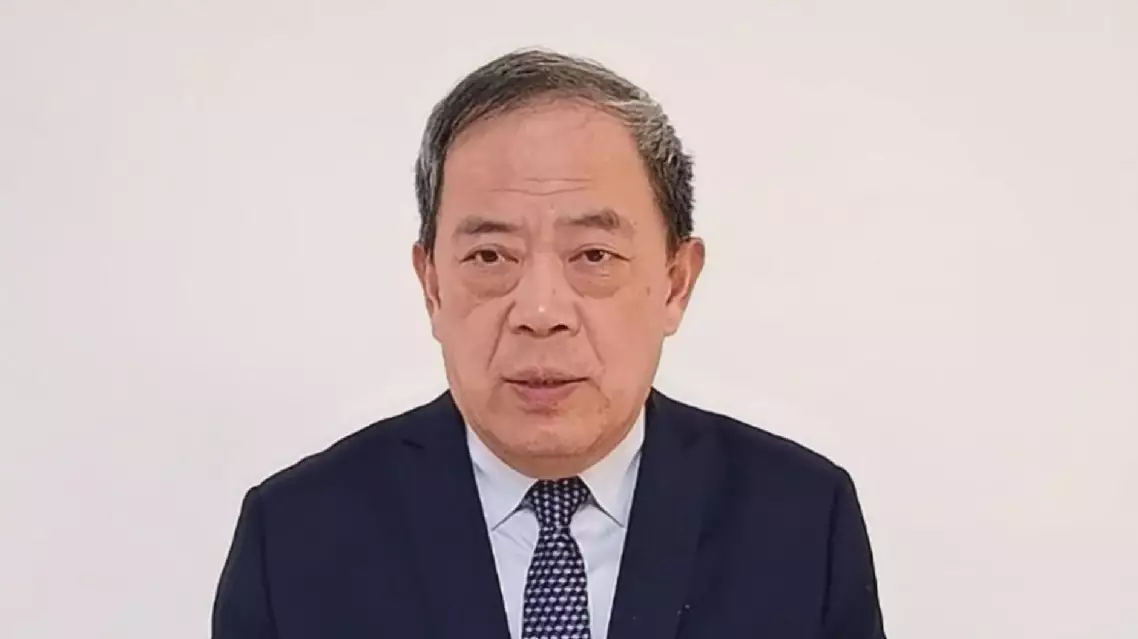
US cannot legitimize operation against Venezuela: Chinese scholar