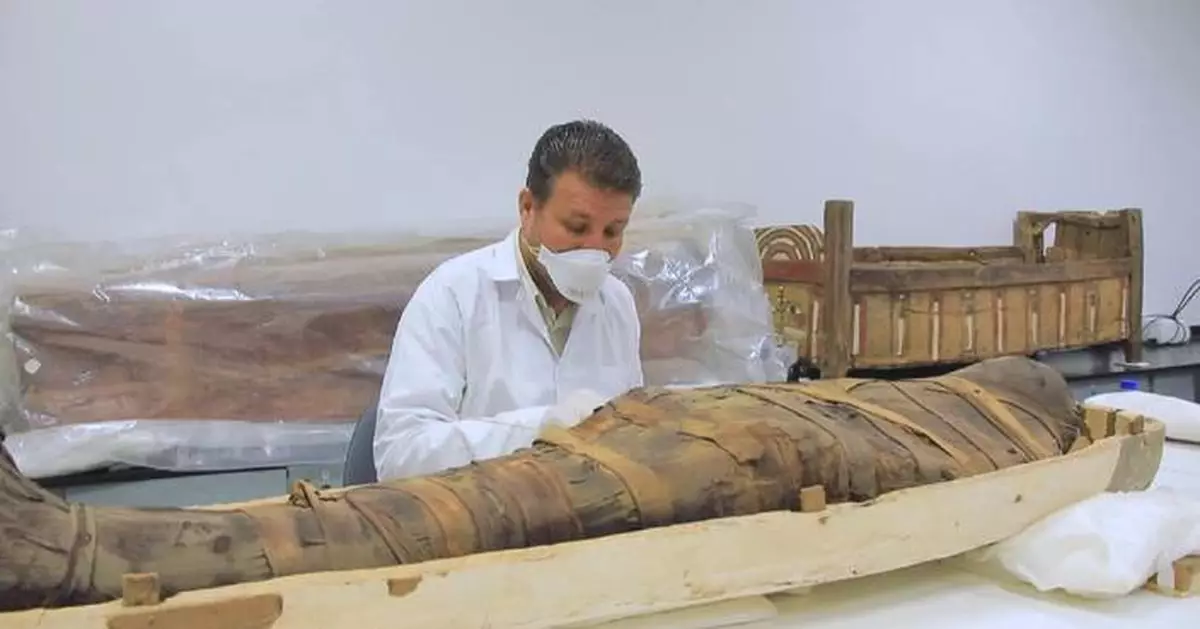
A DNA bone test on a man who lived over 4,500 years ago in the Nile Valley has shed new light on the ancient Egyptian civilization.
Test results revealed the man was probably a potter from the south of Egypt who died at about the age of 60. Analysis also showed 20 percent of his DNA was from the village of Nuweyrat in Mesopotamia, which is 1,500 kilometers away in Iraq or Syria, raising more questions than answers.
It is the first biological evidence that could help explain how Egypt was transformed from a disparate collection of farming communities to one of the mightiest civilizations on Earth.
"When history and science merge, the results are amazing. This research proves that there is no such thing as a pure race, because there were many migrations throughout history," said Bassam El Shammaa, an international lecturer on Egyptology.
However, experts have warned not to jump to conclusions that would deviate from the origin of the ancient Egyptians.
"There was the white washing of the ancient Egyptians that they came from Europe, and there was the black washing that they came from Sub-Saharan Africa. And these all are proved by science not to be true, especially here the DNA that showed that this Nuweyrat man was actually 80 percent from Egypt," said Sahar Salem, a mummy expert.
Experts have also agreed on the need for more tests on a wider scale before rewriting the ancient history, but there are challenges that can prevent accurate results, as issues like DNA degradation and contamination throughout the centuries could alter the skeleton's state.
"The ancient DNA coming from Egypt, a country known for its hot weather, made it very difficult to obtain a sample that is sufficient to give us information about the DNA, as well as in the library to get the information in order to confirm the ancient samples from the other samples," Salem said.
Fortunately, the Nuweyrat man was buried under a ceramic tile, which has helped preserve some valuable information.
"We always thought that life expectancy in ancient Egypt was on average 35 to 40 years, but this test showed that the Nuweyrat man lived to about 44 to 60 years, which is much longer than we thought," Bassam El Shammaa said.
DNA bone tests are now considered a turning point in efforts to unearth more mysteries about the fascinating life of the ancient Egyptian civilization.
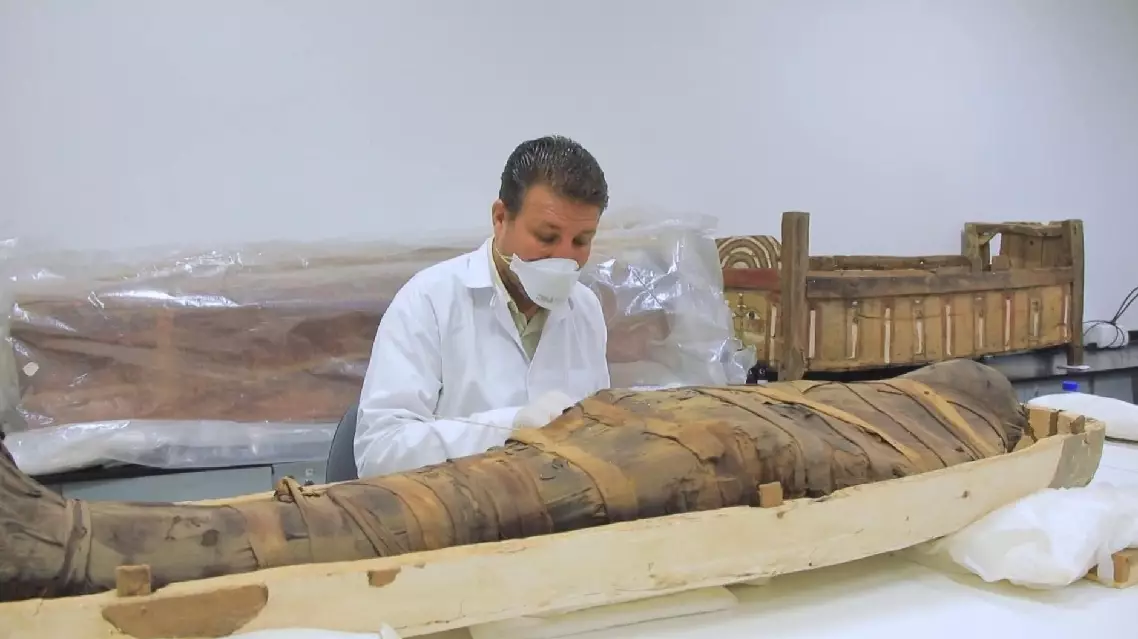
DNA test gives new clue to Egyptian ancestry
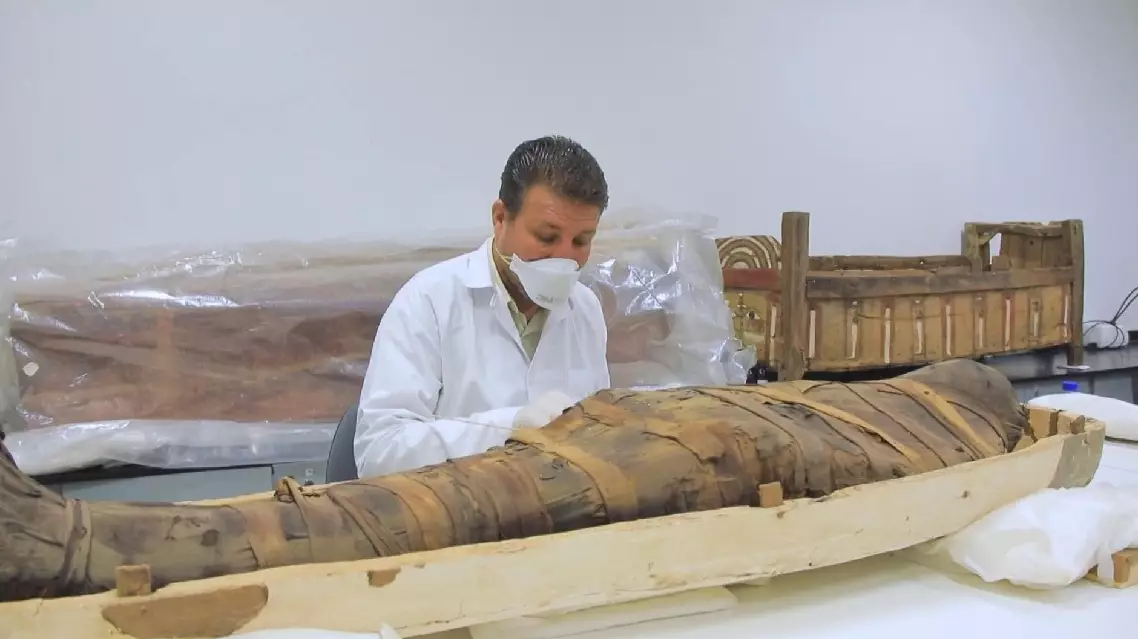
DNA test gives new clue to Egyptian ancestry