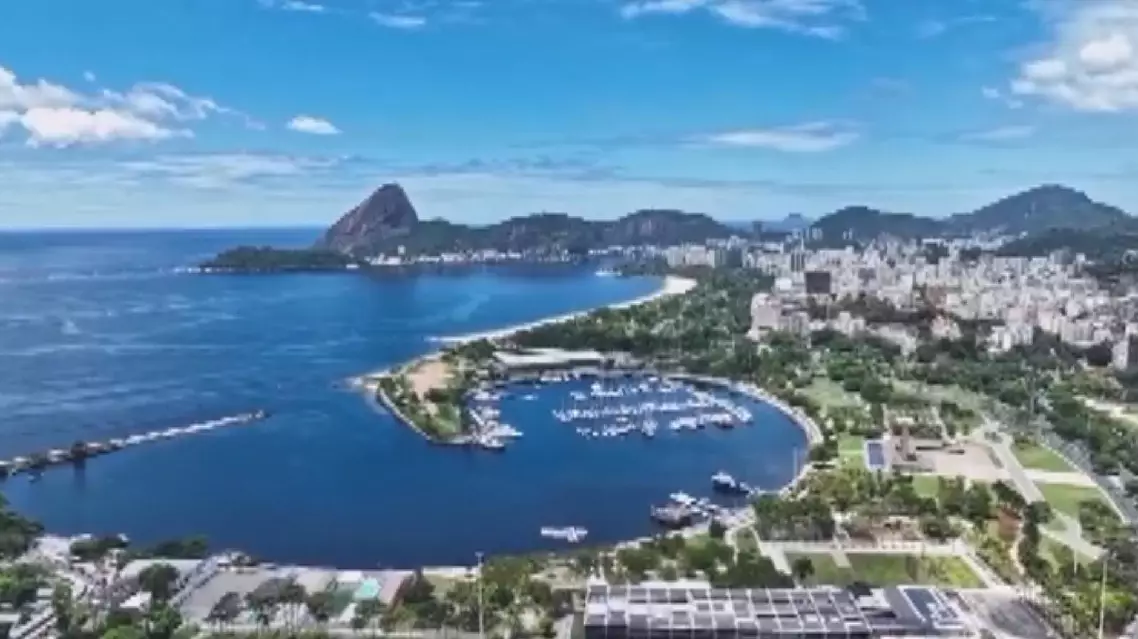
Participants of the 17th BRICS Summit in Rio de Janeiro hailed its outcomes as pivotal steps towards reshaping global governance, emphasizing the group's role in driving sustainable development, addressing climate change, and fostering inclusive international cooperation.
Against a backdrop of growing uncertainties, BRICS leaders convened in the Brazilian city for the two-day summit, tackling critical global challenges such as security, trade, and the pursuit of a more equitable and sustainable governance system.
Running under the theme "Strengthening Global South Cooperation for More Inclusive and Sustainable Governance," the summit brought together leaders from Brazil, Russia, India, China, and South Africa, as well as newly-admitted members, signaling the bloc's growing impact on global affairs.
In his closing remarks, Brazilian President Luiz Inacio Lula da Silva highlighted BRICS' leadership potential, stressing that BRICS countries should lead the way in establishing new development paradigms for global governance to improve the lives of people worldwide.
Addressing climate change was also a key topic at the summit, with Lula noting the Global South countries have the necessary conditions to lead sustainable development and are ready to make significant contributions in this area.
Marina Silva, Brazil’s Minister of Environment and Climate Change, emphasized the collective resolve of developing nations to secure both public and private resources for tackling climate change.
"Regarding climate change financing, all developing countries are united. We need to raise funds and access technology [to address climate change], not only through public funding but also private investment," said Silva.
Luciana Brum, general manager of External Affairs at mining company Vale S.A., highlighted China’s growing role in energy transition.
"I believe China is playing an increasingly important role [in the low-carbon sector]. Over the past few decades, China has been one of the major drivers of the global economy and has also become a key advocate for energy transition and decarbonization," said Brum.
Lula also underscored the potential of BRICS to establish innovative financing mechanisms for public health, infrastructure, and energy transitions. Data reveals that, over the past decade, the New Development Bank (NDB) set up by BRICS has approved 120 projects worth 39 billion U.S. dollars.
Cristina Soreanu Pecequilo, a professor of International Relations at the Federal University of Sao Paulo, praised the NDB's practical contributions.
"I think in practical terms the idea of the New Development Bank of the BRICS, the idea of financing projects for development in smaller countries, the idea of making international organizations' [inclusive] space for talks. I think this is the most evident side of the BRICS, the most practical side of the BRICS," said Pecequilo.
BRICS – an acronym derived from its first five members: Brazil, Russia, India, China and South Africa – has expanded to include 11 full member states and 10 partner countries. Representing over half the global population and nearly 30 percent of global GDP, BRICS continues to demonstrate growing influence in global governance.
Outcomes of BRICS Summit to promote new development of global governance system: experts