China's traveler hotspots are bustling this summer, driven by a nationwide campaign to boost consumer spending during peak travel season.
According to the Ministry of Culture and Tourism, the nationwide summer tourism consumption campaign, which runs from July to August, will see local authorities across China allocating subsidies totaling 570 million yuan (approximately 80 million U.S. dollars) to boost cultural and tourism consumption.
More than 39,000 tourism events, ranging from coastal vacations, cultural performances and exhibitions to market fairs and family-friendly entertainment activities, will be held during the two months.
Shanghai, renowned for its modern charm and vibrant theme parks, has witnessed a surge in hotel bookings this month. Data from travel platforms reveals a 40 percent increase compared to the same period last year.
"Rooms for families and for two-bed [rooms] are almost fully booked through the end of July. The rooms are also 5-percent pricier amid the surging demand," said Jiao Yang, director of operations at a local hotel.
Since its launch in May, the grassroots Jiangsu Football City League, known as Suchao, has captured nationwide attention. Based in Jiangsu Province on China's eastern coast, the league features thrilling competitions between teams representing 13 prefecture-level cities, drawing enthusiastic sports fans from across the country.
For football fans traveling to Nanjing, the provincial capital, many local museums and other attractions are offering free entry, as part of the efforts to support Suchao.
"We are expecting a spike in footfalls for this weekend's football match. We believe the number of visitors will jump more than 120 percent from a year ago," said Dong Ting, director for Resort Management at the Nanjing Pearl Spring Scenic Area, a popular tourist resort in Nanjing.
While some flock to the heat of intense matches, others head to China's northeastern regions for cooler retreats.
Yanji, a vibrant city in Jilin Province known for its rich Korean ethnic heritage, is experiencing a booming summer tourism season, with camping-related businesses like gadget vendors, food stalls, and live performance organizers thriving to meet the surge in visitors.
"This is our third year visiting Yanji. Very nice camping culture, with packed schedules of live activities. We'll definitely be coming back," said Zhao Junyang, a camping enthusiast.
The summer holiday that spans July and August each year is a peak season for domestic tourism, especially among families with children. Data from online travel platforms showed that domestic trips during the summer will increase by at least 30 percent year on year.
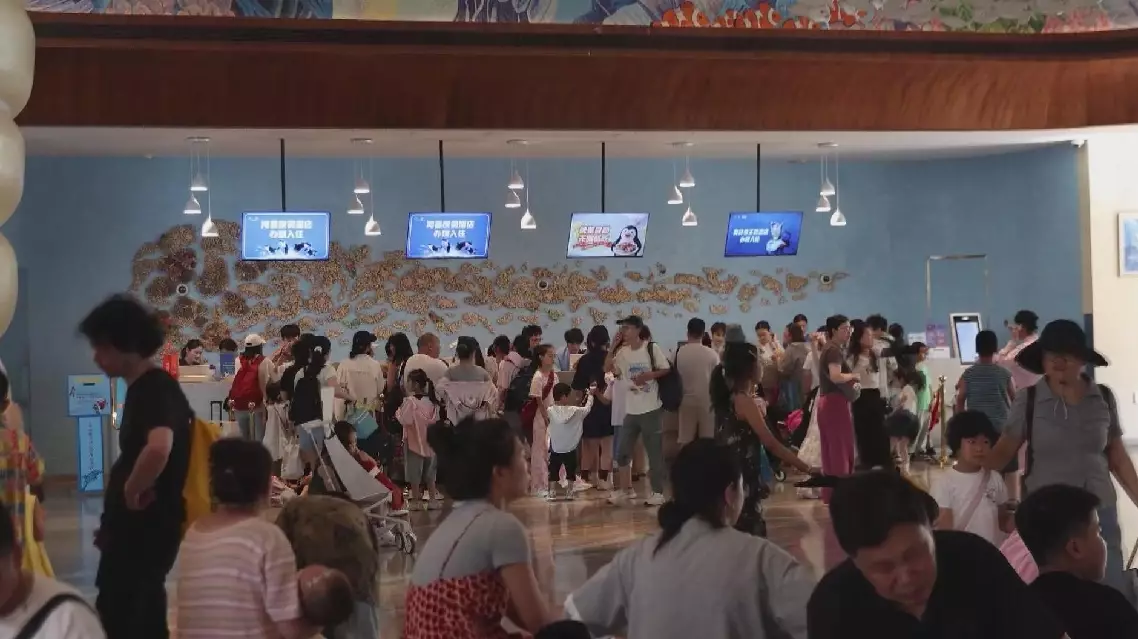
Summer consumption promotion campaign sets off tourism boom across China
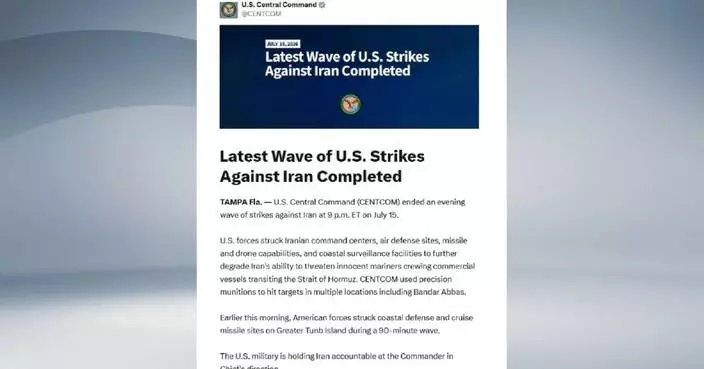
The 36th extraordinary session of the Council of the International Maritime Organization (IMO) concluded on Thursday in London, with member states split over who should be held accountable for the closure of the Hormuz Strait.
As a specialized UN agency, the IMO's responsibility is to safeguard global shipping safety and the rights and interests of seafarers. At the meeting, all parties had obvious differences regarding the root causes of the situation and the wording of the documents.
According to data provided by the IMO, since the outbreak of the conflict involving the United States, Israel and Iran, at least seven seafarers have been killed in attacks on merchant vessels in the Strait of Hormuz area, with several others seriously injured. Around 20,000 seafarers remain stranded aboard ships in the region.
Some countries urged condemning the actions of certain country that led to the blockade, while others believe that the root cause of the current maritime tensions in the Middle East lies in the military action launched by the United States and Israel against Iran, and that unilaterally blaming one country is neither objective nor comprehensive.
Multiple representatives emphasized that the IMO should not serve as a platform for political confrontation. They called for balanced, neutral language in resolutions and urged the organization to focus on pragmatic measures within the framework of IMO regulations to safeguard maritime corridors.
Iran's delegate pointed out that the IMO must not become a tool for political pressure, and any coordination on navigation security must involve Iran.
The Russian delegate warned that current international maritime declarations appear biased and one-sided, which hinders efforts to ease the crisis. He called on the IMO to adopt a more balanced stance.
China's delegate echoed the need for inclusive and impartial language, proposing that the resolutions reflect a constructive consensus rather than unilateral accusations. The Chinese side also suggested that language condemning or opposing military actions that lead to the escalation of tensions in the Strait should be added to proposal.
The IMO Council highlighted the urgent need to address the peril faced by numerous stranded commercial ships. It encouraged exploring frameworks, such as maritime safety corridors, as an emergency humanitarian measure to facilitate the voluntary evacuation of ships from high-risk zones to safer waters.
Regarding the U.S. proposal to provide naval escort operations, IMO Secretary-General Arsenio Dominguez said that naval escorts are not a long-term sustainable solution to the current crisis in the Strait of Hormuz, and only an end to the conflict can prevent shipping from becoming collateral damage.
While acknowledging that the root causes of the crisis lie beyond the IMO's mandate, he said he would continue to work with countries engaged in diplomatic efforts to address the situation.
Over the past few days, U.S. President Donald Trump has urged European countries and other allies to join naval escort operations in the Strait of Hormuz. However, European powers have largely rebuffed the request, citing concerns that direct military involvement would escalate regional tensions and risk drawing them into a wider conflict.
IMO members divided over accountability for closure of Hormuz Strait