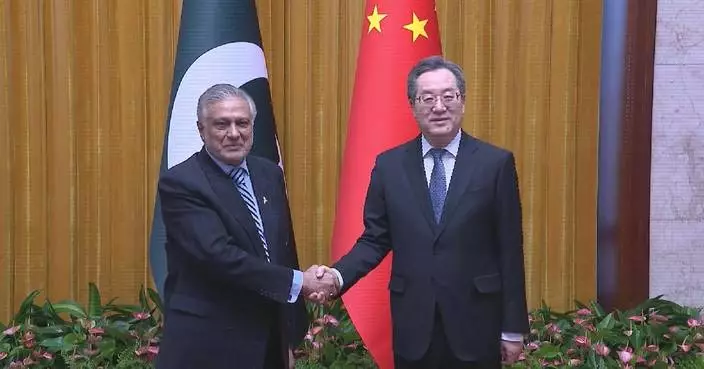
China's top political advisor Wang Huning has called for sustained efforts in implementing the pairing assistance program to Xinjiang, aiming to contribute to the remote northwestern region's social stability and long-term peace.
Wang, a member of the Standing Committee of the Political Bureau of the Communist Party of China (CPC) Central Committee and chairman of the National Committee of the Chinese People's Political Consultative Conference, made the statement at a work conference focused on supporting Xinjiang through pairing assistance.
The conference was held from Monday to Wednesday in Hotan City, the Xinjiang Uygur Autonomous Region.
Greater focus should be placed on addressing prominent problems in southern Xinjiang and on consolidating and expanding the gains made in poverty alleviation in the region, Wang noted.
Efforts should also focus on promoting new industrialization and urbanization in Xinjiang, strengthening interaction, exchanges, and integration among all ethnic groups, and improving the quality and effectiveness of educational support to Xinjiang, Wang added.
Li Ganjie, head of the United Front Work Department of the CPC Central Committee, presided over the conference and delivered a speech.
Li called for the high-quality formulation of a new five-year plan for supporting Xinjiang, emphasizing the need to ensure that all decisions and arrangements related to pairing assistance are effectively implemented and produce tangible results.
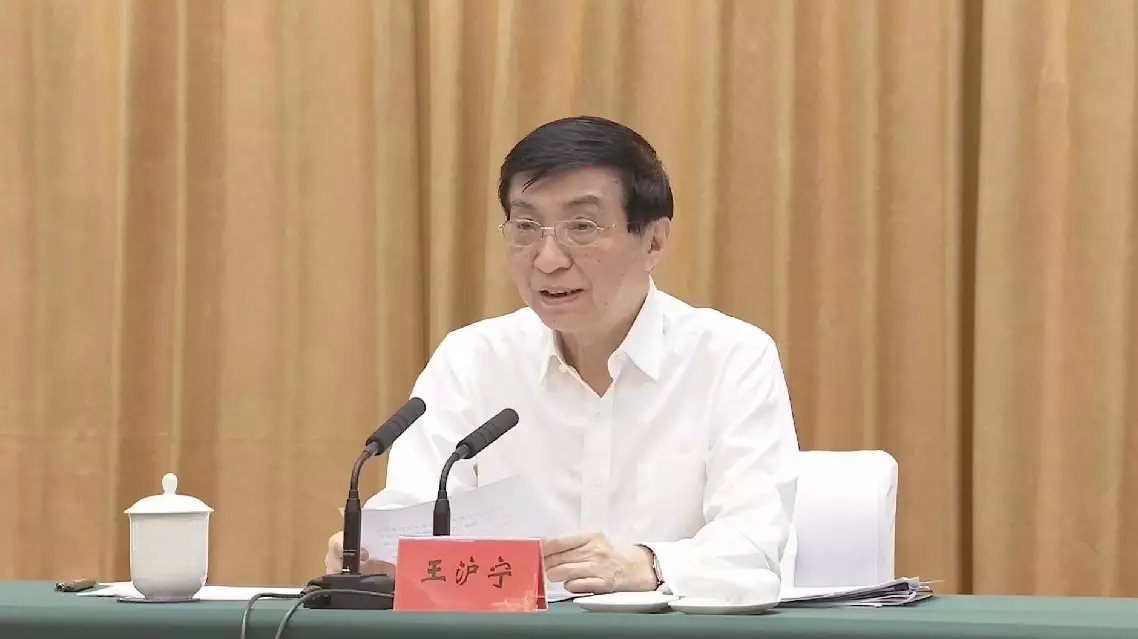
Top political advisor urges sustained pairing assistance to northwest China's Xinjiang
Top political advisor urges sustained pairing assistance to northwest China's Xinjiang
Top political advisor urges sustained pairing assistance to northwest China's Xinjiang
Citizens of the Republic of Korea (ROK) have shared their views and expectations for future cooperation with China ahead of President Lee Jae Myung's state visit, which began in Beijing on Sunday.
Lee is making his first visit to China since assuming office in June 2025, with the state visit scheduled to run until Wednesday.
Street food vendor Jang Dong Il said he had high expectations for the visit, hoping it would lead to effective cooperation between the two countries and improvements in the economic environment for mutual benefit.
"More exchanges between the two countries would boost for the two economies. I am full of hope for a strong cooperation between President Lee Jae-myung and President Xi Jinping," he said.
"I have high hopes for this meeting between our countries' leaders. President Lee Jae Myung is visiting China between January 4 and January 7, to discuss economic, cultural and tourism exchanges.I understand about 200 to 300 South Korean corporate executives have traveled with him. I have high hopes for this. If this visit helps strengthen relations between two leaders,I believe it could lead to a win-win outcome and bring ROK and China closer together," Yang said.
"The leaders' meeting can spark dynamic exchanges in economy and culture. More exchanges between the two countries would boost the two economies. I am full of hope for a strong cooperation between President Lee Jae-myung and President Xi Jinping," said Noh Yun Ji, a teacher.
"The two can complement each other economically and continue to develop," said Kim Yoon Jung, a Seoul resident.
Dancer Yoon Ji Eun shared her experience of visiting Shanghai, saying that the delicious food suited her taste and that the city’s fashionable, clean urban environment left her with a positive impression of China.
"Last summer, I took a trip to Shanghai, and after seeing it for myself, I found the food was to my taste, and the city was modern and clean. So I came to see China as a captivating country," Yoon said.
"First of all, China is a very large country. And the food is delicious. I enjoy dishes like malatang and hot pot.I love Chinese food," Noh said.
The ROK citizens also expressed hope for strengthened people to people exchanges with China.
Recalling her time studying dance in China, Yoon said her experience highlighted the role of education in fostering cultural understanding.
"Although I don’t know much about this, as I mentioned, I went to Shanghai for dance lessons. It shows education can offer cultural experiences," she said.
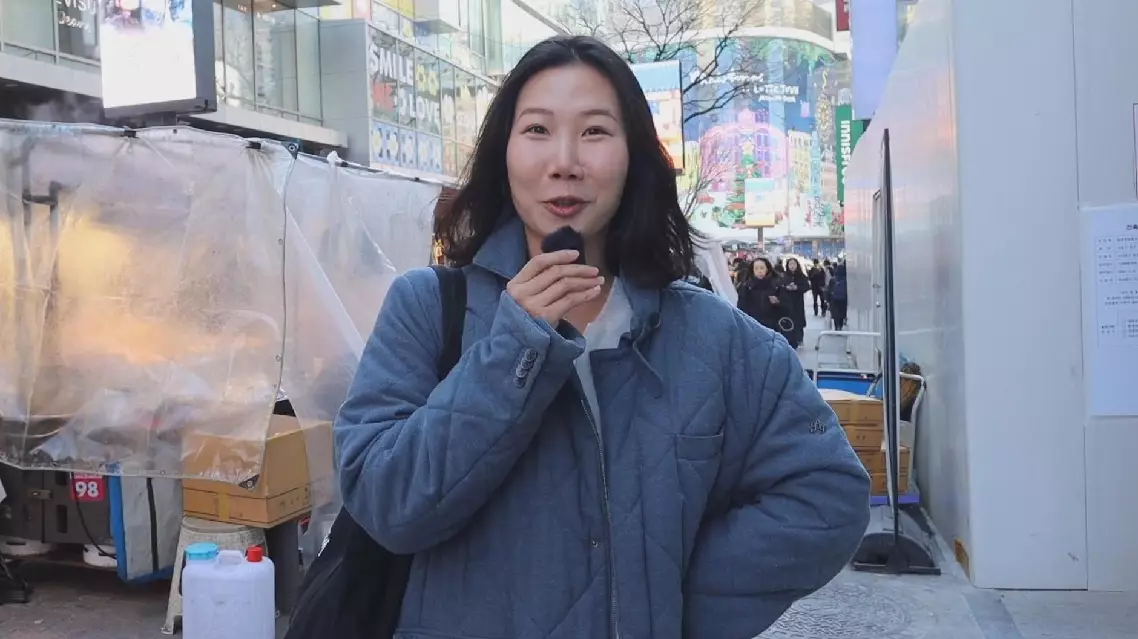
South Koreans hope president’s first visit to China will enhance exchanges