WASHINGTON (AP) — As commerce secretary, Howard Lutnick oversees the U.S. government’s vast efforts to monitor and predict the weather.
The billionaire also ran a financial firm, which he recently left in the control of his adult sons, that stands to benefit if President Donald Trump’s administration follows through on a decade-long Republican effort to privatize government weather forecasting.
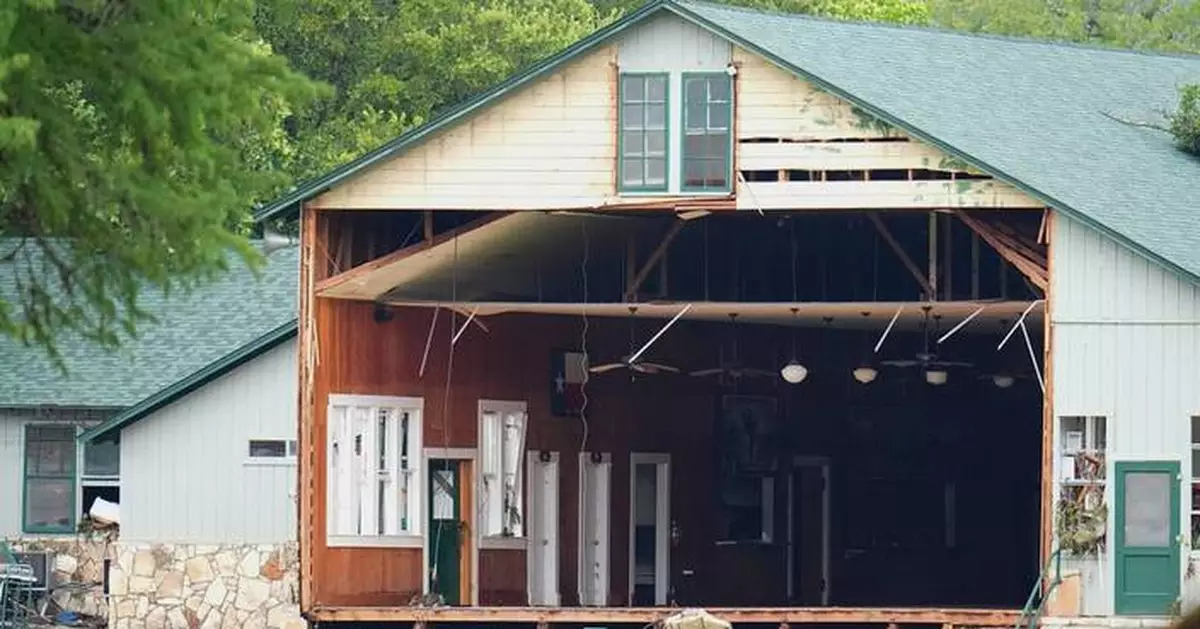
Deadly flooding in Texas has drawn a spotlight to budget cuts and staff reductions at the National Weather Service and the National Oceanic and Atmospheric Administration, agencies housed within the Commerce Department that provide the public with free climate and weather data that can be crucial during natural disasters.
What’s drawn less attention is how the downsizing appears to be part of an effort to privatize the work of such agencies. In several instances, the companies poised to step into the void have deep ties to people tapped by Trump to run weather-related agencies.
Privatization would diminish a central role the federal government has played in weather forecasting since the 1800s, which experts say poses a particular harm for those who may not be able to afford commercial weather data.
The effort also reveals the difficulty wealthy members of Trump’s Cabinet have in freeing themselves from conflicts, even if they have met the letter of federal ethics law.
“It’s the most insidious aspect of this: Are we really talking about making weather products available only to those who can afford it?” said Rick Spinrad, who served as NOAA administrator under President Joe Biden, a Democrat.
The Commerce Department said in a statement that Lutnick has “fully complied with the terms of his ethics agreement with respect to divesture and recusals and will continue to do so.”
Privatizing weather agencies has been an aim of Republicans. During Trump’s first presidency, he signed a bill to utilize more private weather data. Project 2025, a proposed blueprint for Trump’s second presidency that was co-authored by his budget director, calls for the NOAA to be broken up and for the weather service to “fully commercialize its forecasting operations.”
Lutnick is not the only one Trump nominated for a key post with close relationships to companies involved in the gathering of weather data.
Trump’s pick to lead the NOAA, Neil Jacobs, was chief atmospheric scientist for Panasonic Weather Solutions and is a proponent of privatization. The president’s nominee for another top NOAA post, Taylor Jordan, is a lobbyist for weather-related clients.
Jordan and Jacobs "will follow the law and rely on the advice of the Department’s ethics counsel in addressing matters involving former clients” if confirmed, the Commerce Department said in its statement.
Elon Musk, who spent more than $250 million to help elect Trump, owns a controlling interest in SpaceX and its satellite subsidiary Starlink. Both are regulated by the NOAA’s Office of Space Commerce, which lost about one-third of its staff in layoffs by the Department of Government Efficiency, which Musk created.
SpaceX stands to gain through a new generation of private and federally funded weather satellites that would be carried into orbit on its rockets.
Though Musk departed Washington after a very public falling out with Trump, the DOGE staffers he hired and the cuts he pushed have largely remained in place.
Requests for comment sent to representatives for Musk received no response.
Lutnick resigned as CEO of Cantor Fitzgerald upon taking office and began the task of divesting his interests.
His two 20-something sons took the reins of his financial empire. But Lutnick's most recent ethics filing stated he was still selling his holdings in the firm.
An ethics plan from February states Lutnick would request a waiver allowing him to participate in matters with a “direct and predictable effect” on his family’s business. Securities and Exchange Commission filings, meanwhile, show Lutnick is keeping his stake in Cantor close, transferring them to a son.
Cantor spokesperson Erica Chase said Lutnick has had no involvement in running the company since his resignation.
“Cantor and its subsidiaries operate in heavily regulated industries, and maintain robust compliance programs to ensure compliance with all applicable laws,” Chase said.
Federal officials are barred from making decisions that benefit the business holdings of themselves or their spouses, but that prohibition doesn't extend to their adult children, said Richard Painter, an ethics lawyer in Republican President George W. Bush's administration.
Cantor has interests in weather and climate. It owns a controlling interest in BGC Group, which operates a weather derivatives marketplace that essentially allows investors to bet on climate risk and where hurricanes will make landfall.
Lutnick also played a pivotal role in cultivating the satellite company Satellogic, which he helped take public and where he held a board seat. Cantor holds a roughly 13% stake in Satellogic, an emerging federal contractor that offers crisp images of natural disasters and weather events in real time.
The White House’s 2026 spending plan proposes $8 billion in cuts for future NOAA satellites, which capture imagery of the planet provided to the public. Satellogic stands to benefit if the government retreats from operating climate-monitoring satellites.
Jacobs, Trump’s pick to lead the NOAA, was scheduled to appear Wednesday before a Senate committee weighing his nomination.
Jacobs has long advocated for a greater role for the private sector in government weather forecasting. During a 2023 congressional hearing focused on the future of the NOAA, he expressed concerns about what happens to commercial data purchased by the government.
"They give it away to the rest of the planet for free,” he testified.
He was a consultant at the time for Spire Global and Lynker, both of which have millions of dollars in weather data contracts with the NOAA, records show.
Jordan, Trump’s pick for another top NOAA post, has similarly close relationships. His financial disclosure lists more than a dozen weather-related lobbying clients, including Spire, Lynker and AccuWeather.
Though his nomination is pending, records show he still represents weather companies and works at a Washington lobbying firm.
Contact the AP’s global investigative team at Investigative@ap.org or https://www.ap.org/tips/.
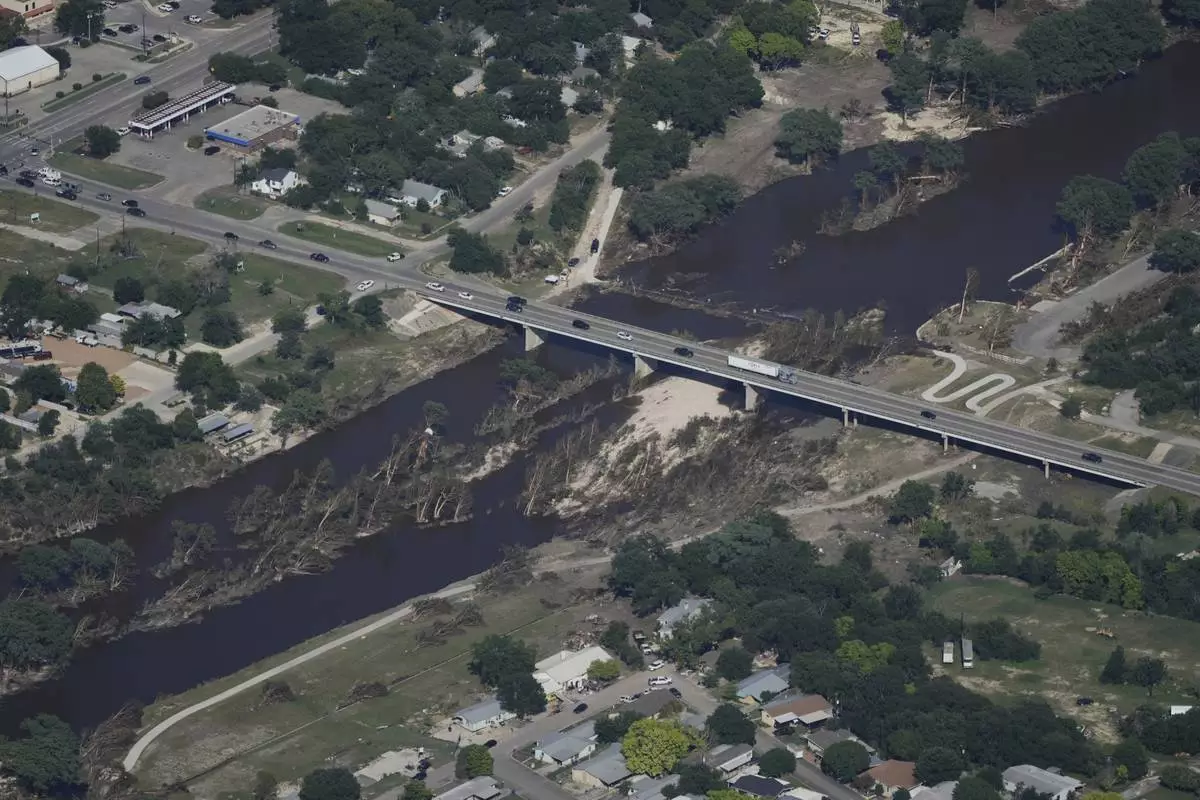
Cars pass a bridge over the Guadalupe River on Tuesday, July 8, 2025, after a flash flood swept through the area in Kerrville, Texas. (AP Photo/Ashley Landis)
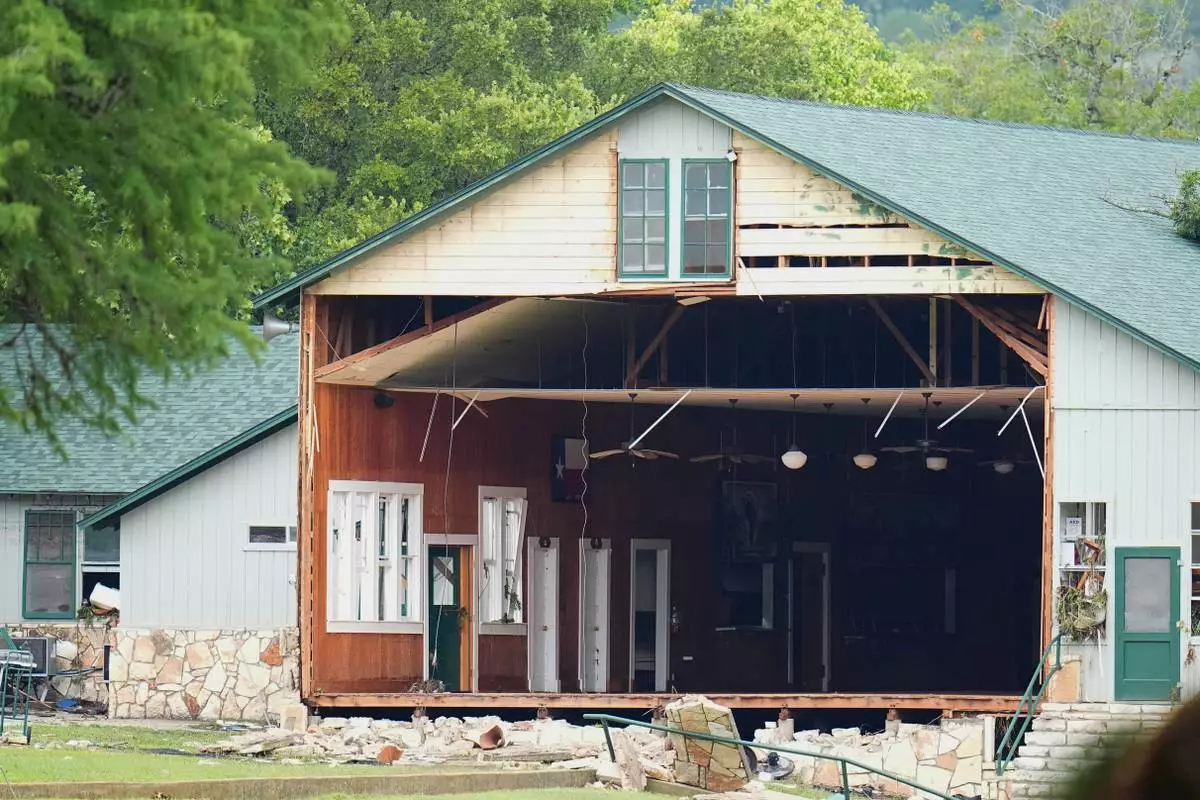
A wall is missing on a building at Camp Mystic along the banks of the Guadalupe River, Saturday, July 5, 2025, in Hunt, Texas, after a flash flood swept through the area. (AP Photo/Julio Cortez)