Skip to Content Facebook Feature Image

A surprise IRS move on political endorsements leaves faith leaders and legal experts divided

News

A surprise IRS move on political endorsements leaves faith leaders and legal experts divided
News

News

A surprise IRS move on political endorsements leaves faith leaders and legal experts divided

2025-07-10 05:48 Last Updated At:05:50

WASHINGTON (AP) — A surprise move by the IRS that would allow pastors to back political candidates from the pulpit without losing their organization’s tax-exempt status is drawing praise from conservatives and even some progressive religious groups but concern from other leaders of faith, along with tax and legal experts.

A 1954 provision in the tax code called the Johnson Amendment says churches and other nonprofits could lose their tax-exempt status if they participate or intervene in any political campaign on behalf of or in opposition to any candidate for public office. The rule was rarely enforced.

While the IRS did not go as far as calling for the repeal of the Johnson Amendment, it said in court documents Monday that communications in good faith by a church to its flock does not amount to “intervening” or affecting the outcome of a political campaign.

“Communications from a house of worship to its congregation in connection with religious services through its usual channels of communication on matters of faith do not run afoul of the Johnson Amendment as properly interpreted," the IRS said.

The new IRS interpretation came after decades of debate and, most recently, lawsuits from the National Religious Broadcasters association and other conservative churches complaining that the amendment violates their First Amendment rights, among other legal protections.

Speaking to reporters Wednesday, President Donald Trump called the IRS' assessment “terrific."

“I love the fact that churches can endorse a political candidate,” he said. “We have a lot of respect for the people that lead the church.”

While some congregations see a new freedom to speak openly about preferred candidates, others see openings for campaign finance corruption, new pressures on religious leaders and an overall entanglement between church and state.

Robert Jeffress, pastor of a Baptist megachurch in Dallas and a Trump ally, called it “the right decision.” He said his church’s tax-exempt status was threatened because of an IRS investigation into their political endorsements, costing the megachurch hundreds of thousands in legal fees.

“The IRS has no business dictating what can be said from the pulpit,” he said. “They need to stay the heck out of our churches.”

Calvary Church Chino Hills, a Southern California megachurch led by Jack Hibbs, has been endorsing candidates for years, particularly in local elections. Gina Gleason, director of the church’s political engagement team, said she hopes the move will encourage smaller churches previously hesitant for fear of triggering an IRS response.

“I’d have thought if the IRS had targeted any church it would’ve been us,” she said. “But we got sound legal advice from lawyers and religious liberty organizations that explained we were within our constitutional rights."

For Democrats trying to connect with people of faith, this decision is timely, said Doug Pagitt, pastor and executive director of Vote Common Good, a progressive and evangelical Christian organization.

“Conservative pastors who have been blatantly endorsing candidates regardless of the Johnson Amendment over the years created a disadvantage causing Democrats to step away from faith voters,” he said. “There was a true imbalance between how many more opportunities there were for Republican voters.”

The IRS statement, Pagitt says, also puts an end to the delicate dance pastors and congregations were forced to do.

“You could talk about politics in the church gymnasium, but not in the sanctuary or from the pulpit,” he said. “Pastors could express political opinions on their personal Facebook page, but not on the church’s website. It’s just silly.”

Tax and constitutional law experts, meanwhile, are wary of what entanglements could arise from the IRS' new position.

Philip Hackney, a University of Pittsburgh School of Law professor who studies the relationship between churches and tax authority, said the decree could allow churches to push new boundaries.

“It’s essentially creating a political intervention tax shelter for churches,” Hackney said. "It has the potential to corrupt their mission, more towards politics and away from their true beliefs.”

Other religious groups, particularly in faith communities of color, are viewing it with skepticism. The Rev. Mark Whitlock, senior pastor at Reid Temple African Methodist Episcopal Church in Glenn Dale, Maryland, said it raises more questions than answers.

“From those of us in the Black church, this decision is being viewed with caution, apprehension and skepticism,” he said. “The question we’re asking is: ‘Why now?’”

Whitlock said he will continue to do what the Black church has always done — educating and civically engaging parishioners. His congregants' political views vary, too.

“If I do say something in church, it needs to be God-centered, God-focused and a revelation that God gave you,” Whitlock said. “You can’t go to the pulpit as a campaign manager."

Raymond Chang, president of the Asian American Christian Collaborative, warned that a repeal of the Johnson Amendment could help tether some congregations to certain parties or candidates.

“This can lead to a partisan identity becoming the primary marker of a church or congregation, over a commitment to the Gospel, which cuts against both existing major parties,” he said. “Church leaders may also face pressure to make political endorsements.”

California Gov. Gavin Newsom said Wednesday that he finds the IRS’ position on the issue “politically convenient and cynical.”

“We’ve seen a lot of the pulpit be coming more and more political over the years — almost weaponized in that respect," the Democrat said at a church in South Carolina.

About 8 in 10 U.S. adults believe churches and other houses of worship should not come out in favor of one political candidate over another during elections, a Pew Research Center survey conducted in 2022 found.

White evangelicals and Black Protestants were a little more divided on the matter, with about one-third in each group favoring political endorsements. But in every other religious group surveyed, there was a strong consensus against political involvement by houses of worship.

Others are more optimistic that the IRS statement puts to bed unfounded criticisms against the agency for a rarely enforced rule.

Terry Lemons, a former IRS official who began at the agency under Democratic President Bill Clinton, called it a “common sense approach through a narrowly written filing."

Roger Colinvaux, a Catholic University of America law professor, said he would caution churches against “overinterpreting” the IRS statement. He points out that the word “endorse” does not appear anywhere in it and said his biggest concern is religion being used as a partisan tool in campaigns.

Pagitt at Common Good said not all pastors will seize the opportunity because they might be ministering to a divided congregation or might not be comfortable mixing politics and religion.

Chieko Noguchi, spokesperson for the U.S. Conference of Catholic Bishops, said Tuesday that the IRS statement doesn’t “change how the Catholic Church engages in public debate.”

“The Church seeks to help Catholics form their conscience in the Gospel so they might discern which candidates and policies would advance the common good,” Noguchi said. “The Catholic Church maintains its stance of not endorsing or opposing political candidates.”

Bharath reported from Los Angeles. Associated Press writer Meg Kinnard in South Carolina contributed reporting.

AP’s religion coverage receives support through the AP’s collaboration with The Conversation US, with funding from Lilly Endowment Inc. The AP is solely responsible for this content.
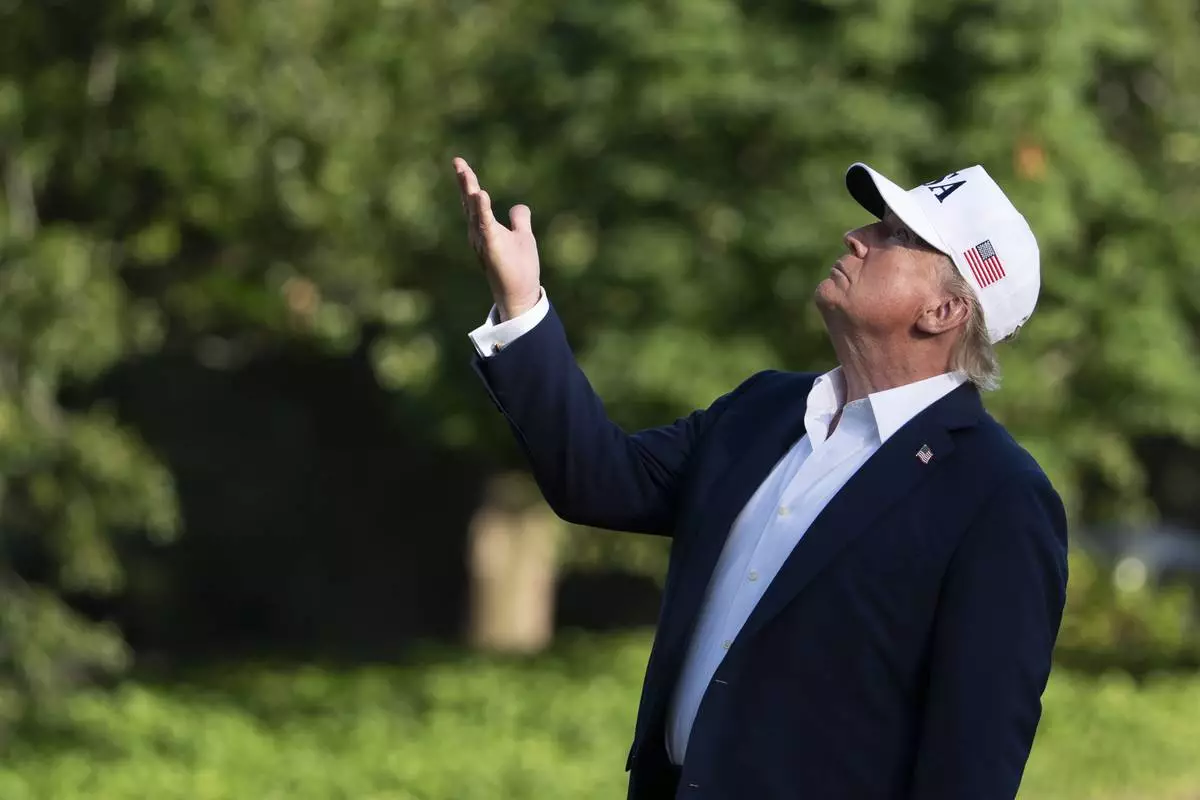
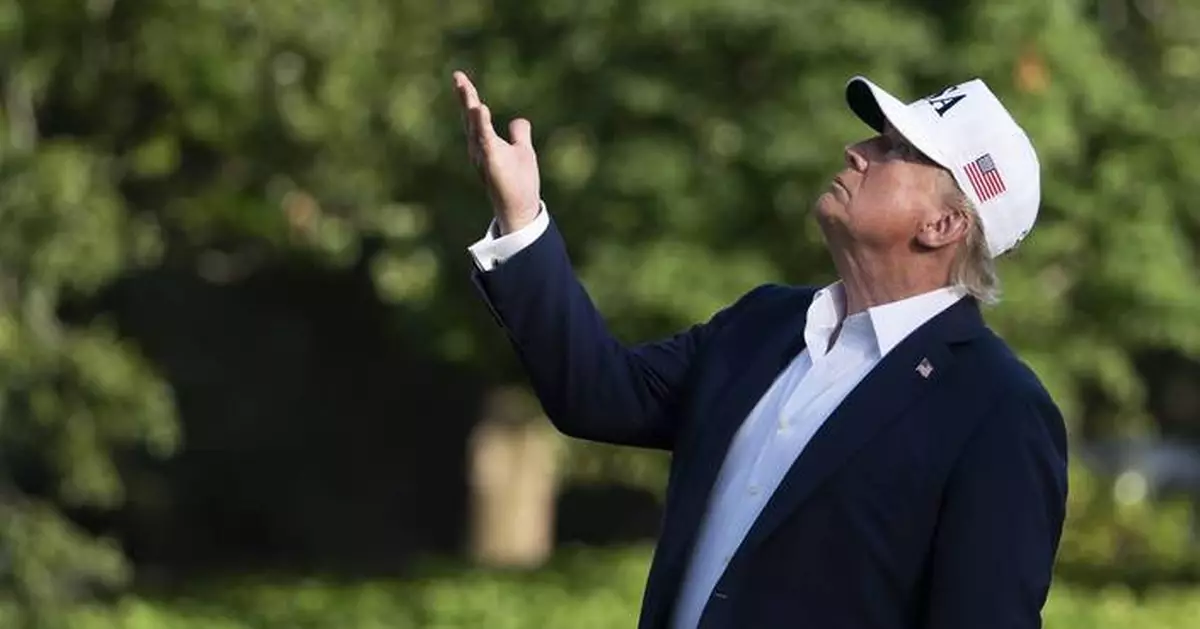
President Donald Trump looks up at the American flag on the flagpole on the South Lawn as he arrives at the White House, Sunday, July 6, 2025, in Washington. (AP Photo/Manuel Balce Ceneta)
President Donald Trump looks up at the American flag on the flagpole on the South Lawn as he arrives at the White House, Sunday, July 6, 2025, in Washington. (AP Photo/Manuel Balce Ceneta)
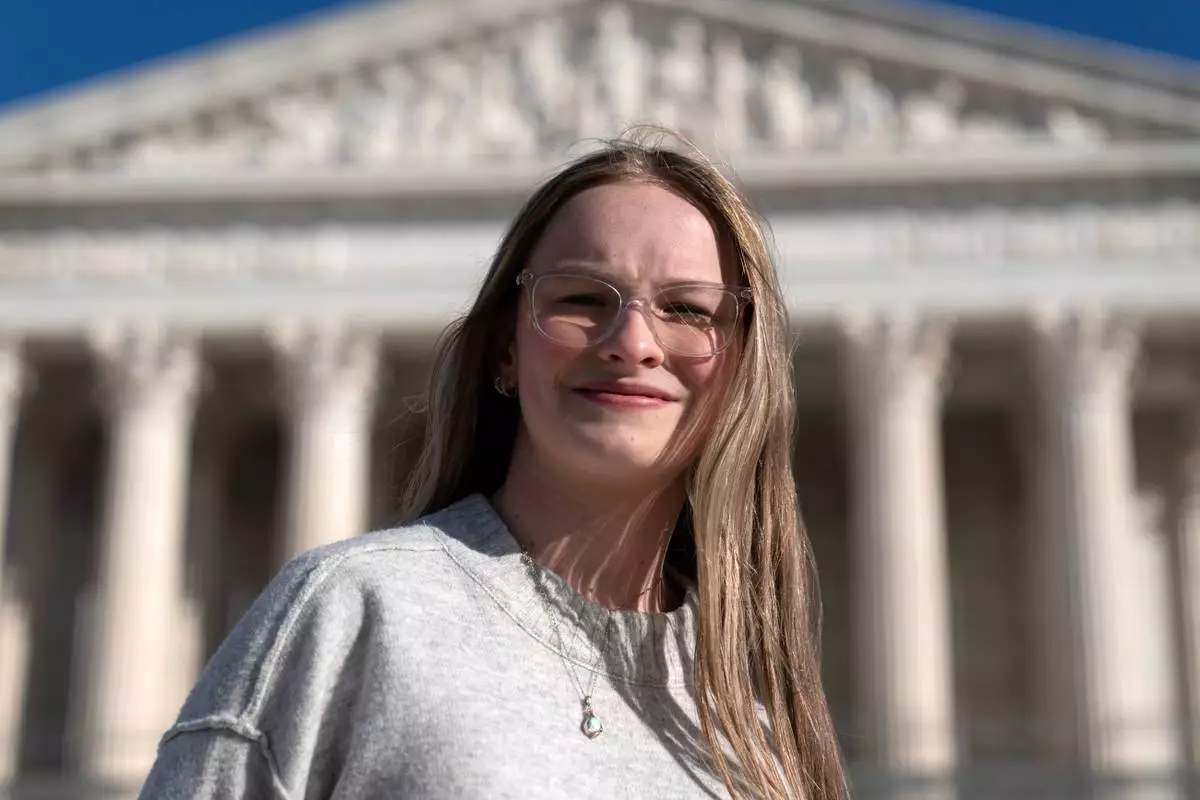
WASHINGTON (AP) — Becky Pepper-Jackson finished third in the discus throw in West Virginia last year though she was in just her first year of high school. Now a 15-year-old sophomore, Pepper-Jackson is aware that her upcoming season could be her last.

West Virginia has banned transgender girls like Pepper-Jackson from competing in girls and women's sports, and is among the more than two dozen states with similar laws. Though the West Virginia law has been blocked by lower courts, the outcome could be different at the conservative-dominated Supreme Court, which has allowed multiple restrictions on transgender people to be enforced in the past year.

The justices are hearing arguments Tuesday in two cases over whether the sports bans violate the Constitution or the landmark federal law known as Title IX that prohibits sex discrimination in education. The second case comes from Idaho, where college student Lindsay Hecox challenged that state's law.

Decisions are expected by early summer.

President Donald Trump's Republican administration has targeted transgender Americans from the first day of his second term, including ousting transgender people from the military and declaring that gender is immutable and determined at birth.

Pepper-Jackson has become the face of the nationwide battle over the participation of transgender girls in athletics that has played out at both the state and federal levels as Republicans have leveraged the issue as a fight for athletic fairness for women and girls.

“I think it’s something that needs to be done,” Pepper-Jackson said in an interview with The Associated Press that was conducted over Zoom. “It’s something I’m here to do because ... this is important to me. I know it’s important to other people. So, like, I’m here for it.”

She sat alongside her mother, Heather Jackson, on a sofa in their home just outside Bridgeport, a rural West Virginia community about 40 miles southwest of Morgantown, to talk about a legal fight that began when she was a middle schooler who finished near the back of the pack in cross-country races.

Pepper-Jackson has grown into a competitive discus and shot put thrower. In addition to the bronze medal in the discus, she finished eighth among shot putters.

She attributes her success to hard work, practicing at school and in her backyard, and lifting weights. Pepper-Jackson has been taking puberty-blocking medication and has publicly identified as a girl since she was in the third grade, though the Supreme Court's decision in June upholding state bans on gender-affirming medical treatment for minors has forced her to go out of state for care.

Her very improvement as an athlete has been cited as a reason she should not be allowed to compete against girls.

“There are immutable physical and biological characteristic differences between men and women that make men bigger, stronger, and faster than women. And if we allow biological males to play sports against biological females, those differences will erode the ability and the places for women in these sports which we have fought so hard for over the last 50 years,” West Virginia's attorney general, JB McCuskey, said in an AP interview. McCuskey said he is not aware of any other transgender athlete in the state who has competed or is trying to compete in girls or women’s sports.

Despite the small numbers of transgender athletes, the issue has taken on outsize importance. The NCAA and the U.S. Olympic and Paralympic Committees banned transgender women from women's sports after Trump signed an executive order aimed at barring their participation.

The public generally is supportive of the limits. An Associated Press-NORC Center for Public Affairs Research poll conducted in October 2025 found that about 6 in 10 U.S. adults “strongly” or “somewhat” favored requiring transgender children and teenagers to only compete on sports teams that match the sex they were assigned at birth, not the gender they identify with, while about 2 in 10 were “strongly” or “somewhat” opposed and about one-quarter did not have an opinion.

About 2.1 million adults, or 0.8%, and 724,000 people age 13 to 17, or 3.3%, identify as transgender in the U.S., according to the Williams Institute at the UCLA School of Law.

Those allied with the administration on the issue paint it in broader terms than just sports, pointing to state laws, Trump administration policies and court rulings against transgender people.

"I think there are cultural, political, legal headwinds all supporting this notion that it’s just a lie that a man can be a woman," said John Bursch, a lawyer with the conservative Christian law firm Alliance Defending Freedom that has led the legal campaign against transgender people. “And if we want a society that respects women and girls, then we need to come to terms with that truth. And the sooner that we do that, the better it will be for women everywhere, whether that be in high school sports teams, high school locker rooms and showers, abused women’s shelters, women’s prisons.”

But Heather Jackson offered different terms to describe the effort to keep her daughter off West Virginia's playing fields.

“Hatred. It’s nothing but hatred,” she said. "This community is the community du jour. We have a long history of isolating marginalized parts of the community.”

Pepper-Jackson has seen some of the uglier side of the debate on display, including when a competitor wore a T-shirt at the championship meet that said, “Men Don't Belong in Women's Sports.”

“I wish these people would educate themselves. Just so they would know that I’m just there to have a good time. That’s it. But it just, it hurts sometimes, like, it gets to me sometimes, but I try to brush it off,” she said.

One schoolmate, identified as A.C. in court papers, said Pepper-Jackson has herself used graphic language in sexually bullying her teammates.

Asked whether she said any of what is alleged, Pepper-Jackson said, “I did not. And the school ruled that there was no evidence to prove that it was true.”

The legal fight will turn on whether the Constitution's equal protection clause or the Title IX anti-discrimination law protects transgender people.

The court ruled in 2020 that workplace discrimination against transgender people is sex discrimination, but refused to extend the logic of that decision to the case over health care for transgender minors.

The court has been deluged by dueling legal briefs from Republican- and Democratic-led states, members of Congress, athletes, doctors, scientists and scholars.

The outcome also could influence separate legal efforts seeking to bar transgender athletes in states that have continued to allow them to compete.

If Pepper-Jackson is forced to stop competing, she said she will still be able to lift weights and continue playing trumpet in the school concert and jazz bands.

“It will hurt a lot, and I know it will, but that’s what I’ll have to do,” she said.

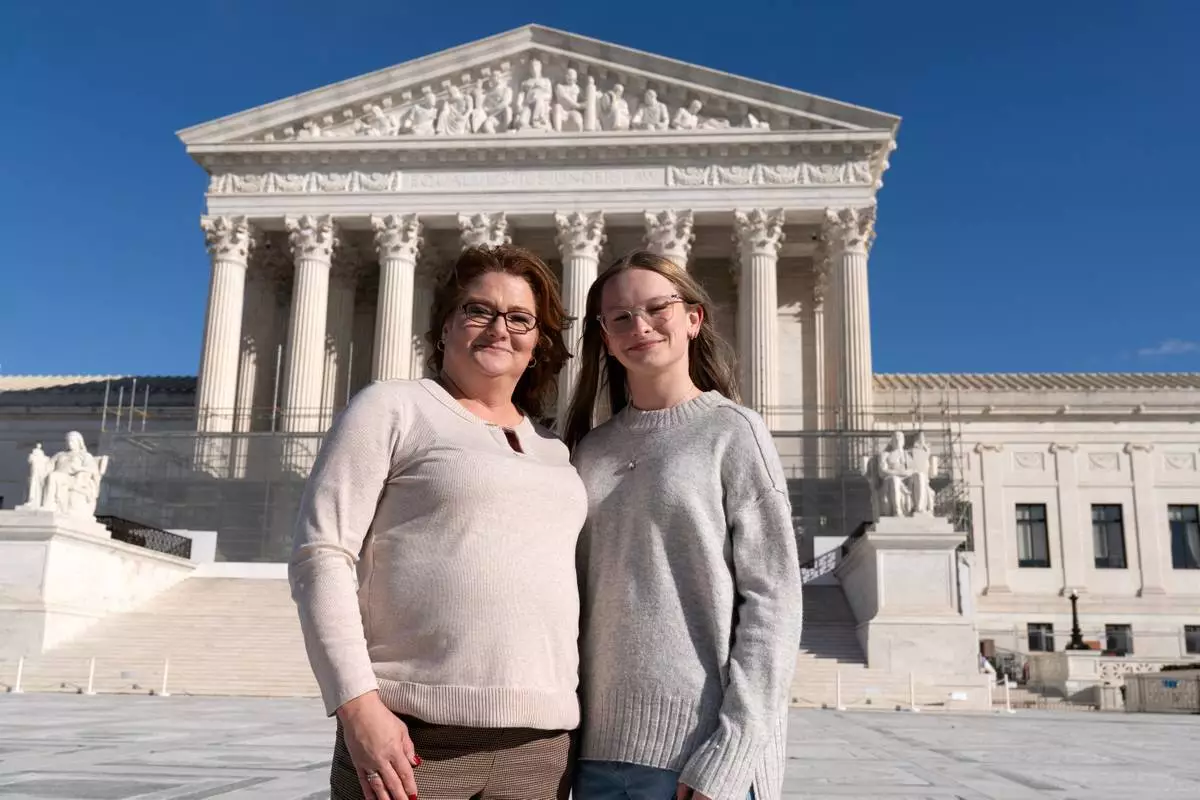
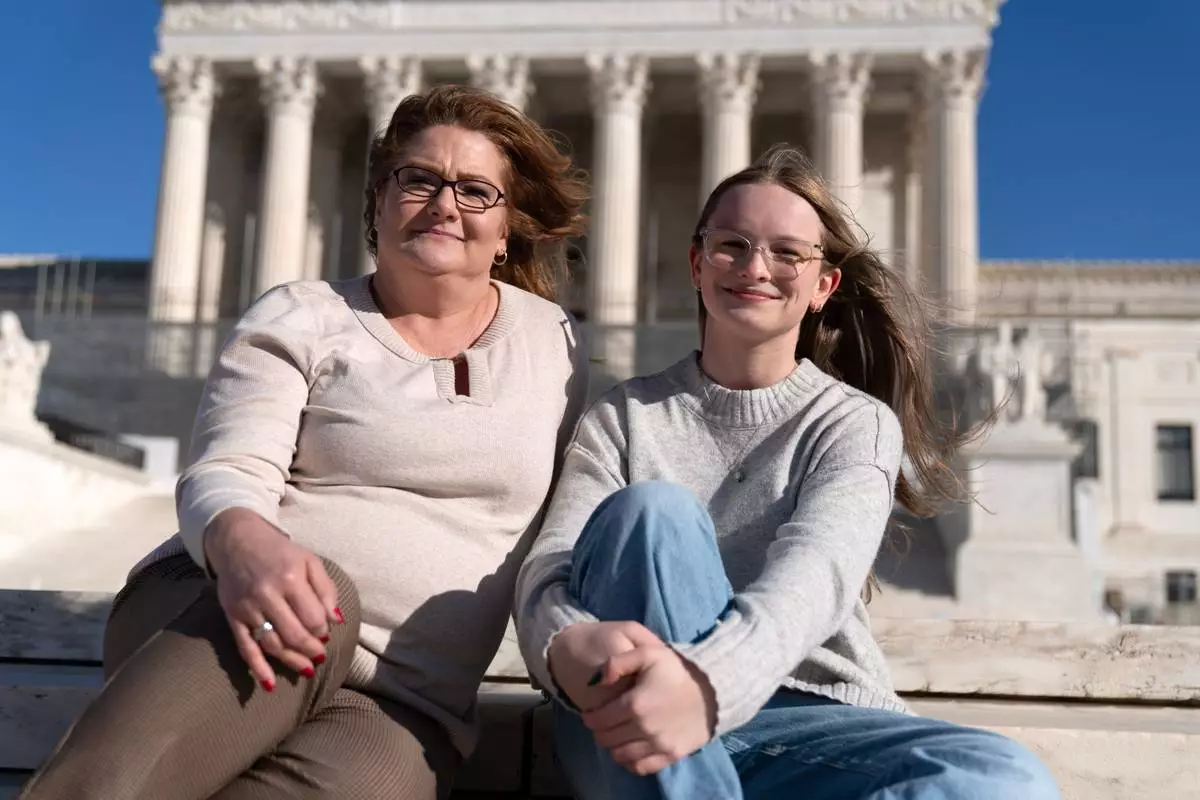
Heather Jackson, left, and Becky Pepper-Jackson pose for a photograph outside of the U.S. Supreme Court in Washington, Sunday, Jan. 11, 2026. (AP Photo/Jose Luis Magana)

Heather Jackson, left, and Becky Pepper-Jackson pose for a photograph outside of the U.S. Supreme Court in Washington, Sunday, Jan. 11, 2026. (AP Photo/Jose Luis Magana)

Heather Jackson, left, and Becky Pepper-Jackson pose for a photograph outside of the U.S. Supreme Court in Washington, Sunday, Jan. 11, 2026. (AP Photo/Jose Luis Magana)

Heather Jackson, left, and Becky Pepper-Jackson pose for a photograph outside of the U.S. Supreme Court in Washington, Sunday, Jan. 11, 2026. (AP Photo/Jose Luis Magana)

Becky Pepper-Jackson poses for a photograph outside of the U.S. Supreme Court in Washington, Sunday, Jan. 11, 2026. (AP Photo/Jose Luis Magana)

Becky Pepper-Jackson poses for a photograph outside of the U.S. Supreme Court in Washington, Sunday, Jan. 11, 2026. (AP Photo/Jose Luis Magana)

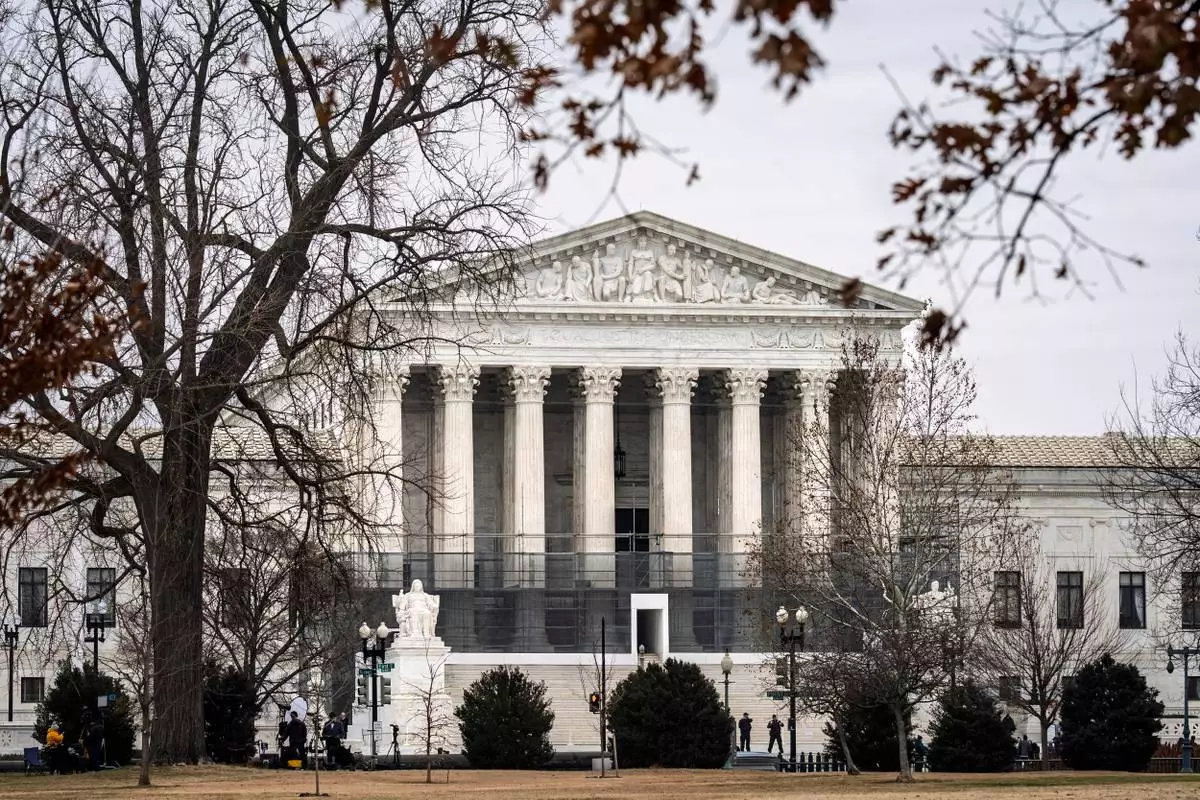
The Supreme Court stands is Washington, Friday, Jan. 9, 2026. (AP Photo/J. Scott Applewhite)

The Supreme Court stands is Washington, Friday, Jan. 9, 2026. (AP Photo/J. Scott Applewhite)

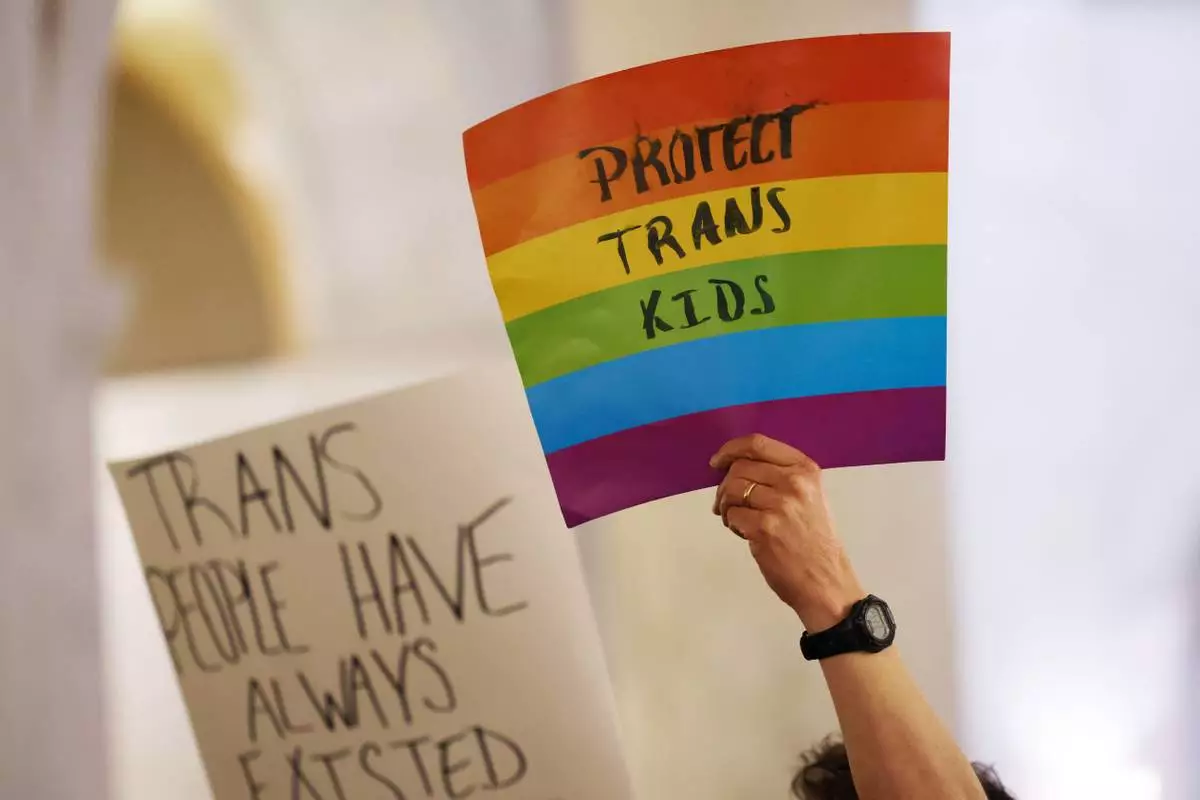
FILE - Protestors hold signs during a rally at the state capitol in Charleston, W.Va., on March 9, 2023. (AP Photo/Chris Jackson, file)

FILE - Protestors hold signs during a rally at the state capitol in Charleston, W.Va., on March 9, 2023. (AP Photo/Chris Jackson, file)

Recommended Articles