SEOUL, South Korea, July 10, 2025 /PRNewswire/ -- Digital Edge (Singapore) Holdings Pte. Ltd. ("Digital Edge"), one of Asia's fastest-growing data center platforms backed by global infrastructure investor Stonepeak, today announced the successful close of a KRW 800 billion Green Loan to fund the development of SEL3, the second phase of its flagship 96-megawatt (MW) campus in the Seoul metropolitan area. This marks a major milestone in developing one of South Korea's largest commercial data center developments, first launched in 2022.
The Green Loan was significantly oversubscribed, attracting strong support from a diverse group of Korean and international financial institutions. This is Digital Edge's second Green Loan in Korea, reinforcing the company's commitment to sustainable infrastructure development in the region.
"We are pleased with the strong support from our lending partners across the region for this project," said Jonathan Walbridge, Digital Edge's Chief Financial Officer. "This financing demonstrates continued confidence in our platform and affirms our long-term commitment to building digital infrastructure responsibly and sustainably."
Located in Bupyeong-gu, Incheon and adjacent to the company's SEL2, SEL3 will add 60MW of capacity and complete the full 96MW campus. Designed for high-density, scalable deployments, the campus caters to the growing needs of hyperscale and enterprise customers in Korea.
Construction on SEL3 began in May 2025, with Ready-for-Service (RFS) targeted by Q4 2027. The project extends Digital Edge's strategic partnership with SK ecoplant, a leading local developer which also successfully delivered the SEL2 facility.
SEL2, which reached Ready-for-Service in August 2024, is Digital Edge's first purpose-built hyperscale and AI facility in Korea. It has already secured strong leasing momentum from major cloud and digital platform customers, validating the company's strategic investment in the market.
Andrew Pak, Country Manager for Digital Edge in South Korea, commented, "As one of the largest commercial DC campuses in South Korea, SEL3 reinforces Digital Edge's commitment to this country. We are delighted to work again with our partners at SK ecoplant to develop this highly energy efficient facility that helps realise the potential of cloud and AI in South Korea."
The expansion reflects Digital Edge's broader strategy to power Asia-Pacific's digital transformation through infrastructure that enables sustainable growth across the region's most dynamic markets.
About Digital Edge
Headquartered in Singapore, Digital Edge is a trusted and forward-looking data center platform company, established to transform digital infrastructure in Asia. Through building and operating state-of-the-art, energy-efficient data centers rich with connectivity options, Digital Edge aims to bring new colocation and interconnect options to the Asian market, making infrastructure deployment in the region easy, efficient and economical.
Backed by leading alternative investment firm Stonepeak, Digital Edge has established itself as a market-leading pan-Asia data center platform. The company provides data center and fiber services across nine countries in Asia Pacific, with more than 1.1GW of secured IT power. You can visit the company's website at www.digitaledgedc.com.
** The press release content is from PR Newswire. Bastille Post is not involved in its creation. **

Digital Edge Secures Financing to Complete Major Data Center Campus
|
ABU DHABI, UAE, Dec. 22, 2025 /PRNewswire/ -- Bybit, the world's second-largest cryptocurrency exchange by trading volume, participated in the HSC Asset Management high-level conference in Abu Dhabi, where Yoyee Wang, Head of Business-to-Business (BBU), highlighted the role of custody design, capital efficiency and regulatory clarity in institutional engagement with digital assets. The two-day event brought together policymakers, asset managers and technology leaders to discuss global investment trends, digital assets, artificial intelligence and the future architecture of financial markets.
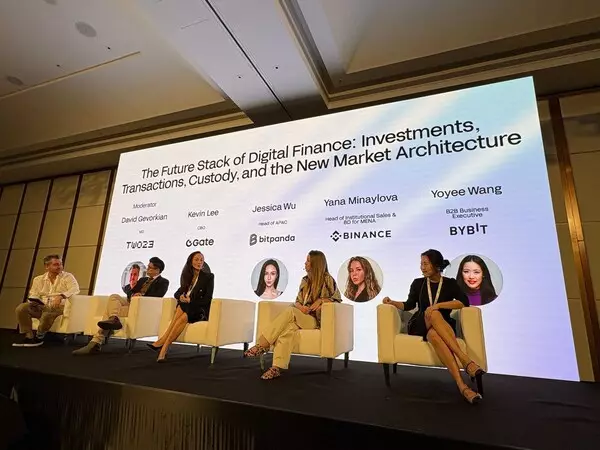
Wang spoke as a panelist during the Grand Forum Day session titled "The Future Stack of Digital Finance: Investments, Transactions, Custody, and the New Market Architecture," which examined how institutional-grade infrastructure is influencing the evolution of digital finance.
Moderated by David Gevorkian, managing director of TWO23 Group, the panel featured senior executives from major digital asset platforms, including Kevin Lee, chief business officer at Gate; Yana Minaylova, head of institutional sales and business development for MENA at Binance; and Jessica Wu, head of APAC at Bitpanda Technology Solutions.
Custody, Risk and Capital Efficiency
During the discussion, Wang emphasized that institutional conversations around custody are fundamentally driven by risk management and operational considerations.
"When institutions talk about custody, the discussion usually starts with security – transparency, control of assets and risk reduction," Wang said."But custody is not the objective in itself. The underlying question is how clients can trade more efficiently while managing risk."
She noted that as custodian and off-exchange settlement models become more common, market participants are increasingly focused on capital usage.
"As custody structures are introduced, whether through multi-party arrangements or off-exchange solutions, the immediate challenge for the industry is capital efficiency," Wang said. "The priority is to improve capital efficiency, on top of enhanced security and reduced counterparty risk to exchanges."
Regulatory Clarity in the UAE
Wang also highlighted the role of regulatory clarity in enabling institutional participation, pointing to the United Arab Emirates as a key example.
"Bybit established its headquarters in the UAE some time ago, and we've seen regulations in the region become progressively clearer," she said. "That clarity and certainty are critical for technology innovation and for building confidence among global institutions."
She added that clearer frameworks have helped foster constructive dialogue between regulators, market participants and technology providers, supporting long-term market development.
Tokenized Real-World Assets
Addressing the growing interest in tokenized real-world assets (RWAs), Wang noted that Bybit has supported access to regulated RWA products through collaborations with established financial institutions.
"We've launched tokenized products in collaboration with Qatar National Bank and UBS that provide exposure to underlying money-market instruments," Wang said. "These structures allow clients to access traditional returns within a digital asset framework, while benefiting from liquidity and trading functionality."
She cautioned, however, that the broader RWA landscape remains uneven.
"The market today includes a wide range of structures and standards," Wang said. "Our focus is on products that are well-structured, subject to appropriate oversight and designed to be tradable, so they can support liquidity in secondary markets."
Institutional Engagement Beyond Asset Exposure
Wang concluded by encouraging institutions to take a broader view of how they engage with digital assets.
"We'd like institutions to look beyond digital assets solely as an asset class and consider them as part of a broader blockchain infrastructure," she said. "Participation can take many forms — from liquidity provision to agency trading or technology collaboration — depending on an institution's business model and risk framework."
#Bybit / #TheCryptoArk / #IMakeIt
About Bybit
Bybit is the world's second-largest cryptocurrency exchange by trading volume, serving a global community of over 80 million users. Founded in 2018, Bybit is redefining openness in the decentralized world by creating a simpler, open and equal ecosystem for everyone. With a strong focus on Web3, Bybit partners strategically with leading blockchain protocols to provide robust infrastructure and drive on-chain innovation. Renowned for its secure custody, diverse marketplaces, intuitive user experience, and advanced blockchain tools, Bybit bridges the gap between TradFi and DeFi, empowering builders, creators, and enthusiasts to unlock the full potential of Web3. Discover the future of decentralized finance at Bybit.com.
For more details about Bybit, please visit Bybit Press
For media inquiries, please contact: media@bybit.com
For updates, please follow: Bybit's Communities and Social Media
Discord | Facebook | Instagram | LinkedIn | Reddit | Telegram | TikTok | X | Youtube
ABU DHABI, UAE, Dec. 22, 2025 /PRNewswire/ -- Bybit, the world's second-largest cryptocurrency exchange by trading volume, participated in the HSC Asset Management high-level conference in Abu Dhabi, where Yoyee Wang, Head of Business-to-Business (BBU), highlighted the role of custody design, capital efficiency and regulatory clarity in institutional engagement with digital assets. The two-day event brought together policymakers, asset managers and technology leaders to discuss global investment trends, digital assets, artificial intelligence and the future architecture of financial markets.
Wang spoke as a panelist during the Grand Forum Day session titled "The Future Stack of Digital Finance: Investments, Transactions, Custody, and the New Market Architecture," which examined how institutional-grade infrastructure is influencing the evolution of digital finance.
Moderated by David Gevorkian, managing director of TWO23 Group, the panel featured senior executives from major digital asset platforms, including Kevin Lee, chief business officer at Gate; Yana Minaylova, head of institutional sales and business development for MENA at Binance; and Jessica Wu, head of APAC at Bitpanda Technology Solutions.
Custody, Risk and Capital Efficiency
During the discussion, Wang emphasized that institutional conversations around custody are fundamentally driven by risk management and operational considerations.
"When institutions talk about custody, the discussion usually starts with security – transparency, control of assets and risk reduction," Wang said."But custody is not the objective in itself. The underlying question is how clients can trade more efficiently while managing risk."
She noted that as custodian and off-exchange settlement models become more common, market participants are increasingly focused on capital usage.
"As custody structures are introduced, whether through multi-party arrangements or off-exchange solutions, the immediate challenge for the industry is capital efficiency," Wang said. "The priority is to improve capital efficiency, on top of enhanced security and reduced counterparty risk to exchanges."
Regulatory Clarity in the UAE
Wang also highlighted the role of regulatory clarity in enabling institutional participation, pointing to the United Arab Emirates as a key example.
"Bybit established its headquarters in the UAE some time ago, and we've seen regulations in the region become progressively clearer," she said. "That clarity and certainty are critical for technology innovation and for building confidence among global institutions."
She added that clearer frameworks have helped foster constructive dialogue between regulators, market participants and technology providers, supporting long-term market development.
Tokenized Real-World Assets
Addressing the growing interest in tokenized real-world assets (RWAs), Wang noted that Bybit has supported access to regulated RWA products through collaborations with established financial institutions.
"We've launched tokenized products in collaboration with Qatar National Bank and UBS that provide exposure to underlying money-market instruments," Wang said. "These structures allow clients to access traditional returns within a digital asset framework, while benefiting from liquidity and trading functionality."
She cautioned, however, that the broader RWA landscape remains uneven.
"The market today includes a wide range of structures and standards," Wang said. "Our focus is on products that are well-structured, subject to appropriate oversight and designed to be tradable, so they can support liquidity in secondary markets."
Institutional Engagement Beyond Asset Exposure
Wang concluded by encouraging institutions to take a broader view of how they engage with digital assets.
"We'd like institutions to look beyond digital assets solely as an asset class and consider them as part of a broader blockchain infrastructure," she said. "Participation can take many forms — from liquidity provision to agency trading or technology collaboration — depending on an institution's business model and risk framework."
#Bybit / #TheCryptoArk / #IMakeIt
About Bybit
Bybit is the world's second-largest cryptocurrency exchange by trading volume, serving a global community of over 80 million users. Founded in 2018, Bybit is redefining openness in the decentralized world by creating a simpler, open and equal ecosystem for everyone. With a strong focus on Web3, Bybit partners strategically with leading blockchain protocols to provide robust infrastructure and drive on-chain innovation. Renowned for its secure custody, diverse marketplaces, intuitive user experience, and advanced blockchain tools, Bybit bridges the gap between TradFi and DeFi, empowering builders, creators, and enthusiasts to unlock the full potential of Web3. Discover the future of decentralized finance at Bybit.com.
For more details about Bybit, please visit Bybit Press
For media inquiries, please contact: media@bybit.com
For updates, please follow: Bybit's Communities and Social Media
Discord | Facebook | Instagram | LinkedIn | Reddit | Telegram | TikTok | X | Youtube
** The press release content is from PR Newswire. Bastille Post is not involved in its creation. **
Bybit's Yoyee Wang Says Capital-Efficient Custody and Regulatory Clarity Are Key to Institutional Crypto Adoption