Skip to Content Facebook Feature Image

Kobo Resources Confirms Additional High-Grade Gold Mineralization at Kossou with 15.5 m at 2.3 g/t Au, incl. 8.3 m at 3.43 g/t Au; Outlines Next Phase of Exploration at Kossou

News

Kobo Resources Confirms Additional High-Grade Gold Mineralization at Kossou with 15.5 m at 2.3 g/t Au, incl. 8.3 m at 3.43 g/t Au; Outlines Next Phase of Exploration at Kossou
News

News

Kobo Resources Confirms Additional High-Grade Gold Mineralization at Kossou with 15.5 m at 2.3 g/t Au, incl. 8.3 m at 3.43 g/t Au; Outlines Next Phase of Exploration at Kossou

2025-07-10 19:30 Last Updated At:19:40

QUEBEC CITY--(BUSINESS WIRE)--Jul 10, 2025--

Kobo Resources Inc. (" Kobo” or the " Company ") ( TSX.V: KRI ) is pleased to report additional diamond drill results from the Road Cut Zone at its 100%-owned Kossou Gold Project (“ Kossou ”) in Côte d’Ivoire. Results from these holes continue to strengthen the Company’s understanding of the key structural controls that define this prospective target area.

More Images

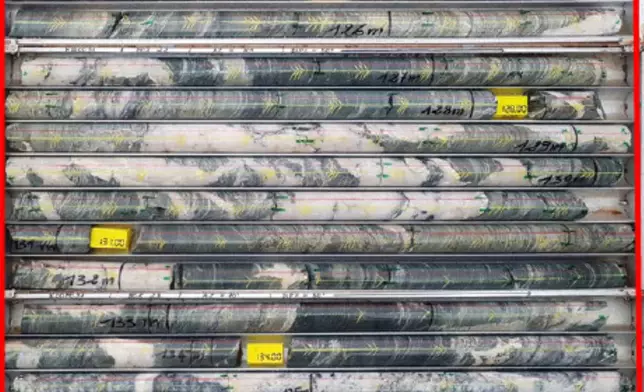
Figure 4: Diamond Drill Hole KDD0091 – 15.55 m at 2.30 g/t Au, incl. 8.30 m at 3.43 g/t Au
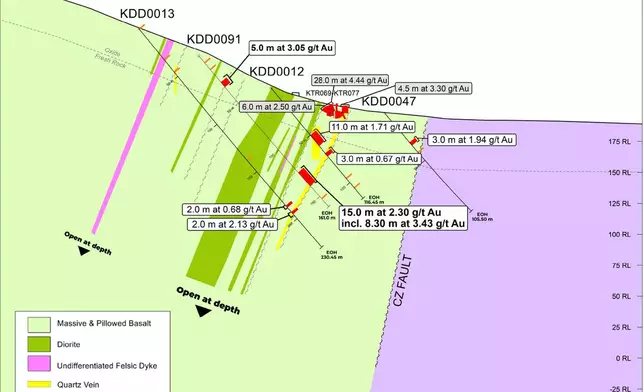
Figure 4: Diamond Drill Hole KDD0091 – 15.55 m at 2.30 g/t Au, incl. 8.30 m at 3.43 g/t Au

Figure 3: Road Cut Zone Cross Section – RCZ500
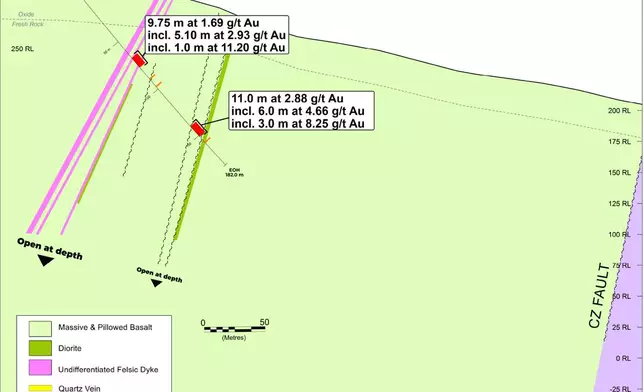
Figure 3: Road Cut Zone Cross Section – RCZ500

Figure 2: Road Cut Zone Simplified Section – RCZ825

Figure 2: Road Cut Zone Simplified Section – RCZ825

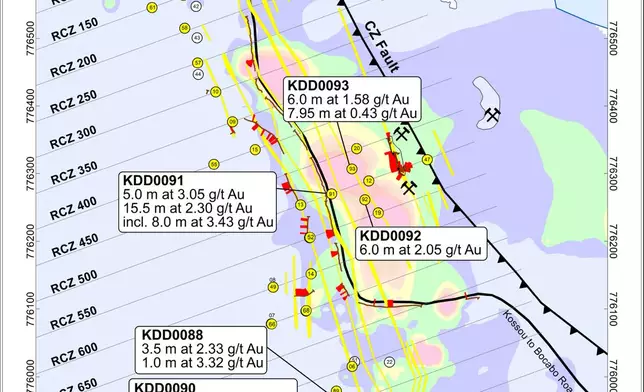
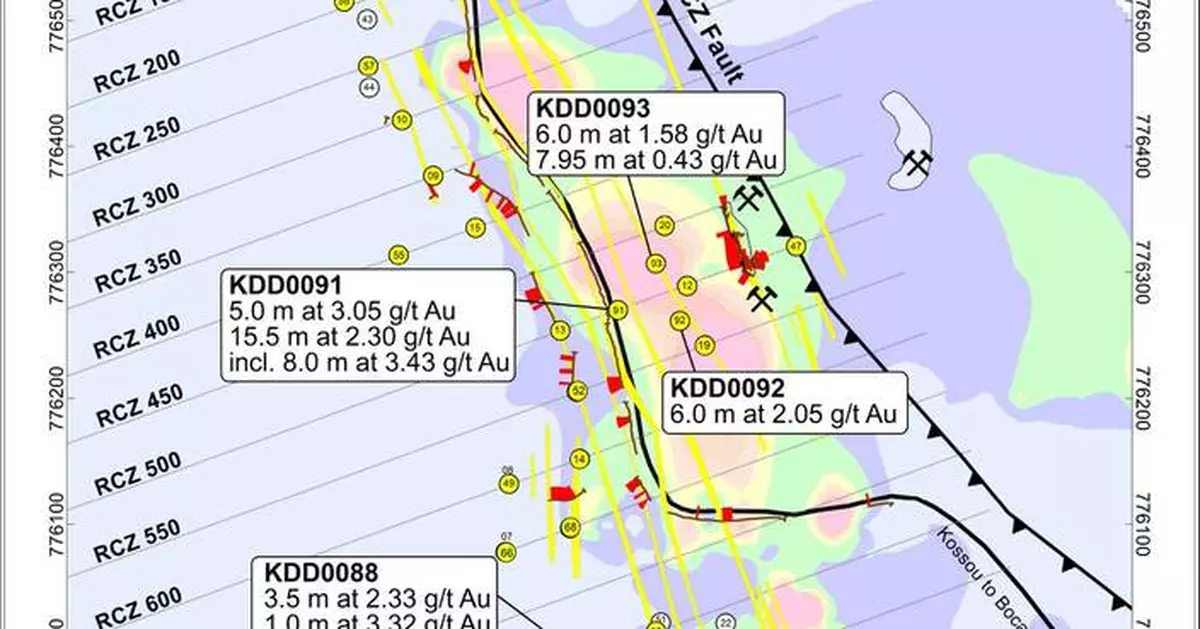
Figure 1: Road Cut Zone Drill Hole Locations and Simplified Geology

Figure 1: Road Cut Zone Drill Hole Locations and Simplified Geology

This press release features multimedia. View the full release here: https://www.businesswire.com/news/home/20250710272213/en/

The Company also completed an initial test of the gap between the Road Cut and Jagger Zones, confirming the presence of the interpreted structure. Additionally, the Company has provided an outline of its next exploration priorities as it advances plans for its next phase of drilling and regional target work.

Diamond Drill Results – Highlights:

Road Cut Zone:

Edward Gosselin, CEO and Director of Kobo commented: “Our latest drilling has outlined additional strong gold mineralization at the Road Cut Zone, highlighting its scale and the consistency of grades and widths we are seeing along strike and down dip. Importantly, these results build on our understanding of the structural setting at Kossou and will help guide how we advance the Road Cut Zone in parallel with the Jagger Zone, including the structural corridor between the two targets.”

He continued: “With this phase of diamond drilling now complete, our team is focused on advancing a larger, systematic program to further define the Jagger, Road Cut and Contact Zones, test the potential connection of the gap between these Jagger and Road Cut Zones, and expand our footprint to new targets identified at the Jagger South area and the underexplored western portion of the permit. Based on the work completed to date, we remain confident in the scale and continuity of mineralization at Kossou and believe the project continues to demonstrate significant potential as we move towards the next phase of drilling and a maiden Mineral Resource Estimate.”

Road Cut Zone Results

Results from six diamond drill holes at the Road Cut Zone have been received. Holes KDD0088 to KDD0090 were drilled on three sections (RCZ725 to RCZ775) (see Figure 1) to test gold mineralization associated with diamond drill hole KDD0056, which previously returned 10.0 m at 4.57 g/t Au ( see press release dated January 30, 2025 ).

KDD0090 intersected two zones of strong gold mineralization: an upper intercept of 9.75 m at 1.69 g/t Au, including 1.0 m at 11.20 g/t Au, highlighting the high-grade nature of the cross-cutting V2 veins within the dominant northerly trending shear systems. The second intercept, 11.0 m at 2.88 g/t Au from 140.0 m, including 3.0 m at 8.25 g/t Au from 143.0 m, supports the continuity of high-grade mineralization within a previously identified structure (see Figure 2). Results from KDD0088 and KDD0089, which returned 3.5 m at 2.33 g/t Au from 81.0 m, illustrate the variability of gold grades within the well-defined shear zones at the Road Cut Zone. These mineralised zones remain open at depth and will be targeted in future drilling.

A second set of holes, KDD0091 to KDD0093 (see Figure 3), targeted an area of artisanal mining previously trenched and sampled by the Company, which returned strong gold mineralization including trench KTR070 with 28.0 m at 4.44 g/t Au and trench KTR069 with 6.0 m at 2.50 g/t Au ( see press release dated December 5, 2023 ). Previous diamond drilling on this target also confirmed strong mineralization, including hole KDD0012, which intersected 11.0 m at 1.71 g/t Au from 50.0 m ( see press release dated July 11, 2024 ).

All drill holes intersected significant gold mineralization, highlighted by KDD0091, which returned 15.55 m at 2.30 g/t Au from 123.0 m, including 8.30 m at 3.43 g/t Au from 126.0 m. The mineralized zone is characterized by strong shearing within the basaltic host rocks, cross-cut by a series of V2 and V1 veins that are strongly altered and host gold mineralization that was consistent throughout the interval. This zones shows excellent continuity from surface down dip on the section RCZ500 (see Figure 4). Additional drilling is being planned to test these structures to the north and south along strike of shear zone and to depth.

Testing Structural Corridor Between Jagger and Road Cut Zones

One hole, KDD0087, was drilled within the interpreted structural corridor between the Road Cut and Jagger Zones. The hole intersected a well-defined shear zone near surface but did not return significant gold mineralization. The presence of the shear structure provides further support for Kobo’s geological interpretation in this area. Additional drilling is planned to continue assessing the potential structural linkages and mineralization continuity between these two high-priority targets.

Soil Geochemistry to Define Targets: South Jagger and Western Kossou Permit Area

The Company has extended detailed infill soil geochemistry across the South Jagger Zone, collecting 270 samples to date. Previous infill sampling on a 25 m by 25 m grid proved effective in defining drill-ready targets at the Road Cut, Jagger and Kadie Zones further north. The South Jagger soil anomaly, which consistently returned values up to 1000+ ppb Au, now extends over a distance greater than 2 km, reinforcing its potential for follow-up drilling.

In addition, recent soil geochemical surveying has outlined a new northwest-trending anomaly of over 400 m in the western portion of the Kossou Permit, with individual sample results returning values up to 1,380 ppb gold. These results further support systematic target definition and demonstrate the upside potential across less-explored portions of the permit.

Update on Regional Exploration: Kotobi Permit

At the Kotobi Permit, the Company has collected 1,942 soil samples to date, with additional results pending. Recent work has defined a 50+ ppb gold-in-soil anomaly extending over 400+ m of strike length, with individual samples returning between 370 ppb and 1,420 ppb Au. Follow-up pitting and trenching are currently underway to better define this anomaly and assess its potential for future exploration work.

Earn-In Agreement: NESDAVE MINING

Regional scale soil geochemical sampling is underway at the Akoboissue Permit (PR0970). Information meetings are underway with local village chiefs and elders with respect to the Annépé Permit (PR0973) and regional scale soil geochemical sampling is expected begin shortly.

Next Steps: Preparing for Expanded Drilling and maiden Mineral Resource Estimate at Kossou

With this current phase of drilling now complete, the Company’s exploration and technical team is integrating the latest drill data into detailed geological models to refine its understanding of the structural controls at the Jagger and Road Cut Zones. This work will directly inform the Company’s next major drill campaign, which is anticipated to comprise more than 15,000 m of additional diamond drilling and begin in H2 2025. This expanded program will prioritize systematic step-out and deeper drilling at the Jagger Zone to support preliminary resource modelling, continue expansion drilling at the Road Cut Zone, and follow up on the interpreted structural corridor between the two zones.

Further, the Company plans to advance the Contact Zone with targeted drilling based on structural mapping completed to date and begin testing new targets on the western side of the Kossou Permit, supported by recent soil geochemical results indicating a strong northwest-trending gold anomaly. This methodical approach is designed to build on the Company’s drilling success to date, advance the potential for a future maiden Mineral Resource Estimate, and support the Company’s broader strategy to unlock value within Côte d’Ivoire’s highly prospective Birimian gold belt.

Table 1: Summary of Significant Diamond Drill Hole Results

An accurate dip and strike and controls of mineralisation are unconfirmed and mineralised zones are reported as downhole lengths. Drill holes are planned to intersect mineralised zones perpendicular to interpreted targets. All intercepts reported are downhole distances.

Sampling, QA/QC, and Analytical Procedures

Drill core was logged and sampled by Kobo personnel at site. Drill cores were sawn in half, with one half remaining in the core box and the other half secured into new plastic sample bags with sample number tickets. Core samples are drilled using HQ core barrels to below the level of oxidation and then reduced to NQ core barrels for the remainder of the bore hole. Samples are transported to the SGS Côte d’Ivoire facility in Yamoussoukro by Kobo personnel where the entire sample was prepared for analysis (prep code PRP86/PRP94). Sample splits of 50 grams were then analysed for gold using 50g Fire Assay as per SGS Geochem Method FAA505. QA/QC procedures for the drill program include insertion of a certificated standards every 20 samples, a blank every 20 samples and a duplicate sample every 20 samples. All QAQC control samples returned values within acceptable limits.

Review of Technical Information

The scientific and technical information in this press release has been reviewed and approved by Paul Sarjeant, P.Geo., who is a Qualified Persons as defined in National Instrument 43-101. Mr. Sarjeant is the President and Chief Operating Officer and Director of Kobo.

About Kobo Resources Inc.

Kobo Resources is a growth-focused gold exploration company with a compelling new gold discovery in Côte d'Ivoire, one of West Africa’s most prolific and developing gold districts, hosting several multi-million-ounce gold mines. The Company’s 100%-owned Kossou Gold Project is located approximately 20 km northwest of the capital city of Yamoussoukro and is directly adjacent to one of the region’s largest gold mines with established processing facilities.

With over 18,500 metres of diamond drilling, nearly 5,900 metres of reverse circulation (RC) drilling, and 5,900 metres of trenching completed since 2023, Kobo has made significant progress in defining the scale and prospectivity of its Kossou’s Gold Project. Exploration has focused on multiple high-priority targets within a 9+ km strike length of highly prospective gold-in-soil geochemical anomalies, with drilling confirming extensive mineralisation at the Jagger, Road Cut, and Kadie Zones. The latest phase of drilling has further refined structural controls on gold mineralisation, setting the stage for the next phase of systematic exploration and resource development.

Beyond Kossou, the Company is advancing exploration at its Kotobi Permit and is actively expanding its land position in Côte d'Ivoire with prospective ground, aligning with its strategic vision for long-term growth in-country. Kobo remains committed to identifying and developing new opportunities to enhance its exploration portfolio within highly prospective gold regions of West Africa. Kobo offers investors the exciting combination of high-quality gold prospects led by an experienced leadership team with in-country experience. Kobo’s common shares trade on the TSX Venture Exchange under the symbol "KRI”. For more information, please visit www.koboresources.com.

NEITHER THE TSXV NOR ITS REGULATION SERVICES PROVIDER (AS THAT TERM IS DEFINED IN THE POLICIES OF THE TSXV) ACCEPTS RESPONSIBILITY FOR THE ADEQUACY OR ACCURACY OF THIS RELEASE.

Cautionary Statement on Forward-looking Information:

This news release contains “forward-looking information” and “forward-looking statements” (collectively, “forward-looking statements”) within the meaning of the applicable Canadian securities legislation. All statements, other than statements of historical fact, are forward-looking statements and are based on expectations, estimates and projections as at the date of this news release. Any statement that involves discussions with respect to predictions, expectations, beliefs, plans, projections, objectives, assumptions, future events or performance (often but not always using phrases such as “expects”, or “does not expect”, “is expected”, “anticipates” or “does not anticipate”, “plans”, “budget”, “scheduled”, “forecasts”, “estimates”, “believes” or “intends” or variations of such words and phrases or stating that certain actions, events or results “may” or “could”, “would”, “might” or “will” be taken to occur or be achieved) are not statements of historical fact and may be forward-looking statements Forward-looking statements are necessarily based upon a number of estimates and assumptions that, while considered reasonable, are subject to known and unknown risks, uncertainties, and other factors which may cause the actual results and future events to differ materially from those expressed or implied by such forward-looking statements. Such factors include, but are not limited to: general business, economic, competitive, political and social uncertainties; and the delay or failure to receive board, shareholder or regulatory approvals. There can be no assurance that such statements will prove to be accurate, as actual results and future events could differ materially from those anticipated in such statements. Accordingly, readers should not place undue reliance on the forward-looking statements and information contained in this news release. Except as required by law, Kobo assumes no obligation and/or liability to update the forward-looking statements of beliefs, opinions, projections, or other factors, should they change, except as required by law.
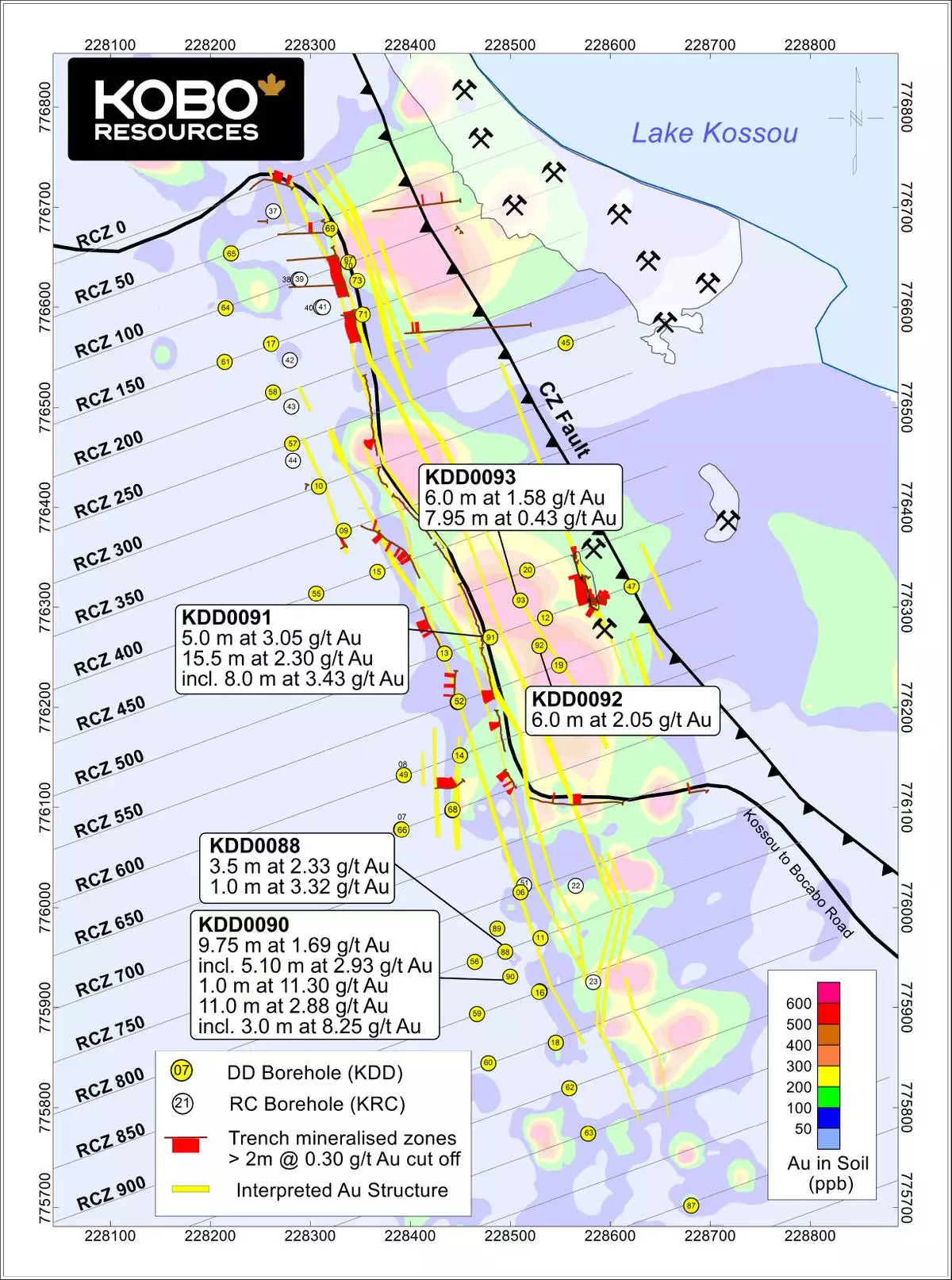
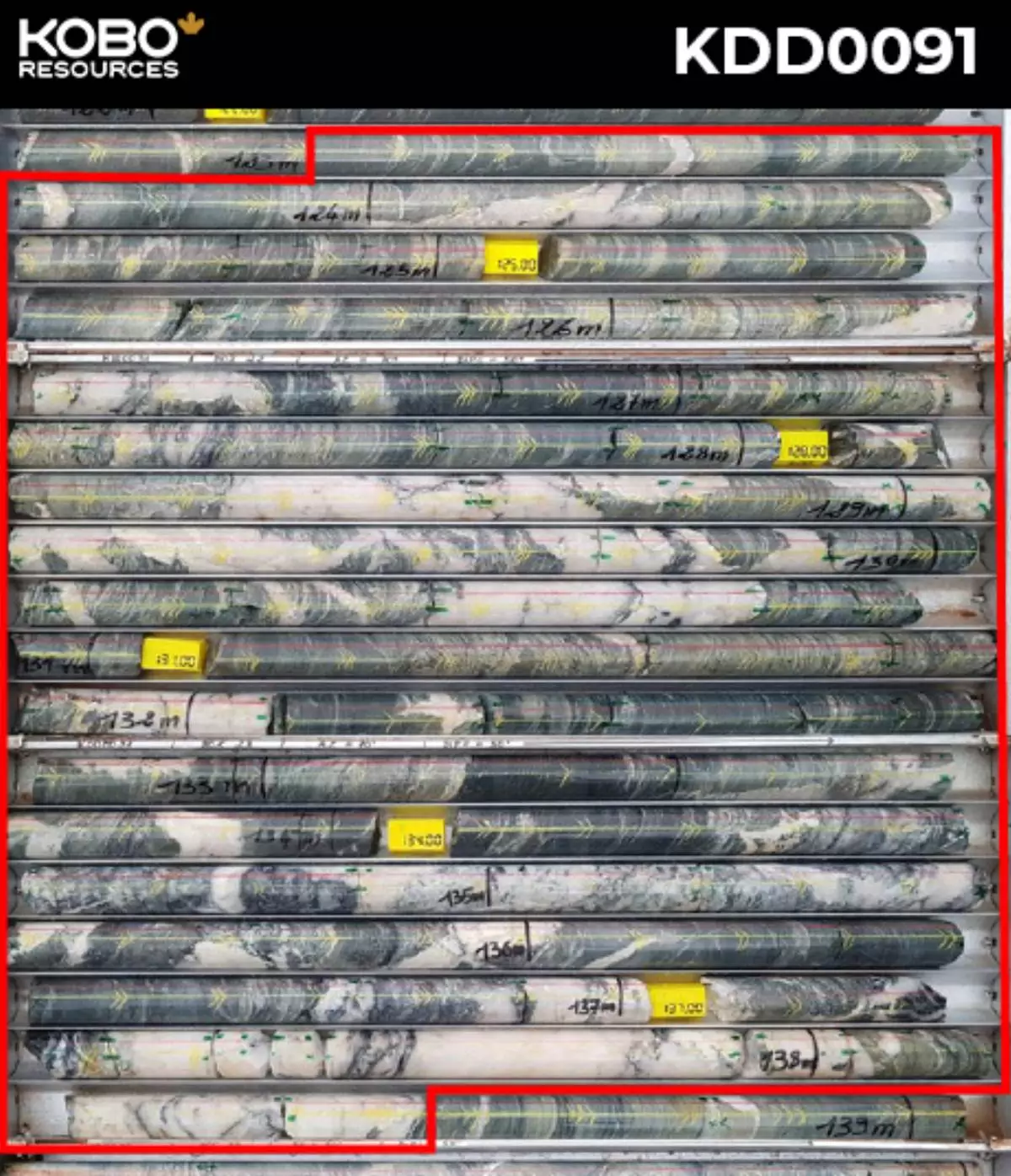
Figure 4: Diamond Drill Hole KDD0091 – 15.55 m at 2.30 g/t Au, incl. 8.30 m at 3.43 g/t Au
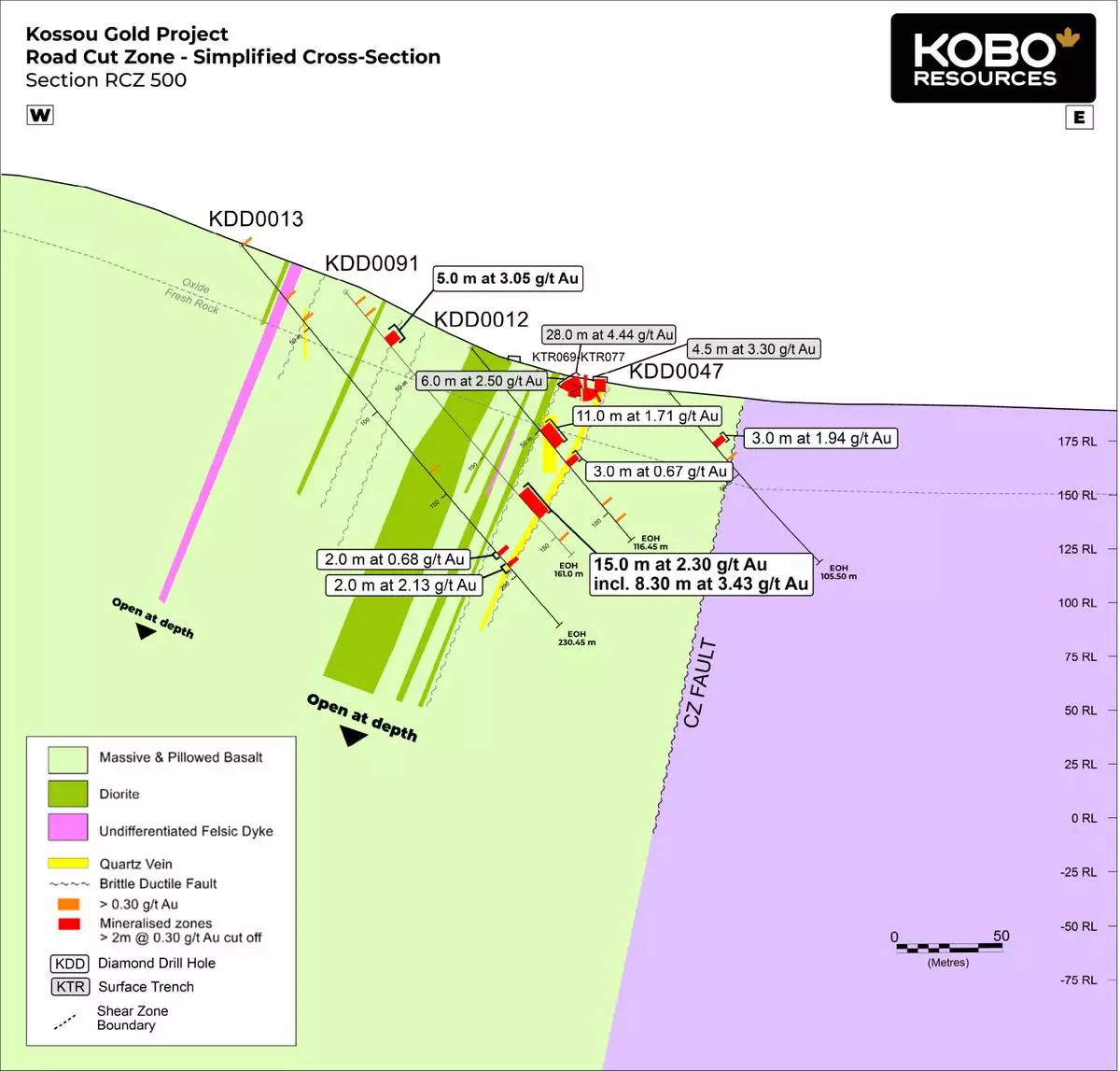
Figure 4: Diamond Drill Hole KDD0091 – 15.55 m at 2.30 g/t Au, incl. 8.30 m at 3.43 g/t Au

Figure 3: Road Cut Zone Cross Section – RCZ500
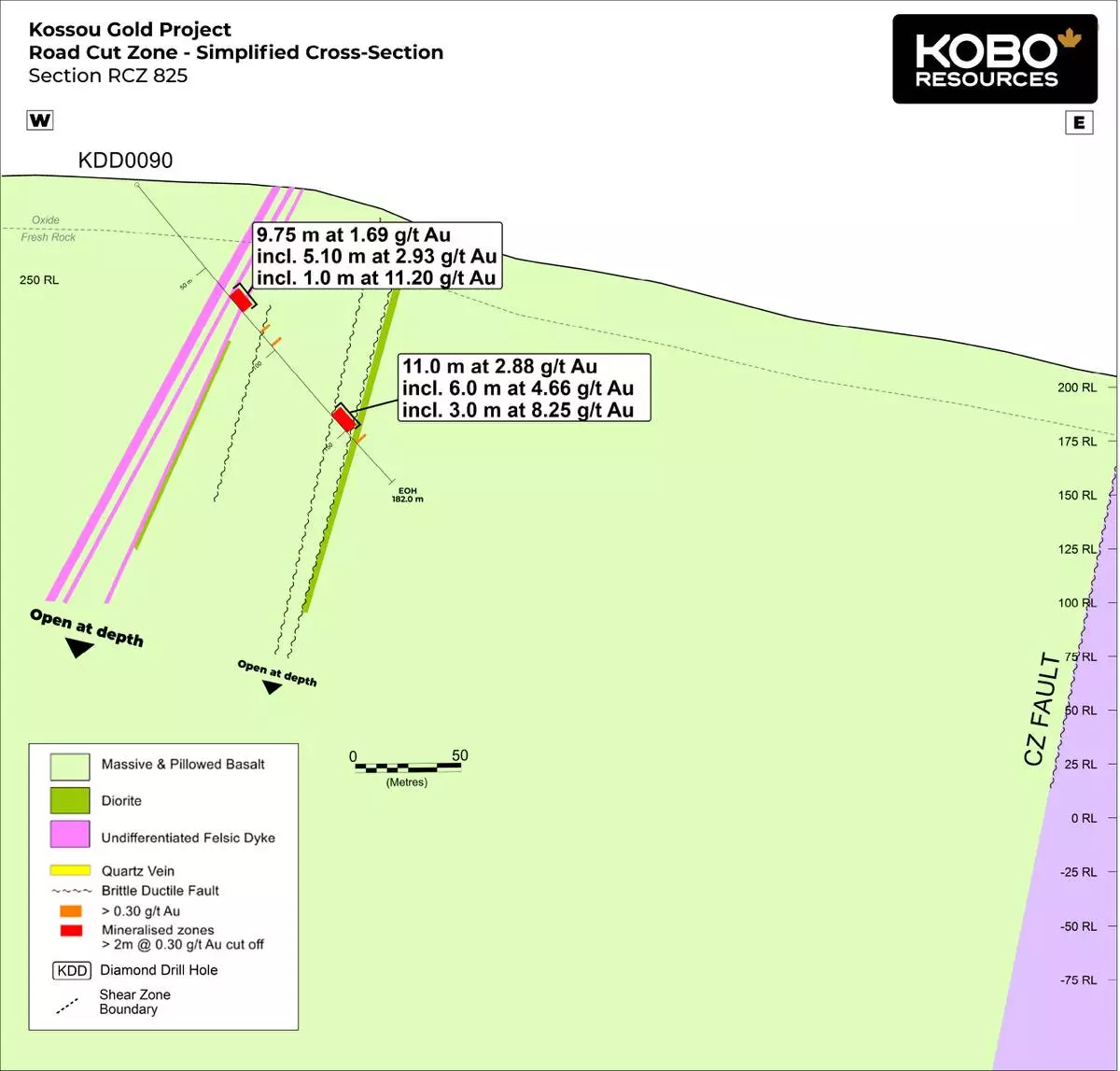
Figure 3: Road Cut Zone Cross Section – RCZ500

Figure 2: Road Cut Zone Simplified Section – RCZ825

Figure 2: Road Cut Zone Simplified Section – RCZ825

Figure 1: Road Cut Zone Drill Hole Locations and Simplified Geology

Figure 1: Road Cut Zone Drill Hole Locations and Simplified Geology
The United States hit Venezuela with a “large-scale strike” early Saturday and said President Nicolás Maduro and his wife were captured and flown out of the country after months of stepped-up pressure by Washington. President Donald Trump insisted the U.S. government would run the country at least temporarily and was already doing so.

The legal authority for the strike — and whether Trump consulted Congress beforehand — was not immediately clear. The stunning, lightning-fast American military action, which plucked a nation’s sitting leader from office, echoed the U.S. invasion of Panama that led to the surrender and seizure of its leader, Manuel Antonio Noriega, in 1990 — exactly 36 years ago Saturday.

Maduro and his wife, captured overnight from their home, were being transported via a U.S. warship to New York, where they were to face criminal charges. The U.S. is now evaluating next steps for Venezuela, Trump said Saturday on Fox News, “We’ll be involved in it very much.”

Here's the latest:

In a letter sent to the U.N. Security Council on Saturday, the Venezuelan ambassador to the U.N. warned that in light of the U.S. strikes, the country “reserves the inherent right to self defense.”

The letter from Ambassador Samuel Reinaldo Moncada Acosta, obtained by AP, goes on to request an urgent meeting of the 15-member council and condemnation and cessation of U.S. actions.

“What began more than four months ago as a police fantasy is now showing its true face: this is a colonial war aimed at destroying our republican form of government, freely chosen by our people, and at imposing a puppet government that allows the plundering of our natural resources, including the world’s largest oil reserves,” Acosta wrote.

U.S. President Donald Trump claimed that Venezuelan vice president Delcy Rodríguez had been sworn in as president shortly before he spoke to reporters and added she had spoken with Secretary of State Marco Rubio.

“She is essentially willing to do what we think is necessary to make Venezuela great again. Very simple,” Trump said.

Earlier, opposition leader María Corina Machado said that the opposition candidate Edmundo González should assume power, saying that he rightfully won the 2024 presidential election.

The president posted a photo on social media showing Maduro wearing a sweatsuit and a blindfold with the caption: “Nicolas Maduro on board the USS Iwo Jima.”

Maduro appeared to be wearing a flotation device around his neck. Next to him was someone wearing a jacket that had a DEA logo.

Maduro also had protective headphones on his ears and appeared to be lifting a water bottle with both arms to drink.

Trump told Fox News he spoke to Maduro several times, including most recently a week ago.

Maduro denied that in an interview on New Year’s Eve, saying he had only spoken to Trump in November.

Trump’s dramatic action against Maduro is the polar opposite of the clemency he granted to former Honduran President Juan Orlando Hernández.

Trump in December pardoned Hernández though he was sentenced to 45 years in U.S. prison for helping drug traffickers to safely move hundreds of tons of cocaine north through his country to the U.S.

Hernández, who enjoyed support from officials in the first Trump administration, was convicted by a U.S. jury in New York — which Maduro is now set to face.

When asked in an interview with Politico about the pardon, Trump said, “I don’t know him” and “I know very little about him,” but added that he was told that Hernández “was set up.”

“The country, uh, deals in drugs, like probably you could say that about every country, and because he was the president, they gave him like 45 years in prison,” he said.

The indictment accuses Maduro of leading a “a corrupt, illegitimate government that, for decades, has leveraged government power to protect and promote illegal activity, including drug trafficking.” It alleges that the drug trafficking efforts “enriched and entrenched Venezuela’s political and military elite.”

U.S. authorities allege that Maduro partnered with “some of the most violent and prolific drug traffickers and narco-terrorists in the world” to bring tons of cocaine into the U.S., according to the indictment.

Authorities estimate that as much as 250 tons of cocaine were trafficked through Venezuela by 2020, according to the indictment. The drugs were moved on go-fast vessels, fishing boats and container ships or via planes from clandestine airstrips, authorities allege.

The United Nations said it was “deeply alarmed” by the U.S. strikes and reported detention of President Nicolás Maduro in Venezuela. It expressed concern that the escalation was a violation of international law.

“These developments constitute a dangerous precedent,” Stéphane Dujarric, spokesman for the U.N. secretary-general, said in a statement. Dujarric said the U.N. worried about the larger implications for Latin America and the Caribbean and called on “all actors in Venezuela” to respect human rights and the rule of law.

China strongly condemned the U.S. strike in Venezuela and the action against its president, the Foreign Ministry said, adding the Beijing government was “deeply shocked” and firmly opposed to the operation.

“Such hegemonic acts of the U.S. seriously violate international law and Venezuela’s sovereignty and threaten peace and security in Latin America and the Caribbean region,” it said.

It called on the U.S. to comply with international law and the principles of the U.N. Charter, urging it to stop violating the sovereignty and security of other nations.

Trump said a helicopter was hit during the operation in Venezuela and a few U.S. members were injured, but he believed none were killed.

“A couple of guys were hit, but they came back and they’re supposed to be in pretty good shape,” he said.

He said the U.S. lost no aircraft in the operation.

“We got it all back. One of them was hit pretty hard but—a helicopter—but we got it back.

“We had to do it because it’s a war,” he added a few moments later.

The Federal Aviation Administration has imposed a temporary airspace restriction on Puerto Rico’s international airport and surrounding regions.

An announcement by Luis Muñoz Marín International Airport in San Juan posted on the social media site X said the restriction was placed because of the “security situation related to military activity” in Venezuela.

As a result, most commercial airlines to and from the airport that are operated by U.S. airlines have been suspended or may be canceled.

Foreign airlines and military aircraft are not included in this restriction, the statement said. “Passengers are urged to check the status of their flight directly with their airline before heading to the airport.”

Trump brushed off criticism from U.S. Democratic lawmakers that he did not seek permission from Congress ahead of time and that the strike was illegal. He called his Democratic critics “weak, stupid people” and blaming his political opponents for inflation in the U.S.

He said the operation in Venezuela was “really genius.”

“All they do is complain,” he said of the Democrats.

“They should say, ‘Great job.’ They shouldn’t say, ‘Oh Gee, maybe it’s not constitutional.’ You know, the same old stuff that we’ve been hearing for years and years and years,” Trump said.

Trump said the operation in Venezuela “wasn’t meant to be” a message to Mexico, but then he has proposed to Mexican President Claudia Sheinbaum that the U.S. “take out” cartels in her country and suggested the U.S. might take action.

“We’re very friendly with her, she’s a good woman. But the cartels are running Mexico. She’s not running Mexico. The cartels are running Mexico,” Trump said.

He said he’s asked Sheinbaum numerous times, “Would you like us to take out the cartels?” but she has said no.

“Something’s going to have to be done with Mexico,” Trump said.

Trump told Fox News that the couple were aboard the U.S. warship Iwo Jima and headed to New York, where they will face prosecution.

President Donald Trump said in an interview Saturday morning that the United States will be making decisions on what is next for Venezuela after capturing the Latin American country’s president and flying him out of the country.

“We’ll be involved in it very much” as to who will govern the country, Trump said.

“We can’t take a chance in letting somebody else run and just take over what he left, or left off,” Trump said in an interview with Fox News hours after the capture.

Venezuelan ruling party leader Nahum Fernández told The Associated Press that Nicolás Maduro and his wife were at their home within the Ft. Tiuna military installation when they were captured.

“That’s where they bombed,” he said. “And, there, they carried out what we could call a kidnapping of the president and the first lady of the country.”

Vice President JD Vance said in a statement on X: “The president offered multiple off ramps, but was very clear throughout this process: the drug trafficking must stop, and the stolen oil must be returned to the United States. Maduro is the newest person to find out that President Trump means what he says.

Kudos to our brave special operators who pulled off a truly impressive operation.”

In South Florida, Venezuelans celebrated the news of Maduro’s capture at a rally held outside a South American eatery.

People wrapped themselves in Venezuelan flags, ate fried snacks and cheered as music was playing at the event. At one point, the crowd chanted “Liberty! Liberty! Liberty!”

The rally took place in Doral, Florida, a city of 80,000 people surrounded by Miami sprawl and home to the largest Venezuelan community in the United States.

— EU foreign policy chief Kaja Kallas wrote on X that she had spoken with U.S. Secretary of State Marco Rubio and the EU ambassador in Caracas. “The EU has repeatedly stated that Mr Maduro lacks legitimacy and has defended a peaceful transition. Under all circumstances, the principles of international law and the UN Charter must be respected. We call for restraint.”

— Spanish Prime Minister Pedro Sánchez called for “de-escalation and responsibility. International Law and the principles of the United Nations Charter must be respected,” Sánchez wrote on X.

— Russia’s Foreign Ministry said it is “extremely alarmed” and called for “immediate clarification,” according to a statement posted Saturday on the ministry’s Telegram channel. The ministry said such actions, if confirmed, would constitute “an unacceptable infringement on the sovereignty of an independent state.”

— British Prime Minister Keir Starmer said the U.K. was not involved in the U.S. operation in Venezuela and that he would seek more information from Trump. Without condemning the U.S. action, Starmer said he always believes that international law should be upheld. “But I think at this stage, fast moving situation, let’s establish the facts and take it from there,” he said.

At a pro-Maduro protest in the capital, Caracas Mayor Carmen Meléndez joined a crowd that demanded that Maduro be returned immediately.

“Maduro, hold on, the people are rising up!” the crowd chanted. They also said: “We are here Nicolás Maduro. If you can hear us, we are here!” Elsewhere, residents were still taking in the events.

“How do I feel? Scared, like everyone,” said Caracas resident Noris Prada, who sat on an empty avenue looking down at his phone. “Venezuelans woke up scared, many families couldn’t sleep. I have been on the street, I just got back from Maracay, everything is blocked, everything is bad, very bad.”

“They impose the law,” electrician Alfonso Valdez said about the U.S. government. “They are the police of the world … they are assassins.”

Venezuelan opposition leader Maria Corina Machado’s spokespeople declined to comment on the U.S. operation.

Machado was last seen in public last month, when she emerged from 11 months in hiding and traveled to Norway, where she was honored with the Nobel Peace Prize.

U.S. Attorney General Pam Bondi says Maduro and his wife will face criminal charges after an indictment in New York.

Bondi vowed in a social media post that the couple will “soon face the full wrath of American justice on American soil in American courts.”

Maduro was indicted in 2020 in New York, but it was not previously known that his wife had been.

The Justice Department during Trump’s first term in office charged in the several indictments that Maduro had effectively converted Venezuela into a criminal enterprise at the service of drug traffickers and terrorist groups as he and his allies stole billions from the South American country.

The coordinated unsealing of indictments against 14 officials and government-connected individuals, and rewards of $55 million for Maduro and four others, attacked all the key planks of what then-Attorney General William Barr called the “corrupt Venezuelan regime,” including the Maduro-dominated judiciary and the powerful armed forces.

One indictment by prosecutors in New York accused Maduro and socialist party boss Diosdado Cabello, head of the rubber-stamping constitutional assembly, of conspiring with Colombian rebels and members of the military “to flood the United States with cocaine” and use the drug trade as a “weapon against America.”

Read our news report from 2020 on the charges

U.S. Deputy Secretary of State Christopher Landau says the military action and seizure of Maduro marks “a new dawn for Venezuela,” saying that “the tyrant is gone.”

He posted on X hours after the strike. His boss, Secretary of State Marco Rubio, reposted a post from July that said Maduro “is NOT the President of Venezuela and his regime is NOT the legitimate government.”

Utah Sen. Mike Lee said Rubio informed him that “he anticipates no further action in Venezuela now that Maduro is in U.S. custody,” the lawmaker posted on social media.

Sen. Mike Lee, R-Utah, posted on X that he had spoken with Secretary of State Marco Rubio, who briefed him on the strike. Rubio told Lee that Maduro “has been arrested by U.S. personnel to stand trial on criminal charges in the United States.”

The White House did not immediately respond to queries on where Maduro and his wife were being flown to. Maduro was indicted in March 2020 on “narco-terrorism” conspiracy charges in the Southern District of New York.

President Gustavo Petro of Colombia, one of Trump’s fiercest critics, said the Colombian government convened a national security meeting before dawn Saturday and sent security forces to the border in preparation for a potential “massive influx of refugees” from neighboring Venezuela.

He said he’d also call on the U.N. Security Council to consider “the aggression against the sovereignty of Venezuela and of Latin America.”

“Without sovereignty, there is no nation,” Petro wrote on social media.

Russia’s Foreign Ministry condemned what it called a U.S. “act of armed aggression” against Venezuela in a statement posted on its Telegram channel Saturday.

“Venezuela must be guaranteed the right to determine its own destiny without any destructive, let alone military, outside intervention,” the statement said.

The ministry called for dialogue to prevent further escalation and said it reaffirmed its “solidarity” with the Venezuelan people and government, adding that Russia supports calls for an emergency U.N. Security Council meeting.

The State Department issued a new travel alert early Saturday warning Americans in Venezuela urging them to “shelter in place” due to the situation.

“U.S. Embassy Bogota is aware of reports of explosions in and around Caracas, Venezuela,” it said without elaboration.

“The U.S. Embassy in Bogota, Colombia, warns U.S. citizens not to travel to Venezuela. U.S. citizens in Venezuela should shelter in place.” The embassy in Bogota has been shuttered since March, 2019 but operates remotely.

Secretary of State Marco Rubio retweeted Trump’s announcement without comment, but his deputy, Christopher Landau, posted Trump’s statement, adding that it marked “a new dawn for Venezuela!” “The tyrant is gone. He will now—finally—face justice for his crimes,” Landau said.

Venezuela's Vice President Delcy Rodríguez says, “We do not know the whereabouts of President Nicolás Maduro and First Lady Cilia Flores.” He added: “We demand proof of life.”

Trump said Maduro “has been, along with his wife, captured and flown out of the Country. This operation was done in conjunction with U.S. Law Enforcement. Details to follow.” He set a news conference for later Saturday morning.

The explosions in Caracas, Venezuela’s capital, early on the third day of 2026 — at least seven blasts — sent people rushing into the streets, while others took to social media to report hearing and seeing the explosions. It was not immediately clear if there were casualties. The apparent attack itself lasted less than 30 minutes, but it was unclear if more actions lay ahead, though Trump said in his post that the strikes were carried out “successfully.”

Government supporters display posters of Venezuelan President Nicolás Maduro, right, and former President Hugo Chávez in downtown Caracas, Venezuela, Saturday, Jan. 3, 2026, after U.S. President Donald Trump announced that Maduro had been captured and flown out of the country. (AP Photo/Matias Delacroix)

Government supporters display posters of Venezuelan President Nicolás Maduro, right, and former President Hugo Chávez in downtown Caracas, Venezuela, Saturday, Jan. 3, 2026, after U.S. President Donald Trump announced that Maduro had been captured and flown out of the country. (AP Photo/Matias Delacroix)

Supporters display a poster of Venezuelan President Nicolás Maduro in Caracas, Venezuela, Saturday, Jan. 3, 2026, after U.S. President Donald Trump announced Maduro had been captured and flown out of the country. (AP Photo/Cristian Hernandez)

Supporters display a poster of Venezuelan President Nicolás Maduro in Caracas, Venezuela, Saturday, Jan. 3, 2026, after U.S. President Donald Trump announced Maduro had been captured and flown out of the country. (AP Photo/Cristian Hernandez)

National Guard armored vehicles block an avenue leading to Miraflores presidential palace in Caracas, Venezuela, Saturday, Jan. 3, 2026. (AP Photo/Cristian Hernandez)

National Guard armored vehicles block an avenue leading to Miraflores presidential palace in Caracas, Venezuela, Saturday, Jan. 3, 2026. (AP Photo/Cristian Hernandez)

Smoke rises from Fort Tiuna, the main military garrison in Caracas, Venezuela, after multiple explosions were heard and aircraft swept through the area, Saturday, Jan. 3, 2026. (AP Photo/Matias Delacroix)

Smoke rises from Fort Tiuna, the main military garrison in Caracas, Venezuela, after multiple explosions were heard and aircraft swept through the area, Saturday, Jan. 3, 2026. (AP Photo/Matias Delacroix)

Pedestrians walk past the Miraflores presidential palace after explosions and low-flying aircraft were heard in Caracas, Venezuela, Saturday, Jan. 3, 2026. (AP Photo/Cristian Hernandez)

Pedestrians walk past the Miraflores presidential palace after explosions and low-flying aircraft were heard in Caracas, Venezuela, Saturday, Jan. 3, 2026. (AP Photo/Cristian Hernandez)

A vehicle drives along a darkened highway next to Fort Tiuna, the main military garrison in Caracas, Venezuela, after explosions and low-flying aircraft were heard, Saturday, Jan. 3, 2026. (AP Photo/Matias Delacroix)

A vehicle drives along a darkened highway next to Fort Tiuna, the main military garrison in Caracas, Venezuela, after explosions and low-flying aircraft were heard, Saturday, Jan. 3, 2026. (AP Photo/Matias Delacroix)

Smoke raises at La Carlota airport after explosions and low-flying aircraft were heard in Caracas, Venezuela, Saturday, Jan. 3, 2026. (AP Photo/Matias Delacroix)

Smoke raises at La Carlota airport after explosions and low-flying aircraft were heard in Caracas, Venezuela, Saturday, Jan. 3, 2026. (AP Photo/Matias Delacroix)

Recommended Articles