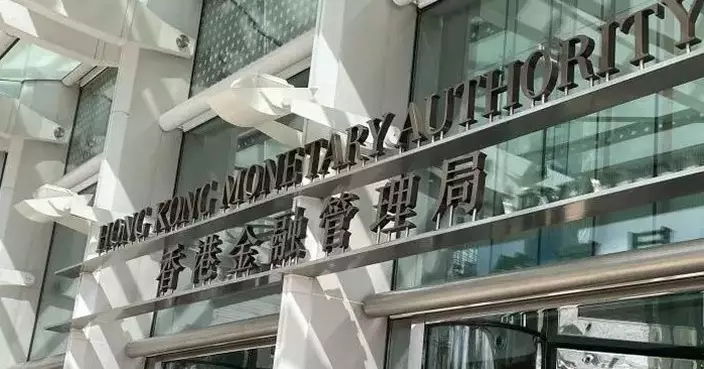
Rates and Government rent due July 31
Demands for rates and/or Government rent for the quarter from July to September 2025 have been issued, and payment should be made by July 31, 2025.
Payment can be made:
(1) by using autopay, the Faster Payment System (FPS), PPS, Internet banking or bank automated teller machines (ATMs);
(2) by uploading an e-Cheque/e-Cashier Order via the Pay e-Cheque portal (www.payecheque.gov.hk);
(3) by sending a crossed cheque to the Treasury, PO Box No. 28000, Sham Shui Po Post Office, Hong Kong (mail with insufficient postage will be rejected); or
(4) in person at any post office or designated convenience store in Hong Kong (i.e. 7-Eleven, Circle K, VanGo or U select). For the addresses and opening hours of post offices, please call Hongkong Post enquiry hotline on 2921 2222 or visit its website (www.hongkongpost.hk).
If payers have not received the demands, they may obtain replacement demands or enquire as to the amount payable by (i) visiting the Rating and Valuation Department (RVD)’s website (www.rvd.gov.hk); (ii) calling 2152 0111; (iii) faxing 2152 0113; or (iv) visiting the RVD, 15/F, Cheung Sha Wan Government Offices, 303 Cheung Sha Wan Road, Kowloon.
There will be no rates concession for this quarter. The total amount due is shown on the demand. Non-receipt or late receipt of demand does not alter the requirement that the total amount due must be paid by July 31, 2025. A surcharge of 5 per cent will be imposed for late payment. A further surcharge of 10 per cent will be levied on the amount (including the 5 per cent surcharge) which remains unpaid six months after the last day for payment.
For payment by autopay, the rates and/or Government rent will be debited from payers' bank accounts on July 31, 2025. Payers should ensure that there are sufficient funds in their bank accounts to meet the payments on that date until settlement.
To support environmental protection, payers are encouraged to utilise the RVD's free eRVD Bill service to receive e-bills and make payments, and to settle bills by autopay or other means of e-payment (e.g. FPS, PPS, Internet banking, e-Cheque/e-Cashier Order or ATMs) to save queuing time. Application forms for autopay can be obtained by downloading from the RVD's website, visiting the RVD, District Offices and banks or by calling 2152 0111.
CHP investigates two suspected food poisoning clusters with epidemiological linkage
The Centre for Health Protection (CHP) of the Department of Health (DH) is today (January 9) investigating two epidemiologically linked suspected food poisoning clusters affecting 39 students from two primary schools. The students developed symptoms after consuming lunch provided by the Sailing Boat Luncheon Production Limited. The CHP reminded the public to maintain good personal, food and environmental hygiene to prevent foodborne diseases.
The first cluster involves 12 boys and 16 girls aged between 6 and 11. They attend a primary school in Sham Shui Po. The investigation revealed that the affected students developed abdominal pain and diarrhoea approximately three to 31 hours after eating school lunch containing fish, chicken cutlets, sauce, garnish and rice, which was provided by the abovementioned school lunch supplier on January 6.
While investigating the first cluster, the CHP of the DH traced the supply chain of the school lunch supplier and identified another cluster, involving eight boys and three girls, aged between 10 and 12, who attend a primary school in Diamond Hill. The investigation revealed that the affected students developed abdominal pain and diarrhoea approximately five to 15 hours after eating lunch containing chicken, cervelat sausage, sauce and fusilli at school yesterday (January 8). The food concerned was also provided by the same school lunch supplier.
None of the affected students required hospitalisation and they are all currently in stable condition.
Officers of the CHP and the Food and Environmental Hygiene Department, including personnel of the Centre for Food Safety (CFS) and the Environmental Hygiene Branch, have inspected the food factory of the school lunch supplier concerned and the kitchen of the first school. They inspected the food storage, the food preparation process and environmental hygiene. Investigation revealed that some food items, such as meat and sauce, were prepared at the food factory, while the other food items, such as rice and garnish, were prepared at the school kitchen. It is suspected that some food items were prepared too early in advance. The CFS immediately instructed the premises concerned to suspend operations for thorough cleaning and disinfection, improve food preparation process and hygiene standards. The CFS has provided food safety and environmental hygiene education to the staff. Food and environmental samples were collected for testing.
The investigation of the CHP and CFS is ongoing.
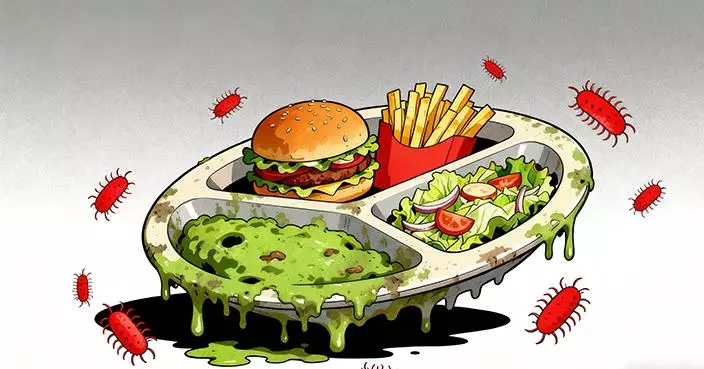
To prevent foodborne diseases, members of the public are reminded to maintain personal, food and environmental hygiene at all times. When dining out, one should:
 Avoid eating raw seafood;
Be a discerning consumer in choosing cold dishes, including sashimi, sushi and raw oysters at a buffet;
Choose pasteurised eggs, egg products or dried egg powder for dishes that often use undercooked eggs;
Patronise only reliable and licensed restaurants;
Ensure food is thoroughly cooked before eating during a hotpot or barbecue meal;
Handle raw and cooked foods carefully and separate them completely during the cooking process;
Use two sets of chopsticks and utensils to handle raw and cooked foods;
Avoid patronising illegal food hawkers;
Drink boiled water;
Susceptible populations, including those with weakened immunity, the elderly, pregnant women and young children are at a higher risk of foodborne diseases, so they should not consume raw or undercooked foods;
Refrain from trying to use salt, vinegar, wine or wasabi to kill bacteria as they are not effective; and
Always wash hands before eating and after going to the toilet.
Avoid eating raw seafood;
Be a discerning consumer in choosing cold dishes, including sashimi, sushi and raw oysters at a buffet;
Choose pasteurised eggs, egg products or dried egg powder for dishes that often use undercooked eggs;
Patronise only reliable and licensed restaurants;
Ensure food is thoroughly cooked before eating during a hotpot or barbecue meal;
Handle raw and cooked foods carefully and separate them completely during the cooking process;
Use two sets of chopsticks and utensils to handle raw and cooked foods;
Avoid patronising illegal food hawkers;
Drink boiled water;
Susceptible populations, including those with weakened immunity, the elderly, pregnant women and young children are at a higher risk of foodborne diseases, so they should not consume raw or undercooked foods;
Refrain from trying to use salt, vinegar, wine or wasabi to kill bacteria as they are not effective; and
Always wash hands before eating and after going to the toilet.
Source: AI-found images