SAO PAULO (AP) — President Donald Trump’s threat to boost import taxes by 50% on Brazilian goods could drive up the cost of breakfast in the United States. The prices of coffee and orange juice — two staples of the American morning diet — could be severely impacted if there's no agreement by Aug. 1.
Brazilian beef and regional airliners are also among the products that could be affected by Trump's decision announced Wednesday, which Brazil's President Luiz Inácio Lula da Silva promised on Thursday to reciprocate.
Trump’s move this time is overtly political, targeting the Brazilian Supreme Court trial of former president Jair Bolsonaro, an ally of his who was charged for his alleged role in trying to overturn his 2022 election loss. The court’s prosecution of U.S.-based social media companies failing to comply with local laws was also mentioned by Trump in a public letter as a reason to hike Brazil’s trade tariffs.
The U.S. Census Bureau said the country had a $6.8 billion trade surplus with Brazil last year.
Brazilian exporters, bodies that represent them and politicians — many of whom are friendly with Bolsonaro — have poured criticism on Trump and urged Lula to negotiate, with coffee, beef and orange juice associations rallying to the nation’s defense.
“These new tariffs produce direct effects and hit Brazil's agribusiness, impacting the exchange rate, in the rise of the cost of imported inputs and in the competitiveness of Brazilian exports,” Brazil's agribusiness caucus in Congress said in a statement Thursday.
Lula said in interviews after Trump's move that the U.S. had a trade surplus with the South American nation of more than $410 billion over the past 15 years, with orange juice and coffee among the few goods made in Brazil that American consumers get in huge numbers.
Americans' coffee habit depends almost exclusively on imports. Official U.S. government data shows Brazil, the world’s top coffee producer, supplies about 30% of the American market, followed by Colombia at roughly 20% and Vietnam at about 10%. Global stocks are now low due to climate-related pressures that have recently strained coffee prices.
Marcos Matos, executive director of Cecafé, Brazil’s coffee exporters council, said the initial 10% tariff imposed by Trump in April was not as catastrophic as some of Brazil's competitors faced even higher rates. Vietnam, for example, began with a 46% tariff, now reduced to 20%. He sees the proposed increase to 50% as a serious escalation.
“It will harm us, coffee exporters, in terms of jobs, income and costs. And it will hurt the American industry and the end consumer, who will end up paying more,” Matos told The Associated Press. He added that agriculture minister Carlos Fávaro told him on Thursday he is looking for alternatives for coffee exporters as he negotiates with the U.S.
Ibiapaba Netto, a director at the Brazilian association for citrus juice exporters, said both countries will suffer as Brazil has no replacement for a market that buys about 3 billion liters of its orange juice every year and the U.S. doesn't have enough of the product at home.
“About 40% of Brazil's orange juice exports go to the U.S. But about 60% of U.S. imports of orange juice come from Brazil. We are the biggest partner of American companies that make their breakfast juice,” Netto told the AP. “Except for the few companies producing 100% in Florida, every American brand depends on Brazil's orange juice for scale.”
Netto added that American brands can survive without Brazil's juice, but now “it will be much harder for them to make their business' wheels spin without it.”
“They don't have anywhere else to find our product. The American market is a traditional partner, we always complete each other. These additional tariffs on Brazil do not strengthen orange juice from Florida, they make the whole juice industry weaker and hike the cost for everyone's breakfast in the U.S.,” Netto said.
Both Matos and Netto say their producers want Brazil's Lula to keep diplomacy on the table until the very end of negotiations before imposing the country's reciprocity law.
When Trump first unveiled his tariff plan in April, many in Brazil hoped the country could benefit since it avoided the harshest penalties imposed on Canada, Mexico and China.
“We had been left out, so many people were saying that Brazil would end up benefiting from this,” said Marcos Jank, a professor of global agribusiness at Insper, a business school in São Paulo. “But with this 50% tariff hike, we now face one of the highest tariffs the U.S. is applying. We moved into a losing position.”
Airline maker Embraer, another Brazilian company that will be affected if the new tariffs are applied, said in a statement it is “currently assessing the potential impacts on its operations” and whether “the new measure will specifically impact the Brazilian aviation industry.” Analysts of investment manager XP estimate 60% of Embraer's revenue depends on the U.S.
“Any material impacts will be addressed during our second-quarter earnings conference call, scheduled for Aug. 5,” Embraer said in a statement. Alongside this, Embraer is actively engaging with the relevant authorities seeking to restore the zero import tax for the aeronautical sector."
The beef sector in Brazil is also in dire straits after Trump's announcement.
Roberto Perosa, president of the Brazilian Association of Meat Exporting Industries, said he has been meeting with partners in the U.S. since Wednesday steering negotiations with the Trump administration.
Perosa said Brazil's beef industry is not a competitor for the U.S. as the South American nation has offered high production volumes during the livestock shortage cycle in recent years, which has helped American consumers buy cheaper products.
“We don’t want to keep being the target of political disputes that harm the Brazilian productive sector,” he said. “The limits of political action cannot come at the expense of our country’s population — or the American population, which will pay the price through higher beef prices."
While Trump’s tariffs are seen as politically motivated, Brazil is working to develop commercial arguments to break the ideological impasse.
Luiz Rua, secretary of trade and international relations at Brazil’s Ministry of Agriculture, said there may be room to negotiate tariffs, citing the U.S. interest in accessing the country’s ethanol market. Brazil, in turn, is pushing for better access to the U.S. sugar market.
“That’s part of our agricultural negotiations,” Rua said. “There are other discussions beyond my portfolio that involve industrial matters. All of this is being put on the table.”
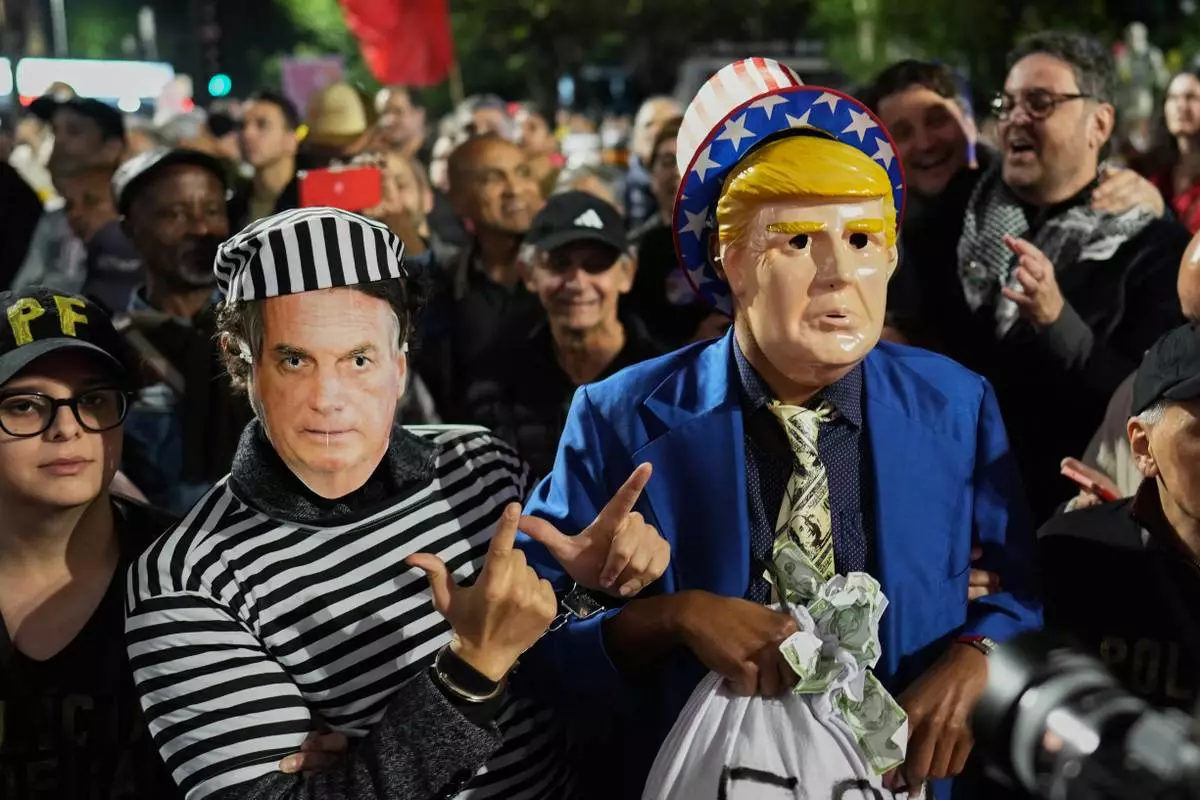
Protesters wearing masks of U.S. President Donald Trump, right, and former President of Brazil Jair Bolsonaro demonstrate after Trump's announcement of 50% tariffs on Brazilian goods, in Sao Paulo Thursday, July 10, 2025. (AP Photo/Andre Penner)
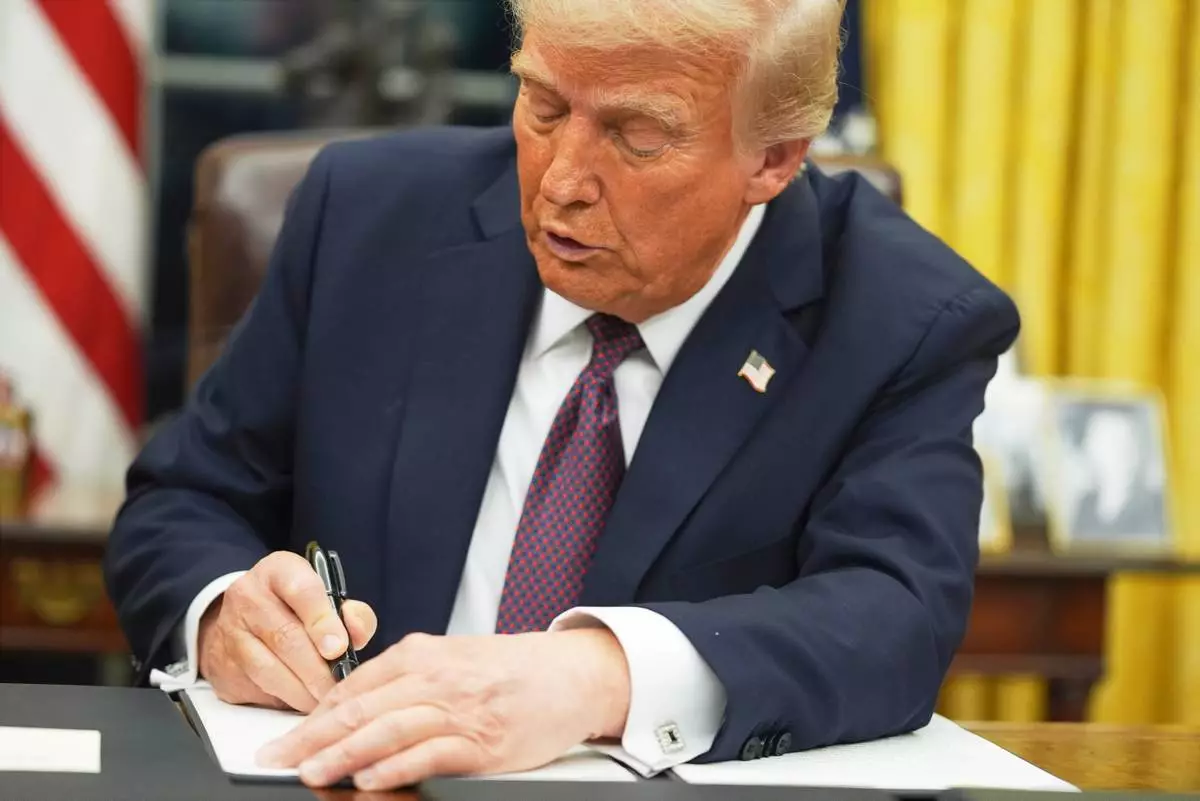
FILE - President Donald Trump signs an executive order on birthright citizenship in the Oval Office of the White House in Washington, Jan. 20, 2025. (AP Photo/Evan Vucci, File)